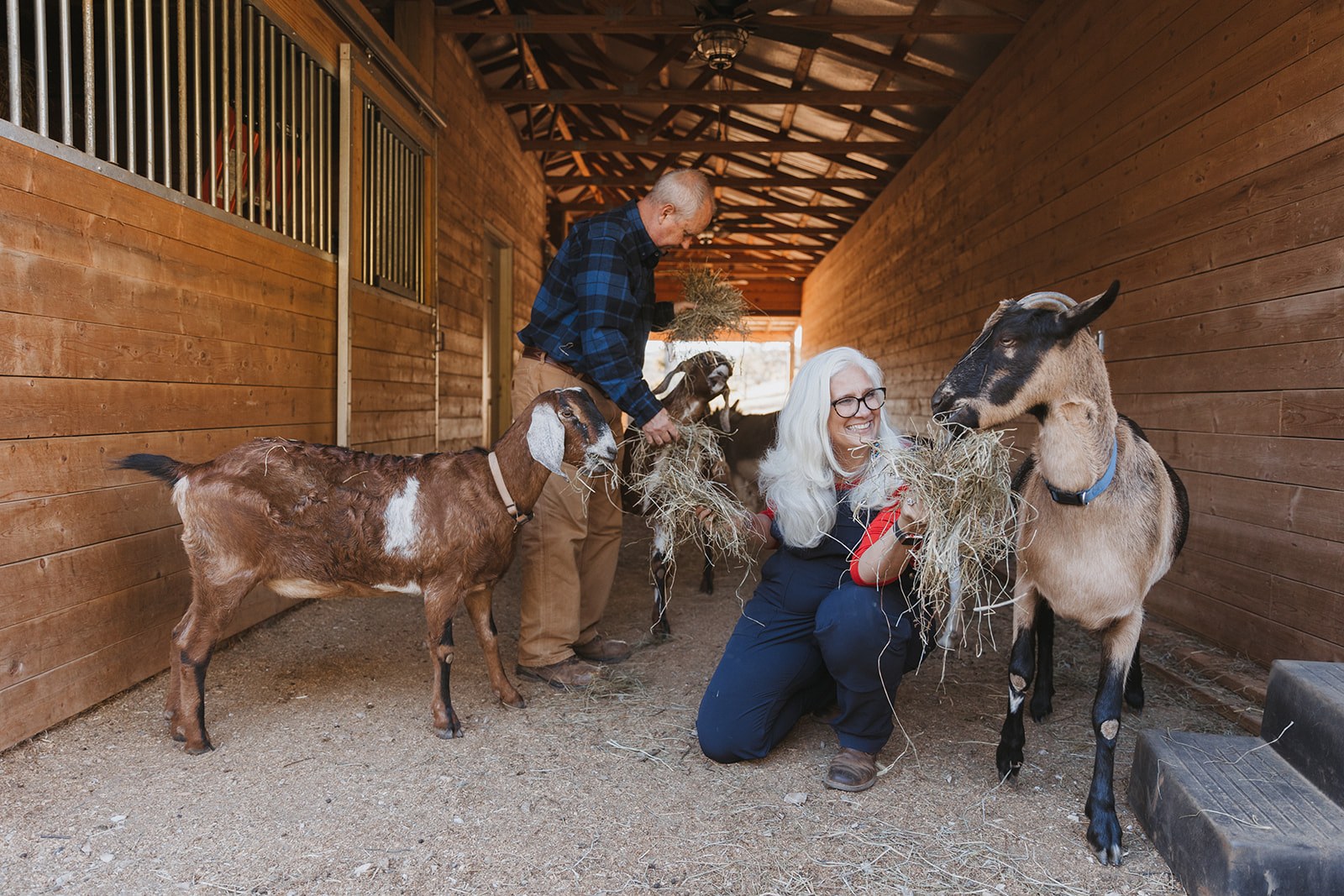
Students ask me how I keep up with platforms that change every month. My answer: I run a lab.
At a glance
1
A real lab
Sweet BombDiggity Farms is where I test what I teach.
2
Attention is not trust
What earns attention and what earns trust are not the same thing.
3
Change one thing
Look at what performed, change one thing, and try again.
4
Start your own
Run small experiments on something you care about.
Real audience, real stakes
Sweet BombDiggity Farms is the content brand Lane and I built around designing a flourishing life at any age.
It’s also where I test almost everything I teach in Digital Marketing and Visual Marketing. Real audience, real stakes, real numbers.
What we test there
Content strategy
Daily short-form video, a newsletter and a blog. We learn what earns attention and what earns trust, which are not the same thing.
Hooks and formats
Our strongest reels follow one pattern. I teach it in short-form video because I watched it work.
Brand photography
Light, composition and a consistent look across hundreds of posts. The Photography lab comes straight from that practice.
Brand partnerships
Working with brands like Purina showed me a creator brief from the other side, and why fit and honest disclosure matter more than reach.
Analytics
We look at what performed, change one thing, and try again. Not every experiment works. That’s the point of a lab.
Start your own lab. It doesn’t need goats.
Jules Morris
Our strongest reel pattern
- A myth-busting or question hook
- One clear distinction
- Why it matters to us
- A light brand thread
- A one-word comment call to action
Why this matters for you
You learn marketing faster by doing it on something you care about. A personal project, a club, a family business, a cause. Run small experiments, keep notes and look at the numbers.
I tried this, here’s what happened, and here’s what I changed.
Try this
Interviewers remember the student who can tell that story. Start your own lab. It doesn’t need goats.
Keep going
Sweet BombDiggity Farms
The content brand that doubles as my marketing lab.
Short-form video
The reel structure I teach in Marketing 465.
Photography lab
Brand photography practice from Marketing 475.
Frequently asked questions
What is a marketing lab?
A marketing lab is a real project with a real audience where you run small experiments and learn from the numbers. For Jules Morris, that lab is Sweet BombDiggity Farms, the content brand she built around designing a flourishing life at any age. It is where she tests almost everything she teaches in Digital Marketing and Visual Marketing.
How can marketing students get hands-on experience?
Start your own lab on something you care about, such as a personal project, a club, a family business or a cause. Run small experiments, keep notes and look at the numbers. Interviewers remember the student who can say what they tried, what happened and what they changed. The lab does not need goats.
What is the difference between attention and trust in content marketing?
Attention and trust are earned by different things. Content that gets views does not automatically build a relationship with the audience. Sweet BombDiggity Farms tests daily short-form video, a newsletter and a blog to learn what earns each. Brand partnerships with brands like Purina also showed that fit and honest disclosure matter more than reach.
What reel structure works best for Sweet BombDiggity Farms?
The farm's strongest reels follow one pattern: a myth-busting or question hook, one clear distinction, why it matters, a light brand thread and a one-word comment call to action. Jules teaches this structure in the short-form video topic of Marketing 465 because she watched it work on her own account.
How do you use analytics to improve content?
Look at what performed, change one thing and try again. This simple loop is how Sweet BombDiggity Farms tests content, hooks, formats and brand photography. Not every experiment works, and that is the point of a lab. Keeping notes on each change and result lets you explain what you tried, what happened and what you changed next.