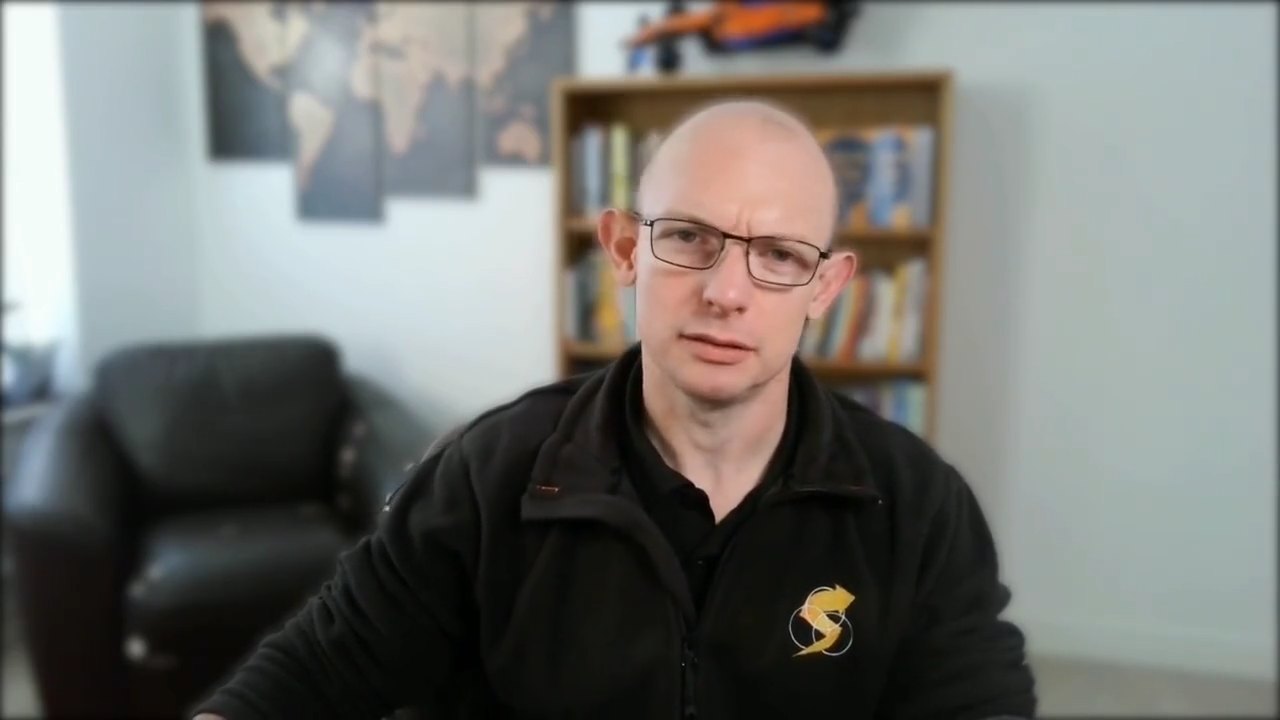
Matt Wilkinson calls himself a recovering scientist who moved into marketing. He founded Strivenn, wrote The Buyer in the Loop, and spends his days helping companies understand their customers. In this three-minute video he gives you an interview move most candidates skip: research the company’s customers, not just the company.
Watch for
- The empty chair. Jeff Bezos became known for leaving a chair open in Amazon meetings to stand in for the customer.
- The catch. Anyone can point at that chair and confidently make something up. The better question is what customers have actually told us, and what we still need to find out.
- Three customer questions to answer before any interview.
- One smart question to bring to the interviewer, built from what you learned.
Try this before your next interview
Pick a company you want to work for. After you learn what it sells and what it is trying to achieve, spend some time on its customers. Answer Matt’s three questions:
- Who actually uses this product, and who decides whether to buy it? They might be different people.
- What are they trying to get done, and what makes that difficult?
- What might stop them from choosing this company? Price, the hassle of switching, the risk of getting it wrong, or being happy with what they already use.
Then read customer reviews and the online communities where those customers talk. If you can, talk to someone who uses the product. Notice their exact words, keep track of your sources, and remember that a handful of comments does not represent everyone.
Walk in with two things: one customer insight and one question you genuinely want answered.
Example: “I noticed a few customers mentioning difficulties getting started. How does that shape your marketing?” You show curiosity, and you give the interviewer something useful to talk about.
Why the habit matters on the job
Picture a meeting with marketing, sales, finance and product around the table. Everyone has an opinion about what the company should do next, and the person who has to live with the result is not in the room. Matt’s point is that companies often do great customer research, then slowly lose sight of it as internal opinions take over. Keeping the customer in the conversation takes deliberate effort. Start practicing now, and when you get the job, keep doing it. Help make sure that empty chair has a voice.
About Matt Wilkinson

Matt Wilkinson is the founder of Strivenn, a Visiting Fellow at Cranfield School of Management, and a director of the Association for Key Account Management (AKAM). His work focuses on how AI is reshaping sales, marketing and commercialisation, particularly in life sciences and other regulated industries.
Before founding Strivenn, Matt held senior commercial, marketing and e-commerce roles in the life sciences and led major client accounts at specialist agencies. He holds a PhD in Chemistry from the University of Bristol and an MBA from Cranfield University.
Named in Marketing Week’s CX50 2026 for life sciences, Matt is also the author of The Buyer in the Loop, which examines why the buyer disappears from commercial decisions and how grounded synthetic customers keep them in the room.
Strivenn · Matt on LinkedIn · The Buyer in the Loop
Photo courtesy of Matt Wilkinson.
Read the transcript
Hi, I’m Matt Wilkinson. I’m a recovering scientist who’s moved into marketing and communications, but that journey is a story for another day. At the heart of the work that I do is helping companies better understand their customers, and that’s why I wrote the book The Buyer in the Loop.
Now, I want you to imagine a meeting around the table of people from marketing, sales, finance and product. Everyone has an opinion about what the company should do next. Now imagine one empty chair. That chair belongs to the customer. Jeff Bezos, the founder of Amazon, became known for leaving an empty chair in Amazon meetings to represent the customer, a reminder that the most important person was missing from the conversation, because the people making decisions can talk for an hour without hearing from the person that has to live with the result.
But there’s a catch. You can point at the chair and ask, what would our customer think? And everyone can confidently make something up. The more useful question is, what have customers actually told us? And what do we still need to find out? That’s at the heart of my book. Companies can do great research, then gradually lose sight of it as internal opinions take over. Keeping a customer in the conversation takes deliberate effort. And you can start practicing that before you even get your first marketing job.
When you’re preparing for an interview, of course you need to research the company. You need to learn what it sells and what it’s trying to achieve. But then spend some time researching its customers. Try asking three questions. Who actually uses this product and who decides whether to buy it? Those might be different people. What are they trying to get done, and what makes that difficult? And what might stop them choosing this company? It might be price, but it might also be the hassle of switching, the risk of getting it wrong, or being happy with what they already use.
Then read customer reviews. Look at what relevant communities say online. If you can, talk to someone who uses the product. Notice their words. Keep track of your sources, and don’t assume a handful of comments represents everyone.
Then bring a thoughtful question to your interview: “I noticed a few customers mentioning difficulties getting started. How does that shape your marketing?” You’re showing curiosity and giving the interviewer something useful to discuss. So before your next interview, find one customer insight and one question you genuinely want answered. And when you get the job, keep doing it. Help make sure that empty chair has a voice.
Frequently asked questions
How do I research a company’s customers before a marketing interview?
Learn what the company sells and what it is trying to achieve, then answer three questions: who uses the product and who decides to buy it, what they are trying to get done and what makes it hard, and what might stop them from choosing this company. Read customer reviews and online communities, note customers’ exact words, and keep track of your sources.
What question should I ask at the end of a marketing interview?
Ask one question built on something you learned about the company’s customers. For example: “I noticed a few customers mentioning difficulties getting started. How does that shape your marketing?” It shows curiosity and gives the interviewer something real to discuss.
What is the “empty chair” in marketing?
It is the practice, made famous by Jeff Bezos at Amazon, of leaving a chair open in meetings to represent the customer. Matt Wilkinson’s caution is that pointing at the chair is not enough. Teams should ask what customers have actually told them and what they still need to find out.
What is The Buyer in the Loop about?
Matt Wilkinson’s book examines why the buyer disappears from commercial decisions and how grounded synthetic customers keep them in the room.
Keep going: Interviews and Talking About Your Experience · Market Research and Social Listening (MARK 465)