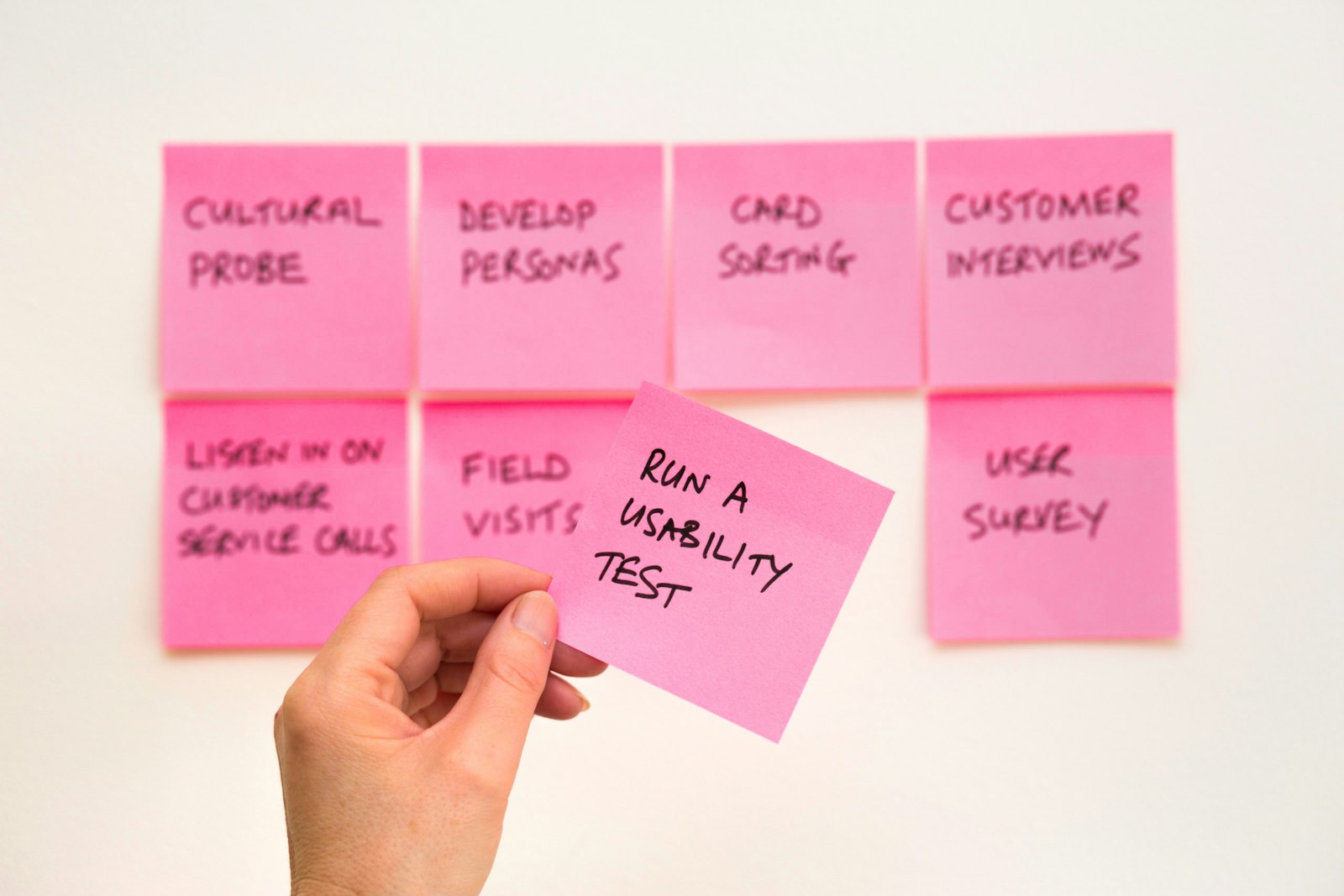
The big idea
The best solutions start with people, not answers. Lead with empathy and curiosity, ask open questions, and you find the real problem before you spend a dime solving the wrong one.
Topic soundtrack
HCD Bootcamp: Listen First
A soundtrack for curiosity, empathy and better questions.
In 60 seconds
- Human-centered design starts with what people desire, then checks what is feasible and viable.
- Discovery runs on empathy and curiosity: listen to understand, not to reply.
- Open questions, stories and “show me” requests reveal what people need, even when they can’t say it.
Do this: rewrite your next yes or no question as “Tell me about a time when…” and then stay quiet long enough for the story.
How human-centered discovery works
HCD Bootcamp: Discovery
Better solutions start with better listening.
Discovery is where you slow down, get curious and learn what people really need before you try to fix anything.

Goals and outcomes
Four things you will do better after today.
Design thinking adds a new set of tools and a new vocabulary for challenging assumptions.
Think differently
Expand your problem-solving toolkit with design thinking and HCD.
Listen deeply
Build interviewing and listening skills that generate breakthrough insights.
Find the real problem
Accurately define the root of the problem.
Make and test
Brainstorm better, prototype to save time and money, and create solutions people embrace.
All eight outcomes
- Expand your problem-solving toolkit with design thinking and HCD.
- Develop interviewing and listening skills.
- Generate breakthrough insights.
- Hone your ability to accurately define the root of the problem.
- Practice strategies for better brainstorming.
- Learn about prototyping and how it can save time and money.
- Gain a new vocabulary that will help you challenge assumptions.
- Create human-centered solutions that people can embrace.

What is human-centered design?
It starts and ends with people.
Human-centered design is a creative approach to problem solving. It starts with the people you’re designing for and ends with new solutions that are tailor made to suit their needs.
Tim Brown, IDEO
The full definition
Human-centered design is a creative approach to problem solving. It’s a process that starts with the people you’re designing for and ends with new solutions that are tailor made to suit their needs. Human-centered design is all about:
- building a deep empathy with the people you’re designing for,
- generating tons of ideas,
- building prototypes,
- sharing what you’ve made with the people you’re designing for,
- and eventually putting your innovative new solution out in the world.
Basis of human-centered design
Start with what people desire.
Text version of this diagram
- Desirable: do people want it? Human-centered design starts here.
- Feasible: can we build it, technically and organizationally?
- Viable: can it last financially?
- Human-centered solutions sit where all three overlap.
- Sustainable, an optional fourth lens: is it good for people, community and planet over the long run?
What makes HCD different
People first. Then open up, narrow down, repeat.
People at the center
It puts people at the center of the process.
Diverge, then converge
Divergent thinking creates choices. Convergent thinking makes choices.
Cyclical
You loop back as you learn. It is not a straight line.
Plays well with others
It can complement other established approaches, such as Lean and Six Sigma.
The HCD process
Open wide, then narrow. Twice.
Text version of this diagram
- Inspiration: open wide to learn from people, then narrow to what you learned.
- Ideation: open wide again into many ideas, then narrow to a few prototypes.
- Implementation: keep narrowing as you iterate, run a live prototype and pilot.
HCD compared to other approaches
Same four questions. Only HCD starts with people.
| The question | Scientific method | Lean (PDSA) | Six Sigma (DMAIC) | HCD |
|---|---|---|---|---|
| What is the problem? | Form question | Plan | Define | Empathize |
| Why is it happening? | Make hypothesis | Measure, Analyze | Define | |
| How can we fix it? | Predict outcome, Conduct test | Do, Study | Improve | Ideate, Prototype |
| Did we reach our goal? What still needs adjusting? | Analyze results | Act | Control | Test |
HCD and Lean could work together
Lean delivers two E’s. HCD adds the third.
Ease
Is the experience simple to get through?
Lean and HCD
Effectiveness
Does it get the job done?
Lean and HCD
Emotion
How does it make people feel?
HCD adds this
How the two fit together
- HCD is heavily qualitative. Lean is primarily quantitative.
- Lean enacts the ease and effectiveness of the customer experience well. HCD does too, but adds another E: emotion.
- HCD could help define the desired experience. Lean could architect the backstage to deliver it.
- HCD sorts out the root causes of conflict and needs.
- Lean allows for the understanding of current states and the rational correction of mechanical and non-human inefficiencies.


Root causes
Watch what people do, not just what they say.
What people say, what people do, and what they say they do are entirely different things.
Margaret Mead, anthropologist
Why this matters for HCD
HCD helps sort out the root causes of conflict or needs. In contrast, Lean allows for the understanding of current states and the rational correction of mechanical and non-human inefficiencies.
It’s a messy process
Messy and sometimes ambiguous. That’s normal.
Text version of this diagram
- Research and empathy feel tangled and uncertain.
- Concepts and prototypes start to untangle it.
- By design, the line is clear and focused.
Where do I start?
Start with empathy and curiosity.
Every tool in this bootcamp depends on these two. Without them, interviews turn into surveys and insights turn into assumptions.
What is empathy?
Empathy is a skill with four moves.
Text version of this diagram
- Listen intently to another person.
- Take on their frame of reference.
- Understand, and do not judge.
- Communicate that understanding back to the person.
The continuum of empathy
From apathy to action.
Text version of this diagram
- Apathy: I don’t know or care about what you’re facing.
- Pity: I acknowledge it and feel sorry for you.
- Sympathy: I feel exactly what you feel.
- Empathy: I understand and experience your feelings.
- Compassion: I want to relieve what you’re facing. Compassion is empathy in action.
Empathy is multi-dimensional
Four separate components.
- 01CognitiveHeadIntellectually understand another person’s perspective.
- 02AffectiveHeartSubjectively perceive and share another person’s feelings.
- 03BehavioralVoiceCommunicate your understanding and concern back to them.
- 04EthicalCharacterAn inner drive to care, and to act on what you understand.
Together they let you step into another person’s shoes without losing yourself or your path to your goals.
After Janice Morse and colleagues (1992).
Empathy in business
Leaders see the payoff. Many employees don’t feel it.
CXOs say empathy improves financial performance.
of employees say their workplace is toxic.
higher toxicity in unempathetic workplaces (2025 study).
Businessolver, State of Workplace Empathy 2026; 3x figure from the 2025 study
About the research
Businessolver’s 2026 State of Workplace Empathy report was fielded from March to April 2026 with Edelman Data & Intelligence. It surveyed more than 1,300 US employees and executives (300 CXOs and 1,000 employees). The share of employees calling their workplace toxic rose 18 percentage points from the year before. In the 2025 study, unempathetic workplaces reported 3x higher toxicity.

Curiosity
The impulse to seek new experiences.
Curiosity is a basic human attribute. Two things stop us: the wrong mindset about exploring, and wanting to be efficient more than we want to learn.
Meanwhile, on the farm
Wanting efficiency can crowd out curiosity.
Text version of this comic
- Panel 1: at the help desk, the Polish hen tilts her head at a ringing phone: Ooh, who’s calling? I wonder what they need.
- Panel 2: the donkey holds up a hoof beside a stack of tickets: No time for questions. Just close the tickets.
- Panel 3: the donkey is buried to his neck in tickets while phones ring, thinking: Same five problems. Every. Single. Day.
The basics of casual learning conversations
Empathetic listening transforms.
It is a skill you can learn. It unlocks someone’s inner landscape. Practice all seven in every conversation.
- Rapport build trust
- Presence be genuine
- Curiosity ask to discover
- Regard respect, always
- Purposeful their point, not yours
- Listen to understand
- Silence let it work
Meanwhile, on the farm
A rating gets a number. A conversation gets the story.
Text version of this comic
- Panel 1: with a clipboard, the spotted donkey asks the KuneKune pig: On a scale of 1 to 5, how satisfied are you with your workflow?
- Panel 2: the pig shrugs: Uh… a 3, I guess?
- Panel 3: over coffee, the Sebastopol goose just listens while the pig gestures: So yesterday the printer ate my report AND my lunch order…
The conversation arc
Every good conversation climbs a mountain.
Text version of this diagram
A good learning conversation follows an arc over time, like a mountain trail:
- Introduce yourself.
- Introduce the project.
- Build rapport.
- Evoke stories.
- Explore emotions (the summit).
- Question statements.
- Thank you and wrap up.
The BE’s of casual learning conversations
Eight ways to BE in the room.
Be fluidUse your questions as a compass, not a script.
Be warmBuild rapport. Give introductions time and breathing room.
Be openShare the purpose of the interview.
Be silentLet them think. Get comfortable with long pauses.
Be encouragingSmile and make good eye contact.
Be mindfulWatch their comfort level. Pull back or go deeper.
Be focusedPolitely redirect tangents that are off topic.
Be timelyRespect their energy. Wind down on time.
The full BE’s
- Be fluid: prepare questions but use them as a compass, not a script. Change the order, adapt the question.
- Be warm: build rapport. Give introductions enough time and breathing room. Participants may want to spend some time getting to know you before they open up to you.
- Be open: share the purpose of the interview with your participant.
- Be silent: be silent if the participant seems to be thinking or mulling something over. Allow them time to think. Get comfortable with long pauses.
- Be encouraging: smile and make good eye contact.
- Be mindful: be mindful of the participant’s comfort level. Pull back when necessary and go in deeper when possible.
- Be focused: be polite and use your judgment to redirect tangents that are off topic and do not relate to your learning topic.
- Be timely: be respectful of the energy and time it takes to do an interview. Wind down by the planned time.
Conversation tips
Six moves that turn answers into stories.
Ask open-ended questions
Stay away from yes or no.“Open, open, open.”
Use the 5 whys
Clarify generalities. Not every one is a “why.”“What does ‘fine’ mean to you?”
Use analogies
Relaxing and fun for interviewees.“Are you a Mercedes or a VW? Why?”
Ask them to show you
Objects, spaces, tools, a skill or a talent.“Show me how you do that.”
Seek the stories
Stories are the core of a good interview.“Tell me about a time when…”
Mind the gap
Say and do don’t always match. Don’t judge, but ask.“Help me understand the difference.”
More on each tip
- Open-ended questions: stay away from yes or no questions. Give them the space to answer in their own unique way with open, open, open questions.
- 5 whys: these help to clarify the conversation when people use generalities or are ambiguous. They don’t all have to be “why.” Why do you say that? What does “fine” mean to you? Tell me about that. That is interesting, can you help me understand what you mean? Why do you think that?
- Analogies: analogies are often relaxing and fun for interviewees. Are you a Mercedes or a VW, and why?
- Show me: ask them to show you something (objects, spaces, tools, a skill or a talent) rather than tell you about it. Don’t be afraid to ask, “Can you show me how you do that?”
- Stories: stories are at the core of a good interview. Whether process-oriented, illustrative or just fun, they offer context and help us understand. Can you tell me about a time…? Can you walk me through your day? Can you share your best or worst experience with me?
- Mind the gap: what someone says does not always add up to what they do. Maybe they aren’t aware of, or can’t put into words, what they need. If things don’t add up, don’t judge, but ask.
Activity: Four Fabulous Questions
One person in the center. Four open questions.
- Pick a number from 1 to 8 before the envelope opens.
- Take the center and read the topic for your number.
- Ask open. Others take turns asking open questions.
- Build on it. Each question builds on the last answer.
- Rotate after four questions.

Full instructions
- Prior to opening the magic envelope, each person chooses a number from 1 to 8. No repeating numbers. This is your number for the activity.
- You go in order, and each person has a turn in the center of the group. The person in the center looks inside the envelope and shares the topic for their number.
- Rotating turns, a different person asks the center person an open-ended question related to their topic. The person in the center answers.
- Another person asks another open-ended question by building on the last question, honing in on a detail of the answer, or asking a related question.
- Repeat for a total of 4 questions. Rotate through your entire group. If you finish early, switch it up and explore other topics within the group.
Inside the magic envelope
Eight topics. Pick your number.
- 1Work life balance
- 2Leadership
- 3Motivation
- 4Joy and happiness
- 5Communication
- 6Family
- 7Unforgettable storyWildcard
- 8Superpower
While engaging
Seven habits for the road.
Take these into every conversation.
- Listen deeplyFor what people want and need, and the workarounds they’ve built.
- Find root causesThe attitudes, behaviors and beliefs underneath.
- Check your biasNotice your own judgments before they steer you.
- Fail smallFail early, fail fast. Iteration is learning.
- Learn firstDon’t jump to solutions.
- Include everyoneKeep hearing more than one perspective.
- Stay flexibleSurprises in a conversation lead to insights.

One last thought
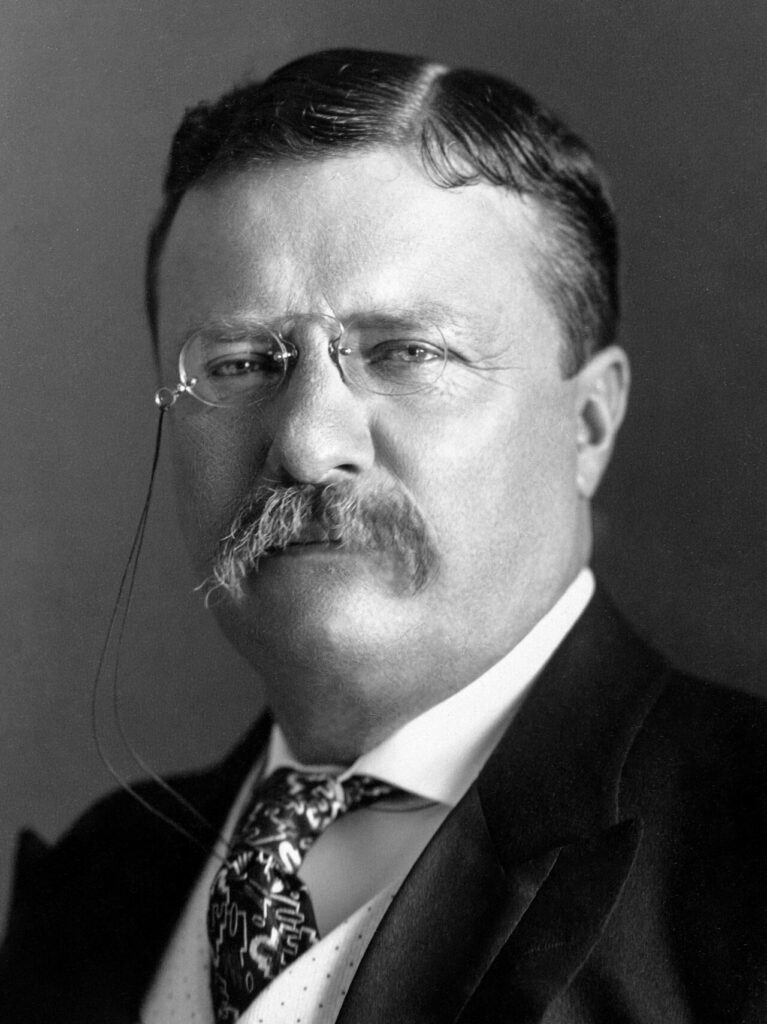
People don’t care how much you know until they know how much you care.
Often attributed to Theodore Roosevelt; the earliest known version is from 1959
Where this line comes from
Quote Investigator found no evidence that Theodore Roosevelt said it. The earliest known match is a 1959 commencement remark by Margaret Tyson, Dean of the University of Virginia School of Nursing. Whoever said it first, it is the heart of discovery work.
Try it: Four Fabulous Questions
Practice tool
Four Fabulous Questions
Turn the question in your head into an open one that gets people talking, then warm up with the eight game topics. Nothing you type leaves your browser.
1. Question Upgrader
Or tap an example:
2. Practice round
Pick a number from 1 to 8, or roll for one.
My question bank
Four Fabulous Questions: my open-ended questions
Questions you add show up here.
Go deeper
Back to all Executive Education topics · Next: Psychological Safety
Part of Executive Education from the Human Centered Lab: workshops Jules Morris, PhD and Lane Morris, PhD lead for working professionals.
Frequently asked questions
What is human-centered design?
Human-centered design is a creative approach to problem solving that starts with the people you are designing for and ends with solutions tailored to their needs. It moves through inspiration, ideation and implementation. Good HCD ideas sit where desirability, feasibility and viability overlap.
What is the difference between design thinking and human-centered design?
The two terms are often used interchangeably. Both are creative, iterative ways of solving problems that alternate between opening up options and narrowing them down. Human-centered design puts extra emphasis on starting with deep empathy for the specific people you serve.
How does human-centered design work with Lean or Six Sigma?
They complement each other. Lean and Six Sigma are strong on measuring current states and fixing process inefficiencies, which delivers ease and effectiveness. HCD adds emotion: it uncovers root causes, needs and the experience people want, and Lean can then architect the backstage to deliver it.
What is the difference between empathy and sympathy?
Sympathy means feeling what another person feels about their situation. Empathy means understanding their experience from their frame of reference without judging, and communicating that understanding back to them, without losing yourself. Compassion goes one step further: it is empathy in action.
How do you ask good open-ended questions in a user interview?
Start with “how,” “what,” “tell me about a time when” or “walk me through,” instead of words like “do,” “is” or “would” that invite a yes or no. Ask one question at a time, keep your opinion out of it, and ask people to show you rather than tell you. Then build on their answer with follow-ups like “What does ‘fine’ mean to you?”