
The big idea
Creativity is not a talent a few people have. It is a skill every leader can practice and a culture every organization can build.
Topic soundtrack
Creativity
A soundtrack to get the ideas flowing.
In 60 seconds
- Creativity means new ideas that are also useful; innovation is putting one of them to work.
- Amabile: it takes expertise, creative thinking and motivation, inside a culture that supports it.
- Creativity is a skill. Teams and leaders can practice it and grow it.
Do this: have one creativity-focused conversation with someone in your organization this week, using the guide below.
How creativity works

Creativity and innovation
Creativity is a skill your organization can build.
It is not a gift a few people are born with. Creativity is something we have and something we do, a process and a product. With practice and the right culture, anyone can grow it.
What is creativity?
New is not enough. It has to be useful.
Novel
A new or original idea or approach.
Useful
It offers real value to someone.
Actionable
It can be put to work.
More from the slides
Creativity is both a noun and a verb. It is something we as individuals have and do, both a process and a product (Amabile). In research and across organizations, definitions range from artistic ability to a set of thinking skills to imagination and inventiveness (Treffinger). Most accepted definitions include newness, but originality alone is not enough. The work must also be useful.
Amabile’s componential theory of creativity
Creativity lives where three things overlap.
Text version of this diagram
- Expertise: what you know, your knowledge and technical skill.
- Creative-thinking skills: how flexibly and imaginatively you approach problems.
- Motivation: why you care, especially intrinsic motivation, the drive that comes from within.
- Creativity happens where all three overlap, inside a work environment that can support or stifle it.
- Amabile: expertise and creative thinking are a person’s raw materials, but motivation determines what people will actually do.
Creativity vs. innovation
Creativity comes first. Innovation is what ships.
Text version of this diagram
- The two words are often used interchangeably, but they are different.
- Creativity is the messy front end: generating many new, useful ideas.
- Innovation is the successful implementation of one of those ideas.
- Organizational growth depends on both: generating novel ideas, then bringing the most promising ones to life.
Four types of creativity
New ideas happen in four ways.
Text version of this diagram
- Combinational: put familiar ideas together in a new way.
- Exploratory: follow curiosity past the edge of what you already know.
- Transformational: assume one of the rules is wrong and explore what becomes possible.
- Team-based collaborative: pieces of the idea live in different people’s heads, and the team connects them.
- In practice, most people use a combination of all four.
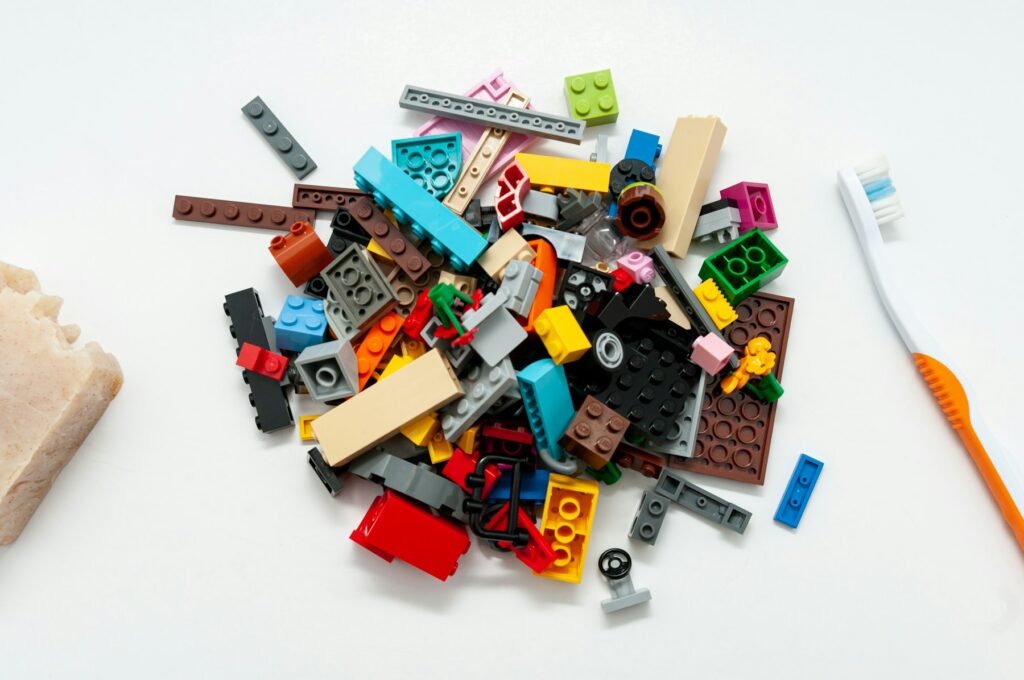
Combinational creativity
The pieces are already in your head.
Old ideas are already stored in your brain. Combinational creativity connects what you know in ways no one has before.
CollectGather as many existing ideas as you can.
IncubateLet them mix in the back of your mind.
TriggerForce a prompt or a new input.
RelaxWalk or shower, and let the connection surface.
Combinational creativity in four steps
Collect, incubate, trigger, relax.
Text version of this diagram
- 1. Collect as many existing ideas as possible.
- 2. Let them incubate in your brain.
- 3. Force a trigger event: a question, a constraint or a new input.
- 4. Do something relaxing, like a shower or a walk, so the combinations can form.

Exploratory creativity
Follow your curiosity past the edge.
The new idea is not in your head yet. What you already know becomes the trailhead, and curiosity for the unexpected, plus a willingness to experiment, takes you somewhere new.

Transformational creativity
What if one of the rules is wrong?
The ruleEveryone “knew” carbon formed sheets and chains.
The flipIn 1985, chemists proposed carbon could also form a hollow sphere, shaped like a geodesic dome.
The payoffThe molecule was named buckminsterfullerene after dome designer Buckminster Fuller. Its discoverers won the 1996 Nobel Prize in Chemistry.
Try itName one rule in your work. Ask what becomes possible if it is not true.

Team-based collaborative creativity
The best ideas live in more than one head.
The other types rely on one brain. In team creativity, old ideas and pieces of the new idea live with different people, and the team builds the combinations. The best results come from a supportive culture and a real mix of perspectives. This is where human-centered design and leadership do their best work.

Warm-up
What can you use this for?
Two minutes. Go for quantity.

A famous creativity story
Kids connect everything.
George Land described a creativity test he developed for NASA in the 1960s and later gave to children. In his account, nearly all five-year-olds scored at the “highly creative” level, and far fewer adults did. Treat it as a story, not settled science, but its point holds: making connections between seemingly unrelated things, called divergent thinking, is critical to creativity.
What causes the decline?
We train creativity out of people.
One right answer
School and industrial work rewarded the single correct answer. Today very few tasks have one.
No practice
Creativity is a skill. Adults rarely practice it on purpose.
Deadline pressure
Financial and market pressure pushes people to take the first idea that comes to mind.
Lip service
An innovation lab or a team name is not a creative culture.
Creative brain power
Synthesizing a new idea is harder than analyzing one.
Creative thinking is more demanding than logical thinking. It draws on more of the brain and asks more of working memory. That is why creativity needs time, space and energy, not just a deadline.
The business case
Creative companies win.
67%
of the most creative companies, measured by Cannes Lions awards, had above-average organic revenue growth. 70% had above-average shareholder returns (McKinsey, 2017).
The business case, continued
CEOs keep saying it, decade after decade.
1,500 CEOs, 2010
IBM’s Global CEO Study: creativity is the most important leadership quality for navigating complexity.
2,000 CEOs, 2025
IBM’s CEO Study: siloed collaboration and aversion to risk are among the top barriers to innovation.
1,000+ employers, 2025
World Economic Forum: creative thinking will keep rising in importance through 2030.
1 in 4 people, 2012
Adobe: only 1 in 4 believe they are living up to their creative potential.
Sources
- McKinsey, “Creativity’s bottom line” (2017)
- IBM Global CEO Study (2010)
- IBM Institute for Business Value CEO Study, with Oxford Economics (2025)
- World Economic Forum, Future of Jobs Report (2025)
- Adobe, State of Create (2012)

Diversity: which came first?
Different voices make better ideas.
Research from McKinsey and others links diverse teams with stronger performance. Teams with a mix of backgrounds, experiences and ways of thinking challenge assumptions and see problems from new angles. More voices in the room make an organization more creative and more adaptive.

Creating a culture of creativity
The right culture makes anyone more creative.
The riskEven naturally creative people get stifled by a culture that does not support it.
The good newsWhen the environment supports creativity, even people who are not naturally creative become more so (Zhou and Hoever, 2014).
The goalA team that builds together what no one could build alone.
Growing the creative culture
A cycle leaders repeat.
Text version of this diagram
- Hire for the right skill sets and mindsets.
- Encourage people to broaden their skills.
- Build empathy for your customers.
- Empower the team and set it up for success.
- Celebrate successes and smart failures.
- Do it all over again. Culture is a habit.
Encouraging creativity in teams
Twelve habits, three moves.
Set the stage
Make it inclusive. Change the room, add music or movement. Give time and space to think. Take creative field trips.
Spark ideas
Brainstorm with ground rules. Build on others’ ideas. Ask open questions about assumptions. Remind people you want ideas.
Keep it going
Listen actively. Compliment and critique meaningfully. Challenge people often. Celebrate the attempts, not just the wins.

Daily creative stretching
Creativity is a muscle.
Schedule itPut creative practice on your calendar.
Get boredLet your mind wander.
Switch timesWork on a project at an unexpected hour.
WalkMovement shakes ideas loose.
StretchTry something outside your creative comfort zone.
Be an idea machineWrite ten ideas a day.

Your challenge
How might we unleash more creativity here?
WhoTwo people in your organization, outside your usual circle.
How long30 to 45 minutes each. In person if you can.
HowOpen questions. Listen more than you talk.
ThenCapture what you learned in the Conversation Guide below.

Until next time
Eat a balanced breakfast.
Feed your creativity the way you feed everything else: every day, with variety.
Try it: Creativity Conversation Guide
Conversation tool
Creativity Conversation Guide
Plan and capture two casual learning conversations about creativity in your organization. Pick your questions, take notes, then copy or print a clean summary.
- 1Pick questions
- 2Listen and capture
- 3Reflect
Conversation 1
Pick 5 or 6 questions
Ask open questions, then follow up: “Tell me more.” “Can you walk me through an example?” Let them do most of the talking.
Your notes stay in this browser tab. Nothing is sent or saved, so copy or print before you close the page.
Go deeper
Back to all Executive Education topics · Previous: Psychological Safety
Part of Executive Education from the Human Centered Lab: workshops Jules Morris, PhD and Lane Morris, PhD lead for working professionals.
Frequently asked questions
What is the difference between creativity and innovation?
Creativity is generating new and useful ideas. Innovation is successfully implementing one of those ideas. Creativity comes first and is the messy front end; innovation is what actually ships.
What is Amabile’s componential theory of creativity?
Teresa Amabile’s model says creativity comes from three components that overlap: expertise, creative-thinking skills and intrinsic motivation, all shaped by the work environment. Expertise and thinking skills are the raw materials, but motivation decides what people actually do.
What are the types of creativity?
Margaret Boden describes combinational creativity (combining familiar ideas), exploratory creativity (exploring beyond what you know) and transformational creativity (changing the rules). Team-based collaborative creativity adds a fourth way, where pieces of an idea live in different people and the team connects them.
Can creativity be learned?
Yes. Creativity is a skill that improves with practice and a supportive culture. Research by Zhou and Hoever (2014) suggests that when the environment supports creativity, even people who are not naturally creative can become more so.
How can leaders encourage creativity on their teams?
Make it safe to share ideas, brainstorm with ground rules, build on others’ ideas, ask open questions about assumptions, and give people time and space to think. Celebrate smart failures as well as successes, and practice creativity on purpose, not only under deadline.