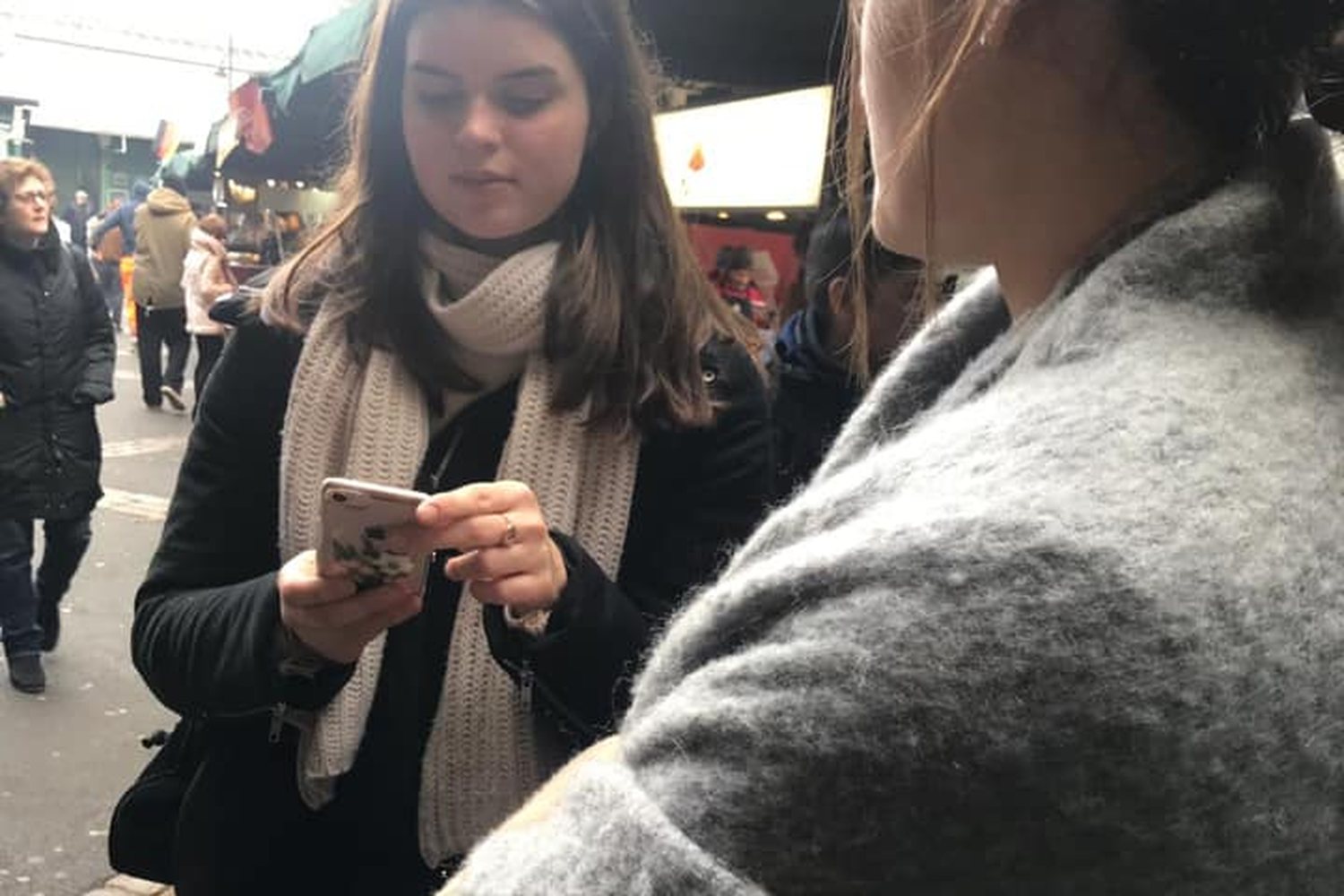
The big idea: People tell you the truth about their experiences when it feels like a conversation, not an interview, so ask for stories, listen with your eyes and follow what surprises you.
In 60 seconds
- Casual conversations feel less threatening than interviews, so people tell richer stories.
- Use all five question types, with most of your time on discovery and behavior questions that start with Tell, Explain, Describe or Walk me through.
- After each conversation, sort notes into Says, Thinks, Does, Feels and Goals, and look for contradictions and work-arounds.
Do this: run each of your 10+ solid interviews as a casual learning conversation and debrief it into an empathy map with goals within a day.
How casual learning conversations work
Generative research aims to understand the people you design for as humans, not as users of a product. A casual learning conversation is how you get there: a relaxed, purposeful exchange that invites people to tell stories about their experiences, so you learn their motivations, goals, needs and pain points, inside and outside the thing you might design.
The human elicitation continuum
Getting people to share their experience is both an art and a science. The way you ask sits somewhere on this line, and people open up more the further right you go.
Interrogation
One side demands answers. People defend themselves and say as little as possible.
Feels: threatening.
Debriefing
A structured recap of an event. Useful for facts, but focused on what happened, not why.
Feels: formal.
Interviewing
Planned questions with the researcher in charge. Better, but it can still feel like a test.
Feels: polite.
Conversation
A purposeful exchange of information. Both people talk, and stories come out on their own.
Casual + conversation: less threatening.
Questions unlock the story
Good questions reveal how people think about their experiences and what they intend: the why. Curiosity and caring probes (“Tell me more about that.” “What happened next?”) uncover the parts of the story that matter.
TEDW: openers that get stories
Tell me about… or Talk me through the last time you… Explain… Describe what happened… Walk me through how you… Each one asks for a story instead of a verdict.
Five types of questions
A strong conversation guide uses all five. Screening comes first. Discovery and behavior questions do most of the work in generative research. Solution and opinion questions round it out.
1. Screening
Demographics, role-based and user-based. Makes sure you are talking with the right people before the conversation begins.
Example: “Have you used [service] in the past 6 months?”
2. Solution
Experiences with a product, service, space or process. Learn the current set of solutions people use, and what is and is not working.
Example: “What job did you hire this solution to do?”
3. Discovery
Background, context, pain points and gains (motivations). Reveals the why behind behavior and sets up deeper exploration.
Example: “Can you describe the last time you faced [challenge]?”
4. Behavior
Past experiences, workflow and processes, decision-making and tasks. Focuses on what people actually do, not what they say they do.
Example: “Walk me through how you last used [solution].”
5. Opinion and preference
Satisfaction, feedback, reactions, intentions and comparisons. Subjective, but needed to understand satisfaction and what to improve.
Example: “If you could change one thing about [solution], what would it be?”
Put them in order
Screen, then discovery and behavior, then solution, then opinion. Save opinions about a new idea for prototype feedback in Part D.
Why: stories first, judgments last.
The question bank
From the Class 3 slides, taught by Lane Morris, PhD and Jules Morris, PhD. Swap the words in brackets for your challenge, then make each one sound like you.
Screening questionsRole-based and user-based, 8 questions
Demographics and role-based
- What is your role, and what are your main responsibilities at your organization?
- How many years of experience do you have in [industry]?
- What is the size of your team or organization?
- What industry do you work in?
User-based
- Have you used [product, service, space or process] in the past 6 months?
- How often do you use [it] in your daily work?
- Have you made a purchase in this [category] recently?
- What tools do you currently use to [reach a specific goal]?
Solution questionsExperiences with a product, service or space, 7 questions
- What job did you hire this solution to address or fix?
- How often do you use [solution or feature], and what prompts you to use it?
- Show me how you found [information] the last time you needed it.
- How does [solution] fit into your typical [workflow or process]?
- What other tools do you use alongside [solution] for [task]?
- What do you typically do right before and after using [feature]?
- What do you do in [solution] versus [competing solution] when working on [task]?
Discovery questionsBackground, pain points and gains, 12 questions
Background and context
- Can you tell me about your typical day at work?
- Describe for me what things look like when you are [doing a specific task].
- How is [solution or topic] relevant to your daily life?
Pain points (difficult challenges)
- Can you describe the last time you faced [a specific challenge]?
- What is the biggest pain point or frustration you experience with [current solution]?
- Can you describe a recent challenge you faced with [topic]?
Gains (motivations)
- What were you hoping to accomplish when you [specific action]?
- Why is [solving this problem] important to you?
- What does success look like for you in this situation?
- What made you start looking for a solution like this?
- How would solving this challenge change your daily routine?
- What happens if you cannot solve this challenge?
Behavior questionsPast experiences, workflow, decisions and tasks, 20 questions
Past experiences
- Can you walk me through how you last used [solution]?
- Describe the steps you took to complete [task] last time.
- What is the first thing you do when you are trying to solve the challenge?
- Can you show me how you typically find your way through [platform or place]?
Workflow and process
- How do you currently go about [problem or task]?
- How much time do you usually spend on [activity]?
- What steps do you follow when you work toward [goal or task]?
- Walk me through your typical process for completing [task].
Decision-making
- When you are deciding on [product or service], what factors matter most?
- How do you usually research solutions for [challenge]?
- What influences your choice between different options?
- Can you describe how you made your last [relevant decision]?
- Describe your typical decision-making process in [different scenarios].
- Who else do you consult before making this type of decision?
- What is your typical timeline for making this kind of choice?
- What is your role in decisions about [relevant purchases or tools]?
Tasks
- What is the first thing you do when you run into [specific problem]?
- How do you know when [task] is complete?
- What do you do when [the normal process] does not work?
- How do you prepare before starting [complex task]?
Opinion and preference questionsSatisfaction, feedback, emotions, intentions and comparisons, 22 questions
Satisfaction and preference
- What is your first impression of [product, feature or design]?
- How would you rate your experience with [solution] on a scale of 1 to 10? Why?
- How does [solution] compare to other solutions you have used?
- What is most appealing about this solution’s approach?
Improvement and feedback
- If you could change one thing about [solution], what would it be?
- What is missing from this that you expected to see?
- What would make this more useful for your needs?
- What might prevent you from using this regularly?
Emotional response
- How did you feel as you went through [process]?
- Was there anything that felt confusing or frustrating?
- What part of the experience felt smooth or satisfying?
- What emotions come to mind when you think about [experience]?
Future intent and recommendation (best for prototype feedback in Part D)
- Can you see yourself using this in your daily routine?
- Would you recommend this to a colleague? Why or why not?
- What would convince you to switch from your current solution?
- How likely are you to keep using this after today?
- What would need to change for this to become essential for you?
Comparisons
- How does this compare to your current solution?
- What does this do better than other options you have tried?
- What features are you missing that other tools provide?
- How does the learning curve compare to similar products?
- What would make this a clear winner over the alternatives?
Listening for the story
Questions open the door. Listening is the work. Life is a continuous series of experiences, so in every conversation you are in pursuit of a story, and you listen with your eyes as well as your ears.
The pursuit of a story: what you are hunting for
Dreams
Pictures of an ideal future. What would “great” look like to them?
Insights
A deep understanding of something, the “a-ha” moment that changes how you see the problem.
Needs and wants
What is desirable to them, including latent needs they have not put into words. This is need-finding.
Gaps
Shortcomings, deficiencies and design flaws in what exists today.
Thorny or wicked problems
Tangled problems with many causes and no single right answer.
Pain points and bug lists
Fears, frustrations, anxieties and disappointments, large and small.
Contradictions
Things that do not make sense, like a person who says one thing and does another. Follow them.
What to look and listen for
Keep this list in your pocket during a conversation. When you notice one of these, slow down and ask a follow-up.
Feelings and puzzles
- Surprises, delights and disappointments. Moments that stand out for them.
- Frustrations, pinches and bug lists. Small daily irritations add up.
- Challenges or mountains. What feels hard or too big.
- Confusions. Unsolved mysteries they still wonder about.
- Contradictions and opposites. Where words and actions disagree.
- Exceptions to the rule. “Usually… except when…”
- Things missing. What they expected and did not find.
- Scavenger hunts. Things that are hard to find.
Stories and patterns
- Tell me a time. Specific stories beat general opinions.
- Give me examples. Ask for one whenever an answer is abstract.
- Sequences and journey maps. The steps, in order, and where they stall.
- Work-arounds. Hacks people invented point to unmet needs.
- Comparisons. “It is better than… worse than…”
- Metaphors and similes. “It is like…” reveals how it feels.
- Speculations, guesses and the crystal ball. What they think will happen.
- Observations and witnesses. What they saw others do.
- Explorations. Mining deeper on one thread.
- Quotes, patterns, ideas and insights. What you will carry back to your team.
EMPATHY: listen with your eyes
Much of what people feel comes through without words. This acronym, used on the Class 3 slides, was developed by physician Helen Riess to help clinicians read and show empathy (Riess and Kraft-Todd, 2014). The descriptions are our own.
| Letter | Cue | What to notice |
|---|---|---|
| E | Eye contact | Where they look when they talk about the hard part. Keep your own eye contact natural and friendly. |
| M | Muscles of facial expression | Smiles, frowns and tension that match or contradict their words. |
| P | Posture | Leaning in or away, sitting or standing, and shifts when the topic changes. |
| A | Affect | The overall emotion that comes through: flat, animated, anxious, relieved. |
| T | Tone of voice | Pace, volume and pitch. Notice where the voice speeds up or drops. |
| H | Hearing the whole person | The context and feelings behind the answer, not just the answer to your question. |
| Y | Your response | How you react. Stay curious and neutral, and notice your own judgment before it shows. |
The empathy map, with goals
After each conversation, sort what you captured into five areas. The fifth, Goals, keeps the map pointed at what this person is trying to accomplish.
Says
Their exact words, in quotes. One quote per sticky note.
Thinks
What they seem to believe or worry about. You infer it, so mark it as your read.
Does
Actions you saw or they described: steps, habits and work-arounds.
Feels
Emotions, supported by words and EMPATHY cues.
Goals
What they are trying to get done or to feel. Start each goal with a verb (“Leave knowing nothing was missed”), not a noun (“better handoff”). Verbs keep you focused on the person, and they set up need statements later.
The four-area empathy map and how to download learnings were covered in London: Synthesis: From Stories to Insights (IB 407).
ACV laddering: from features to valuesMeans-end chain theory in three rungs
Attributes (what?)
Characteristics a person assigns to a product, service or experience.
Consequences (how?)
The benefits they get from those attributes: functional, social and emotional.
Values (why?)
The motive or belief behind it, often unconscious (latent), that drives behavior.
People usually start with a feature. Ask what it does for them, then why that matters. A made-up example from a small plant:
- “I like the paper checklist.” (attribute)
- “Why that one?” “I can check things off as I go.” (functional consequence)
- “What does checking off give you?” “My lead can see I did not skip anything.” (social consequence)
- “Why does that matter?” “I want them to trust me on my own.” (value)
The insight is about trust and independence, not paper. Vary your wording (“What makes that matter?” “How come?”) so laddering feels like curiosity, not a drill.
The shape of a conversationFrom the d.school Empathy Field Guide, your Class 3 reading
The Stanford d.school’s Empathy Field Guide (Hasso Plattner Institute of Design, 2013) treats an empathy conversation as an arc. In short, and in our words:
- Introduce yourself and the project. Simple, friendly and clear about why you are there.
- Build rapport. Easy questions about their day or role.
- Evoke stories. The first time, the last time, the best or worst time.
- Explore emotions. “How did that feel?” “What was going through your mind?”
- Question statements. Gently probe what they said: “You said it was easy. What made it easy?”
- Thank and wrap up. Ask what you should have asked and who else you should talk to.
The guide also urges you to ask why even when you think you know, to welcome silence, and to stay neutral. Full text on Canvas.
Build a cross-disciplinary interview teamUnexpected solutions need an unexpected team
You will not reach unexpected solutions with an expected team. Diversity rules in a good design team. Smith GLS teams mix finance, accounting, supply chain, HR, analytics, economics, marketing and international business majors on purpose. Use that range in the field:
- The supply chain major notices the hand-offs and waiting.
- The accounting or finance major notices where money and time leak.
- The HR or management major notices roles, training and who has power.
- Rotate roles each conversation: one person leads, one takes notes, one watches EMPATHY cues.
For the empathy continuum and AEIOU observation, refresh Empathy Fieldwork and Observation (IB 407).
Try it: Empathy Map Debrief
Tool · BUAD 317
Empathy Map Debrief
Turn the notes from one casual learning conversation into an empathy map with goals, and find the follow-up to ask next.
- 1Log notes
- 2Map
- 3Probe
Ask next
All checks
Put it to work: your 10+ solid interviews (Deliverable #3 Part A)
Casual learning conversations are how your interview team earns Deliverable #3 Part A: 10+ solid interviews per team, gathered out of class in Classes 5 to 7, downloaded on sticky notes with photos, and ready to present at the start of Class 8. Part A is graded on Empathy and Interpret, and the Empathy half rewards exactly what this page teaches.
From first hello to sticky notes in six steps
Build one team guide
Merge everyone’s Deliverable #2 questions. Keep the best of each type: one or two screening questions, then discovery and behavior, then solution and opinion.
Your deliverable: a one-page conversation guide your whole interview team uses.
Open casually
Go where the experience happens. Introduce yourself, explain the project in one sentence and ask for consent to take notes and a photo.
Your deliverable: consent noted for every person in your interviewee log.
Pursue the story
Use TEDW openers, then follow what you hear: surprises, work-arounds, contradictions, metaphors. Ladder from features to values when it fits.
Your deliverable: exact quotes and observations, not summaries.
Watch the EMPATHY cues
One teammate leads, one takes notes, one watches eye contact, face, posture, affect and tone.
Your deliverable: Feels notes backed by what you saw and heard.
Debrief within a day
One idea per sticky note. Sort into Says, Thinks, Does, Feels and Goals with the Empathy Map Debrief, and write the follow-up you would ask next.
Your deliverable: an empathy map with goals for each interview.
Bring the stories to Class 8
Put each interviewee’s name or role at the top of a board, add photos and the stickies, and look for a-ha moments and patterns before class.
Your deliverable: Part A: 10+ solid interviews on sticky notes with photos, ready to present at the start of Class 8.
What the Empathy rubric looks forFrom non-obvious to full-spectrum insights
| Level | What the team shows |
|---|---|
| Strongest | A full spectrum of human-centered insights. Rich descriptions, a variety of surprising insights and deep needs. You understand people and the system they operate in, and can think like them. |
| Meets expectations | Deeper insights. Human emotion, physical needs, surprises or needs come through in your descriptions. |
| Developing | Some non-obvious insights, but limited description, few surprises and few needs. |
| Beginning | Shows that other people experience things, with little description and little comfort eliciting information from people unlike yourselves. |
“Solid” means a real conversation with a story in it, not a 90-second poll. The rubric’s language comes from the BUAD 317 syllabus.
Example: three notes from one conversationA made-up talk with a night-shift nurse
- Says: “Our handoff sheet is fine, I use it every time.”
- Does: never opened the sheet in the 12 minutes we watched. Wrote room numbers on her glove instead. (Contradiction, work-around)
- Goals: leave knowing nothing urgent was lost between shifts.
Follow-up she answered next time: “Tell me about a time the sheet did not catch something.” That story, about a missed 7:30 medication, became the team’s strongest insight.
Do this, not thatConversation habits that get stories
Do this
- Ask about specific past moments.
- Let silence sit. The best part often comes after a pause.
- Ask why, even when you think you know.
- Write exact words in quotes.
- Talk with people unlike you.
Not that
- Reading your guide like a survey.
- Pitching your idea or asking if they would use it.
- Finishing people’s sentences.
- Summarizing what they “basically” said.
- Stopping at the first answer.
Before Class 8A checklist for your interview team
- [ ] We have 10 or more solid conversations, each with a story in it.
- [ ] Our conversations include mainstreams, extremes and insiders.
- [ ] Every interview is downloaded on sticky notes, one idea per note.
- [ ] Says notes use exact words in quotes.
- [ ] Each interview has Goals stated with verbs.
- [ ] We tagged surprises, work-arounds and contradictions.
- [ ] Photos are included, taken with permission.
- [ ] We can tell each interviewee’s story to the class.
Go deeper
Back to all BUAD 317 topics · Next: AI-Generated Interview Questions
In-class team activity · 25 min
Story Hunt Relay
By the end: One real casual learning conversation per team, observed for EMPATHY cues and story signals, turned into an empathy map with goals and a stronger follow-up question for your Part A interviews. Your instructor will give you the password in class.
Part of BUAD 317, taught by Lane Morris, PhD and Jules Morris, PhD, in the Smith GLS human-centered leadership program, toward the Human Centered Consulting Certificate.
Frequently asked questions
What is a casual learning conversation?
A casual learning conversation is a relaxed but purposeful exchange that invites a person to tell stories about their experiences. It sits at the far end of the elicitation continuum, past interrogation, debriefing and formal interviewing. Because it feels less threatening, people share more about their motivations, goals, needs and pain points, which is what generative research is trying to understand.
What are the five types of interview questions?
Screening questions check you are talking with the right person. Solution questions explore the products, services or spaces people use now. Discovery questions uncover background, pain points and motivations. Behavior questions focus on what people actually do, step by step. Opinion and preference questions capture satisfaction, reactions and comparisons. In generative research, spend most of your time on discovery and behavior.
What does TEDW stand for?
TEDW is a set of openers that invite stories instead of short answers: Tell me about (or Talk me through), Explain, Describe and Walk me through. For example, "Walk me through the last time you picked up a prescription" gets a sequence of real steps, feelings and work-arounds, while "Was picking it up easy?" usually gets one word.
What does the EMPATHY acronym stand for?
EMPATHY is a reminder of nonverbal cues: Eye contact, Muscles of facial expression, Posture, Affect, Tone of voice, Hearing the whole person and Your response. Physician Helen Riess developed it to help clinicians read and show empathy. In a casual learning conversation it helps you notice feelings people do not say out loud, and keep your own reactions neutral.
Why add Goals to an empathy map?
The classic empathy map has four areas: Says, Thinks, Does and Feels. Adding Goals keeps your team focused on what the person is trying to accomplish or feel. Write each goal with a verb, such as "leave knowing nothing was missed," not a noun like "better handoff." Verb-based goals lead naturally to need statements and How Might We questions later.