The big idea: An insight is not data, an observation or a wish: it is a human truth that explains why people act as they do, and finding one is what turns a pile of interview notes into a question worth designing for.
In 60 seconds
- Synthesis moves notes from learnings to themes to insights to How Might We questions to ideas.
- An insight is not data, an observation or a wish. It explains why people act the way they do.
- Write it in three sentences: the situation, the dilemma and the ideal end state.
Do this: turn your interview notes into named themes and at least two three-sentence insights for Interpret/Define.
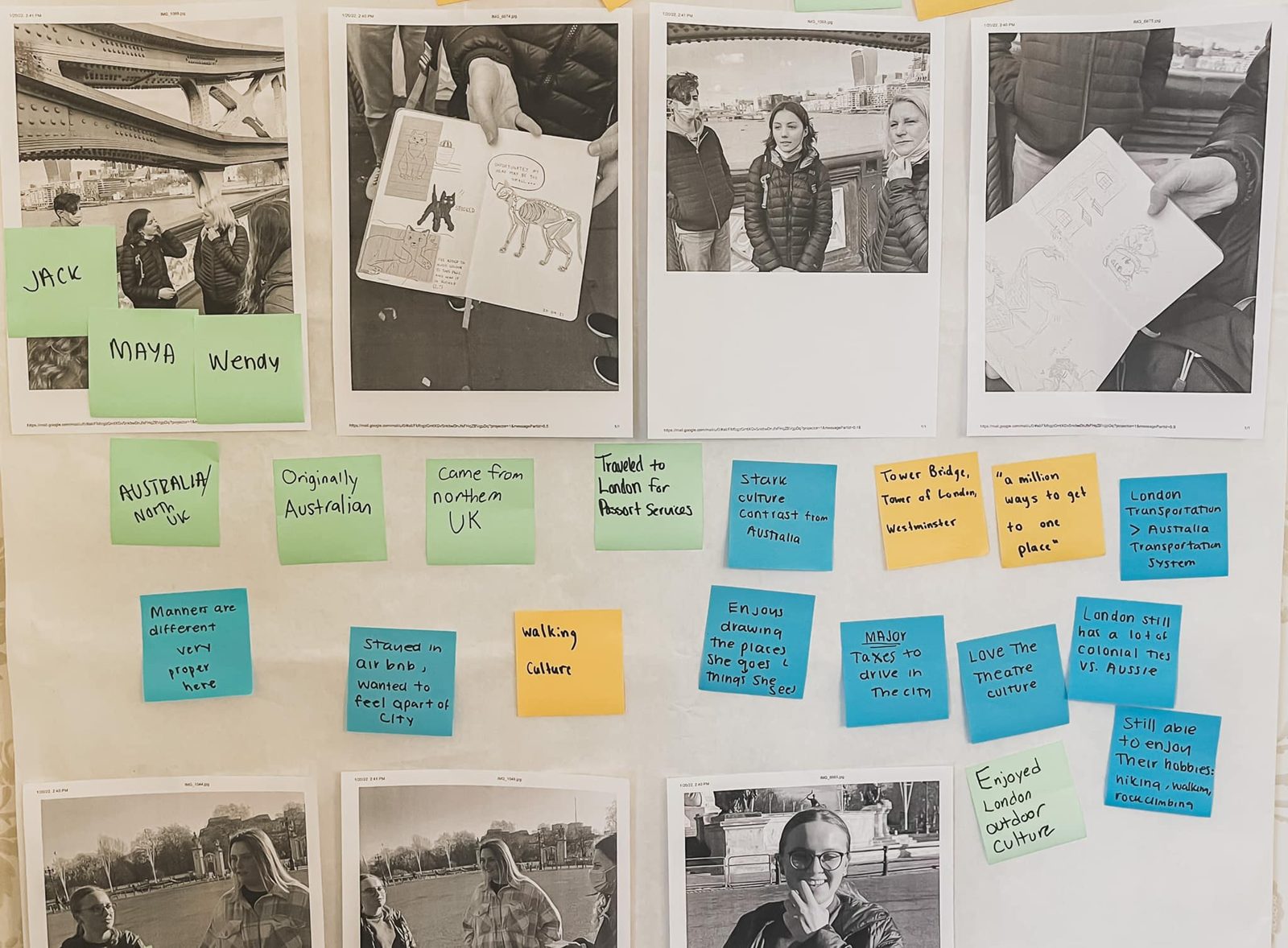
How synthesis works
Synthesis is making sense of what you saw and heard so you can find where to design. It starts fuzzy and gets clearer as your team talks, sorts and argues. You move your notes through five forms.
Learnings
One fact, quote or observation per sticky.
Example: “A dad checks the Tube map at every single stop.”
Themes
A name for a cluster of related learnings.
Example: “Plans that break.”
Insights
The human truth that explains the theme.
Example: visitors fear wasting a trip they saved for.
How Might We
The insight turned into an open question.
Example: HMW make a broken plan still feel like a good day?
Ideas
Many answers to the question, practical to wild.
Example: “plan B” walks that start at any station.
The three steps of synthesis (download your learnings, find themes and insights, craft How Might We questions) are adapted from IDEO’s Field Guide to Human-Centered Design, in our own words.
An insight is not
- Data. “Most visitors use their phones” says how many, not why.
- An observation. “The Tube is confusing” says what happened, with no reason behind it.
- A wish. “They want a better app” is a request, and often a solution in disguise.
An insight is
- A human truth. It explains why people act the way they do.
- A new way of seeing. It makes you question how things are done now.
- A look at motivation. It names what drives people, including what they feel but do not say.
The three-sentence insight statement
1. The situation
What the person does now, and what they are trying to achieve.
Principle: Context.
2. The dilemma
What gets in the way, why it happens, and how it makes them feel.
Principles: Dilemma, Why, Motivation.
3. The ideal
The good experience they want, in their terms. An end state, not a product.
Principle: Envision the ideal.
You know you have an insight when
Someone like your user would say “you understand me.” It challenges how things are done now. It points at a real problem. It gives you a clear person to design for and a clear next step. Your team gets more excited, not less, when you read it aloud.
Step 1: Download your learningsFacts first, one per sticky, about 20 minutes
- Grab sticky notes and a marker. Write the person’s name (and a quick sketch of them and their setting) at the top of a sheet.
- Everyone writes quietly for two or three minutes. One quote or observation per sticky, big enough to read from across the table.
- Stick to what you saw and heard. Save interpretation for later. “She photographed every page” is a learning. “She is anxious” is a guess.
- Read each sticky aloud as you post it, and tell the story behind it.
- If you talked to many people, decide who to share first and how long each gets.
The empathy mapSort one person’s learnings into four squares, plus pains and gains
Put the person in the middle. Sort your stickies around them. Gaps show you what you still do not know.
| Square | What goes there |
|---|---|
| Says | Direct quotes. What they told you out loud. |
| Does | What you watched them do, including workarounds. |
| Thinks | What they seem to believe or worry about but may not say. |
| Feels | The emotions you noticed: in their face, voice or choices. |
| Pains | Fears, frustrations and obstacles. |
| Gains | What they want, how they measure success, and the openings you see. |
Look hardest where the squares disagree. A visitor who says “we’re relaxed” but checks the time every five minutes is showing you a tension, and tensions lead to insights. The version in your slides also asks what the person sees and hears around them.
Unpacking storiesQuestions to ask about each interview
- What stood out to us?
- Why does it matter for our design challenge?
- What does it tell us about this person? What do they care about and believe?
- What does this moment mean? Why did it stick with us?
- What other situations does it remind us of, and why?
- How does it help us see the challenge in a new way?
Step 2: Find themesCluster, name, argue, repeat
- Remind yourselves of the design challenge.
- Move the most compelling, common and surprising stickies to a new board.
- Group them. Keep moving them around and talking until everyone agrees the clusters are real opportunities.
- Name each cluster on a different color or bigger sticky, placed above it. Watch for unmet needs, barriers and unusual workarounds that help.
- Write what is important about each theme next to it. Those notes become your insights.
Not every sticky fits. Something you heard only once can still deserve its own theme if it surprised you.
The five principles of an insightWhat each one asks, with the London example
| Principle | Ask | Example |
|---|---|---|
| Context | What do they do, think and feel, and what are they trying to achieve? | They plan every hour of the trip on their phones. |
| Dilemma | What blocks them? Where is the tension or discomfort? | The plan falls apart by lunch. |
| Why | What explains the behavior? What unmet need drives it? | Queues and Tube changes take longer than expected. |
| Motivation | What do they want to change, and what need is unfulfilled? | They do not want to waste a trip they saved for. |
| Envision the ideal | What does the good experience look like to them? | The day feels well spent, whatever they saw. |
Then write it as three sentences in the builder below. Your insight also becomes the “because” in a need statement.
Try it: Insight Statement Builder
Tool · IB 407
Insight Statement Builder
Write an insight in three sentences, test it against the five principles, and get the How Might We it points to.
- 1Write
- 2Check
- 3Share
Your insight statement
The How Might We it implies
All checks
Go broader: ask “why does that matter to them?” Go narrower: ask “what is stopping them?”
Put it to work: insights for Interpret/Define
Insights are what the Interpret/Define grade (40 points) rewards. Top teams synthesize several deep insights from non-obvious sources and reframe the challenge around a user. Teams that only pick one obvious problem score lowest.
From interviews to insights in five steps
Download every interview
One sheet per person, one fact per sticky, read aloud. About 20 minutes.
Your deliverable: a photo of each person’s sheet.
Map your most surprising person
Build an empathy map for the person who surprised you most. Circle where says and does disagree.
Your deliverable: one empathy map with pains and gains.
Cluster and name themes
Move the strongest stickies to a new board, group them and name each group.
Your deliverable: a photo of your theme board with every cluster named.
Write three to five insights
One per strong theme, in three sentences. Run each through the Insight Statement Builder.
Your deliverable: three to five insight statements with field evidence under each.
Pick the strongest and ask HMW
Choose one to three insights that pass the gut check. Turn each into How Might We questions.
Your deliverable: your insights and HMWs for the Interpret/Define submission.
A worked exampleFrom stickies to an HMW at a small accounting firm
For example, a team studying a small accounting firm’s clients at tax time posts these learnings:
- A bakery owner brings a shoebox of receipts in April.
- “I know I should sort these monthly. I just never get to it.”
- She apologizes three times in a 30-minute meeting.
Theme: shame about the shoebox.
Insight: (1) Small business owners save every receipt all year because they want to do things right. (2) But sorting them feels like a test they already failed, so they put it off and arrive embarrassed, which keeps them from asking the questions that could save them money. (3) They want to walk into the meeting feeling on top of their business, not judged.
HMW: How might we help small business owners feel on top of their books all year, not just in April?
Do this, not thatHabits that turn notes into insights
Do this
- Write facts first. Interpret after the download.
- Put one learning on each sticky.
- Look for tension: where what people say and do disagree.
- Back every insight with a quote or observation.
- Keep going until the insight surprises you.
Not that
- Stickies that say “anxious” or “confused” with no fact behind them.
- Calling a statistic or an observation an insight.
- Writing a wish (“they want an app”) as your insight.
- Insights anyone could guess before fieldwork.
- Jumping from one interview to ideas.
Before you submitCheck your synthesis
- [ ] Every interview has its own sheet of learnings, one per sticky.
- [ ] We built at least one empathy map with pains and gains.
- [ ] Every theme cluster has a name.
- [ ] Each insight has three sentences: situation, dilemma, ideal.
- [ ] Each insight has a why and a feeling, and is backed by field evidence.
- [ ] None of our insights is data, an observation or a wish.
- [ ] Our strongest insights became How Might We questions.
Go deeper
Back to all IB 407 topics · Next: Define: How Might We Questions
In-class team activity · 28 min
Data, Wish or Insight?
By the end: Your team's interview notes sorted into named themes, two three-sentence insights that survived another team's critique, and the How Might We your best one implies. Your instructor will give you the password in class.
Part of the Smith GLS human-centered leadership sequence: IB 407, BUAD 317, BUAD 497 and BUAD 417, toward the Human Centered Consulting Certificate.
Frequently asked questions
What is an insight in human-centered design?
An insight is a human truth that explains why people act the way they do. It offers a new way of seeing, makes you question how things are done now, and names what drives people, including what they feel but do not say. An insight is what turns a pile of interview notes into a question worth designing for.
What is the difference between an insight, an observation and data?
Data says how many, such as "most visitors use their phones," but not why. An observation says what happened, such as "the Tube is confusing," with no reason behind it. A wish, like "they want a better app," is often a solution in disguise. An insight goes further: it explains the motivation behind behavior and points to a real problem to design for.
How do you write an insight statement?
Write an insight as three sentences. First, the situation: what the person does now and what they are trying to achieve. Second, the dilemma: what gets in the way, why it happens and how it makes them feel. Third, the ideal: the good experience they want, in their terms, described as an end state rather than a product.
What are the steps of synthesis after design research interviews?
Synthesis has three steps adapted from IDEO's Field Guide to Human-Centered Design: download your learnings, find themes and insights, and craft How Might We questions. Notes move through five forms: learnings, themes, insights, How Might We questions and ideas. Download one fact per sticky, cluster and name themes, then write insights and turn the strongest into HMW questions.
How do you use an empathy map to find insights?
Put one person in the middle and sort their learnings into four squares: says, does, thinks and feels, plus pains and gains. Gaps show what you still do not know. Look hardest where the squares disagree. A visitor who says "we're relaxed" but checks the time every five minutes is showing a tension, and tensions lead to insights.