Jobs to be done is one of my favorite lenses for marketers. The idea is simple: people don’t buy products. They hire them to make progress in a specific situation.
Theodore Levitt said it best: people don’t want a quarter-inch drill, they want a quarter-inch hole. Clayton Christensen made the idea famous with a milkshake. A fast-food chain found that many morning milkshakes were bought by commuters who wanted something to make a long, boring drive more bearable and keep them full until lunch. The competition wasn’t other milkshakes. It was bagels, bananas and boredom.
If you can figure out the job, the rest of the strategy and creative becomes much easier to build.
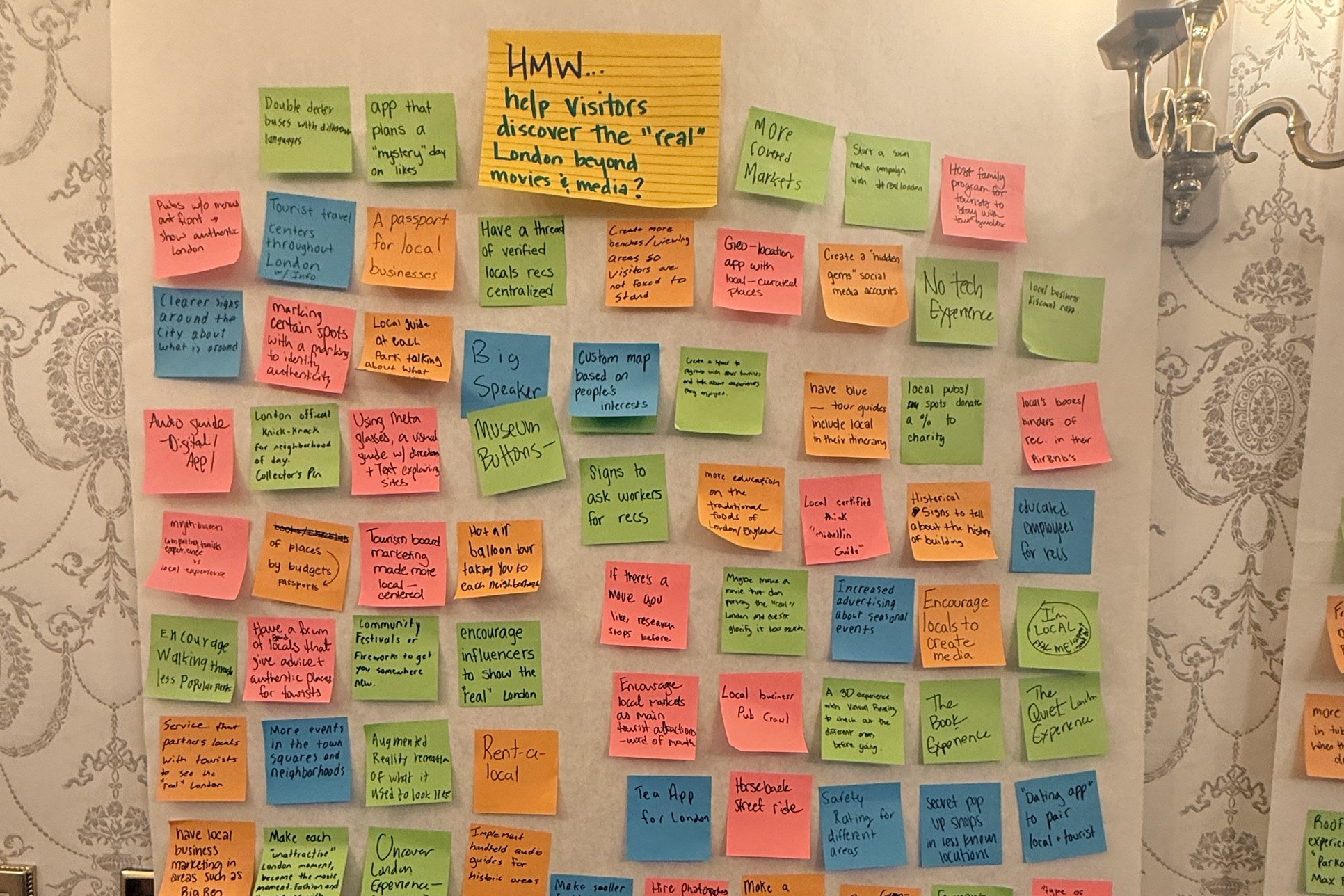
The sticky notes in the photo come from a design session with my students in London. The prompt: how might we help visitors discover the “real” London beyond movies and media? Under that question sits a job. Visitors aren’t hiring a tour or an app. They’re hiring something that helps them feel they experienced the real place, not the postcard. Name that job and the best ideas on the wall jump out.
Why the job makes everything easier
- Your audience gets sharper. You define people by their situation, not only their age or income.
- Your competition gets real. You see everything they could hire instead, including doing nothing.
- Your message writes itself. You talk about the progress they want, not your features.
- Your creative has a scene. You know the moment to show: the commute, the late weeknight, the first day on the job.
- Your metrics make sense. You measure whether the job got done, not just whether people clicked.
Write the job statement
When [situation], I want to [motivation], so I can [outcome].
The job statement
Example: When I get home late on a weeknight, I want dinner on the table in 20 minutes, so I can still feel like I fed my family something real. That one sentence tells you who to target, when to reach them, what to promise and what to show.
Every job has three layers. The functional job is the task. The emotional job is how they want to feel. The social job is how they want to be seen. The best brands answer all three.
Try it on your client
- Talk to three to five real customers about the last time they bought. Ask what was going on that day.
- Ask what they used before, what almost stopped them, and what they would do if your client disappeared.
- Write one job statement. Then check your personas, messaging and creative against it.
Pair this with Personas and Audience Journeys and Strategy Foundations. The job is what makes a persona useful.