The big idea: Strategy starts with who your audience is and what they value, not with which platform is hot. Go where your people already are, in a setting where your message is welcome.
See it in action
SWOT Sorter Lab
Ridgeline Bikes is a local bike shop. Sort each fact into Strengths, Weaknesses, Opportunities or Threats, then turn your sort into a strategy. Ask two questions: does the shop control it, and does it help or hurt?
SStrengths
WWeaknesses
OOpportunities
TThreats
Key concepts
- Channel selection logic: Don’t ask which platform is growing fastest. Ask which one reaches your audience in a context where your message is welcome.
- Instagram: Visual discovery and aspiration. High-quality visuals, Stories and Reels work.
- TikTok: Entertainment first. Short video, trending audio and personality work.
- LinkedIn and email: LinkedIn is professional, so thought leadership and case studies land. Email reaches people who opted in and rewards personalization and a clear offer.
- Search: People arrive with a need and want answers, so content that solves real problems wins.
- Shared values beat discounts: When a brand truly shares its audience’s values and acts on them, the campaign largely writes itself. You can’t fake values.
Real examples
- REI #OptOutside: Closed its stores on Black Friday and paid employees to go outside, winning earned media without paid ads.
Real brands in action
REI: #OptOutside: closed on Black Friday
In 2015 REI closed all 143 stores on Black Friday and paid its 12,000 employees to go outside. It used earned media like news, social sharing and member email, with zero paid ads. There were 1.4 million pledges on day one, more than 150 brands joined, and sales grew.
The lesson: When you know what your audience values, the right channel and message follow.
Learn more: REI
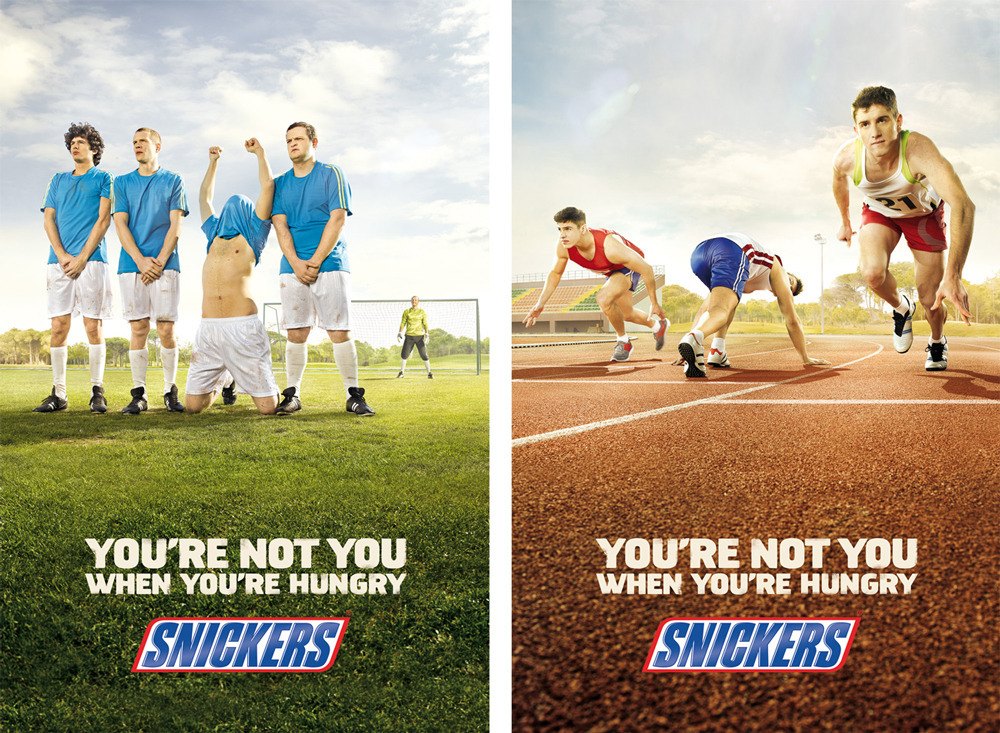
Snickers: Selling the job, not the candy bar
Snickers doesn’t sell peanuts and nougat. It sells the fix for being hangry with ‘You’re Not You When You’re Hungry.’ That’s Jobs to Be Done in action: the ad focuses on the progress the customer wants, not product features.
The lesson: Ask what job your customer is hiring the product to do, then market that.
Image courtesy of Snickers

Cruze Farm: Ice cream, or an experience?
Knoxville’s Cruze Farm isn’t really selling ice cream. Its ‘why’ is joyful, Instagrammable nostalgia: vintage uniforms, red checkered outfits, classic cones and neon signs. That ‘why’ drives its photography, collaborations and content.
The lesson: Once you know the brand’s why, content strategy gets clear and consistent.
Image courtesy of Cruze Farm

Yee-Haw Brewing: Setting a goal you can measure
We used Yee-Haw Brewing to practice SMART goals. A sample goal: increase fall event attendance by 15% in 60 days, tracked with ticket sales and Story swipe-ups. The insight behind it is that millennials hire Yee-Haw for vibes and social connection, not just craft beer.
The lesson: A strong goal is specific and measurable, and it ties back to why people choose you.
Image courtesy of Yee-Haw Brewing
Brand images are shown for educational purposes only. Each image and trademark belongs to the brand credited, and each credit links to that brand.
Frameworks from class
Jobs to Be Done
People don’t buy products. They hire them to make progress in their lives. Focus on the situation the customer is in, not their age or income. The same milkshake can be hired as a filling breakfast on a commute or as a treat for the kids in the afternoon.
- When ___ (the situation): “I’ve got a free Saturday with friends.”
- I want to ___ (the motivation): “Find something adventurous and local to do.”
- So I can ___ (the outcome): “Make memories, post great content, and feel outdoorsy.”
Product-focused vs. progress-focused
Traditional marketing sells features and price: buy this because it’s cheap. Jobs-based marketing sells the progress. Snickers doesn’t talk about peanuts and nougat. It talks about fixing the hangry version of you with “You’re not you when you’re hungry.”
Start with the brand’s why
A brand’s reason for being drives every content choice. Cruze Farm isn’t selling ice cream. It’s selling joyful, photo-ready nostalgia, so vintage uniforms, classic cones and neon signs all follow from that. When you know the why, the content strategy becomes clear and consistent.
SMART goals
Every strategy needs a goal you can check. A SMART goal is Specific, Measurable, Achievable, Relevant and Time-bound. “Increase social engagement” is too vague to plan against. “Increase Instagram Story link taps to our online bean store by 20% by December 15, through daily behind-the-scenes posts” tells the team exactly what to do and how to know it worked.
- Specific: who, what, where
- Measurable: a number you can track
- Achievable: a stretch, not a fantasy
- Relevant: tied to a business objective
- Time-bound: a clear deadline
Class exercise: Jobs-driven strategy sprint
Build a one-page strategy for a local brand in five moves.
- Write one SMART goal for the brand.
- Write the customer’s job: When ___, I want to ___, so I can ___.
- Sketch the audience: age range, key traits, main motivation, and why they would hire this brand.
- Choose two digital channels and explain why each fits the audience and the job.
- Write a one-minute pitch for a single content idea that does the customer’s job.
Try it
Run a channel audit on any brand. List every platform it’s active on. For each, note what it posts, how often and what the audience responds to. Decide whether the channel mix fits the audience, then make one recommendation: a channel to add, drop or do completely differently, and why.
Tips and best practices
- Ask two questions for every SWOT item. Does the brand control it (internal) or not (external)? Does it help or hurt? Those two answers place every fact.
- Write facts, not feelings. “Great customer service” is an opinion. “Repeat customers ask for mechanics by name” is evidence a client will believe.
- Opportunities are outside the brand. A new trend, a law change or a competitor leaving is an opportunity. “We could launch a podcast” is a tactic, so save it for the strategy step.
- Turn the SWOT into moves. Pair the boxes: use strengths to grab opportunities, fix weaknesses that block opportunities, and use strengths to defend against threats. A SWOT with no moves is just a list.
- Start with the audience, then pick channels. Choose channels where your audience already is and where your message is welcome. A growing platform is not a reason by itself.
- Rank and cut. Most SWOTs list too much. Pick the three items per box that matter most for this decision, and say why.
Quick check
Think through your answer, then select a question to reveal one.
What’s the better question than “Which platform is growing fastest?”
Which platform reaches my audience in a setting where my message is welcome?
Why did REI #OptOutside work without paid ads?
It acted on values its audience already held, so people and media shared it for them.
Go deeper
- Marketing Rebellion by Mark Schaefer
View the Strategy Foundations: Goals, Audiences and Channels slides on Gamma