The big idea
People don’t buy products. They buy who they want to be. The brands that win commit to a clear point of view and a voice you’d recognize without seeing the logo.
Topic soundtrack
Tell Me a Story
Every song here tells a story. Notice how fast each one pulls you in.
In 60 seconds
- Brand voice is a set of convictions. If people could not tell who wrote a post without the logo, the voice is not clear yet.
- Voice is the brand’s personality and stays the same everywhere. Tone shifts with the moment.
- A content strategy picks the audience, 2 to 3 pillars, 1 to 2 platforms and 2 to 3 formats, then tells each story with the customer as the hero.
Do this: write a one-page voice guide, pick three content pillars and show each pillar across every channel in your Final Pitch.
Your next steps
Slides

How content strategy and storytelling work
Take control of the story people already tell.
Your audience forms an opinion of a brand every time they search, scroll or see a post, whether you manage it or not. A content strategy is how you take control of that story. It starts with a clear voice.
Brand voice
Voice stays the same. Tone shifts.
Voice or tone? Make your call on each one, then tap to check.
ConfidentConfident, warm or irreverent: voice or tone?
LaunchPlayful in a launch post: voice or tone?
LegalSounding different in a legal disclaimer than on social: voice or tone?
LogoYou know who wrote the post before you see the logo. What is that?
What a voice is made of
Brand voice is a set of convictions: what the brand believes, how it talks about those beliefs, and how it shows up for the humans it serves across every channel.
- Voice is consistent across all channels. It is the brand’s personality: confident, warm or irreverent, for example.
- Tone shifts by context. The same voice sounds different on social media than in a legal disclaimer.
If you can read a post and know who wrote it without seeing the logo, that’s voice. If you can’t, it’s just noise in someone’s feed.
Practice: read three voices
Three brands. Wildly different voices.
Pull up each brand on social, YouTube or its website, then answer the question.
Scrub Daddy
A sponge that became a $209M brand.
What human emotion is it tapping into, and why does that work for a cleaning product?
Duolingo
The owl is unhinged, but it’s not random. There’s a strategy behind the chaos.
What does Duolingo understand about its audience that makes this voice work?
Jack Daniel’s
Slow. Confident. Never tries hard.
What human truth is it selling, and what words would it never say?
Try it: write as the brand
Pick one of these brands. Write one sentence in its voice: not about the brand, but as the brand, speaking directly to the human it’s trying to reach.
The Big 3 questions
Three questions before a single post.
Answer these before you make a single post, for a company, a client or your own personal brand.

See it in the wild
Red Bull answers the Big 3 every time.
Red Bull acts more like a media company than a drink company.
WhoPeople who love extreme sports, speed and adventure.
Feel and doFeel the rush, then link that feeling to the can.
ProofIn 2012, millions watched live as Felix Baumgartner jumped from the edge of space in Red Bull Stratos.
Build a content strategy in four steps
Audience, pillars, platforms, formats.
Quick test: can you describe one content idea that combines a pillar, a platform and a format?
Jordan Lee is an invented marketer, based on the example later in this deck.
Why pillars, and which platforms
- Why pillars: pillars keep a feed focused and make planning faster.
- Platforms, for example: LinkedIn for B2B, Instagram for visual stories, a blog or website for deep dives.
See it in the wild
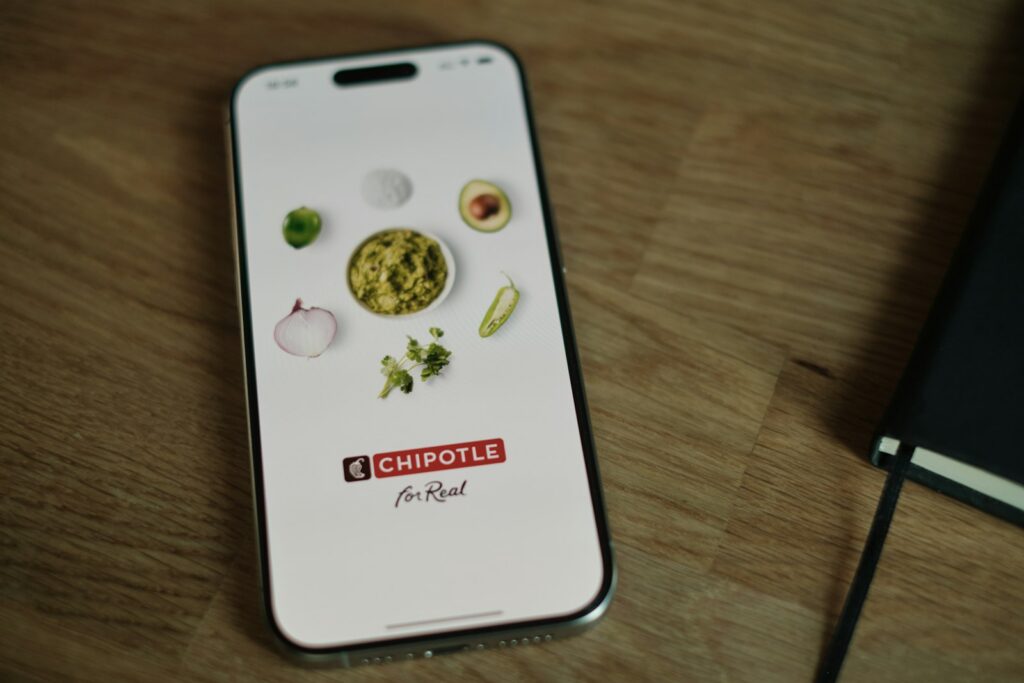
Chipotle built its TikTok on clear pillars.
Chipotle became one of the first big restaurant brands to win on TikTok.
AudienceStudents and young adults who already eat there.
PillarsFan challenges, menu hacks and behind-the-line looks at the food.
ProofIts 2019 #GuacDance challenge became one of the biggest branded challenges on the app.

What strong content does
Strong content does a job and sells a feeling.
- Does a job. It solves the job the customer hires the brand for.
- Sells a feeling. Some brands build content around the feeling their audience wants, so the content becomes the main product.
Two local examples of content that does a job
River Sports Outfitters posts weekend hike videos for people who want adventure. Honeybee Coffee posts finals-week reels for students who need caffeine and a study spot.
Example: Liquid Death
People don’t buy products. They buy who they want to be.
$1.4 billion
Liquid Death launched in 2019 selling canned mountain water, the most boring product imaginable. It treated the water like a heavy metal brand, and by 2024 the company was valued at $1.4 billion.
Why it worked
Its content strategy had nothing to do with water and everything to do with identity. Liquid Death made its audience feel like part of a subculture, not just people buying a drink.
You can’t out-Liquid Death Liquid Death. But you can ask: what would it look like if we committed this hard to a point of view?
Puts story over production value
A clear audience, an unmistakable voice and a real offer can beat a big budget.
Test for a real strategy
Could a stranger write the brand’s next post?
- Commit to a point of view. What would the brand look like if it fully committed to what it believes?
- Machine or voice? A big brand can post constantly and still not sound like anyone. A small brand with a clear voice can feel like a person you know.
- The next-post test. If you could write a brand’s next post without working there, that brand has a strategy.
Try it: Starbucks vs. Honeybee Coffee
Spend two minutes scrolling each brand’s Instagram. Think about the person on the other end of the feed: what are they feeling, needing, expecting?
- Which one has a content strategy? Point to a specific post, pattern or format as evidence.
- What is the other one doing instead of strategy? Is it random, reactive or product-first?
- Could you write Honeybee’s next post without being them? What about Starbucks? If yes for one and not the other, that’s the difference.
Starbucks has a machine. Honeybee has a voice. The question isn’t just which one has a strategy. It’s which one actually knows who it’s talking to.
Quick check
Which of the Big 3 did they skip?
Name the missing question for each brand, then check your answers.
- 1Maple Hollow Candles posts on six platforms every day, and nobody engages anywhere.
- 2Every Ridgeline Gym post ends with “Follow us, shop now, sign up and share with a friend.”
- 3Copper Kettle Bakery says its posts are written “for everyone.”
Check your answers
- Where will you show up? A strong presence on one or two platforms beats a scattered presence everywhere.
- What should they feel or do? Four asks means no ask. Pick one primary action per post.
- Who are you trying to reach? “Everyone” is nobody. Go past demographics to one real person.
Maple Hollow Candles, Ridgeline Gym and Copper Kettle Bakery are invented brands.
Example: a young marketer’s content strategy
The four steps, filled in.
A hypothetical early-career marketer who wants to help people land their first marketing job.
Audience
Recent grads and entry-level professionals (about 22 to 26) trying to stand out and break into marketing.
Content pillars
A standout portfolio. Entry-level skills. The job search.
Platforms
LinkedIn and a personal website.
Formats
Short tips and video mini-lessons. Case studies and templates.
Example: a young marketer’s content strategy: the four steps filled in for an early-career marketer
| Step | Choice |
|---|---|
| Audience | Recent grads and entry-level professionals (about 22 to 26) trying to stand out and break into marketing. They want practical, actionable advice. |
| Content pillars | 1. Building a standout marketing portfolio. 2. Essential entry-level skills such as SEO, social media and content creation. 3. Navigating the job search: resumes, interviews, networking. |
| Platforms | LinkedIn for networking, insights and projects. A personal website for in-depth case studies and work samples. |
| Formats | LinkedIn: short actionable tips, trend analysis, video mini-lessons. Website: campaign breakdowns, personal projects, downloadable templates, curated resource lists. |
Find your unique position
Find the space where only you fit.
Before you pick pillars, figure out where you or your brand can stand apart.
- Problem solver: What 1 to 3 problems do you naturally solve for others?
- Go-to authority: What topics do people consistently come to you for?
- Unique intersection: What mix of skills, passions and experiences could serve a specific audience or fill an unmet need?
- Key differentiator: What makes you genuinely different from others in the field? What is your unique perspective?
- Core purpose: What work truly energizes you and fits your mission?
Find your unique position: five prompts and five pieces of brand-building advice
Brand-building advice
- Passion is common. Endurance is rare. Build around interests you can sustain, not what excites you this week.
- Find your uncontested space. Look for a gap where you can be the go-to expert instead of fighting in a crowded topic.
- Authority, not fame. You do not need millions of followers. You need the right audience for your goals.
- Consistency beats perfection. Regular, useful content builds trust over time.
- Sustainable interest = passion + purpose + what serves others.
Real brands in action
See it in real brands.
Each case study shows these ideas at work. Open one to read the full story.
Red Bull: a media company that happens to sell energy drinks
Red Bull built its content around one feeling, pushing past human limits, and then built its own media company to tell those stories.
The lesson: Own a feeling your audience wants, and build your content around it.
Photo: Ank kumar (CC BY-SA 4.0), via Wikimedia Commons. Brand: Red Bull
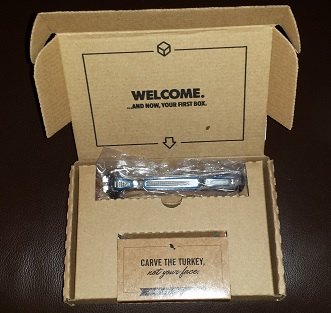
Dollar Shave Club: A $4,500 Video That Outtalked a Category Giant
Dollar Shave Club’s launch video won because it knew exactly who it was talking to and said one clear thing in a real voice, not because it looked expensive.
The lesson: A clear audience and a real voice can beat a big budget.
Photo: Whoisjohngalt (CC BY-SA 3.0), via Wikimedia Commons. Brand: Dollar Shave Club

HubSpot: Old Posts That Doubled Leads
HubSpot found most of its blog leads came from old posts, so it started updating them and more than doubled leads from that content.
The lesson: Check your analytics before you create: your best growth may be hiding in content you already have.
Image courtesy of HubSpot
Brand images are shown for educational purposes only. Each image and trademark belongs to the brand credited.
Hot take
Whose Post Is This?
Take a side on each storytelling take, then check it against the logo test.
Try it
Interactive tool · practice it
Tool · MARK 465
Story Arc Builder
Build a post for Trailhead Outfitters, an outdoor gear store. Choose a hook, a tension and a payoff, then see whether the story lands.
- 1Hook
- 2Tension
- 3Payoff
Pick one line for each part of the arc. The post and the arc update as you go.
Feedback on each part
Do it
Class work for this topic. The in-class activity counts toward participation, and you get feedback on it.
In-class group activity
Hook, Tension, Payoff Remix
Your brand’s voice in three words, a logo test verdict, and one weak post rewritten with a real hook, tension and payoff. A 25-minute group activity. Each case study below has its own group activity too. Dr. Morris gives the password in class.
Put it to work: Final Pitch, Brand Voice and Content Strategy
Brand voice and content strategy are not a separate slide in the Final Pitch, but they show up in almost every section. The rubric rewards strategic coherence: channels that work as a system, not a checklist. A clear voice and a small set of content pillars tie them together. See where this fits in the deck in the Final Pitch Roadmap.
Build it in four steps
Write a one-page voice guide
You do not need a full brand book. Agree on four things as a team so every section of the deck sounds like the same brand. Open “One-page voice guide” below.
Your deliverable: 3 voice words with a “but not,” tone settings, we say / we never say, and tone shifts.
Pick three content pillars
A pillar sits where what your persona wants, fears and searches for overlaps with your client’s real expertise or stories. Test each one: could your client make 20 pieces on it? Does it pass the logo test, so a competitor could not post the same thing?
Your deliverable: three pillars, each tied to your persona.
Run each pillar through every channel
Show how each pillar shows up in SEO and AI search, short-form video, email and community. That table is the clearest proof your strategy is a system. For help, see the SEO and AI Search Optimization guide and Social Media and Short-Form Video.
Your slide: one pillar-by-channel view, with short-form video inside the plan, not a separate idea.
Tell it as a story
Give each pillar and your Bold Recommendation a story shape: the customer is the hero, the tension is their problem, the brand is the guide, the payoff is what changes. Practice hook, tension and payoff in the Story Arc Builder Lab on this page.
Your slide: a Bold Recommendation told as a short story with a clear payoff.
One-page voice guideThe four pieces, with a local coffee roaster example
| Piece | What to write | Example (local coffee roaster) |
|---|---|---|
| 3 voice words | Personality words, each with a “but not” | Warm, but not sappy. Expert, but not snobby. Local, but not small-time. |
| Tone settings | Where the voice sits on four scales: funny to serious, casual to formal, irreverent to respectful, enthusiastic to matter-of-fact | Casual, a little funny, respectful, enthusiastic about coffee |
| We say / we never say | Two or three phrases each | Say: “Pull up a chair.” Never say: “Artisanal craft experience.” |
| Tone shifts | How the same voice changes by moment | Social: playful. Order-problem email: calm and direct. Community: welcoming, asks questions. |
Pillars through every channelA coffee roaster example of three pillars across four channels
| Pillar (coffee roaster example) | SEO and AI search | Short-form video | Community | |
|---|---|---|---|---|
| Better coffee at home | Guide answering “how to make pour over coffee” | 30-second brew tip series | Welcome email with a brew guide | Members share their home setups |
| Where our beans come from | Page on each origin and farm partner | Roaster explains one bean in 45 seconds | New bean launch email | Monthly tasting night |
| Our neighborhood | Local search content: “coffee shop near [area]” | Customer and staff spotlights | Event invites | Members host meetups |
Do this, not thatStorytelling habits that work and the common mistakes
Do this
- Make the customer the hero and the brand the guide. Posts about the customer’s problem get more attention than posts about the company.
- Earn the first line: open with a person, a moment or a surprising detail.
- Show the problem before the solution. A real struggle gives people a reason to keep reading.
- Explain how the brand helped in one concrete line, then give one clear action.
Not that
- Opening with founding years or “we’re excited to announce.”
- A solution with no tension. No tension, no story.
- Voice words like “friendly, professional, authentic” that could describe any brand.
- Each teammate writing sample copy in a different voice, so the deck sounds like several brands.
- Pillars that are just formats (“Reels, blogs, emails”) instead of topics.
- Content ideas the persona would not care about, like company news no one searches for.
- A content plan that lives only on social and never connects to search or email.
Before you submitCheck voice and content across the deck
- [ ] Our team agreed on 3 voice words and wrote what each one does not mean.
- [ ] Our slide copy, sample posts and sample emails all sound like the same brand.
- [ ] Someone could pick out our client’s content without the logo.
- [ ] We chose 3 content pillars grounded in what our persona wants, fears and searches for.
- [ ] Each pillar shows up in SEO, social, email and community, and we showed that in one view.
- [ ] Our content examples make the customer the hero, not the brand.
- [ ] We explained the role of short-form video inside the content plan, not as a separate idea.
- [ ] Our Bold Recommendation is told as a short story with a clear payoff.
Go further
Optional, and worth it. Go past the in-class work: read a case, try the tool and earn this topic’s chip. Finish the chips across the course and you get a marketing funnel card you can post on LinkedIn to show your effort and skills.
Expert advice
Joe Pulizzi on why content marketing needs a trust portfolio
Video, 4 minutes 46 seconds, with captions. Recorded for Dr. Morris’s students.
About Joe Pulizzi
Joe Pulizzi, pronounced pull-it-zee, is an author, entrepreneur, and speaker exploring how to build a more meaningful life and career in a world that keeps pushing people toward the safe and predictable. He founded Content Marketing Institute and The Tilt, co-hosts This Old Marketing with Robert Rose, and is the author of several books, including Content Inc., Epic Content Marketing, and Burn the Playbook.
Read the transcript
Hi class, my name is Joe Pulizzi. I’ve been working in the content marketing field for over 25 years now, it’s hard to believe, and I’ve sort of come to the crossroads of my career. I’ve been talking about this really innovative idea, which was content marketing. In the early 2000s, everything in marketing was really built on advertising and interruption. Then a group of people came along and said, hey, maybe if the brand delivered valuable, relevant information on a consistent basis to its customers and its prospects, maybe that’s better than just interrupting them.
So we were telling brands: create, initially, print magazines and newsletters, and then YouTube shows and podcasts, and just deliver amazing information. If you do that and help your customers get better jobs or live better lives, whatever the case is, then they’ll trust you more. And if they trust you more and you become an expert, somebody important in their lives, they rely on the information and they’ll buy more products and services from you. That’s actually worked really, really well for the past couple of decades. Of course you’ve seen it all on social media, and maybe a lot of you are content creators yourselves, building businesses around it. So it’s been very, very exciting.
And now I’m seeing the rise in synthetic content, AI-generated content. It’s very hard for humans to compete with that kind of information, at least on that scale. Although I still believe in brand-centered content marketing, where it’s coming from the organization, like a magazine, a YouTube channel or a podcast coming from the brand itself, I think it’s risky today. By putting all the content muscle, if you will, just with the organization, I don’t think we’re diversifying our voices enough from a trust standpoint to make an impact.
So I think that old form of content marketing is dying, and this new thing, what I call a trust portfolio, is where we need to be as an organization. If you have a small business with 20 or 30 employees, you focus first on where the trust gaps are. Where do I need to build trust with my customers? Then you look in your organization and say, who is the expert, the advocate, the storyteller that can build a connection with the audience we want to target and build their trust in some way?
Instead of content marketing coming from just one person or the brand itself, we’re going to start trusting our employees as the great marketers they should be, to create podcasts, newsletters, YouTube shows, in-person events, whatever helps. The marketing department helps those people become the experts and becomes sort of a production group, a media center, if you will. That’s marketing’s role now. We give our customers the opportunity to build trust and to see all these amazing trust signals coming from our individual employees. I think that’s the future of marketing, especially in this AI-driven world.
If your major is marketing or business or whatever the relevant area is, I think this is what we’re going to start seeing as we need to combat, in a lot of cases, synthetic content. I’m not saying you shouldn’t use AI. I’m saying if we trust our weird, crazy, human employees, and we know that our customers want to actually interact with humans, that’s where the opportunity is to build trust long-term. That’s the opportunity for marketing in the future.
So again, this is Joe Pulizzi. Dr. Morris, thank you for giving me this opportunity. I hope this has been helpful. If you go to thetilt.com, you can find all you want about the trust portfolio I’ve been working on for the past year or two, versus traditional content marketing. I’m wishing you the best of luck, and thanks for the opportunity.
Featured episode · The Marketer Exchange
The Long Game of Marketing: Storytelling, Optimism, and Impact
John Carroll, Executive Director, City Leadership (Memphis)
The story behind Memphis's Choose901 family of campaigns and why storytelling is a long game.
Listen for
- How one story became a family of campaigns
- Measuring a campaign built on optimism
- Purpose-driven marketing careers
Watch on YouTube (opens in a new tab) Listen on Apple Podcasts (opens in a new tab)
Courtesy of The Marketer Exchange (opens in a new tab), hosted by Zach Thompson, PhD. Follow:
From the blog



Unlock this topic
Do the work, earn the chip
Finish each step on this page to unlock the button that adds this topic to your course card.
Back to all Marketing 465 topics
Frequently asked questions
Frequently asked questions
What is the difference between brand voice and tone?
Brand voice is the brand's personality and stays the same everywhere, while tone shifts with context. A brand might sound playful in a launch post and plain and sincere in an apology, yet still have the same voice. One test of a strong voice is the logo test: would you know who wrote the post without seeing the logo?
How do you build a content strategy?
Build a content strategy in four steps: define your audience, pick 2 to 3 content pillars, choose 1 to 2 platforms and select 2 to 3 formats. Pillars are core topics where your expertise meets a problem the audience keeps having. A quick test: can you describe one content idea that combines a pillar, a platform and a format?
What are content pillars?
Content pillars are the 2 to 3 core topics a brand or person returns to again and again, where their expertise meets a problem the audience keeps having. Pillars keep a feed focused and make planning faster. For example, an early-career marketer might choose portfolio building, entry-level skills like SEO, and navigating the job search.
How can you tell if a brand has a real content strategy?
Use the next-post test: if you could write a brand's next post without working there, that brand has a strategy. A big brand can post constantly and still not sound like anyone, while a small brand with a clear voice can feel like a person you know. Strategy means committing to a point of view.
What can marketers learn from Dollar Shave Club's launch video?
Dollar Shave Club shows that a clear audience and a real voice can beat a big budget. Its 2012 launch video reportedly cost about $4,500 and was shot in a single day. It won by targeting men who felt overcharged by big razor brands, using an irreverent, direct voice, and putting story over production value.