Case study · Marketing 465 · Content Strategy and Brand Storytelling
Red Bull built its content around one feeling, pushing past human limits, and then built its own media company to tell those stories.
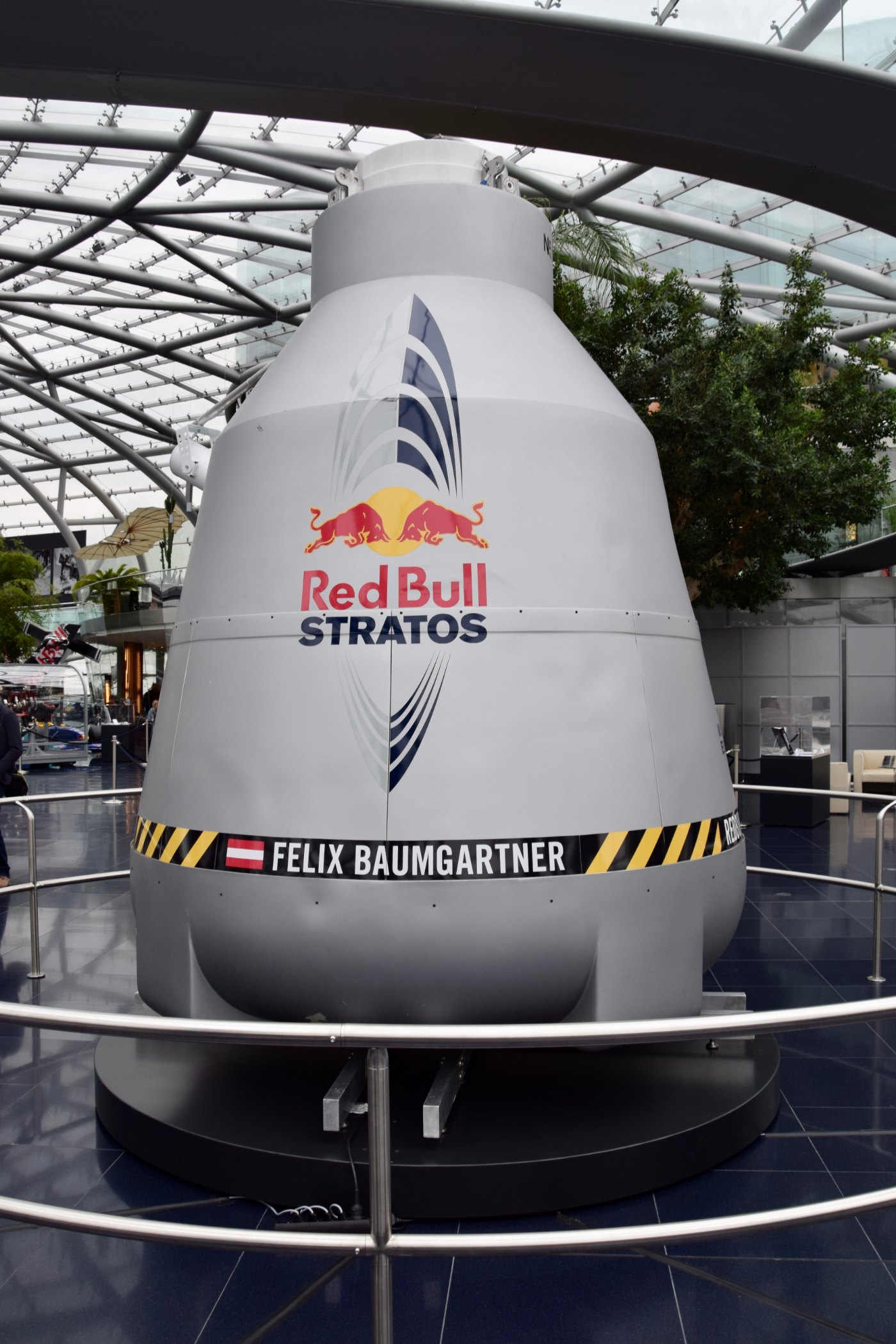
_01.jpg)
Brand
Red Bull
Year(s)
1987 to today (Red Bull Media House founded 2007; Stratos jump 2012)
Channel(s)
Live streams, YouTube, Red Bull TV, The Red Bulletin magazine, film, music, sports teams and events
Goal
Own the feeling of energy and daring so the drink stays top of mind without traditional selling
Topic
Content Strategy and Storytelling
8M+
Concurrent YouTube live streams of the Stratos jump (YouTube, 2012)
2007
Year Red Bull Media House was founded (Red Bull Media House)
13.969B
Red Bull cans sold worldwide in 2025 (Red Bull company profile)
1.2M
U.S. copies of The Red Bulletin shipped in its May 2011 launch (NBC News, 2011)
The situation
Red Bull launched in Austria on April 1, 1987. Founder Dietrich Mateschitz had been developing the product since 1984. An energy drink is easy to copy. The formula is not the advantage. The brand is.
From early on, Red Bull tied itself to extreme sports, music and daring stunts rather than to taste or ingredients. Its company profile today uses the line “Giving Wiiings to People and Ideas,” which is about what you can do, not what is in the can.
The challenge
Sponsoring events and buying ads makes a brand a guest in someone else’s media. Red Bull wanted to own the stories itself, produce them, and distribute them to large audiences. That required a different kind of company, one that thinks like a publisher.
What they did
In 2007, Red Bull founded Red Bull Media House in Austria to produce and distribute its own content. It describes itself today as a multi-platform media company covering sports, culture and lifestyle across TV, mobile, digital, audio and print.
Mateschitz told reporters in 2011 that media was “our most important line extension so far.” The same year, Red Bull Media House North America’s managing director, Werner Brell, told CNBC that its new U.S. magazine was meant to sell magazines, not drinks. “We’re fighting for eyeballs just like everyone else.”
- The Red Bulletin: a magazine that began in Austria in 2007. In May 2011 Red Bull shipped more than 1.2 million U.S. copies, many as inserts in major Sunday newspapers.
- Red Bull TV: a streaming channel with live events, films and shows.
- Red Bull Records: an independent record label.
- Red Bull Studios: a stand-alone film and TV studio.
- Sports teams and events: including Formula 1 teams and more than 1,250 culture and sports events a year, according to Red Bull Media House.
What happened
The best-known example is Red Bull Stratos. On October 14, 2012, Austrian skydiver Felix Baumgartner jumped from a balloon capsule about 39 kilometers (about 24 miles) above New Mexico. He broke the speed of sound in free fall. YouTube said the mission took five years of preparation.
The broadcast was about the jump, not the drink. It was a two-hour live event that people watched because they wanted to see whether a human could do it.
- More than 8 million concurrent live streams on YouTube, which Guinness World Records recognized as the most concurrent views for a live event on YouTube (YouTube, 2012; Guinness World Records).
- Baumgartner reached about 1,357.6 km/h (843.6 mph), according to Guinness World Records.
- In 2025, Red Bull sold 13.969 billion cans in 178 countries, with revenue of about 12.2 billion euros (Red Bull company profile).
Why it worked
Red Bull picked one feeling and stayed with it: going past what seems possible. Every piece of content, from a mountain bike film to a space jump, tells a version of that story. The audience does not need to be told what the brand stands for. They see it.
The content earns attention on its own. People choose to watch a Red Bull event the way they choose to watch a sports broadcast. That is the difference between content marketing and advertising: one interrupts, the other is the thing people came for.
Owning the media also means owning the archive. Red Bull keeps the footage, the athletes’ stories and the audience relationship, and can reuse them across channels for years.
Where it gets complicated
This model is expensive and slow. Mateschitz said he hoped the media unit would turn a profit but was willing to wait. Few brands have Red Bull’s budget, and it is hard to tie a single film or event to cans sold. The business still runs on the drink: the 13.969 billion cans sold in 2025 pay for the stories.
The feeling Red Bull owns is also risky by nature. Content built on extreme stunts depends on real people taking real physical risks. And records do not last forever: a single stunt fades, which is why Red Bull’s strategy relies on a steady stream of content rather than one big moment.
The marketing principle
A content strategy works best when it is built around a feeling your audience already wants, not around your product’s features. Red Bull shows how far that can go: when the stories are good enough, people seek them out, and the brand becomes the publisher rather than the advertiser. The lesson for smaller brands is the focus, not the budget.
Sources
- Mission complete: Red Bull Stratos lands safely back on Earth, YouTube Official Blog (2012)
- Most concurrent views for a live event on YouTube, Guinness World Records (2012)
- Red Bull’s billionaire maniac becomes a media mogul, NBC News (2011)
- Red Bull Surprises With Magazine, CNBC (2011)
- Company Profile, Red Bull (2026)
- About Us, Red Bull Media House (n.d.)
Group activity for this case
Own the Feeling
The feeling your brand’s audience already wants and a content series built on it that people would seek out. A 20-minute group activity. Dr. Morris gives the password in class.
Back to Content Strategy and Brand Storytelling · All case studies
Brand names, images and trademarks belong to their owners and appear here for educational purposes only.