Case study · Marketing 465 · Content Strategy and Brand Storytelling
Dollar Shave Club’s launch video won because it knew exactly who it was talking to and said one clear thing in a real voice, not because it looked expensive.
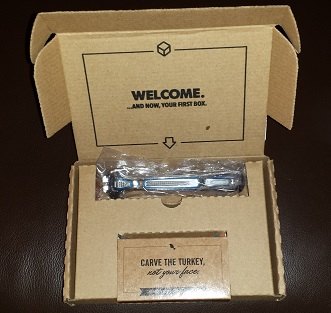

Brand
Dollar Shave Club
Year(s)
2012 launch; acquired by Unilever 2016; majority sold 2023
Channel(s)
YouTube launch video, social sharing, some search ads
Goal
Launch a razor subscription service and win sign-ups from men tired of overpaying
Topic
Content Strategy & Storytelling
$4,500
Cost of the 2012 launch video (Entrepreneur, 2012)
12,000
Sign-ups in the first 48 hours (Entrepreneur, 2012)
4.75M
YouTube views in the first three months (Entrepreneur, 2012)
$1B
Reported price Unilever paid in 2016 (Fortune, 2016)
The situation
For decades Gillette dominated men’s razors. The Boston Globe reported in 2020 that Gillette had long held about 70 percent of U.S. razor sales.
Dollar Shave Club, founded by Michael Dubin, had a simple offer: decent blades mailed to your door every month for a low price. It had little money for marketing.
The challenge
A startup could not outspend Gillette on TV. It needed a piece of content that people would choose to watch and pass along. It also had to explain a new buying habit, a razor subscription, in a few seconds.
What they did
On March 6, 2012, the company posted a video to YouTube titled “Our Blades Are F***ing Great.” It runs about a minute and a half. Dubin, who had studied improv at the Upright Citizens Brigade theater in New York, walks through a plain warehouse and pitches the service straight to camera.
The video jokes about paying for features men do not need, takes a light jab at tennis star Roger Federer, and includes a dancing bear. Under the jokes, it makes one clear offer: good blades, a low price, delivered monthly.
- Cost: $4,500, shot in a single day (Boston Globe, 2020; Entrepreneur, 2012).
- Director: Lucia Aniello, a comedian and friend of Dubin’s from the Upright Citizens Brigade, who helped cut his four-page script. “If it wasn’t 100 percent essential, it was gone,” she told Entrepreneur.
- No celebrity, no effects. Dubin was the spokesperson.
What happened
The video spread mostly through social sharing. Entrepreneur reported in 2012 that apart from some Google ads, the company did no other marketing.
- About 12,000 people signed up in the first 48 hours (Entrepreneur, 2012).
- 4.75 million views in the first three months (Entrepreneur, 2012).
- By 2018, Dollar Shave Club and rival Harry’s together held nearly 14 percent of U.S. razor blade sales (Boston Globe, 2020).
- In July 2016 Unilever bought the company. Fortune reported a price of $1 billion in cash, citing sources close to the deal. The Boston Globe reported annual sales near $200 million at that point.
Why it worked
The video knew its audience. It spoke to men who already felt overcharged, so the joke and the complaint landed at the same time.
It had one message. Aniello cut everything that did not serve the offer. Viewers left knowing what the product was, what it cost and why it was different.
The voice was real. Dubin’s comedy training let him sound like a funny friend, not a company. That voice made people want to share it, and sharing did the work a media budget would usually do. Low production value even helped: the plain warehouse matched the promise of no frills and fair prices.
Where it gets complicated
One great video does not build a lasting business by itself. By 2016 the company had raised more than $160 million in venture capital, according to Fortune.
The story also did not stay a pure win. In October 2023 Unilever announced it was selling a majority of Dollar Shave Club to Nexus Capital Management, keeping a 35 percent stake and not disclosing terms. Unilever said the move was part of shifting toward its core growth areas.
And the format is hard to repeat. The original stood out because it was fresh and because it fit this founder and this offer. A brand that copies the style without the same fit gets the jokes without the credibility.
The marketing principle
Strong content starts with a clear audience and a single message told in a voice people believe. Production value is a choice, not a requirement. Dollar Shave Club shows that story and voice can outperform budget, while also showing that a great launch is the start of the work, not the end of it.
Sources
- How a Dollar Shave Club’s Ad Went Viral, Entrepreneur (2012)
- On the Cutting Edge with Venice Start-Up Dollar Shave Club, Los Angeles Magazine (n.d.)
- Dollar Shave vs. Gillette: a lesson for a new era, The Boston Globe (2020)
- Unilever buys Dollar Shave Club for $1 billion, Fortune (2016)
- Unilever announces the sale of Dollar Shave Club, Unilever (2023)
Group activity for this case
The $4,500 Pitch
A 30-second, no-budget video script for your brand with one audience, one message and one offer. A 20-minute group activity. Dr. Morris gives the password in class.
Back to Content Strategy and Brand Storytelling · All case studies
Brand names, images and trademarks belong to their owners and appear here for educational purposes only.