The big idea
Every post should earn its place. Decide what you make based on what your audience needs and what your brand stands for, not on what’s trending.
Topic soundtrack
What to Make
Feel-good songs worth sharing. Make content people want to replay.
In 60 seconds
- Before you pick a format, answer three questions: who you are trying to reach, what they should feel or do, and where you will show up.
- Pick three to five content pillars tied to your audience’s needs. If a post fits no pillar, skip it.
- Format follows purpose. Choose the format for the job the post has to do, then repurpose one strong idea across platforms.
Do this: write a strategy rationale that links audience, platform, content and result for your Platform Content Design and Campaign Deck.
Slides
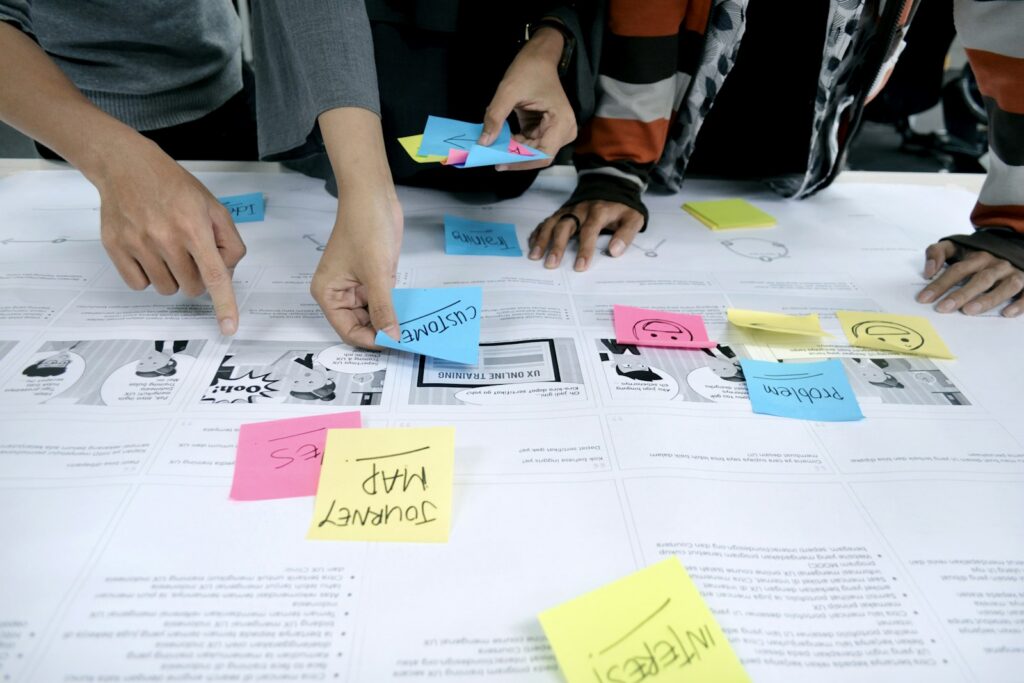
How to decide what to make
Every post should earn its place.
Answer three questions before you pick a single format, then let your pillars and your goal decide what you make.
Three questions before any content plan
Who, what and where come before the format.
- 1Who are you trying to reach?Go past demographics. What keeps them up at night? Know their interests, values and what they already engage with.
- 2What should they feel or do?Pick one main action per post and make it easy. Know the message, the emotion and the one action.
- 3Where will you show up?Start with one platform and do it well. Go where your audience already spends time.
Know: quality on fewer platforms beats a scattered presence everywhere.
Try it: Hillside Roots Farm. Who? Weekend cooks nearby. What? Come to the Wednesday market. Where? Instagram first. (Hillside Roots Farm is an invented brand.)
Decide what to make
If a post fits no pillar, skip it.
Video and static formats: which format does which job, plus short-form video basics
Video tends to earn the most engagement, but static posts still do important work. Choose based on the job the post has to do.
- Behind-the-scenes video: everyday moments of how the product is made build emotional connection.
- Product showcase Reels: short, quick-cut video that shows quality, often with trending audio.
- Time-lapse: compresses a long process, like seed to harvest, into a satisfying clip that shows expertise.
- Static posts: high-quality photography (natural light and the rule of thirds work well for food and products), branded graphics built from consistent templates, shareable quote cards, and educational infographics that position the brand as an expert.
Short-form video basics: hook viewers in the first few seconds, keep it short, shoot vertical for phones, add text overlays for context and for people watching without sound, and put a clear call to action in the caption. Unpolished, genuine content often outperforms slick production.

See it in the wild
Liquid Death never posts off-pillar.
Liquid Death sells canned water, but its content feels like a heavy metal band with a sense of humor.
Pillar 1: humorOver-the-top jokes about “murdering your thirst.”
Pillar 2: music and cultureSkulls, metal and punk-inspired art and collabs.
Pillar 3: purpose“Death to Plastic” content about cans instead of plastic bottles.
Format follows purpose
Every format has a job. Can you name it?
Video tends to earn the most engagement, but static posts still do important work. Guess each format’s job, then tap.
Behind the scenesEveryday moments of how the product is made.
Showcase ReelShort, quick-cut video of the product, often with trending audio.
Time-lapseSeed to harvest in one satisfying clip.
InfographicAn educational graphic in your brand template.
Quote cardOne line, big type, on brand.
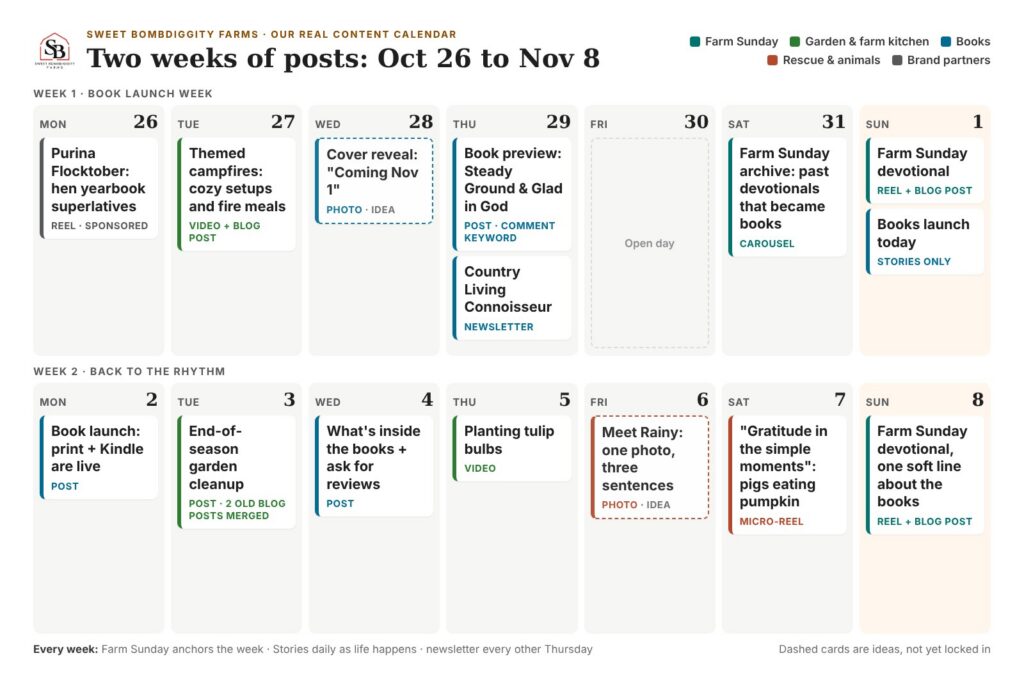
Plan before you post
A simple calendar keeps you on-message.
A simple content calendar keeps you consistent and on-message. Make content that:
- answers a question,
- solves a problem,
- or gives your audience a feeling they want.
Authority, not fame
You do not need millions of followers. You need the right audience for your goal.
Look for open space where you can be the go-to source. Consistency beats perfection.
Writing captions that work
The visual stops the scroll. The caption earns the action.
Hillside Roots Farm is an invented brand.

See it in the wild
Humans of New York writes line one first.
Photographer Brandon Stanton built Humans of New York on one street portrait and one caption at a time.
Be realEach caption is the person’s own words, often something surprising or personal.
Tell a storyThe first line pulls you in before “more” cuts it off.
The visual and the wordsThe photo stops the scroll. The caption makes you care.
Stock photo, not a Humans of New York portrait.
Worked example: a family farm’s final harvest
One brief. Three content options to compare.
A third-generation family farm in East Tennessee grows organic vegetables without harsh pesticides and is heading into its final harvest of the year.
Video option
A short Reel of the last harvest with text overlay announcing the next market day.
Static option
A bold “Final Harvest” graphic with the key facts: family-owned, grown without harsh pesticides, where and when to buy.
Story series
Several Story frames with a countdown sticker, a location tag and behind-the-scenes harvest footage.
Practice: which version fits which platform and audience, and why?
Why this story works
Its story has strong raw material: family heritage, care for the land, local community and seasonal urgency.
Quick check
Post it, rework it or skip it?
Hillside Roots Farm has three pillars: growing, cooking and family. Make the call on each idea, then open the answers.
- 1A trending dance video that has nothing to do with the farm.
- 2A carousel: five ways to use the last tomatoes of the season.
- 3Posting a little bit on six platforms at once, starting this week.
Check your answers
- Skip it. It fits no pillar, and trending is not a job.
- Post it. It fits the cooking pillar, and a carousel is built to teach. Then repurpose it as a Story and an email.
- Rework it. Start with one platform where the audience already spends time, and do it well.
Hillside Roots Farm is an invented brand.
Real brands in action
See it in real brands.
This case study shows these ideas at work. Open it to read the full story.
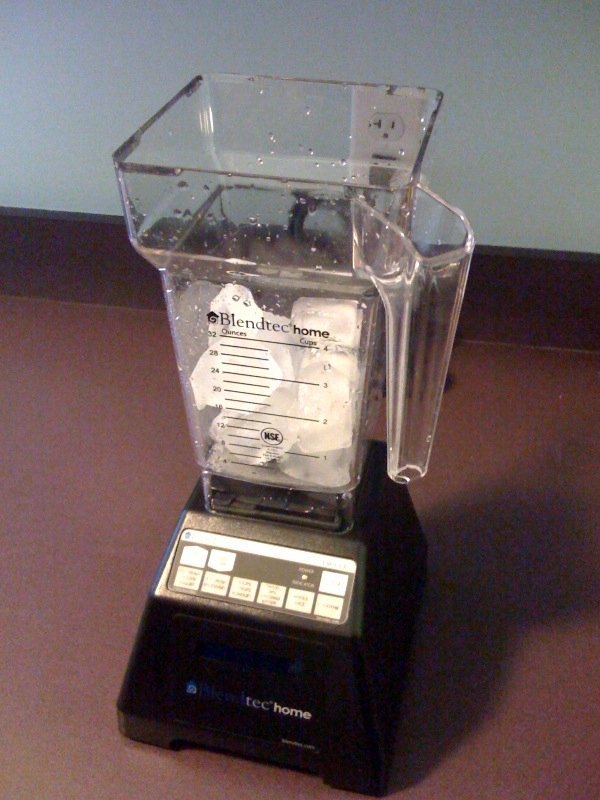
Blendtec: Will It Blend? One content idea built on one product truth
Blendtec turned its own durability test into a weekly entertainment series, and it worked because every episode proved the one thing the brand needed buyers to believe.
The lesson: The strongest content proves what you need the audience to believe, in a format that shows it.
Photo: Trebz (CC BY 2.0), via Wikimedia Commons. Brand: Blendtec
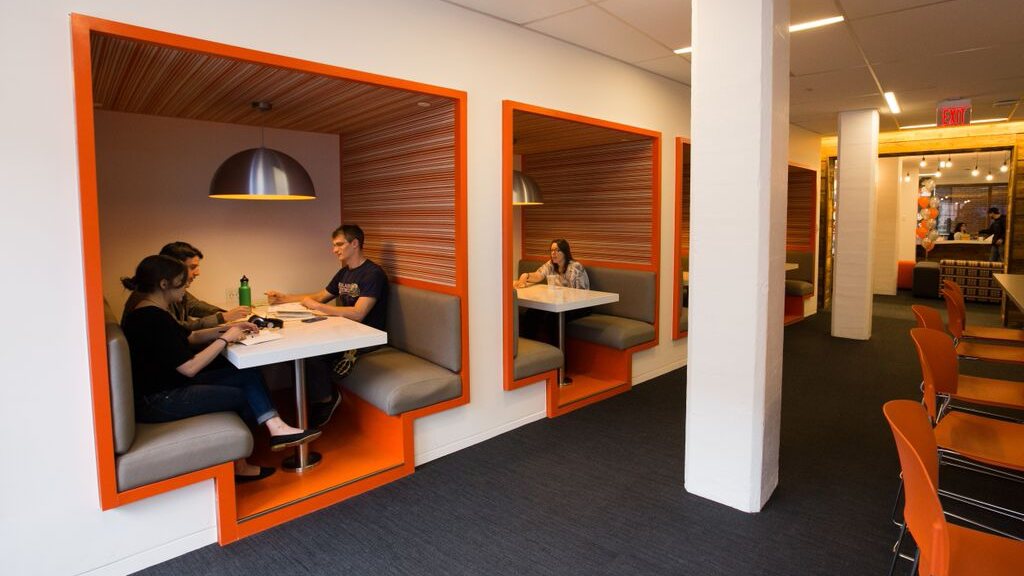
HubSpot: Old Posts That Doubled Leads
HubSpot found most of its blog leads came from old posts, so it started updating them and more than doubled leads from that content.
The lesson: Check your analytics before you create: your best growth may be hiding in content you already have.
Image courtesy of HubSpot

GoPro: Customers as the Content Studio
GoPro pays customers for their best footage and uses it across social, TV and packaging. A case on choosing what to make and what to collect.
The lesson: Before deciding what to make, ask what your customers already make, and build a fair system to collect and reuse it.
Image courtesy of GoPro

Red Bull: a media company that happens to sell energy drinks
Red Bull built its content around one feeling, pushing past human limits, and then built its own media company to tell those stories.
The lesson: Own a feeling your audience wants, and build your content around it.
Photo: Ank kumar (CC BY-SA 4.0), via Wikimedia Commons. Brand: Red Bull
Brand images are shown for educational purposes only. Each image and trademark belongs to the brand credited.
Spot it in the wild bingo
Every Post Earns Its Place
Spot these content strategy moves on your feeds this week and mark each square you find.
Try it
Interactive tool · practice it
Tool · MARK 475
Content Mix Lab
Pick a brand and a goal, set posts per content pillar for two weeks, choose formats, and watch the calendar fill in.
- 1Set the mix
- 2Check
- 3Share
All checks
Pillar balance
Two-week calendar
Key: Edu educate, Fun entertain, Insp inspire, Sell sell. The second line is the format (on phones: Car carousel, Sto story, Img static).
Do it
Class work for this topic. The in-class activity counts toward participation, and you get feedback on it.
In-class group activity
Pillar Draft Day
Three to five content pillars for your final project client, post ideas tested against your client’s target customer, and one idea repurposed three ways. A 28-minute group activity. Each case study below has its own group activity too. Dr. Morris gives the password in class.
Put it to work: Strategy rationale for Platform Design and the Campaign Deck
Two assignments ask you to explain why you made what you made. In the Individual Platform Content Design, your rationale explains why your platform and design fit your audience. In the Final Project & Presentation, the Campaign Deck needs a strategy rationale slide. Both are graded on strategy, not taste: “It looks good” is not a reason. “Our audience searches for this on Pinterest” is.
Build the strategy chain
A strong rationale is a chain with four links. If one link is missing, the reasoning falls apart. Write one chain for each platform your team uses, then turn the chains into your slide.
Audience
Who exactly, and what are they trying to do? Go back to your Imaginary Brand Brief and AI persona (see Brand Strategy and AI as a Creative Partner).
Your deliverable: one named person, such as “Maya, 23, first apartment, wants a room that feels calm on a small budget.”
Platform
Where does this person go when they have this need, and what mood are they in there? Use “Match the platform to the mindset” below.
Your deliverable: the platform and the reason, such as “She plans her apartment on Pinterest weeks before she buys.”
Content
What should you make, in which format and pillar, to meet them there? Format follows purpose.
Your deliverable: the piece and its pillar, such as “An Inspire pin: a before and after of a tiny bedroom using our shelf, with a five-word headline.”
Result
What should they feel or do, and how would you know?
Your deliverable: one feeling, one action and a measure, such as “Feel that small can look calm. Save the pin to her board. Measure saves and outbound clicks.”
Build the strategy rationale slide
Start with a one-line headline that states your strategy, such as “We meet Maya where she plans, then where she buys.” Add one row per platform: platform, role in the campaign, the content you made for it, and what you want the audience to do. For presenting it out loud, see Presenting Creative Work.
Your slide: the headline, the platform rows, and one closing sentence on how the pieces work together (for example, the video builds interest, the pin gets saved during planning, and the email closes the sale).
Match the platform to the mindsetWhat people go to each platform to do, and the ask that fits
People use each platform for a different reason. Your content should fit what they came to do. Use this table to test your choices, then write your own row for any platform not listed.
| Platform | What people go there to do | Content that fits | A natural ask |
|---|---|---|---|
| Instagram feed and stories | Follow people and brands they like; browse for style and ideas | Polished photos, carousels, behind-the-scenes stories | Follow, save, tap through to the profile |
| TikTok | Be entertained and discover new things | Short video with a fast hook and a real person on camera | Watch to the end, follow, comment |
| Plan, search and collect ideas for later | Vertical pins with a clear idea and a short text overlay | Save, click through to learn more | |
| Work, careers, industry news | Useful insight, the story behind the brand, team and values | Follow the page, read, share | |
| Hear from brands they already chose | A clear header, one main message, one button | Click, buy, come back | |
| YouTube | Learn something or watch longer stories | A thumbnail that promises one clear payoff | Click to watch, subscribe |
Do this, not thatThe habits that work and the common mistakes
Do this
- Give more than you ask. Most posts should teach, entertain or inspire, so the sales posts land with people who already trust you.
- Let the goal shape the mix. Discovery needs shareable short video. Community needs Stories, replies and questions. A launch needs clear product posts, still balanced with value.
- Check your balance of Educate, Fun, Inspire and Sell in the Content Mix Lab.
- Plan two weeks at a time, at a pace your team can keep up every week. A calendar shows gaps, repeats and too much selling before you post.
Not that
- Choosing a platform because the team likes it, not because the audience is there.
- “Our audience is everyone 18 to 35.” A rationale needs one specific person to reason from.
- Treating each platform as a separate project, so the campaign does not add up to one message.
- All Sell content.
- Saying what success is without saying how you would see it (saves, clicks, follows, sign-ups).
Before you submitA checklist to run before you turn it in
- [ ] I can name the one person our content is for, not an age range.
- [ ] Every platform we use has a reason tied to what our audience does there.
- [ ] Each piece of content links to a pillar and a goal, and I can say which.
- [ ] Our format choices follow purpose (for example, video to show the product in use, a pin to be saved).
- [ ] Every piece asks the audience to do one specific thing.
- [ ] The platform designs, photos and video look like one brand and tell one story.
- [ ] Our rationale explains decisions with “because”, not descriptions of what the work looks like.
- [ ] The strategy rationale slide shows how the platforms work together, not a list of separate posts.
Go further
Optional, and worth it. Go past the in-class work: read a case, try the tool and earn this topic’s chip. Finish the chips across the course and you get a marketing funnel card you can post on LinkedIn to show your effort and skills.
From the blog


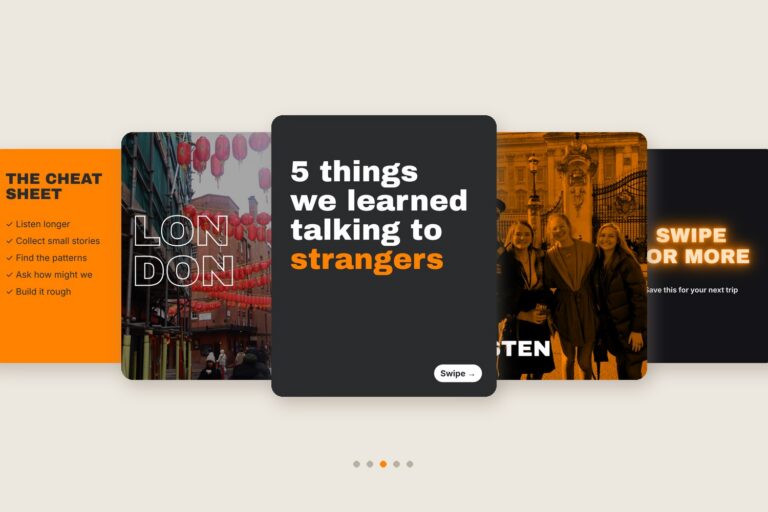
15 Ways to Make Cool Effects in Canva for Instagram Carousels
Fifteen ways to make your carousels worth saving.
Unlock this topic
Do the work, earn the chip
Finish each step on this page to unlock the button that adds this topic to your course card.
Back to all Marketing 475 topics
Frequently asked questions
Frequently asked questions
What are content pillars?
Content pillars are three to five themes a brand always comes back to, tied to the audience's needs and the brand's purpose. They decide what you make, so if a post fits no pillar, skip it. Pillars tell you what to talk about, while formats like themed days, educational series and user-generated content give you new ways to say it.
How do you decide what content to create for social media?
Answer three questions before picking a format: who you are trying to reach, what they should feel or do, and where you will show up. Then let your pillars and goal decide what you make. Every post should earn its place based on what the audience needs and what the brand stands for, not on what is trending.
Should a brand be on every social media platform?
No. Start with one platform and do it well, going where your audience already spends time. Quality on fewer platforms beats a scattered presence everywhere. Each platform has a strongest use, for example Pinterest for discovery and planning, LinkedIn for B2B and professional expertise, and YouTube for long-form tutorials and in-depth stories.
How do you choose between video and static posts?
Choose based on the job the post has to do, not on what is trending. Teach with carousels or how-to video, inspire with photography and connect with behind-the-scenes stories. Video tends to earn the most engagement, but static posts like quality photography, branded graphics, quote cards and infographics still do important work.
What does Blendtec's Will It Blend? teach about content strategy?
Blendtec turned its own durability test into a weekly entertainment series, and it worked because every episode proved the one thing the brand needed buyers to believe. The lesson is that the strongest content proves what you need the audience to believe, in a format that shows it, rather than simply following trends.