Case study · Marketing 475 · Content Strategy: What to Make and Why
Blendtec turned its own durability test into a weekly entertainment series, and it worked because every episode proved the one thing the brand needed buyers to believe.
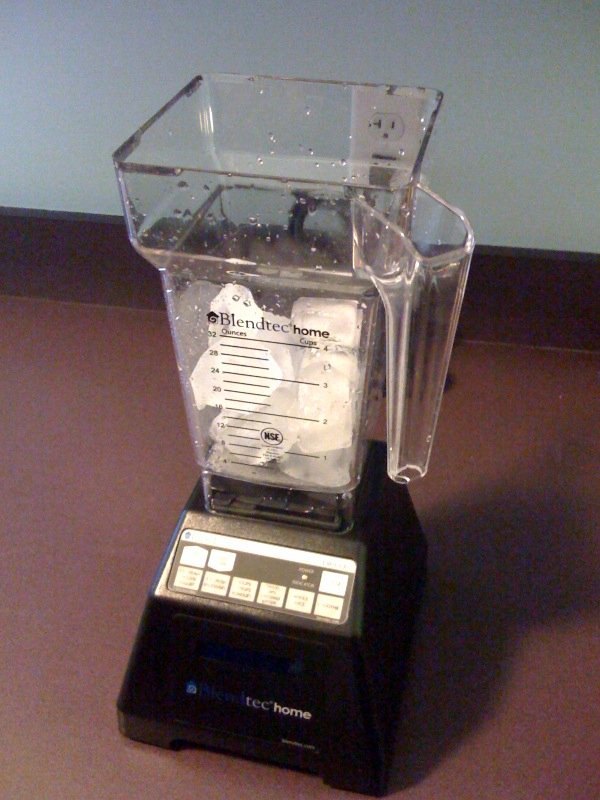

Brand
Blendtec (Orem, Utah)
Year(s)
2006 to 2013 at its peak
Channel(s)
YouTube, the brand’s own site, TV appearances, custom videos for other companies
Goal
Build awareness and drive sales of a roughly $400 consumer blender
Topic
Content Strategy: What to Make and Why
$50
Cost of props for the first shoot (Y Magazine, 2009; Fortune Small Business, 2008)
500%
Rise in sales of the high-end consumer blender in 2007, company figure (Fortune Small Business, 2008)
6M+
YouTube views of the iPhone episode (Y Magazine, 2009)
217M+
Total channel views by February 2013 (Tubefilter, 2013)
The situation
In 2006, Blendtec was a Utah company best known for commercial blenders used in smoothie and coffee shops. It also sold a high-powered home blender for about $400. Most shoppers had never heard of it.
George Wright had recently joined as marketing director. On the factory floor he noticed sawdust. He learned it came from founder and CEO Tom Dickson, an engineer who tested the blenders by grinding up 2×2 boards. Wright saw a story in that sawdust. “I wanted people to know this is not your regular machine,” he told BYU’s Y Magazine.
The challenge
A $400 blender is a hard sell next to a $40 one. The difference is power and durability, and those are hard to show in a print ad or a product photo. Blendtec also had a small marketing budget and no famous spokesperson.
So the content question was simple: what could the brand make that people would choose to watch, and that would prove the product’s main claim at the same time?
What they did
Wright spent about $50 on a lab coat, marbles, a rake, a fast-food meal, golf balls and soda. Dickson put them in the blender on camera. The first videos went up in late October and early November 2006, and the series was named after the question each episode asked: Will It Blend?
The format stayed the same every time. Dickson, in a lab coat, names an object, asks the question, runs the blender and shows the dust. Episodes were short. The company planned a new one each Wednesday.
- One pillar, repeated: every episode was a product demonstration dressed up as entertainment.
- Timely topics: an iPhone in July 2007, an iPad in 2010, Super Bowl snacks and football gear the weekend of the 2007 game.
- Audience input: viewers sent hundreds of emails a day with items to blend, and the company added a suggestion box to its site.
- Repurposing: Dickson blended a rake handle on The Tonight Show in 2007, and the brand made custom episodes for other companies, such as one for software firm Novell.
What happened
The series spread fast. The day after the first videos went up, the company site got nearly 23,000 hits, according to the Associated Press. Wright told the AP the company had built brand awareness “in a matter of days.”
- Consumer sales of the high-end blender rose 500% in 2007, according to Fortune Small Business (2008). Wright had told Forrester analyst Josh Bernoff in 2007 that consumer sales were up five-fold.
- BYU’s Y Magazine reported in 2009 that retail blender sales rose 700% within two years. Both figures come from the company.
- The iPhone episode passed 6 million YouTube views (Y Magazine, 2009).
- By February 2013 the channel had more than 217 million views and about 536,000 subscribers (Tubefilter).
- The series won a 2008 Clio Award for viral marketing (Y Magazine).
Why it worked
The content and the product claim were the same thing. Every episode was entertaining, and every episode also showed the blender doing something a cheap blender could not. Bernoff made this point in 2007: a viral video that is not tied to the product “will help your ego a lot more than your sales.”
The format fit the purpose. A short video is the best way to prove power and durability, because viewers can see the result. A photo or a spec sheet could not do that.
It was also real. Wright told Fortune Small Business the videos worked because “we filmed Tom Dickson as Dickson,” not an actor. The repeatable format made it easy to plan, easy to produce on a small budget and easy for viewers to recognize.
Where it gets complicated
The sales numbers are the company’s own, and they do not match: 500% in one report, 700% in another, five-fold in a third. They point the same direction, but no outside party verified them, and they cannot separate the videos from other factors.
The strategy also leaned on one person and one joke. When Dickson stepped down as CEO in 2013, Tubefilter wrote that it seemed as if “the great show is on its last legs.” A single pillar can carry a brand for a while, but it can wear out, and it is fragile if it depends on one face.
Finally, the series built awareness and proved durability. It did not teach people how to use the blender or show recipes. Those jobs needed other content.
The marketing principle
Good content starts with what the brand needs the audience to believe, then picks the format that proves it. Blendtec’s entertainment pillar earned attention because it was also a product demonstration, so the sell was built into the show. A full strategy adds other pillars, such as education and inspiration, so the brand does not depend on one idea forever.
Sources
- Will It Blend?, Y Magazine (Brigham Young University) (2009)
- Online video marketing for small businesses (Blendtec feature), Fortune Small Business / CNNMoney (2008)
- Orem Company’s “Will It Blend?” Ads Big Hit on Internet, Associated Press via KSL (2006)
- willitblend.com: Speaking through YouTube, Social Media Today (Josh Bernoff) (2007)
- It Will End: Blendtec CEO And ‘Will It Blend?’ Host Steps Down, Tubefilter (2013)
Group activity for this case
Will It Prove It?
A repeatable content format for your brand that entertains and proves its main claim. A 22-minute group activity. Dr. Morris gives the password in class.
Back to Content Strategy: What to Make and Why · All case studies
Brand names, images and trademarks belong to their owners and appear here for educational purposes only.