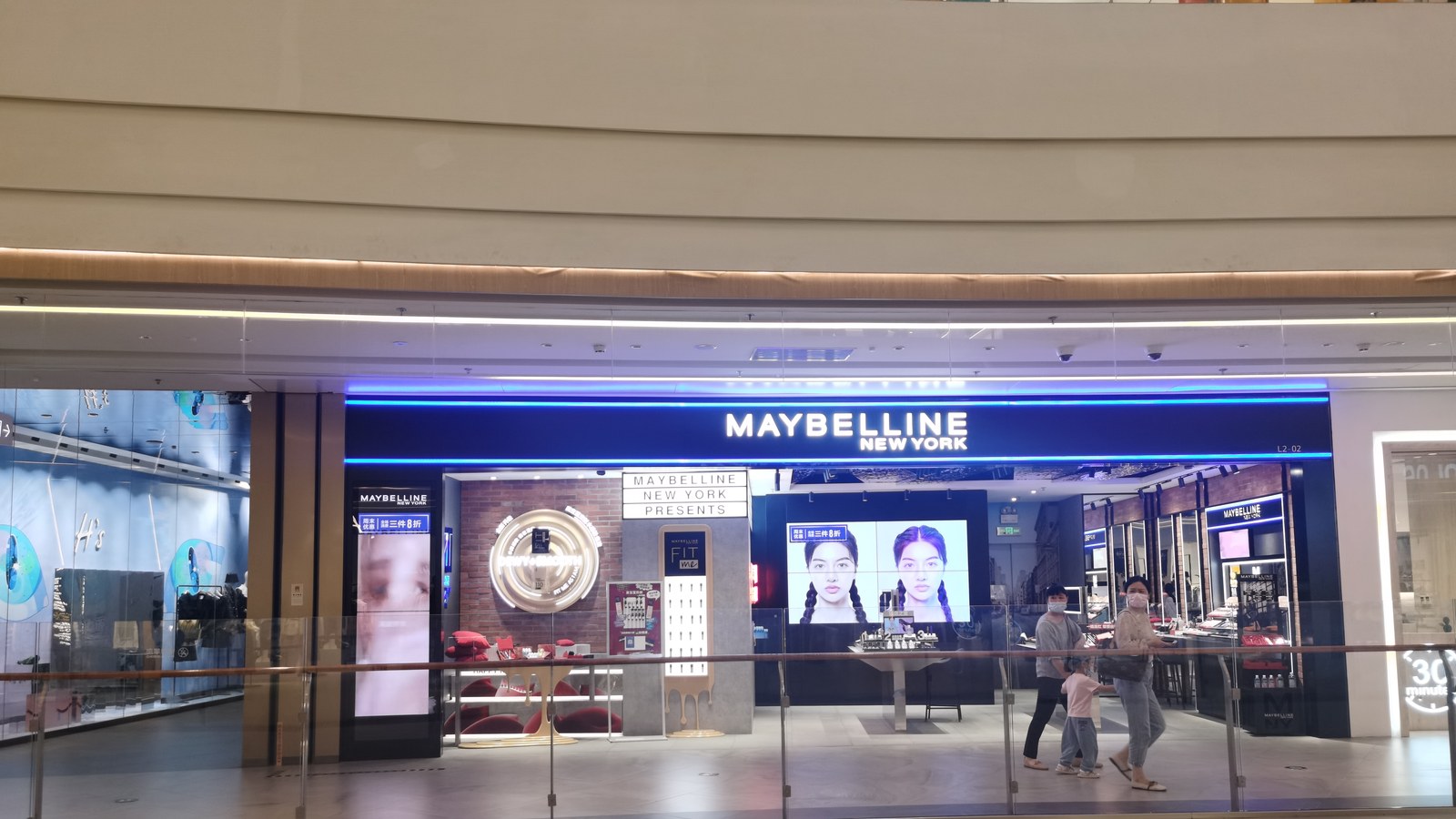
Case study · Marketing 465 · Human-Centered Marketing
In 2020, Maybelline New York committed $10 million to support people living with anxiety and depression, through free one-to-one help, training and an online hub. Years later it is still running, with bigger goals and a public number to hit.

Brand
Maybelline New York
Year(s)
2020 to 2026
Channel(s)
Nonprofit partnerships, online hub, training, ambassadors, social
Goal
Reduce stigma around anxiety and depression and fund real support
Topic
Human-Centered Marketing
$10 million
Committed over five years to mental health organizations (Maybelline, 2020)
1.65 million
People in 34 countries who received free one-to-one support by October 2024 (Maybelline, 2024)
10 million
People the program aims to help by 2030 (Maybelline, 2024)
90 minutes
Length of the free Brave Talk training for college students, built with JED (Beauty Packaging, 2022)
The situation
Maybelline sells confidence. Many of its customers are young women, and anxiety and depression hit that group hard.
When Maybelline launched its program, it cited World Health Organization figures: about 1 in 5 people are affected by anxiety and depression, and half of all mental health conditions start by age 14. Women are affected disproportionately, and most conditions go undetected or untreated.
The challenge
A cosmetics brand is an easy target for cynicism on this topic. Beauty marketing has long been blamed for making young women feel worse about themselves.
A one-off ad about mental health would look hollow. Maybelline needed a commitment big enough and long enough to be taken seriously, and partners who knew the work.
What they did
In September 2020, Maybelline launched Brave Together, a long-term program with $10 million committed over five years. In the US it partnered with Crisis Text Line, The Jed Foundation (JED) and NAMI, and it worked with local nonprofits in other countries. Columbia University psychologist Dr. Kathleen Pike served as a scientific advisor and led a Maybelline-funded study of anxiety and depression among Gen Z women.
- Fund real support: the money paid for free one-to-one help through partners, such as Crisis Text Line’s 24/7 text service.
- Build a hub: an online site with real stories, expert tips and resources.
- Teach people to help each other: in 2022, Maybelline and JED created Brave Talk, a free 90-minute training that teaches college students to spot when a friend is struggling and connect them with help. It piloted at NYU and opened to colleges in 2023. A free five-step online version followed.
- Set a number: the first goal was to reach 1 million people with one-to-one support.
- Add a credible voice: in October 2024, tennis champion Naomi Osaka, who has spoken openly about her own mental health, became the first Brave Together global ambassador.
What happened
- September 2020: Brave Together launched with $10 million over five years and three US nonprofit partners (Maybelline, 2020).
- October 2022: Brave Talk training launched with JED (Beauty Packaging, 2022).
- October 2024: Maybelline said the program had funded free one-to-one support for 1.65 million people in 34 countries, past its first goal of 1 million (Maybelline, 2024).
- October 2024: new goals for 2030: help 10 million people and donate $20 million to local nonprofits (Maybelline, 2024).
- The catch: these results come from Maybelline’s own announcements. Independent measures of impact are hard to find.
Why it worked
Time and money make it believable. Five-plus years and real dollars are hard to fake. People judge a purpose program by how long it lasts.
Experts did the expert work. Maybelline didn’t give mental health advice. It paid organizations that do.
It gives people something to do. Brave Talk turns awareness into a skill: how to help a friend. That builds a community around the cause, not just an audience for the ads.
Where it gets complicated
- The beauty question. Some critics argue beauty marketing feeds the anxiety this program addresses. Do Maybelline’s ads and its program send the same message?
- Self-reported results. The 1.65 million figure is Maybelline’s. Students should ask what counts as “support” and who checks it.
- Goodwill for a makeup brand. The program builds affection for a company that sells cosmetics. Is that a problem, or the honest trade that keeps the money flowing?
- Reach is not treatment. A text conversation or a training session can help a lot, but it isn’t long-term care.
The takeaway
The marketing principle
When a brand takes on a serious human problem, the commitment has to match the problem. Long-term money, real experts and a goal people can check turn a message into a program. If you can’t commit at that level, help in a smaller way you can keep.
Sources
- Maybelline New York launches Brave Together: a long-term program to support anxiety and depression worldwide, Maybelline New York via PR Newswire (2020)
- Maybelline New York unveils mental health training program for college students, Beauty Packaging (2022)
- Maybelline New York announces Naomi Osaka as the brand’s first Brave Together ambassador, Maybelline New York via PR Newswire (2024)
- Mark Schaefer, Belonging to the Brand: Why Community Is the Last Great Marketing Strategy, Schaefer Marketing Solutions (2023)
Group activity for this case
Build a Commitment You Can Keep
Pick a real problem your client’s customers face, find the experts, and size a promise your client could keep for a year. A 20-minute group activity. Dr. Morris gives the password in class.
Part of a set on brands that show up for mental health, sparked by Mark Schaefer’s newsletter “The Intimacy Economy” and his book Belonging to the Brand: Powerade · McDonald’s · Maybelline
Use this case in: Human-Centered Marketing · Community vs. Audience · All case studies
Use and share this case
Free to use in your own classroom, training or team, and to adapt for non-commercial teaching, with credit to Dr. Jules Morris, Haslam College of Business, University of Tennessee. The text is licensed CC BY-NC 4.0. Brand photos and trademarks belong to their owners and are not covered by this license.
Brand names, images and trademarks belong to their owners and appear here for educational purposes only.