The big idea
An audience listens to you. A community talks to each other.
Topic soundtrack
Find Your People
Songs about your people. An audience listens; a community sings along.
In 60 seconds
- An audience listens to the brand. A community talks to each other.
- Run the Disappearance Test: if the brand vanished tomorrow, would these people still know each other?
- Brands earn a community when they put members first, give them status and give up some control.
Do this: build your team’s Community Strategy slide for the Final Pitch: a score, a shared interest, a space, a ritual and role, and a 90-day plan.
Your next steps
Slides

How community works
An audience listens. A community talks to each other.
Every brand starts with an audience. A few turn it into a community. Here is how to tell where a brand sits and what moves it forward.
From audience to community
Four stages. The shift is when members talk to each other.
Text version of this diagram
- 1AudiencePeople see the content.You see: views, likes, follows.
- 2Engaged audiencePeople reply to the brand.You see: comments and DMs aimed at the brand.
- 3NetworkMembers answer each other.You see: customers replying to customers.
- 4CommunityMembers share an identity, traditions and roles.You see: rituals, inside jokes, members welcoming newcomers.

See it in the wild
Harley-Davidson built a club, not a list.
In 1983, Harley-Davidson started the Harley Owners Group, known as HOG.
AudienceOwners who bought a motorcycle and heard from the company.
CommunityLocal chapters where members plan rides, meet each other and ride together.
The shiftMembers show up for each other, not just for the brand.
The Disappearance Test
If the brand vanished tomorrow, would these people still know each other?
If not, it is an audience. Score your client 1 to 4 using the stages above.
Quick check
Score each brand 1 to 4.
Use the four stages and the Disappearance Test. Pick a score for each, then flip the cards on the next slide.
- 1Fernway Coffee has 40,000 followers who like its latte photos. Almost nobody comments.
- 2Loop Bike Repair gets a stack of DMs every week asking the shop how to fix a flat.
- 3In the Kindling Candle Co. Facebook group, customers answer each other’s questions before the brand can.
- 4Summit Run Club members call themselves “the dawn crew,” welcome every newcomer at the Saturday run and would keep running together if the shop closed.
Fernway Coffee, Loop Bike Repair, Kindling Candle Co. and Summit Run Club are invented brands.
Quick check answers
Who is talking to whom?
1Fernway Coffee
2Loop Bike Repair
3Kindling Candle Co.
4Summit Run Club
What makes it real: you can see it when
Members say “we.”
- Members say “we.” They feel connected to each other and see themselves as part of a group.
- They share traditions. Inside jokes, stories, language and things they do together again and again.
- They look out for each other. Members help each other and welcome newcomers without the brand asking.
Brands earn it when they
Community is earned. Put members ahead of the pitch.
Think campfire, not stage. The brand helps light it, then the members gather round.

See it in the wild
LEGO lets fans light the fire.
On LEGO Ideas, fans submit their own set designs and other fans vote.
Members firstAny fan can share a design with the whole community.
StatusDesigns that reach 10,000 supporters get a formal review by LEGO.
Real rewardIf a design becomes a set, the fan is credited and earns a share of sales.

Gut check: the sticker test
A sticker says who they are.
Look at the stickers on laptops, water bottles and cars. People put a brand there when it says who they are, not just what they bought.
Try it now: whose sticker is on your laptop, and why that one?
Not every brand needs one
A forum link or a big follower count is not a community.
Building one takes real effort and support from the whole company. Sometimes a loyal audience is the right goal.
Real brands in action
See it in real brands.
Each case study shows these ideas at work. Open one to read the full story.

Lululemon: building the brand through local people, not celebrities
Lululemon grew by recruiting local instructors, hosting free classes and turning stores into gathering places, which shows that community can be a business model and not just a campaign.
The lesson: Community is a business strategy, not just a marketing tactic.
Image courtesy of Lululemon
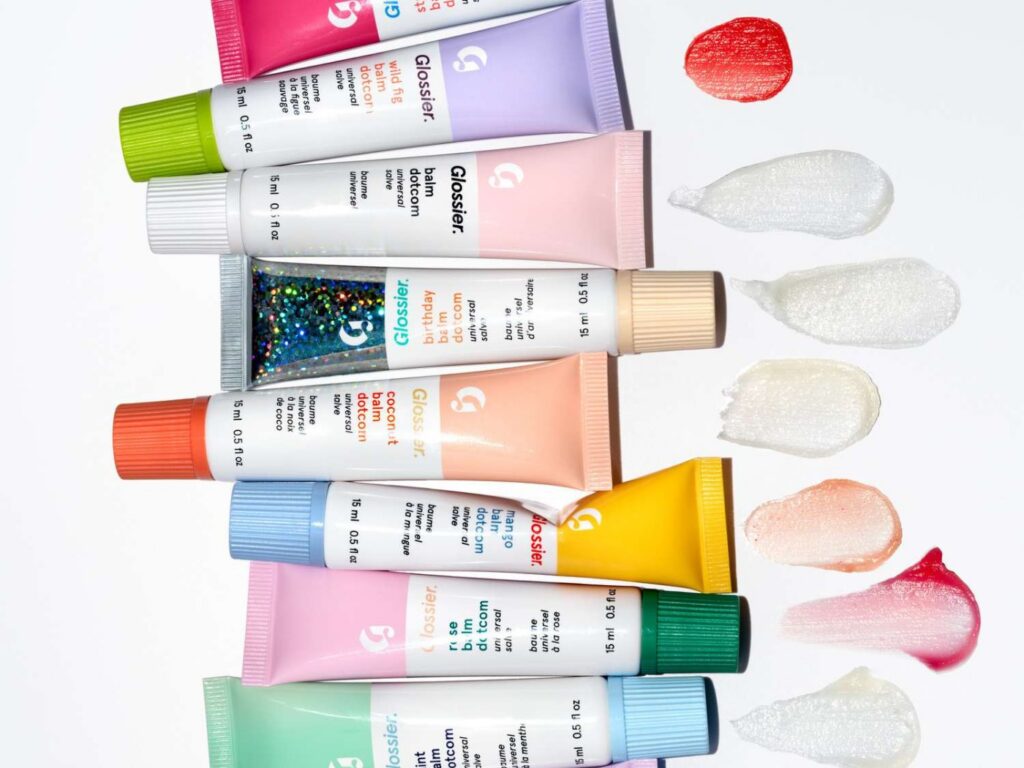
Glossier: a beauty brand that started as a conversation
Glossier grew from a blog audience into a community that shaped its products and spread the word, and its later struggles show that a community has to be earned again as it changes.
The lesson: Brands built with community at the core have a natural advantage.
Image courtesy of Glossier
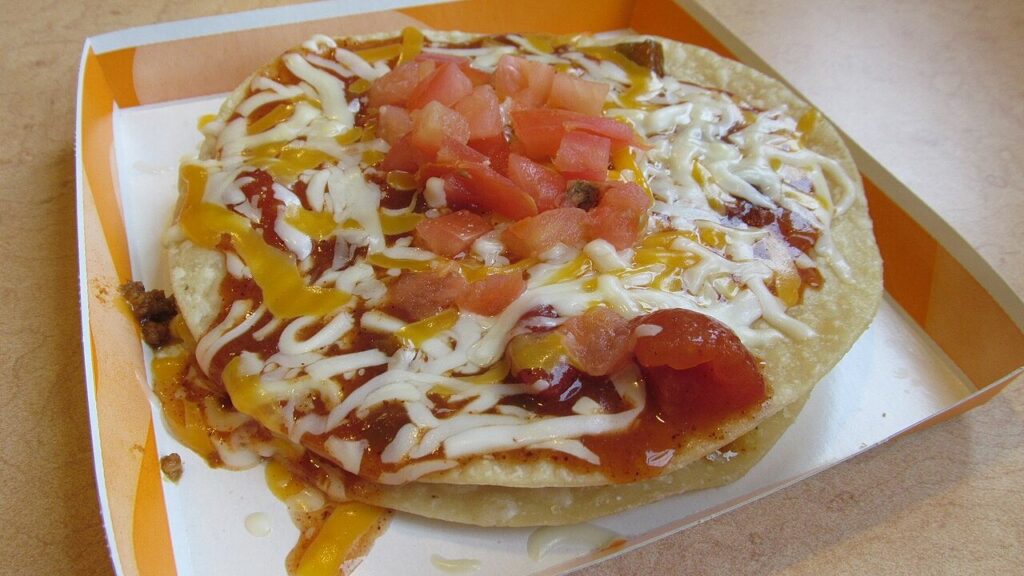
Taco Bell: Fans Brought Back the Mexican Pizza
A fan petition, Doja Cat and a TikTok musical helped Taco Bell bring back the Mexican Pizza, which sold out at seven times its old demand.
The lesson: Listen for specific fan demand, then give the fans a role in the answer.

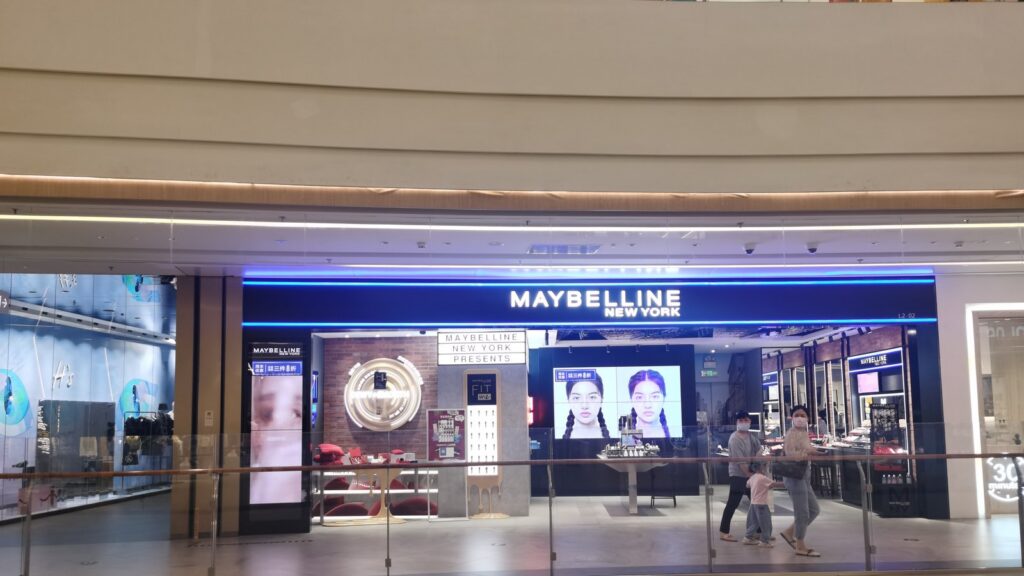
Maybelline: Brave Together and a Beauty Brand’s Long Game on Mental Health
Maybelline’s Brave Together put $10 million, expert partners and free training behind anxiety and depression support, and kept it going for years.
The lesson: Match the size of your commitment to the size of the problem.
Photo: Shwangtianyuan (CC BY-SA 4.0), via Wikimedia Commons. Brand: Maybelline New York

Real brands in action, continued
More real brands to study.

H.O.G.: How Harley-Davidson Turned Customers Into a Community
The Harley Owners Group shows the difference between an audience and a community: an audience watches a brand, while a community gives members a shared identity and a reason to show up together.
The lesson: A strong community can do more for growth than a sales push.
Photo: Eric Jones (CC BY-SA 2.0), via Wikimedia Commons. Brand: Harley-Davidson


Porsche Cayenne: the buyers said yes, the community said no
Porsche’s first SUV became a commercial success with a new audience while its most devoted enthusiast community rejected it for years, which shows that winning an audience and winning a community are two different jobs.
The lesson: You can’t force a community to accept something. Bring them in early.
Photo: Dinkun Chen (CC BY-SA 4.0), via Wikimedia Commons. Brand: Porsche

Brand images are shown for educational purposes only. Each image and trademark belongs to the brand credited.
Mystery brand
Audience or Community? Guess Who
Each brand describes how it turned watchers into members; guess who it is in as few clues as you can.
Try it
Interactive tool · practice it
Tool · MARK 465
Audience to Community Lab
Start with a brand and its followers. Add community moves, then take the brand away and see who still knows each other.
- 1Pick moves
- 2Watch
- 3Remove the brand
Community moves pick any
- Audience
- Engaged audience
- Network
- Community
Real examples of each move
Do it
Class work for this topic. The in-class activity counts toward participation, and you get feedback on it.
In-class activity
Community vs. Audience: Group Activity
Run the Disappearance Test on your final project client and recommend one community move. Your instructor will give you the password in class.
Put it to work: Final Pitch, Community Strategy
Community Strategy is one section of your team’s Final Pitch. Canvas describes it as relationships, not followers: show how your client’s customers will connect with each other, and how you will know it is working. It is graded together with your Measurement Plan.
Build it in five steps
This fits on one or two slides. Each step gives you a line for the slide.
Diagnose
Run the Disappearance Test and score your client 1 to 4.
Your slide: the score plus one piece of evidence, such as “no customer ever replies to another customer on Instagram.”
Find the shared interest
People join for something they care about, not for the brand. Pull it from your persona’s wants and fears.
Your slide: “Training for a first 5K,” “raising backyard chickens,” “starting a career in Knoxville.”
Pick the space
Choose where members will actually talk to each other. Open “Which space fits your client?” below.
Your slide: the space and why your persona is already there.
Add one ritual and one role
A ritual happens on a schedule. A role gives members a job.
Your slide: “Saturday group run” and “member pace leaders.”
Plan the first 90 days
Who launches it, how you invite the first 20 to 50 members, and what the brand does each week.
Your slide: a simple 90-day timeline and the point where the brand steps back.
Which space fits your client?Six options with when to choose each
Start with where your persona already spends time. Then check the trade-off.
Facebook Group
Choose it when your persona is 30 or older, local, or a hobbyist who wants to post photos and ask questions.
Watch out: younger audiences rarely use it, and it needs active moderators.
Discord server
Choose it when your persona is Gen Z, a gamer, a creator or a fan who likes real-time chat by topic.
Watch out: it can feel noisy and confusing to newcomers. Plan a clear welcome channel.
Subreddit
Choose it when the interest is niche and people want honest answers from peers.
Watch out: Reddit users push back on heavy-handed brands. Join as a member first.
In-person meetups
Choose it when the brand is local or has stores: run clubs, classes, tastings, workshops.
Watch out: it takes staff time and space. Pair it with an online space so people stay in touch.
LinkedIn or Slack group
Choose it when the client is B2B and members are professionals trading advice.
Watch out: busy members drift away without a regular prompt or event.
Brand-owned platform
Choose it when the client is large and the community is central to the product, like LEGO Ideas.
Watch out: it is costly and needs lots of members to feel alive. Sephora retired its forum.
Instagram broadcast channels and email newsletters reach an audience, but members can’t easily talk to each other there. Use them to invite people into the space you pick.
Pick one or two measuresSix community KPIs and when to use them
Follower counts measure an audience. These measure a community. Choose the ones that match your plan, then set a 90-day and a 1-year target in your Measurement Plan.
Member-to-member replies
Choose it when your first goal is getting members talking.
Track it: count replies in the group that are not from the brand.
Posts started by members
Choose it when people already talk and you want them to bring their own topics.
Track it: group admin insights or a monthly count.
Repeat ritual attendance
Choose it when your plan centers on an event or a weekly ritual.
Track it: sign-ins, RSVPs or check-ins over time.
Newcomers welcomed by members
Choose it when growth and onboarding are the focus.
Track it: spot-check first posts each month.
Member-created content
Choose it when your plan uses challenges, photos or reviews.
Track it: a branded hashtag, tagged posts or challenge entries.
Community to customer
Choose it when the client needs to see sales value. Pair it with one of the others.
Track it: a community-only code or link, or a question at checkout.
Before you submitAn 8-point checklist for your slide
- [ ] Our slide says where the client is today on the spectrum and gives evidence.
- [ ] The community is built around a shared interest of our persona, not around the brand’s products.
- [ ] We named a specific space where members will talk to each other, and why our persona is there.
- [ ] We included at least one ritual and one member role.
- [ ] We explained what the brand does in the first 90 days and when it steps back.
- [ ] Our community KPIs measure connections between members, not followers or likes.
- [ ] Those KPIs appear in the Measurement Plan with 90-day and 1-year targets.
- [ ] We showed how community connects to at least one other channel, such as email or social.
Go further
Optional, and worth it. Go past the in-class work: read a case, try the tool and earn this topic’s chip. Finish the chips across the course and you get a marketing funnel card you can post on LinkedIn to show your effort and skills.
Expert advice
Mark Schaefer on why community beats audience
Video, 3 minutes 10 seconds, with captions. Recorded for this class.
About Mark Schaefer
Mark W. Schaefer is a marketing futurist, keynote speaker, consultant and author of numerous bestselling books. His books are used at more than 70 universities and have been translated into 15 languages. Mark has more than 30 years of experience in global sales, PR and marketing. He has advised organizations from startups to global brands, including Adidas, Johnson & Johnson, GE Life Sciences, Pfizer, the U.S. Air Force and the UK Government, and has spoken in 35 countries at events such as SXSW. He writes the {grow} blog. The idea running through his work fits this topic: people want to belong, and the brands that build real community win.
Read the transcript
Hi everyone, it's late at night. I'm sitting on my back porch. I'm a bit disheveled, but you know it's real, don't you? I decided I'm gonna let her rip and talk to you tonight anyway. I'm really delighted that Dr. Morris is talking about brand communities. This is something that's very near and dear to my heart. I wrote a major book on the topic called Belonging to the Brand: Why Community Is the Last Great Marketing Strategy. Kind of a bold title, right? And it's the last great strategy because it was also the first strategy. That's how we first learned to love a company, because they were our neighbors. And I thought a lot about, why can't we have that today? Why don't I feel that today? I don't feel like anybody at a store in my community really knows me, and I long for that feeling.
Now, there's a lot I could say about it, but Jules asked me to keep this short. I want to mention brand communities and why this is so powerful and really so largely rare in corporate America today. Because what are we trying to do as a brand? We're trying to create meaning, so that when people think about us, something positive comes to mind that hopefully will move us to the top of the consideration set.
Now, everybody does social media, right? But those are weak relational links. There are exceptions, especially if we're following maybe influencers or something like that, but generally speaking we just see information from brands and kind of largely ignore it. We also have our content, right? That's a stronger link. If people opt into us, if they subscribe to us. And that's where most people stop: social media and content. The highest emotional connection comes in a community. Because not only do people go there because they like you and they trust you, in a community people get to know each other. And the strength of those bonds, the goodwill of those bonds, transfers to the brand. People aren't gonna leave your community because they don't wanna leave their friends. They literally belong to the brand.
So, I love that you're learning about this. It's a very important topic, and it's AI-free, right? I mean, this is something you can own. This is something you can bring to your employer someday in a powerful way. Thanks so much for listening to me. Best wishes on your studies.
Unlock this topic
Do the work, earn the chip
Finish each step on this page to unlock the button that adds this topic to your course card.
Back to all Marketing 465 topics
Frequently asked questions
Frequently asked questions
What is the difference between a brand audience and a brand community?
An audience listens to the brand. A community talks to each other. In an audience, people see content and you see views, likes and follows. In a community, members share an identity, traditions and roles, and you see rituals, inside jokes and members welcoming newcomers. Between the two sit an engaged audience that replies to the brand and a network where members answer each other.
What is the Disappearance Test for brand community?
The Disappearance Test asks: if the brand vanished tomorrow, would these people still know each other? If not, it is an audience, not a community. Use it to score a client from 1 to 4 on four stages: audience, engaged audience, network and community. Back the score with evidence, such as "no customer ever replies to another customer on Instagram."
How does a brand build a community?
Brands earn community by putting members' needs before the sales message, giving the best members status and recognition, and giving up some control so members shape rules, rituals and even products. Start with a shared interest people care about, like training for a first 5K, pick a space where members already talk, and add one ritual and one role, such as a Saturday group run with member pace leaders.
Does every brand need a community?
No. A forum link or a big follower count is not a community, and building one takes real effort and support from the whole company. Sometimes a loyal audience is the right goal. Porsche's Cayenne also shows the two are different jobs: it succeeded with a new audience while its devoted enthusiast community rejected it for years.
Why does Mark Schaefer say community beats audience?
Mark Schaefer, author of Belonging to the Brand, says social media creates weak relational links and subscribed content creates stronger ones, but community creates the highest emotional connection. In a community people get to know each other, and the goodwill of those bonds transfers to the brand. People do not leave because they do not want to leave their friends, so they literally belong to the brand.