Case study · Marketing 465 · Human-Centered Marketing
In November 2025, McDonald’s UK and Ireland swapped its famous red Happy Meal box for a blank white one and invited kids to draw how they feel. The box became a conversation starter for families and part of a fundraiser for BBC Children in Need.

Brand
McDonald’s UK & Ireland
Year(s)
2025
Channel(s)
Packaging, restaurants, McDelivery, app, PR
Goal
Help kids open up about their feelings and raise money for BBC Children in Need
Topic
Human-Centered Marketing
Nearly 4 million
Limited-edition white Happy Meal boxes (Packaging Europe, 2025)
42%
UK children aged 5 to 10 who find it hard to talk about feelings with adults (McDonald’s research, 2025)
73%
Children who feel more comfortable talking about emotions while drawing (McDonald’s research, 2025)
88%
Parents who find it easier to talk with their kids during a creative activity (McDonald’s research, 2025)
The situation
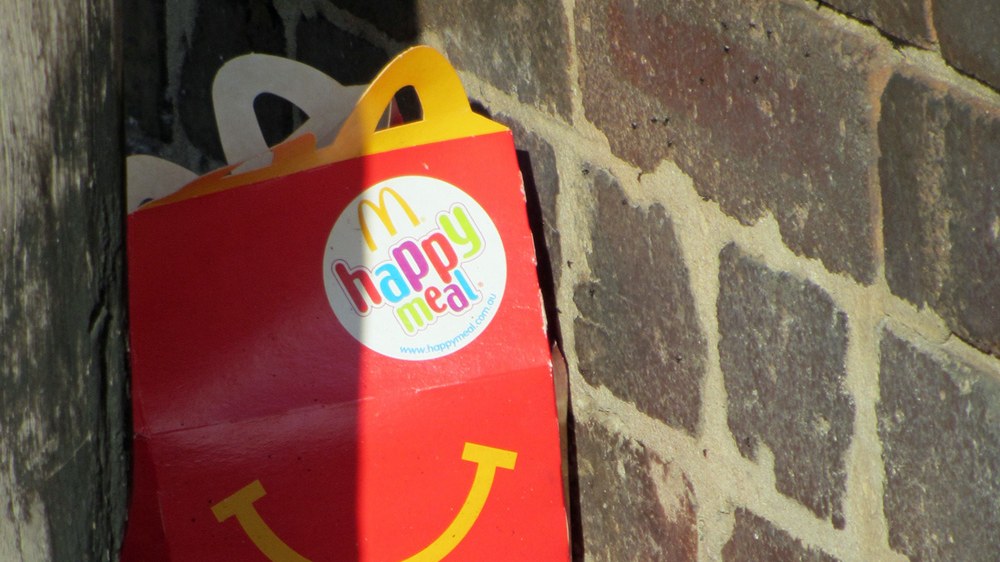
The Happy Meal is one of the best-known packages in the world: a red box, a golden-arches handle and a smile. For decades it has meant a toy and a treat.
Parents bring their own feelings to it. Some see a fun reward; some see a fight about nutrition. McDonald’s UK has a long partnership with BBC Children in Need, the UK charity for children and young people.
The challenge
Children’s emotional wellbeing had become a big worry for UK parents. McDonald’s own research found that 42% of children aged 5 to 10 find it hard to talk about their feelings with adults.
A fast-food brand talking about children’s wellbeing is risky. It can look like the brand is using a serious issue to sell burgers to kids. McDonald’s needed something families would actually use, not a message they would be told.
What they did
For a limited run ending November 18, 2025, McDonald’s UK and Ireland replaced the red box with a white one in restaurants and through McDelivery. The box invited kids to draw how they feel. The insight came from the same research: 73% of children feel more comfortable talking about emotions while drawing, and 88% of parents find it easier to talk during a creative activity.
- Make the package the activity: the box itself was the tool. No extra cost and no app needed.
- Step back to make room: McDonald’s gave up its most famous color so kids could fill the space.
- Give parents a next step: the McDonald’s Family Hub offered free resources to help families understand and respond to children’s emotions.
- Tie it to a cause: app users could donate the cash value of their MyMcDonald’s Rewards points to BBC Children in Need, and anyone could give at kiosks and tills.
- Use a relatable voice: singer and presenter Kimberley Walsh, a mom of boys, said her sons are calmer and more open to chat when they are drawing.
What happened
- November 2025: nearly 4 million white boxes went into restaurants across the UK and Ireland (Packaging Europe, 2025).
- Marketing and packaging press picked it up as an example of experiential, wellness-driven packaging (Packaging Europe, 2025; Famous Campaigns, 2025).
- Ben Fox, CMO of McDonald’s UK & Ireland, framed it as a way to reach families in restaurants and at home (Packaging Europe, 2025).
- The catch: public sources don’t report how many drawings, conversations or donations it produced.
Why it worked
It met families where they already were. A Happy Meal is one of the few times a parent and child sit together for a few minutes with something in their hands.
It used a real insight about kids. Children often talk more easily side by side, doing something, than face to face. Drawing takes the pressure off.
Less brand, more meaning. A blank white box is still clearly a Happy Meal. The shape is the brand, so McDonald’s could give up the color and keep the recognition.
Where it gets complicated
- Fast food and kids. Critics of marketing to children may see a feel-good wrapper around a fast-food meal. The brand’s role in kids’ health is part of the conversation.
- A drawing isn’t support. The box can start a conversation, but a family that uncovers a real problem needs more. The Family Hub and the charity link help; the box alone doesn’t.
- It’s the brand’s own research. The statistics come from research McDonald’s commissioned. Useful, but treat it as brand research, not independent data.
- A short run. About two weeks. Was it a moment or a commitment? Compare it with Maybelline’s multi-year program.
The takeaway
The marketing principle
Sometimes the most human thing a brand can do is make room. McDonald’s took its loudest asset, the red box, and turned it into a blank space for kids to fill. Designing for how people actually behave, like kids talking more while they draw, works better than telling them how to feel.
Sources
- McDonald’s Happy Meal box becomes canvas to “draw how you feel”, Packaging Europe (2025)
- McDonald’s blanks out the Happy Meal box to help kids “draw how they feel”, Famous Campaigns (2025)
- Mark Schaefer, Belonging to the Brand: Why Community Is the Last Great Marketing Strategy, Schaefer Marketing Solutions (2023)
Group activity for this case
Make Room on the Package
Find a moment when customers are already with your client’s product, then design a blank space that helps people connect. A 20-minute group activity. Dr. Morris gives the password in class.
Part of a set on brands that show up for mental health, sparked by Mark Schaefer’s newsletter “The Intimacy Economy” and his book Belonging to the Brand: Powerade · McDonald’s · Maybelline
Use this case in: Human-Centered Marketing · Visual Marketing in the Wild · All case studies
Use and share this case
Free to use in your own classroom, training or team, and to adapt for non-commercial teaching, with credit to Dr. Jules Morris, Haslam College of Business, University of Tennessee. The text is licensed CC BY-NC 4.0. Brand photos and trademarks belong to their owners and are not covered by this license.
Brand names, images and trademarks belong to their owners and appear here for educational purposes only.