The big idea
Lead with the answer. Busy clients want your recommendation first, then the evidence that supports it.
Topic soundtrack
Showtime
Walk-on music for your big moment. Play it right before you present.
In 60 seconds
- Lead with the answer. Give your recommendation first, then the reasons and the evidence.
- Build the pitch as a story: why (the problem), how (your approach) and wow (the creative work that lands it).
- Give each slide one idea, stated as a full-sentence headline, and design it for the back of the room.
Do this: build and rehearse your team’s 12-minute Final Project & Pitch, with the Executive Summary first and a timed run of show.
Slides
How to present like a pro
Lead with the answer. Then prove it.
A strong pitch is a story with the answer up front. Here is the structure to build on, the rules for every slide, and how a team presents as one.
The pitch story
Every pitch tells a story: why, how, wow.
The breakfast pitch is an invented example. The story climbs from the why on the ground to the wow in the sky.
See it in the wild
Simon Sinek built a famous talk on why.
His 2009 TED talk on the Golden Circle is one of the most-watched TED talks ever.
WhyHe opens with a question: why do some leaders and brands inspire people while others do not?
HowHe draws three circles on a flip chart: why, how and what.
WowThe line people remember: people don’t buy what you do, they buy why you do it.
Stock photo of a speaker, not Simon Sinek.
Rules for the talk and slides
Rules for the talk and for every slide.
See it in the wild
Guy Kawasaki’s 10/20/30 rule.
Investor and former Apple evangelist Guy Kawasaki gives founders a simple rule for pitch decks.
10 slidesEnough to tell the story, few enough to remember.
20 minutesLeaves time for questions, even if the meeting starts late.
30-point typeIf the words will not fit at 30 points, the slide says too much.
The resonance check
“Yes, that’s exactly what’s happening.”
An insight lands when listeners recognize it as true and want to act. Before you present, ask whether someone outside your team would say, “Yes, that’s exactly what’s happening.” Real customer quotes and vivid examples get you there.
Pitch rescue
What went wrong? Name the rule.
Each pitch broke one rule. Guess which one, then tap.
Slide 14The team’s recommendation finally shows up on slide 14.
Tiny typeA slide packed with a paragraph in small gray type.
Um…A teammate freezes on the first tough question.
Two pointsOne slide argues for TikTok and also explains the budget.
Five fontsEvery teammate’s slides use different fonts and colors.
Present as one team
A group pitch should look like one person made it.
A group pitch should look and sound like one person made it.
- Practice hand-offs.
- Use one slide template, one set of fonts and one visual tone.
- Agree on three to five tone words before anyone builds slides.
Try it: “Bold, warm, clear” works as a three-word tone set.
Quick check
Why, how or wow?
A team is pitching Campus Bowl, an invented campus breakfast spot. Label each line of their pitch, then open the answers.
- 1A student told us: “I’d eat breakfast if I didn’t have to wait.”
- 2We will add mobile pre-order and a grab shelf for the 8 a.m. rush.
- 3A 15-second reel: your bowl is ready before your alarm stops ringing.
- 4Students skip breakfast because the line eats their whole morning.
Check your answers
- Why. A real customer quote, the kind that passes the resonance check.
- How. The strategic approach: what you will do.
- Wow. The creative work that brings it to life.
- Why. The problem you are solving.
Real brands in action
See it in real brands.
This case study shows these ideas at work. Open it to read the full story.
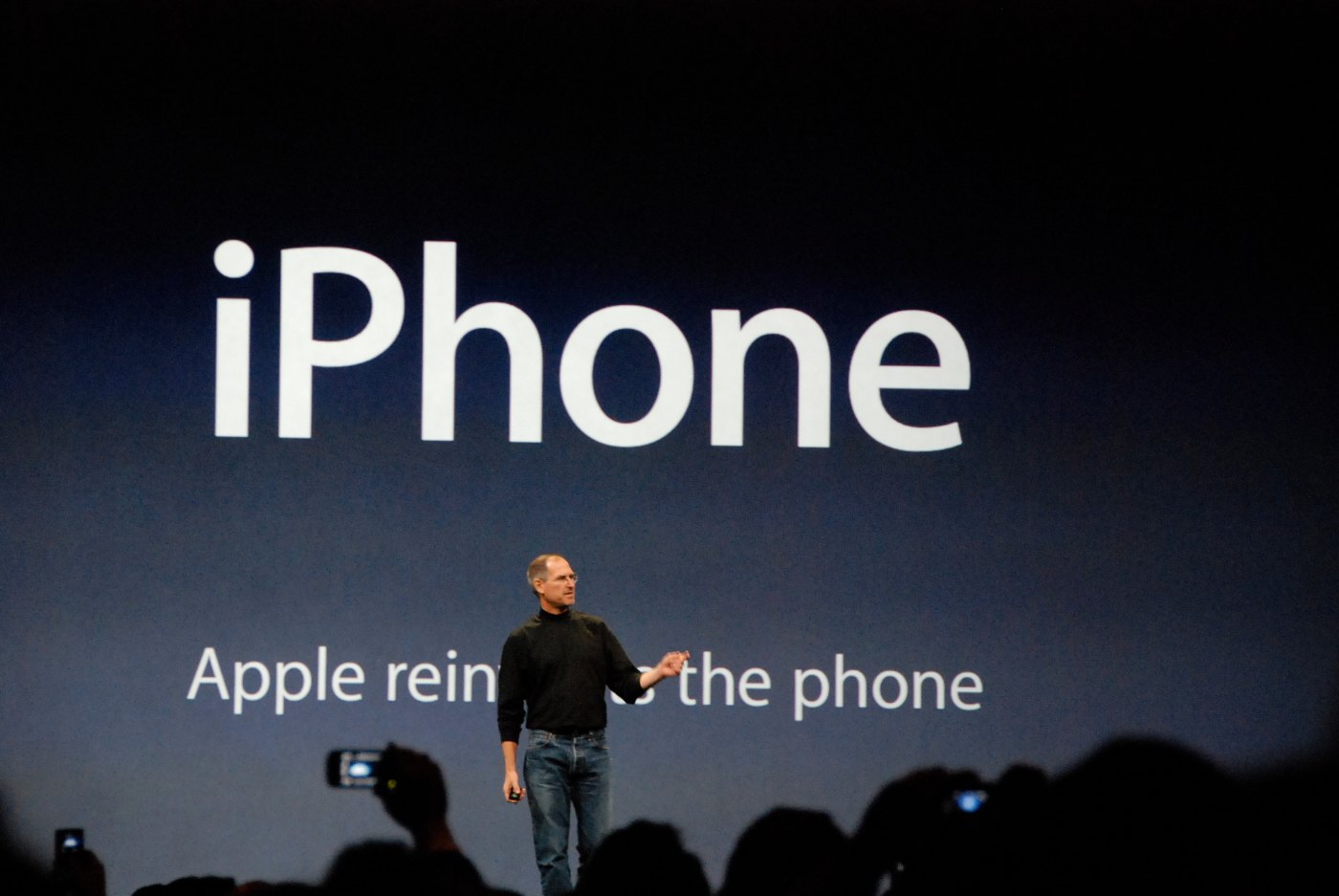
“Today Apple Is Going to Reinvent the Phone”: The 2007 iPhone Keynote
Steve Jobs launched the iPhone with a one-sentence headline, three simple ideas and slides with almost nothing on them, then backed it up with a demo rehearsed for days to hide how unfinished the product was.
The lesson: State the takeaway in one sentence first, then let every slide and demo prove it.
Photo: Blake Patterson (CC BY 2.0), via Wikimedia Commons. Brand: Apple


Al Gore: A Slideshow Given 1,000 Times
Al Gore gave his climate slideshow more than 1,000 times before it became an Oscar-winning film, anchored by a single chart he rode a lift to explain.
The lesson: Rehearse one story until it is tight, then give your biggest number a moment people can see.
Photo: Paul Becker (Becker1999) / Wikimedia Commons, CC BY 2.0

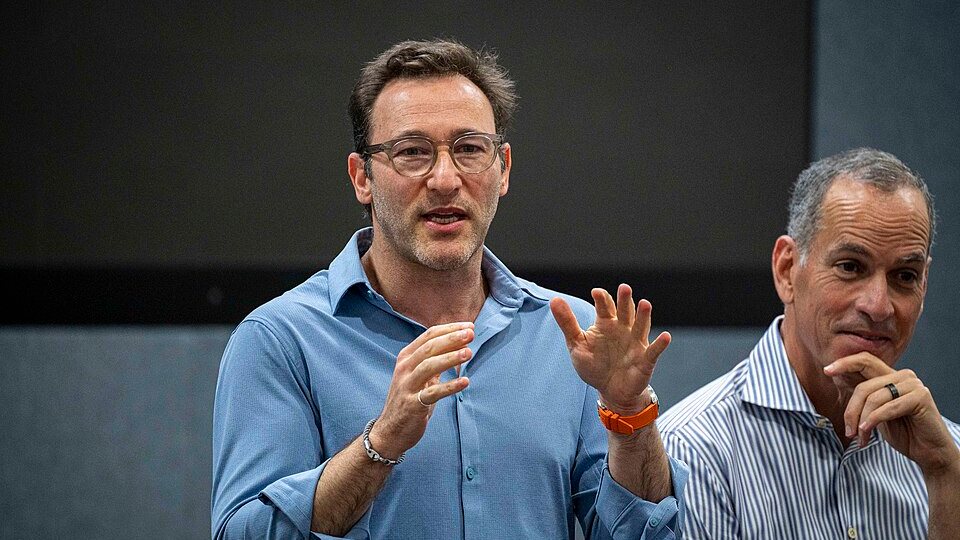
Simon Sinek: Three Circles on a Flip Chart
Simon Sinek drew three circles on a flip chart at a TEDx event and turned it into one of the most-watched TED talks ever.
The lesson: If your audience can redraw your idea from memory, it will travel without you.

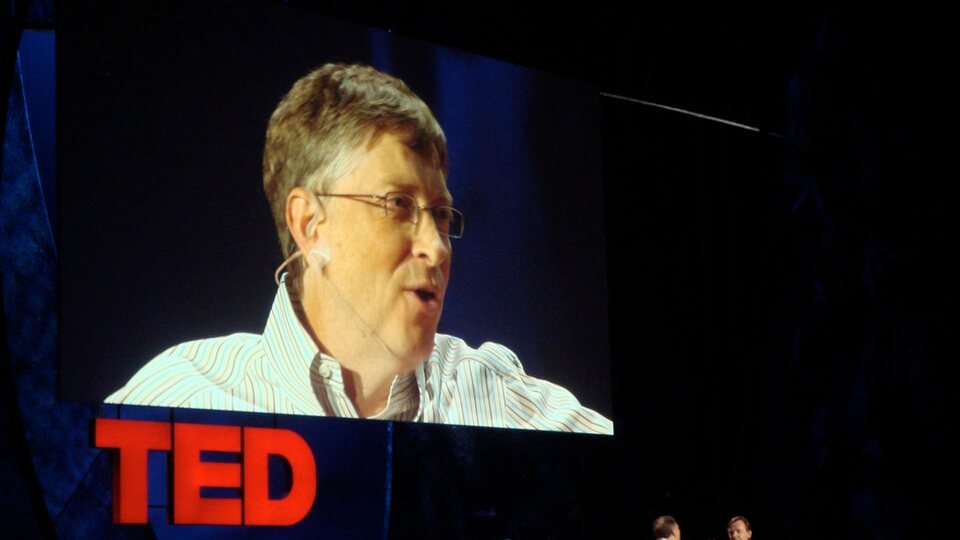
Bill Gates: A Jar of Mosquitoes
Bill Gates released a jar of mosquitoes at TED2009 to make malaria real for a room that had never feared it.
The lesson: When your audience is far from the problem, bring a small, safe piece of it into the room.
Photo: Steve Rosenbaum (Magnify.net) / Wikimedia Commons, CC BY 2.0

Brand images are shown for educational purposes only. Each image and trademark belongs to the brand credited.
Hot take
Answer First or Bust
Pick a side on each pitch take, argue it, then see what leading with the answer says.
Try it
Interactive tool · practice it
Tool · MARK 465
Slide Fix Lab
This results slide (fictional data) tries to say everything at once. Apply the fixes and watch it say one thing clearly.
- 1Fix
- 2Back-row test
- 3Compare
Back-row test
Blurs the slide the way it looks from the last row or a shared screen.All five fixes
Do it
Class work for this topic. The in-class activity counts toward participation, and you get feedback on it.
In-class group activity
Lead With the Answer
Your group will have a one-sentence recommendation for your brand, a three-slide storyline with full-sentence headlines, and answers to the three hardest questions. A 25-minute group activity. Each case study below has its own group activity too. Dr. Morris gives the password in class.
Put it to work: Final Project & Pitch
Your team presents a full digital marketing strategy to your client in 12 minutes, then takes 2 minutes of questions. You also turn in the deck as a PDF. The ten sections come in a set order, and the Executive Summary always goes first. Treat the presentation as the final piece of the campaign, because it is.
Build it in six steps
Write the Executive Summary and Bold Recommendation first
These two slides do the most work. Draft them before the middle slides are done, so every other section supports them. Open “Executive Summary and Bold Recommendation” below for the sentence templates.
Your slide: a summary of 3 sentences or less naming the client, the customer and the recommendation.
Build the ten sections in order
Each channel section points back to the same persona and core recommendation, so the channels work as one system. The Final Pitch Roadmap has the section-by-section checklist and milestones.
Your deliverable: all ten sections, in the required order.
Write every headline as a full sentence
State the slide’s one takeaway in its headline. Practice in the Slide Fix Lab above.
Your slide: a headline like “Reels drove most new sign-ups,” not “Q3 Results.”
Plan the run of show
Ten sections in 12 minutes means about one minute each. Spend extra time where your strategy is strongest. Give each section an owner and plan hand-offs: the speaker who finishes names the next section and the next speaker. Connect sections out loud: “Those search terms are also our short-form video topics.”
Your deliverable: a timed plan with an owner for each section.
Rehearse on a timer
Time yourselves at least twice with the real slides. If you run long, cut words, not sections.
Your deliverable: a full run that finishes in 12 minutes.
Prepare for Q&A
Write down the questions you expect, decide who answers each, and keep answers to about 20 seconds: answer, one piece of evidence, done.
Your deliverable: a question list with owners, two or three backup slides, and the deck exported as a PDF.
A 12-minute run of showTime for each section and the one thing it must land
Use this as a starting plan, then adjust after your first timed run.
| Order | Section | Time | The one thing this section must land |
|---|---|---|---|
| 1 | Executive Summary | 0:45 | Client, customer, recommendation. If the client hears nothing else, they know the plan. |
| 2 | Audience and Personas | 1:30 | What the customer wants, fears and searches for, in their words |
| 3 | SEO and AI Discoverability | 1:15 | The specific search terms and what it takes to get cited in AI answers |
| 4 | Social Media | 1:30 | Which platforms, the role of short-form video, and the 90-day picture of success |
| 5 | Email and Lifecycle | 1:00 | The path from prospect to loyal customer and the key touchpoints |
| 6 | Paid Media | 1:00 | One platform, one audience, one format, and why |
| 7 | Community | 1:00 | How customers will connect with each other, not just follow the brand |
| 8 | Measurement Plan | 1:15 | 3 to 5 KPIs with a 90-day and a 1-year target |
| 9 | Budget Snapshot | 1:00 | Where the money goes and why that split fits the strategy |
| 10 | One Bold Recommendation | 1:00 | The first move, stated as an action the client can start on Monday |
| Transitions and close | 0:45 | A one-line link between sections; end on the bold move, not “any questions?” |
Executive Summary and Bold RecommendationThree sentence templates and the specific, actionable, defensible test
- Sentence 1, the client: “[Client] is a [what they are] that [what they sell or do] for [where or whom].”
- Sentence 2, the customer: “Their best growth opportunity is [persona], who [want or problem] and looks for answers on [where they search].”
- Sentence 3, the strategy: “We recommend [core move] supported by [two or three channels], measured by [main KPI].”
Bold Recommendation test
It is specific (names a channel, an audience and an action), actionable (the client could start this month with what they have), and defensible (you can point to the audit, persona or data that supports it).
Weak: “Grow their social presence.”
Strong: “Launch a weekly short-form series answering the three questions customers Google most, starting with one on [topic], and turn the best one into the first paid test.”
Prepare for Q&AFive likely questions, who answers, and what to have ready
| Likely question | Who answers | Have ready |
|---|---|---|
| Why this channel and not [another one]? | Channel owner | The persona or audit evidence behind the choice |
| What if the budget gets cut in half? | Budget owner | Which line you protect and which you drop first |
| How will we know in 90 days if it is working? | Measurement owner | The one KPI and its 90-day target |
| Can our small team actually do this? | Bold rec owner | Who on the client side does what, and how many hours a week |
| What did competitors do that you would avoid? | Research owner | One competitor example from your kickoff research |
- Keep two or three backup slides after the closing slide (full keyword list, budget detail, persona detail) to pull up if asked.
- If you do not know an answer, say what you would check and how. Do not guess a number.
Before you submitCheck every box before the deck goes in
- [ ] The Executive Summary is first and is 3 sentences or less, naming the client, the customer and the recommendation.
- [ ] All ten sections appear in the required order.
- [ ] Our audience and competitive analysis use real research, not assumptions.
- [ ] Each channel section points back to the same persona and core recommendation, so the channels work as one system.
- [ ] The social section says what success looks like at 90 days.
- [ ] The measurement plan has 3 to 5 KPIs with targets at 90 days and at 1 year.
- [ ] The budget shows a split across channels with a reason for each.
- [ ] Our One Bold Recommendation is specific, actionable and defensible.
- [ ] We ran the full deck on a timer and finished in 12 minutes, with hand-offs planned.
- [ ] We practiced answering likely questions and the deck is exported as a PDF.
Go further
Optional, and worth it. Go past the in-class work: read a case, try the tool and earn this topic’s chip. Finish the chips across the course and you get a marketing funnel card you can post on LinkedIn to show your effort and skills.
From the blog
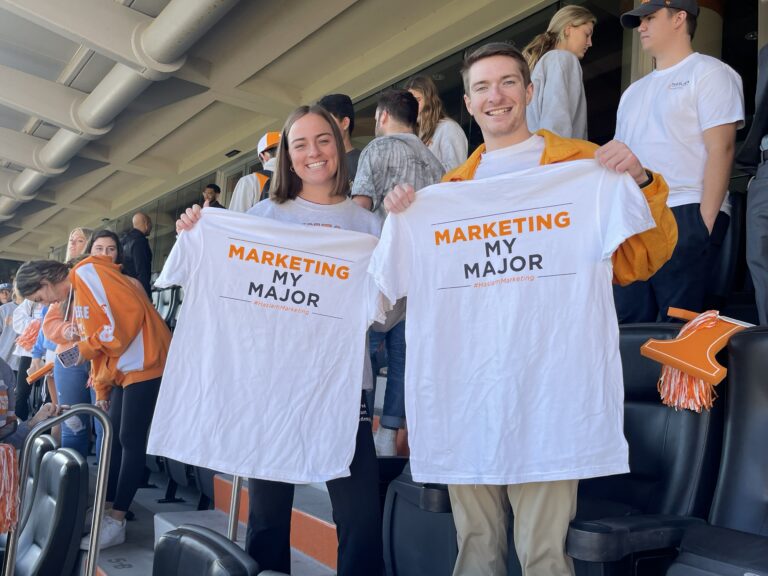
How Marketing Majors Stand Out in Interviews: Prepare, Show Your Thinking, Follow Up
Show your thinking when you present yourself and your work.
From The Lab: Fifteen Minutes Means Fifteen Minutes, on why respecting the time you are given is a leadership skill, and how to plan for it.
Unlock this topic
Do the work, earn the chip
Finish each step on this page to unlock the button that adds this topic to your course card.
Back to all Marketing 465 topics
Frequently asked questions
Frequently asked questions
How should you structure a marketing pitch presentation?
Lead with the answer. Busy clients want your recommendation first, then the evidence that supports it. A strong pitch follows a Why, How, Wow structure: why sets up the insight or problem, how shows your strategic approach and what you found, and wow brings the recommendation to life with creative work.
How do you write a good slide headline?
Write every slide headline as a full sentence that states the slide's one takeaway. A headline like "Reels drove most new sign-ups" tells the audience the point, while a label like "Q3 Results" does not. Each slide should make one idea, and slides should be designed for the back of the room with big type, few words and strong contrast.
What makes a strong bold recommendation in a pitch?
A strong bold recommendation is specific, actionable and defensible. It names a channel, an audience and an action, the client could start it this month with what they have, and you can point to the audit, persona or data that supports it. "Grow their social presence" is weak because it names no clear first move.
How do you present as a team in a group pitch?
A group pitch should look and sound like one person made it. Use one slide template, one set of fonts and one visual tone, and agree on three to five tone words before anyone builds slides. Practice hand-offs so the speaker who finishes names the next section and the next speaker.
How long is the MARK 465 final pitch and how is it timed?
The final pitch is 12 minutes of presentation followed by 2 minutes of questions, with the deck turned in as a PDF. Ten sections in 12 minutes means about one minute each, starting with the Executive Summary. Teams should rehearse on a timer at least twice and, if they run long, cut words, not sections.