The big idea: Human-centered design solves problems by starting with the people who live with them, and it works best when the people doing it bring the mindsets along with the steps. Day 1 is about your own starting point.
In 60 seconds
- Human-centered design starts with the people who live with a problem, then loops through empathize, define, ideate, prototype and test.
- Every idea must pass three tests: desirable to people, feasible to build and run, and viable for the organization to pay for and keep going.
- Mindsets matter as much as steps. Creative confidence is learned, and HCD fits adaptive challenges that have no single right answer.
Do this: find your starting point: take the Mindset Self-Check, back up your strongest and growing mindsets with moments from your own life, and practice calling a London problem technical or adaptive.
How human-centered design works
London Day 1 · Pre-read
Creative Confidence
Tom Kelley and David Kelley, Creative Confidence: Unleashing the Creative Potential Within Us All (2013). Bring your ah-ha moments to class.
Why a leadership course starts with design
Leadership means mobilizing people to do things that matter.
Jules and Lane define human-centered leadership as the process of inspiring and mobilizing people to co-creatively tackle tough challenges and do things that matter. HCD is a practical way to do that: you start with the people who live the challenge, and you bring them along as you find the answer.
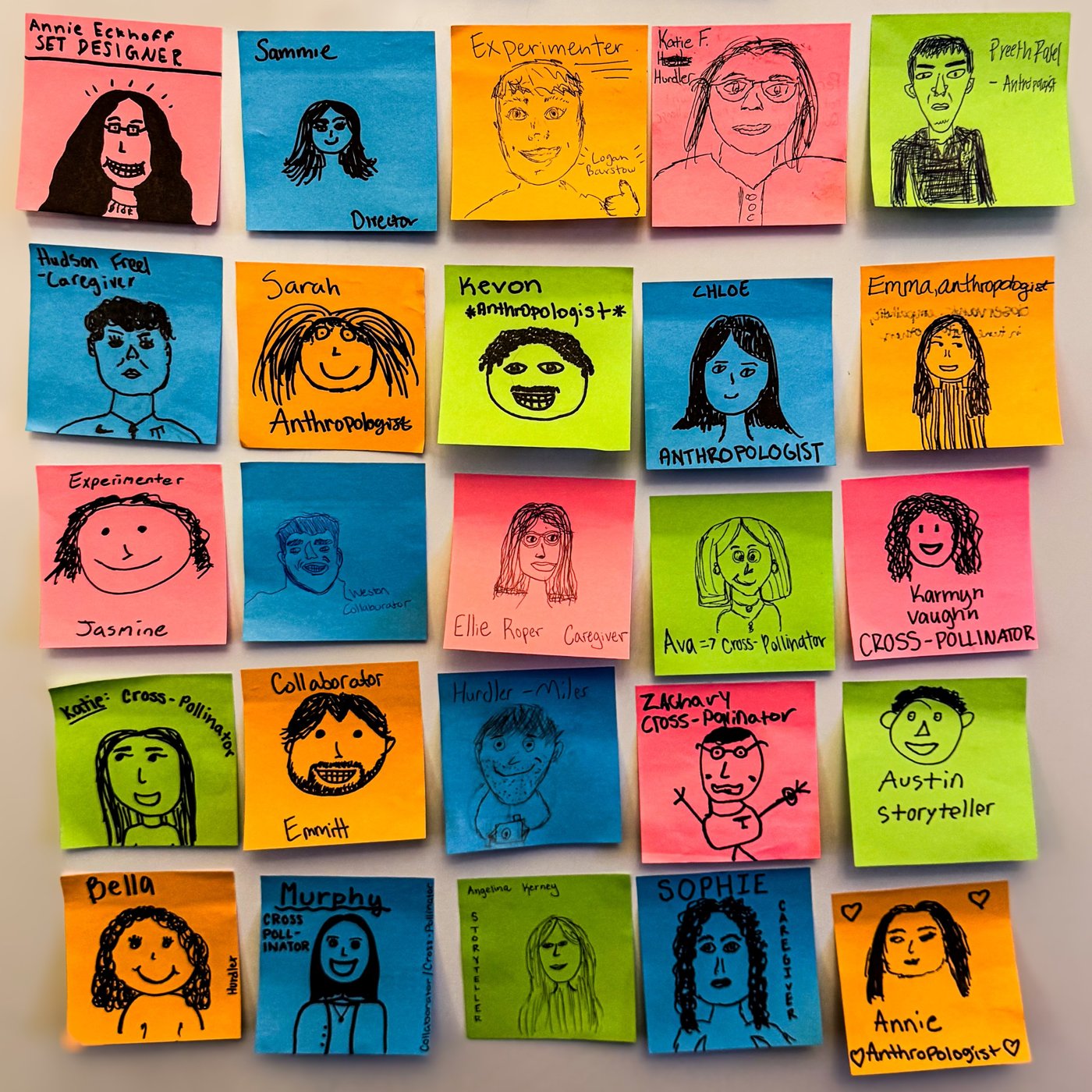
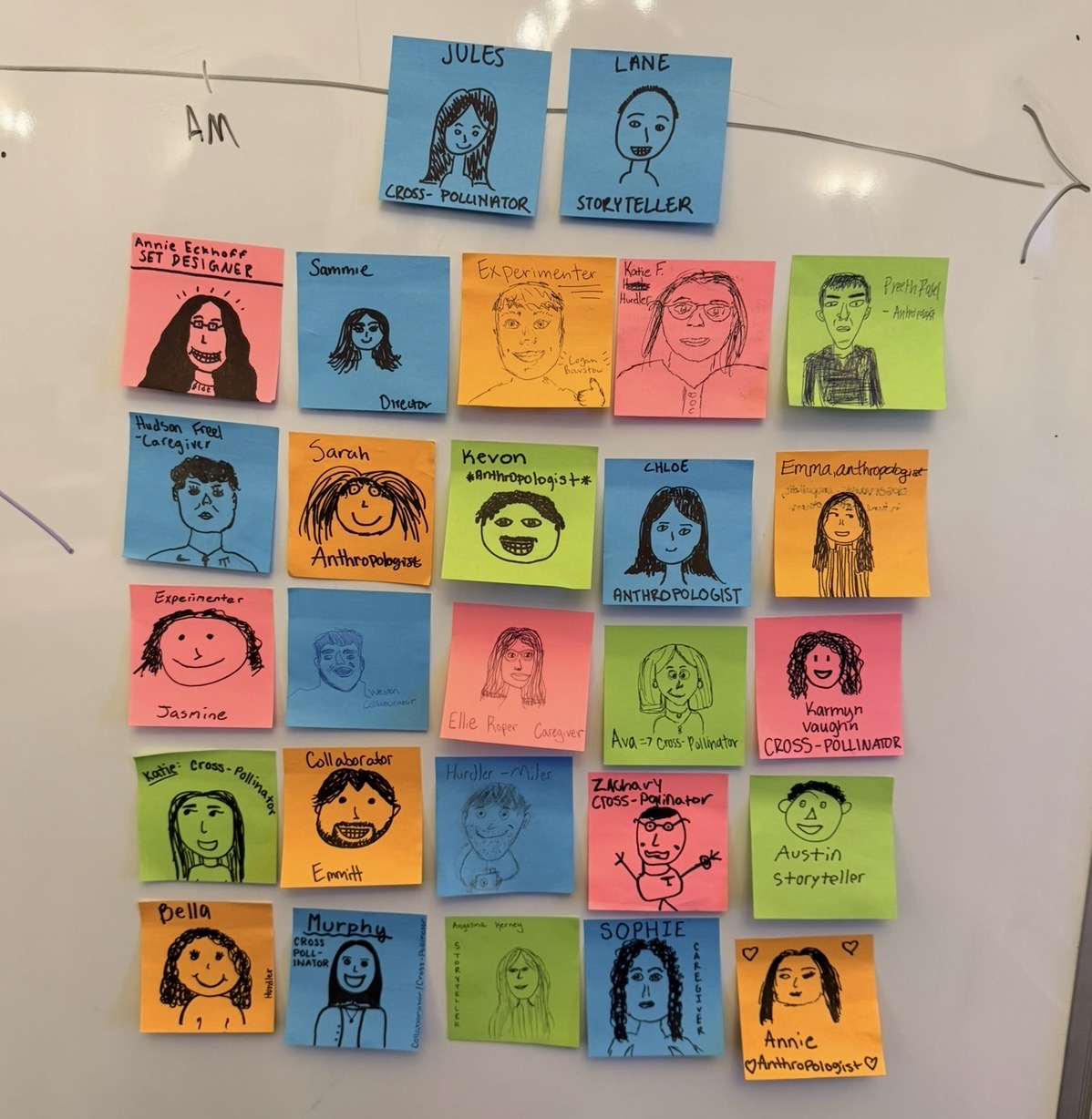
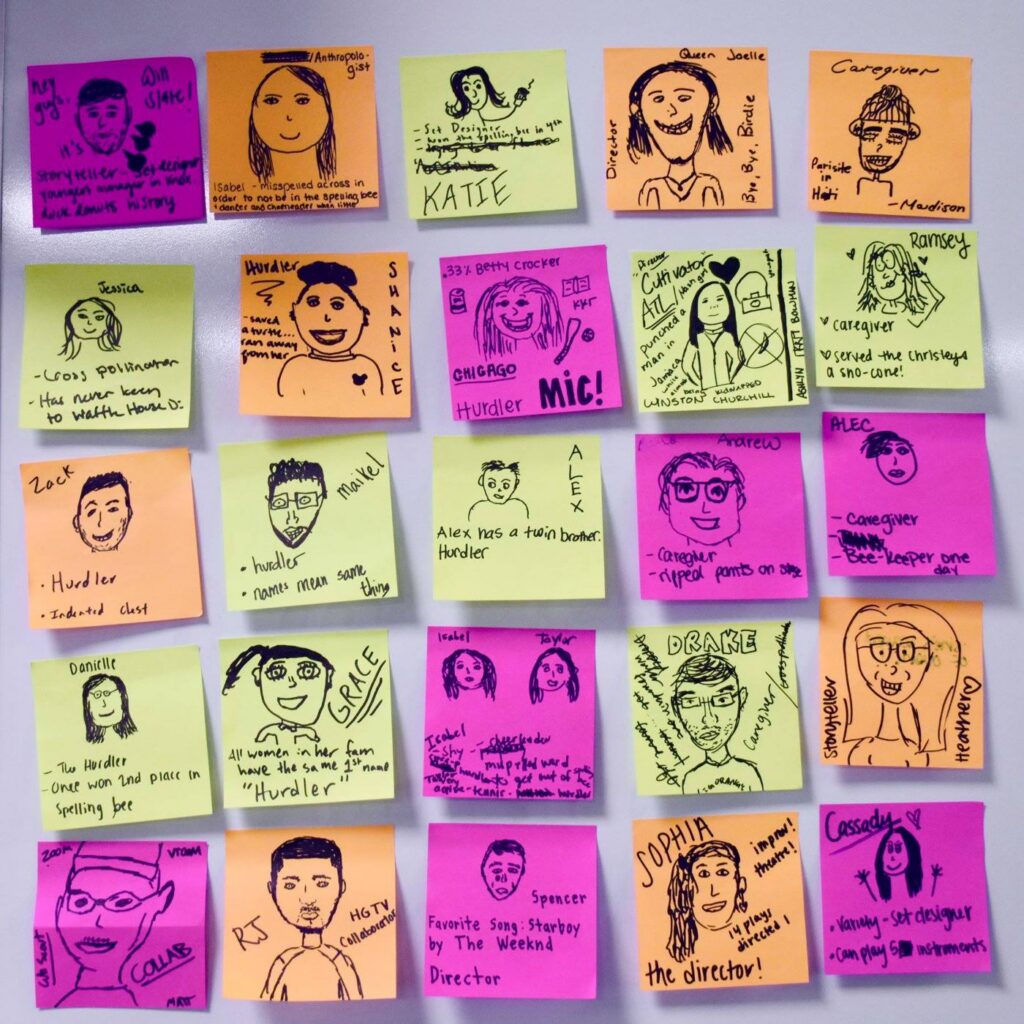
The ten faces of innovation
Ten roles people play on innovative teams.
From Tom Kelley’s The Ten Faces of Innovation (2005). It is a heuristic for noticing strengths, not a test.
Learning roles
Gather new information and keep the team from getting too comfortable.
- AnthropologistObserves how people really behave.
- ExperimenterPrototypes and tests to learn fast.
- Cross-PollinatorBorrows ideas from other fields.
Organizing roles
Move ideas through an organization and past obstacles.
- HurdlerFinds a way around the roadblocks.
- CollaboratorBrings people together across groups.
- DirectorGathers the talent and sets the stage.
Building roles
Turn learning into experiences people feel.
- Experience ArchitectDesigns moments people remember.
- Set DesignerCreates spaces where great work happens.
- CaregiverAnticipates what people need.
- StorytellerBuilds the story that moves people.
Where HCD shows up
Every experience is designed, on purpose or by accident.
Customer experience
Caregiver, Experimenter, Set Designer, Experience Architect.
Employee experience
Cross-Pollinator, Anthropologist, Collaborator.
Organizational experience
Hurdler, Director, Storyteller.
London Day 1
What is human-centered design?
Video
See it in action.
IDEO.org’s short film shows a team designing with the people who would use their product, not just for them. Notice who they talked to first.
Watch: What is Human-Centered Design? (IDEO.org) (opens in a new tab)

What is human-centered design?
It starts and ends with people.
Human-centered design is a creative approach to problem solving. It starts with the people you’re designing for and ends with new solutions that are tailor made to suit their needs.
Tim Brown, IDEO
The full definition
Human-centered design is a creative approach to problem solving. It’s a process that starts with the people you’re designing for and ends with new solutions that are tailor made to suit their needs. Human-centered design is all about:
- building a deep empathy with the people you’re designing for,
- generating tons of ideas,
- building prototypes,
- sharing what you’ve made with the people you’re designing for,
- and eventually putting your innovative new solution out in the world.
A real example: nurses redesign the shift change
A mixed team rebuilt a process in about a week.
- 1What they changedNurses passed information to the next shift in front of the patient, not at the nurses’ station.
- 2How fast they built itA working prototype in about a week, with new procedures and simple software for shift notes.
- 3What happenedBrown reports that the average time between a nurse arriving and first seeing a patient was more than cut in half.
A real example: how HCD worked inside a large hospital system
In his 2008 Harvard Business Review article “Design Thinking,” Tim Brown describes a project at Kaiser Permanente, a large U.S. health care provider. Kaiser taught design thinking to nurses, doctors and administrators in workshops with IDEO, and those workshops produced a portfolio of new ideas.
One team looked at nursing shift changes at four hospitals. The core team mixed a former nurse, an organizational development specialist, a technology expert, a process designer, a union representative and designers.
Notice the mix of disciplines, the quick rough prototype, and the fact that the “product” was a process. Most of your projects will be processes and services too.
Basis of human-centered design
Start with what people desire.
Text version of this diagram
- Desirable: do people want it? Human-centered design starts here.
- Feasible: can we build it, technically and organizationally?
- Viable: can it last financially?
- Human-centered solutions sit where all three overlap.
- Sustainable, an optional fourth lens: is it good for people, community and planet over the long run?
The mindsets
Seven mindsets of a human-centered designer.
Empathy
See the world through other people’s eyes.
Optimism
Believe the problem can be solved.
Embrace ambiguity
Stay open when you don’t know the answer yet.
Make it
Build to think. Show, don’t just tell.
Learn from failure
Treat a miss as information.
Iterate, iterate, iterate
Each version gets you closer.
Creative confidence
Believe you can make a difference with your ideas.

Building on the mindsets
Human-centered leadership adds more.
The Human-Centered Leadership mindsets build on the seven HCD mindsets, with empathy as the foundation.
Action and reframing
Bias to action. Reframe the problem when you are stuck.
Growth
Best self (flourishing), generative, optimistic, curious.
Ways of working
Reflective, creative, adaptive, experiment and embrace failure.
Foundation
Empathy, purposeful, mindful, inclusive positive regard, radical collaboration, holistic thinking, explorer.
The methods
Three phases. Each with its own job.
Inspiration
Learn directly from the people you are designing for. Immerse yourself in their lives and understand their needs.
Ideation
Make sense of what you learned, find opportunities for design, and generate and prototype ideas.
Implementation
Bring your solution to life and figure out how to get it to market and maximize its impact.
The HCD process
Open wide, then narrow. Twice.
Text version of this diagram
- Inspiration: open wide to learn from people, then narrow to what you learned.
- Ideation: open wide again into many ideas, then narrow to a few prototypes.
- Implementation: keep narrowing as you iterate, run a live prototype and pilot.
It’s a messy process
Messy and sometimes ambiguous. That’s normal.
Text version of this diagram
- Research and empathy feel tangled and uncertain.
- Concepts and prototypes start to untangle it.
- By design, the line is clear and focused.
The whole journey
What happens in each phase.
Inspiration
- Frame your design challenge
- Secondary research
- People, experts, immersion, analogous inspiration
- Extremes and mainstreams
- Interview techniques
- Create a plan, then field research
Ideation
- Synthesis: download learnings, find themes and insights, craft How Might We questions
- Brainstorming: rules and top ideas
- Prototyping: storyboard, rapid prototype, test and get feedback, integrate feedback and iterate
Implementation
- Keep iterating
- Live prototyping
- Pilot
Text version of this diagram
- Inspiration: open wide to learn from people, then narrow to what you learned.
- Ideation: open wide again into many ideas, then narrow to a few prototypes.
- Implementation: keep narrowing as you iterate, run a live prototype and pilot.
HCD in every business major
The same method, pointed at different problems.
Finance
Why do department managers keep missing the budget deadline, and what are they doing instead?
Supply chain
How do warehouse pickers work around the handheld scanner, and why?
Business analytics
Why does a dashboard the team asked for go unused after a month?
International business
How does a first-time visitor experience a new city in their first 24 hours?
A human-centered question for every major
| Major | A human-centered question |
|---|---|
| Finance | Why do department managers keep missing the budget deadline, and what are they doing instead? |
| Accounting | What makes expense reports so painful that people put them off for weeks? |
| Supply chain | How do warehouse pickers work around the handheld scanner, and why? |
| Management and HR | What does a new hire’s first week feel like on the night shift? |
| Business analytics | Why does a dashboard the team asked for go unused after a month? |
| Economics | How do people actually choose between options when they are tired and rushed? |
| International business | How does a first-time visitor experience a new city in their first 24 hours? |
Creative Confidence
How to build your creative confidence.
David Kelley’s TED talk on getting past the fear of judgment.
The four fears that block creative confidence
Name the fear, then take the next small step.
Fear of the messy unknown
Staying at your desk feels safer than going out to talk to strangers.
Next step: go out early and often, even for ten minutes.
Fear of being judged
You hold back ideas because someone might think they are dumb.
Next step: label it a wild idea and invite others to build on it.
Fear of the first step
The project feels so big you never start.
Next step: shrink the first move until it is easy, like one interview today.
Fear of losing control
Letting others shape the idea feels risky.
Next step: share early and let the best idea win, even if it is not yours.
Where the four fears come from
In “Reclaim Your Creative Confidence” (Harvard Business Review, 2012), Tom and David Kelley name four fears. They borrow from psychologist Albert Bandura, who helped people overcome a fear of snakes through small, guided steps he called “guided mastery.”
A heuristic: the Ten Faces of Innovation
Tom Kelley of IDEO names ten roles people play in innovation work, from the Anthropologist who watches people closely to the Storyteller who wins support for an idea.
A heuristic, not a personality test. Use it to notice roles you lean toward, then try a different one.
HCD mindsets
Hear each mindset explained.
Short IDEO.org videos, one per mindset.
Design thinking mindsets
Living design thinking every day.
Adapted from the Stanford d.school’s design thinking mindsets.
Focus on human values
Empathy for the people you design for, and their feedback.
Be curious
Seek to understand as much as you can.
Embrace experimentation
Prototype to think, learn and solve.
Iterate everything
Solve, then solve again with each round.
Be mindful of process
Know where you are and which methods fit.
Show, don’t tell
Communicate with experiences, visuals and stories.
Inspire and be inspired
Share your work to energize others.
Words matter
Use language that drives the behaviors you want.
Myth or fact
HCD Day 1: Myth or Fact?
Before teams form in London, call each statement about human-centered design a myth or a fact.
Try it: HCD Mindset Self-Check
Tool · IB 407
HCD Mindset Self-Check
Seven moments from one design project. Pick what you would most likely do, not what sounds best.
- 1Answer
- 2See profile
- 3Practice
Practice next in London
Your mindset profile
Put it to work: get ready for the London design challenge
In London your class works like a consulting firm with a real client challenge. Teams form on Day 2 and move through five HCD phases together: Empathy, Interpret/Define, Ideate, Prototype, and Testing and Storytelling. Day 1 is about you: the mindsets, creative confidence and judgment you bring to whatever team you join.
Get ready in five steps
Run the Mindset Self-Check
Answer for real, not for the option that sounds best. Note which mindsets come up Strong and which come up Growing.
Name your starting point
Pick your strongest mindset and the one you most want to grow. For each, write down a moment from your own life that shows it: a job, a sport, a class project, a trip. If the tool and your life disagree, trust your life.
Practice the technical or adaptive call
Pick a problem you have run into in London so far, like finding the right exit from a busy Tube station. List what you would have to learn from people before you could solve it. A long list suggests adaptive. A known fix an expert could apply suggests technical.
Face one fear
Read the four fears that block creative confidence. Name the one you feel most, then shrink it to one small step you will take this week, like sharing a wild idea out loud on Day 2.
Know the check you bring
Desirable, feasible and viable are how every final idea will be judged. Decide which test your major helps you check best, so you can offer it when teams form.
Do this, not thatHabits that help in an intensive week
Do this
- Get out of the classroom early. Start noticing how real people move through London on day one.
- Share rough ideas fast and invite people to build on them.
- Once teams form, use every major: someone checks feasible, someone checks viable.
- Treat a failed test as the most useful thing that happened that day.
- Use AI to brainstorm or practice interviews, then check it against what people told you, and note how you used it.
Not that
- Starting with a solution and looking for users to agree.
- Waiting until the plan is perfect before you build anything.
- One person doing all the talking in interviews or presentations.
- Defending your prototype when a user struggles with it.
- Treating the phases as a checklist you finish once.
Before teams formA quick checklist for the end of Day 1
- [ ] I can explain the five phases and why they loop.
- [ ] I can name the seven Field Guide mindsets, my strongest one and the one I will practice.
- [ ] I can tell a technical problem from an adaptive challenge and give a London example of each.
- [ ] I can name the fear that most often holds me back and one small step against it.
Go deeper
Back to all IB 407 topics · Next: Frame the Challenge: Problems, Questions and Secondary Research
Day 1 assignment · 5 min
Creative Self-Efficacy Check: Beginning of Class
Rate three statements about how you see your own creativity and send your answers to your instructors. You will take the same check at the end of the course to see your before and after. Your instructor will give you the password in class.
Part of the Smith GLS human-centered leadership sequence: IB 407, BUAD 317 and BUAD 497, toward the Human Centered Consulting Certificate.
Frequently asked questions
What is human-centered design?
Human-centered design (HCD) solves problems by starting with the people who live with them. It moves through five phases: empathize, define, ideate, prototype and test, and in practice it loops back as teams learn. It works in a hospital, a finance team, a warehouse or a city office, because each has people trying to get something done.
What does desirable, feasible and viable mean in design thinking?
These are the three tests every idea must pass. Desirable asks whether people actually want it, proven through empathy, interviews and testing. Feasible asks whether it can be built and run with the available people, tools and processes. Viable asks whether the organization can pay for it and keep it going. Each business major tends to be strongest at one of these checks.
What are the mindsets of human-centered design?
The IDEO.org Field Guide lists seven mindsets: empathy, creative confidence, make it, learn from failure, embrace ambiguity, optimism, and iterate, iterate, iterate. The IB 407 course adds collaboration, curiosity, vulnerability, abundance over scarcity, reflection and purpose. HCD works best when each person brings these mindsets along with the steps.
What fears block creative confidence?
Tom and David Kelley name four fears: fear of the messy unknown, fear of being judged, fear of the first step and fear of losing control. Their answer borrows from Albert Bandura's guided mastery: take small steps. Go out early, label a wild idea and invite others to build on it, shrink the first move, and share early.
What is an example of human-centered design in a hospital?
Tim Brown's 2008 Harvard Business Review article describes Kaiser Permanente nurses redesigning shift changes with IDEO. A mixed team built a working prototype in about a week, and nurses began passing information to the next shift in front of the patient. Brown reports the average time before a nurse first saw a patient was more than cut in half.