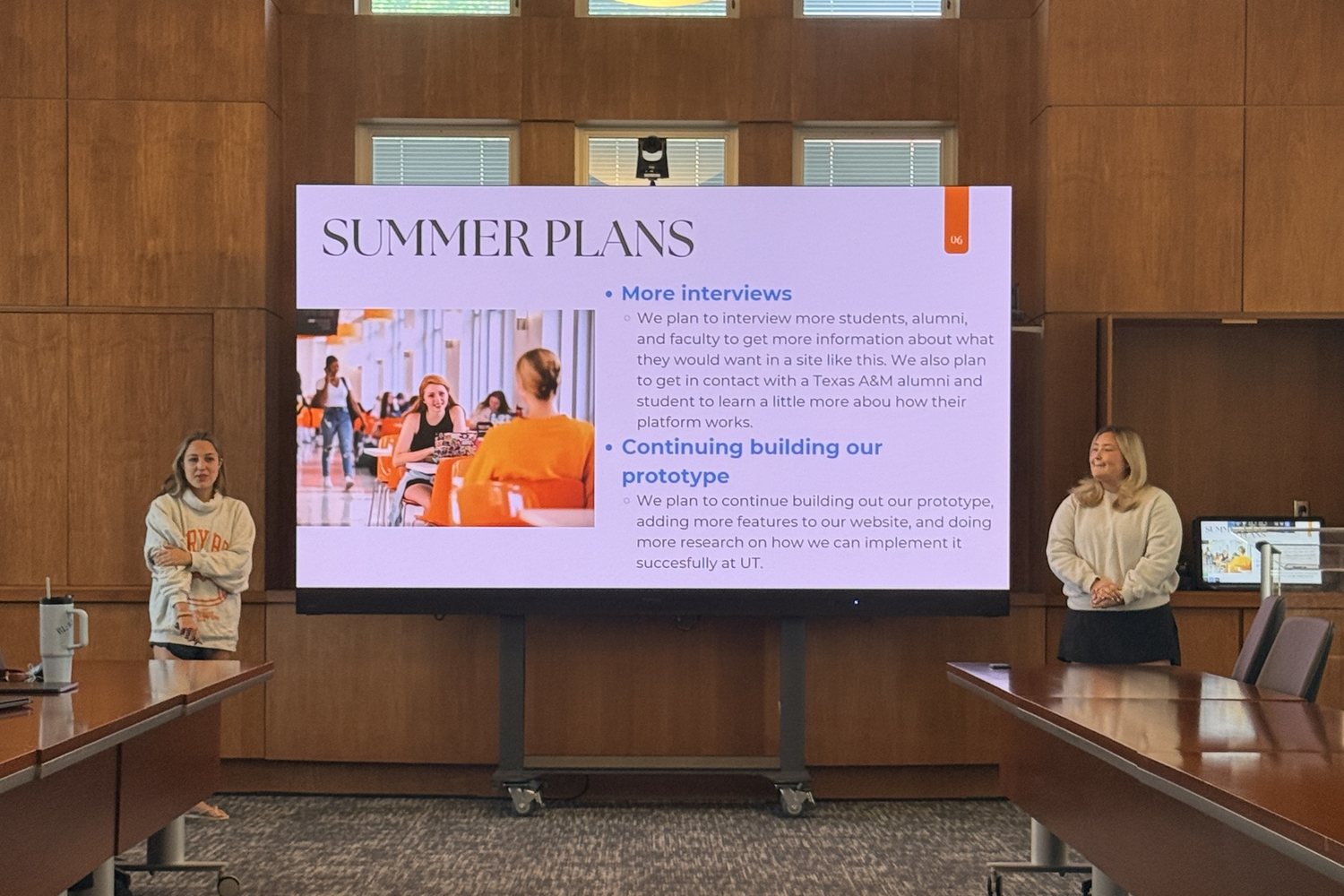
The big idea: Class 14 is not the end. Your summer plan is the commitment that carries your team’s tested prototype into BUAD 497.
How the summer plan and BUAD 497 connect
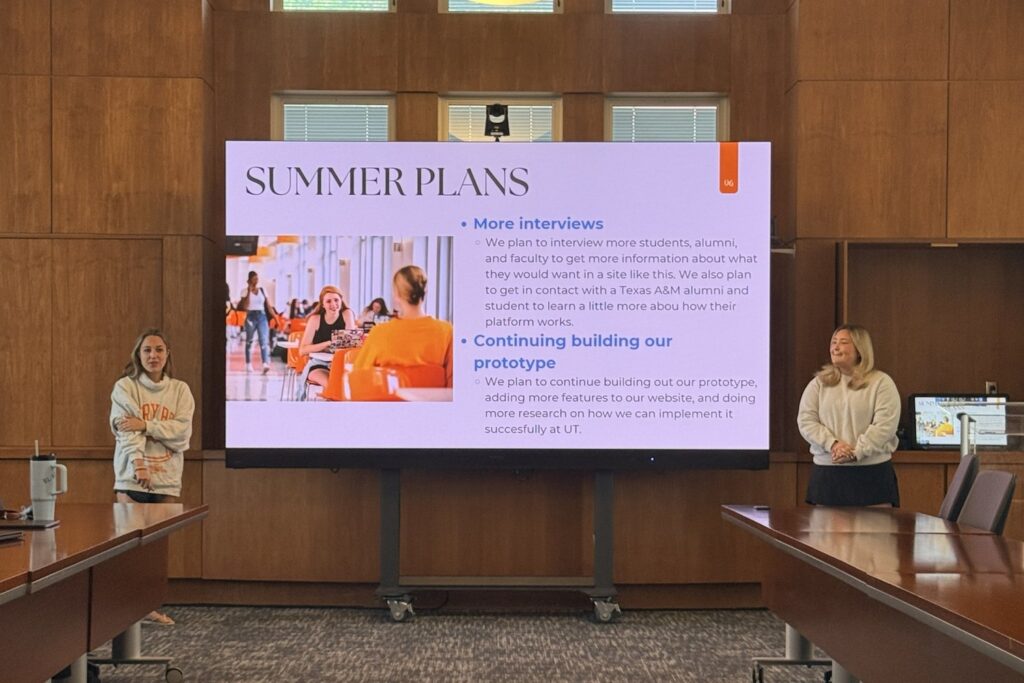
How the summer plan and BUAD 497 connect
Class 14 is not the end. The project is just beginning.
Your prototype team stays together through senior year, and the syllabus says it plainly: the project is just beginning, and the work should continue through the summer. Three things carry it forward: a summer project plan, a slide and poster template, and the BUAD 497 technical report.
Your HCD project plan for the summer
Agree on three answers before you leave.
When fall semester starts, your team gives an update on how far the prototype has come. Agree on these answers before you leave for the summer.
How you will work together
Your goals for meeting over the summer, and when you will meet in the fall besides class.
Strong answer: a set rhythm (“every other Sunday by video”), not “we’ll text.”
Your prototype timeline
How you will keep developing the prototype: a summer goal and a fall goal.
Strong answer: a number you can check (“version 4, tested with 5 more users”).
Who you will speak with
Your plan for getting more input from key stakeholders. Name them by role.
Strong answer: users, an expert and a decision maker, each with a reason.

Get your idea into the world
Keep iterating, run it live, then pilot.
These three steps make up Implementation, the phase your project enters after Class 14.
- Keep iteratingTesting, getting feedback and iterating help you get a strong solution to market and learn how to push it forward.
- Live prototypingRun your solution for a couple of weeks out in the real world.
- PilotA longer-term test of your solution, and a critical step before going to market.
One template, from Capstone to poster
One ten-part template, from Capstone slides to EUReCA poster.
What goes in each of the ten parts
The course’s PowerPoint and poster template has ten parts. You can use it to build your Capstone slides, and the same structure becomes your EUReCA poster in the spring of senior year.
- Title and team info. Project name, team name and members, course, instructors, semester, Smith GLS logo.
- Inquiry statement. The real-world challenge, why it matters to your users, how it emerged from listening and observing, framed as “How might we…?”
- Generative research process. Your methods, who you involved and how you built trust, and one user quote or insight that guided you.
- Insight and interpretation. Patterns, tensions and surprises. Optional visuals: empathy map, journey map, persona, insight clusters.
- Ideation: your solution. What you created, how it was co-developed or tested, with a sketch, mock-up or prototype image.
- Reflection and iteration. The feet-on-the-street feedback you received, how you revised, what worked and what did not.
- Implementation: business plan elements. Who benefits, key parts of your Value Proposition Canvas and Business Model Canvas, social or community impact.
- Action and learning loop. What you would do next (refine, re-test, scale, new stakeholders), what you still wonder, what you would do differently.
- Key takeaway or theory of change. What you learned as researchers and designers. Optional: “If we [do this], then [this outcome] is more likely for [this group].”
- QR code. A link to your full report, prototype, video pitch or slide deck.
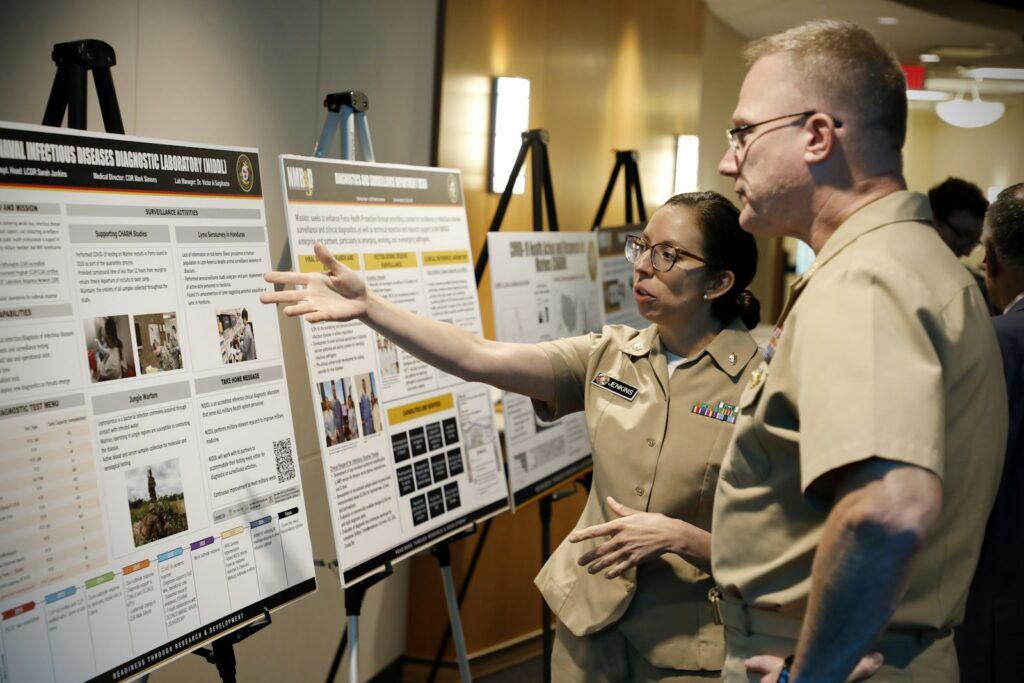
Visual tips from the template
Make your inquiry and process visible.
- Use clear headings, diagrams and user-centered visuals.
- Avoid walls of text and go for flow and storytelling.
- Practice a 2 to 3 minute walk-through that moves from research to insight to impact.
What you can do next
Keep practicing after the course ends.
- Talkwith someone you’re designing for. Ask them to share their experience with you.
- Leada brainstorm with your team.
- Takea prototype to your next meeting to prompt discussion.
- ExploreDesignKit.org for more ways to learn, practice and share.
- Joinopen innovation: IDEO.org’s Amplify challenges take on some of the world’s biggest problems.
Debrief and reflections
Before you move on, look back.

Three debrief questions
- Surprise“What surprised you most about the people you designed for?”
- Do-over“What would you do differently if you started again tomorrow?”
- Growth“Which HCD mindset grew most for you, and when?”
Why each question matters
- Surprise. Surprises mark the needs you would have missed from a desk.
- Do-over. Your answer is a strong first line for your summer plan.
- Growth. Name the mindset and the moment. That story belongs in your reflection.
Hot take
Hot Takes on Your Summer Plan
Pick a side on each claim about keeping your prototype moving into BUAD 497, then see what this topic says.
Unlock this topic
Do the work, earn the stop
Finish each step on this page to unlock the button that adds this topic to your research trail.
Back to all BUAD 317 topics · Back: The Capstone Presentation · Next: Is Our Research Good? The Big Tent Criteria
Part of BUAD 317, taught by Lane Morris, PhD and Jules Morris, PhD, in the Smith GLS human-centered leadership program, toward the Human Centered Consulting Certificate.