The big idea
AI is only as good as the thinking you give it. It reflects your strategy, or shows that you don’t have one. Your value is judgment, empathy and accountability, which no tool can supply.
Topic soundtrack
Robots, Rhythm and Reach
Robots, synths and a little Daft Punk. Let the machines keep the beat while you keep the judgment.
In 60 seconds
- AI is only as good as the thinking you give it, so you supply the direction and the judgment.
- Brief AI in five parts: role, task, audience, tone and voice, and constraints.
- At least 70 percent of a campaign should be human thinking, and every AI output needs human review.
Do this: build and test a seven-part prompt for your brand in the Prompt Glow-Up Challenge, with a before and after caption.
Slides

How AI works in marketing
AI speeds up the work. You supply the judgment.
AI already writes copy, makes images, personalizes what each person sees and is changing how people search. It speeds up the work. You still supply the direction and the judgment.
Three kinds of marketing AI
Three kinds of AI. Three different jobs.
Automation AI
Takes over repetitive, manual tasks so people can spend time on strategy.
Examples: automated email sequences, programmatic ad bidding, chatbots for routine questions.
Augmentation AI
Gives marketers better insight so they make better decisions.
Examples: predicting which customers may leave, sentiment analysis of social posts, A/B test optimization.
Generative AI
Creates new content from a prompt: blog drafts, ad copy, video scripts, images from text. It can write dozens of headlines in seconds, so testing many versions beats guessing at one.
Watch out: every variation still needs a person to decide if it is on brand and true.
Where AI helps and where it hurts
The best AI is the AI customers never notice.
Invisible AI works
AI does best quietly in the background, like recommendations and well-timed offers. Shoppers see the result, not the machine.
Visible AI often fails
It fails when it replaces human judgment in moments that matter, such as health, money and customer problems.
When AI is visible (and infuriating): four examples
- Trying to reach your doctor. Press 1 for billing. Press 2 for appointments. Say your date of birth. Sorry, I didn’t get that. A 2024 Gartner survey found 64 percent of customers would prefer companies not use AI for customer service.
- Scheduling car maintenance. The chatbot can’t find your VIN, can’t book the appointment and can’t transfer you to a human. You hang up and call the dealership directly.
- DPD’s chatbot (2024). A customer who couldn’t track his lost package asked the UK delivery company’s chatbot to write a poem about its own terrible service. It did. He posted it, it went viral, and DPD shut the chatbot down the next day.
- Health insurance disputes. Complex, emotional, high-stakes decisions routed through a bot that can’t understand context. This is where AI causes real harm.
The lesson: AI works when it’s invisible and helpful. It fails when it replaces human judgment in moments that actually matter to people.
When AI is invisible (and working)
You see the ad. You don’t see the machine.
One ordinary phone screen. Four places AI is quietly at work.
More on these four examples
- Taco Bell and KFC (Yum Brands): AI analyzed your order history, the time of day and what’s trending, then sent you a push notification at exactly the right moment: “Craving a Crunch Wrap? Here’s 20% off, today only.” Yum Brands sent 200M+ of those messages, and they were 5x more effective than generic blasts.
- Spotify and Netflix: every “Daily Mix,” “Because you watched” and autoplay recommendation is AI. It’s a model that knows your taste better than you do, and it keeps you on the platform longer.
- Amazon: Amazon’s recommendation engine drives an estimated 35% of all its revenue, silently, every time you shop.
- Zalando and Unilever: Zalando is Europe’s biggest online fashion store. Unilever makes Dove, TRESemmé and Vaseline. Both use AI to generate hundreds of product photos and ad images per campaign, in days, not weeks.

See it in the wild
When the AI is not invisible.
In 2024, Coca-Cola remade its famous “Holidays Are Coming” truck ad using generative AI.
What happenedViewers spotted the AI look right away, and many called it soulless.
The contrastThe AI behind personalized offers works because no one notices it.
The lessonUse AI where it helps people, and be careful when it replaces the human feeling a brand is known for.
Where AI falls short, and where you come in
AI can’t judge or be responsible. That’s your edge.
- Know your client. Its business, its customers, its history.
- Find the real point of difference. What only this brand can say.
- Feel what the audience feels. Empathy no tool can supply.
- Make the call. Treat AI like a brilliant intern who needs your direction.
What AI can’t do (yet)
- Judge. It has no taste and can’t read a room.
- Be responsible. It can’t be held accountable and can’t build trust.
The eight limits in more detail:
- It hallucinates. AI confidently makes things up: fake citations, wrong statistics, invented quotes. It doesn’t know what it doesn’t know.
- It has no taste. AI can produce. It cannot judge. It only knows if something matches patterns it has seen before.
- It has no real-time knowledge. Most models have a training cutoff. They don’t know what happened last week or in your client’s last campaign.
- It has no relationships. AI cannot read a room, sense tension in a client meeting, or know that the CMO hates a certain word. You can.
- It cannot be accountable. When AI gets it wrong, someone still has to own it. That someone is you.
- It reflects bias. AI is trained on human data, so it inherits human bias, and it doesn’t self-correct. Dove’s campaign proved this.
- It has no strategic instinct. AI can generate 100 options. It cannot tell you which one is right for this brand, this moment, this audience.
- It cannot build trust. Brands are built on relationships. AI can support that. It cannot replace it.
The goal is not to fear these limits. It’s to know them, so you know exactly where you add value.
Your edge in more detail, and the brilliant intern
- Know your client. AI knows categories. You know the business, the politics, the culture, the history. That context is everything.
- Find the real difference. Differentiation lives in nuance AI cannot access. You’ve been in the room. AI hasn’t.
- Feel what the audience feels. Empathy isn’t a prompt. It’s lived experience.
- Make the call. AI generates options fast. Deciding which one is right, and why, is the job.
Think of AI as a brilliant intern. Fast. Willing. Never tired. But it needs direction, context, and someone to decide if the work is actually good. That someone is you.
Live demo: same product, two prompts
The output is only as good as the thinking you put in.
Round 1: no context
“Write an Instagram caption for the Nike Pegasus 42.”
No audience, voice or campaign. Generic output.
Round 2: with strategy
“Write an Instagram caption for the Nike Pegasus 42. Audience: everyday runners, women 28 to 35. Voice: motivational but human. Theme: ‘Run Your Way.’”
AI reflects your strategy, or your lack of one.
Product: Nike Pegasus 42 (opens in a new tab)
Brief it in five parts
A strong prompt has five parts.
Here is one prompt, taken apart. Each color is one part.
Then: iterate, ask it to explain its choices, and edit before anything goes out.
The five parts in detail, with a weak and a strong prompt
The quality of your output is determined by the quality of your input.
- Role: tell AI who it is. “You are a brand strategist working for a challenger brand in the athletic wear category.” Context changes everything.
- Task: be specific about what you want. Not “write a caption” but “write three Instagram captions, each under 150 characters, with a call to action.”
- Audience: who is this for? Age, mindset, platform, relationship to the brand. AI cannot assume this. You have to tell it.
- Tone and voice: motivational but human. Witty but not sarcastic. Professional but not corporate. Give it guardrails.
- Constraints: word count, format, what to avoid, what must be included. The more specific, the better the output.
Weak prompt: “Write a tagline for Nike.”
Strong prompt: “Write 5 tagline options for Nike’s Pegasus 42 launch targeting women 28 to 35 who run recreationally. Voice: motivational but grounded. Avoid clichés like ‘just do it’ energy. Each under 8 words.”
- Iterate, don’t accept. Your first output is a draft, not a deliverable. Push back, refine, ask for variations.
- Ask it to explain. “Why did you make that choice?” forces the AI to surface its reasoning and helps you evaluate it.
- You are the editor. AI is the first draft. You are the final judgment. Never publish without reading it as a human first.
See it in the wild
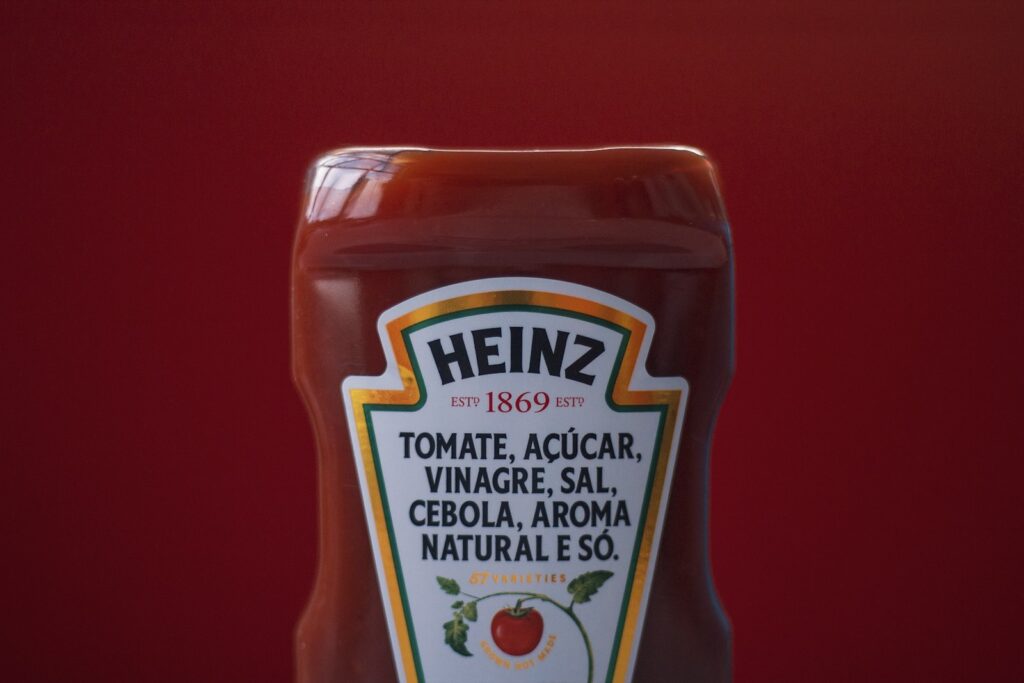
Heinz gave AI a smart brief.
In 2022, Heinz asked an AI image tool to draw “ketchup” and posted what came back.
The taskDraw ketchup, with no brand named in the prompt.
The resultImage after image looked like a Heinz bottle.
The idea“A.I. Ketchup” turned the experiment into proof that Heinz is what people picture.
The 70/30 rule
People own the direction. AI speeds up the routine.
At least 70 percent of a campaign should be human thinking, and about 30 percent can be AI support. The exact ratio changes by brand and campaign.
The 70/30 Rule: how to split a campaign between people and AI
People own direction and judgment. AI speeds up the routine, high-volume parts.
| 70% or more: human | About 30%: AI |
|---|---|
| Strategic direction and campaign goals | Data analysis and audience segmentation |
| Creative concept development | Content variations and personalization |
| Defining the brand voice and its guardrails | First drafts and ideation |
| Emotional resonance and cultural context | Performance prediction and optimization |
| Final review and approval | Routine task automation |
Quick check
Person or AI? Who owns it?
Trailhead Outfitters is planning its spring boot launch. Use the 70/30 rule: who should own each job? Decide, then open the answers.
- 1Choosing the goal for the spring launch.
- 2Writing 40 versions of one headline to test.
- 3Deciding if a joke in the ad still works after a big news event.
- 4Sorting the customer list into groups by what they buy.
- 5Saying yes to the final ad before it runs.
Check your answers
- Person. Strategic direction and campaign goals.
- AI drafts, a person picks. Content variations are AI work, but every one still needs a person to decide if it is on brand and true.
- Person. Emotional resonance and cultural context.
- AI. Data analysis and audience segmentation.
- Person. Final review and approval.
Trailhead Outfitters is an invented brand.
AI search changes discovery
One AI answer is replacing a page of links.
Search used to be a directory. Now it’s a casual conversation. If your brand isn’t in that answer, people won’t find it.
Use AI with integrity
Say what you used. Check what it made.
- Use it to brainstorm, draft, research and explore visuals.
- Always say which tool you used and for what.
- Never pass off AI output as your own strategic thinking.
Ethical risks to manage: bias, privacy, hallucinations and deepfakes
Fact-checking is only one part of using AI responsibly. Watch for these four risks on every project.
- Bias amplification: AI learns from existing data. If the data is biased, the output will be too. Ad targeting can quietly exclude groups, and content can repeat stereotypes.
- Data privacy and security: anything you put into an AI tool may be stored or shared. Know your company’s data rules before you upload customer information.
- Hallucinations: AI states false information with confidence. Every piece of AI content needs human review.
- Deepfakes: AI can create convincing fake images, video and audio. Brands face impersonation and misinformation, and consumer trust erodes.
How to disclose AI use: what a disclosure says and where it goes
Many brands now tell customers when AI helped make a campaign. A simple disclosure says that some elements were created with AI tools, that people reviewed everything for accuracy and brand fit, and that the brand welcomes feedback.
- Note AI use in campaign briefs and creative credits.
- Use tiered disclosure: say more when AI did more of the work.
- Publish a page that explains how and why the brand uses AI.
- Review the policy regularly as tools and customer expectations change.
Why the human part matters
Algorithms don’t have a consciousness so they never care about you.
Mark Schaefer
Will AI take your job?
Not if you’re good at the human parts of marketing.
Roles at risk
Execution-only work: generic copywriting, basic design, data entry, templated reports.
Roles that grow
Strategy, brand management, creative direction, client relationships, insight generation.
The new skill: directing AI well. Write strong prompts, judge the output, and design workflows where people and AI each do what they do best.
Will AI take your job? Roles at risk, roles that grow and the skills to build now
Not if you are good at the human parts of marketing. AI is taking over jobs that are mostly about producing output. It cannot replace the person who knows why a brand exists, what an audience needs, and how to decide when the data is unclear.
| Roles at risk | Roles that grow | The new skill |
|---|---|---|
| Execution-only work: generic copywriting, basic design, data entry, templated reports | Strategy, brand management, creative direction, client relationships, insight generation | Directing AI well: writing strong prompts, judging output, and designing workflows where people and AI each do what they do best |
- Skills to build now: prompting for marketing content, evaluating and refining AI output, reading data for insight, and designing human and AI workflows.
- Stay curious and keep experimenting. The tools change constantly, and asking the right questions is the skill that lasts.
- A common line in the industry: AI will not replace marketers, but marketers who use AI well will replace those who do not.
- The marketers who thrive will use AI as a force multiplier, not a replacement for thinking. Knowing how to direct AI well is itself a competitive advantage: the best prompt writers will outperform the best typists.
Push AI to think, not just answer
Four follow-ups that find the blind spots before your client does.
Treat AI as a thinking partner, not an answer machine.
You have an AI draft. What would you type next for each move? Guess, then tap.
Self-critique
Multiple perspectives
What if
Action plan
Why these moves work
After a first draft, ask it to check its own work, argue the other side, or test the plan against a bad day. These moves surface blind spots before your client does.
Discussion
When did you last notice AI in a brand experience?
Think about a time you realized AI was part of a brand experience, such as a personalized email, a chatbot, an ad that seemed to read your mind, or a recommendation that was surprisingly accurate.
- How did you feel when you realized AI was involved?
- Did it make the experience better or worse?
- What made it feel authentic or inauthentic?
- Would you want brands to tell you when AI is being used?
Four ways to compare an AI draft with a human one
When you compare an AI draft with a human-improved version, judge it on four things: authenticity (which feels truer to the brand), efficiency (how much time AI saved), quality (which would perform better with the audience) and process (how to split the work better next time).
Think like a CMO: three questions about a brand you use
Think about a brand you actually use. Not a case study. Yours.
- Where is AI probably already running behind the scenes for this brand, and you never noticed?
- Where would AI make this brand worse if they handed it over completely? What would be lost?
- If you were the CMO, what’s the one thing you would never let AI decide, and why?
No wrong answers. The goal is to start thinking like a strategist, not just a user.
Real brands in action
See it in real brands.
Each case study shows these ideas at work. Open one to read the full story.
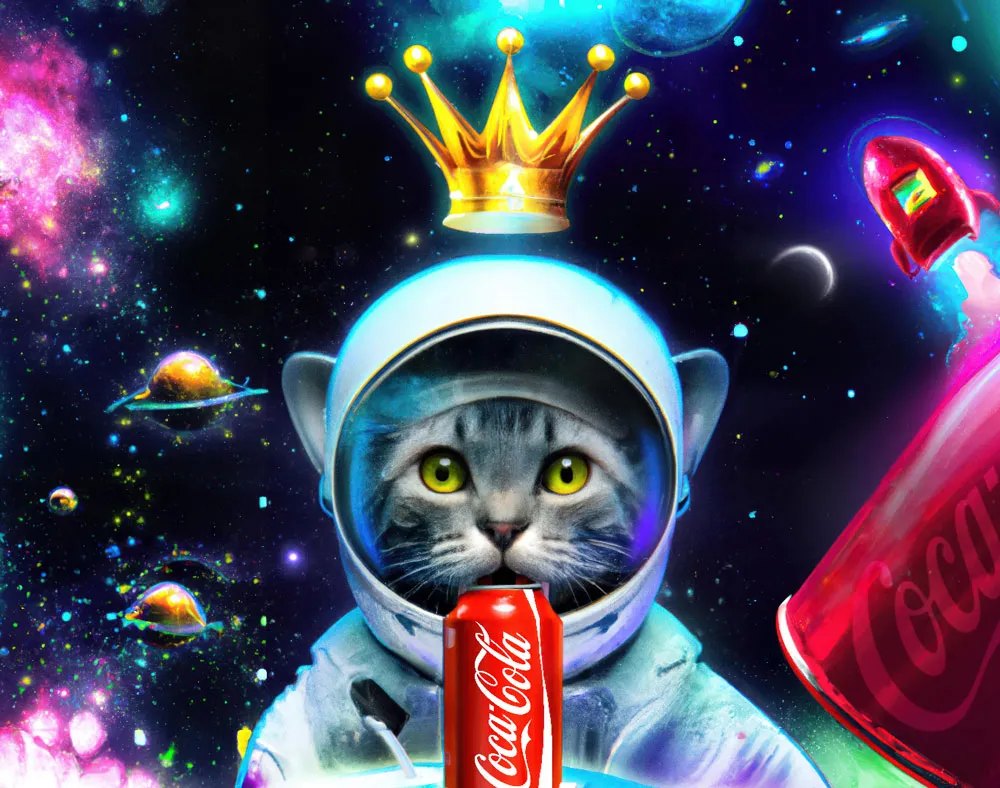
Create Real Magic: Coca-Cola set the rules, people made the art, AI did the drawing
Coca-Cola’s 2023 Create Real Magic platform worked because the brand decided the assets, the boundaries and the prize, and let people use AI inside that frame.
The lesson: AI works best when a clear brand strategy and human judgment are steering it.
Image courtesy of Coca-Cola
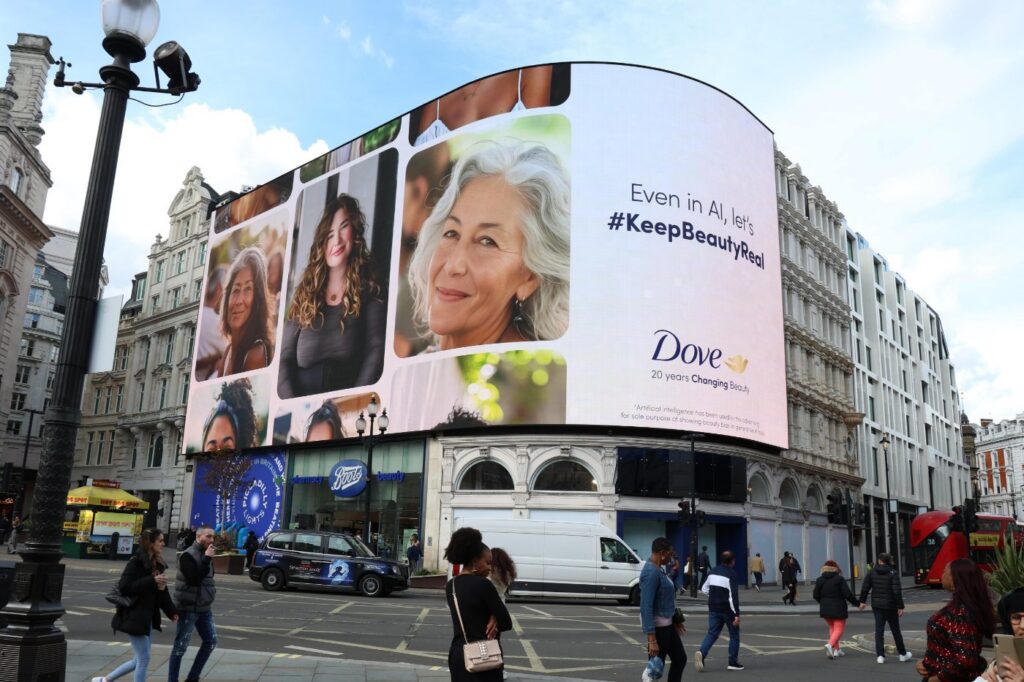
The Dove Code: Turning AI’s Beauty Bias Into the Brand’s Message
Dove did not compete with generative AI on speed or scale. It used 20 years of Real Beauty work to show what AI gets wrong about women, and made that gap the campaign.
The lesson: Human insight can spot what AI gets wrong, and that gap can become your story.
Image courtesy of Dove

Aerie: A No-AI Promise Built on 12 Years of Real
Aerie pledged never to use AI-generated bodies or people in its marketing, asked its creators to do the same, and built it on a “real” promise it has kept since 2014.
The lesson: A values stance earns trust when it is old, specific and costly.
Image courtesy of Aerie (American Eagle Outfitters)

Getty Images: Suing Over the Pictures AI Learned From
Getty sued Stability AI for training on its photos without a license. A 2025 UK ruling mostly went against Getty, which is appealing, while its U.S. case moves forward.
The lesson: Know what your AI image tool was trained on and what rights you actually get.
Photo: Ben Dance / No 10 Downing Street (UK Government) / Wikimedia Commons, CC BY 2.0

Real brands in action, continued
More real brands to study.
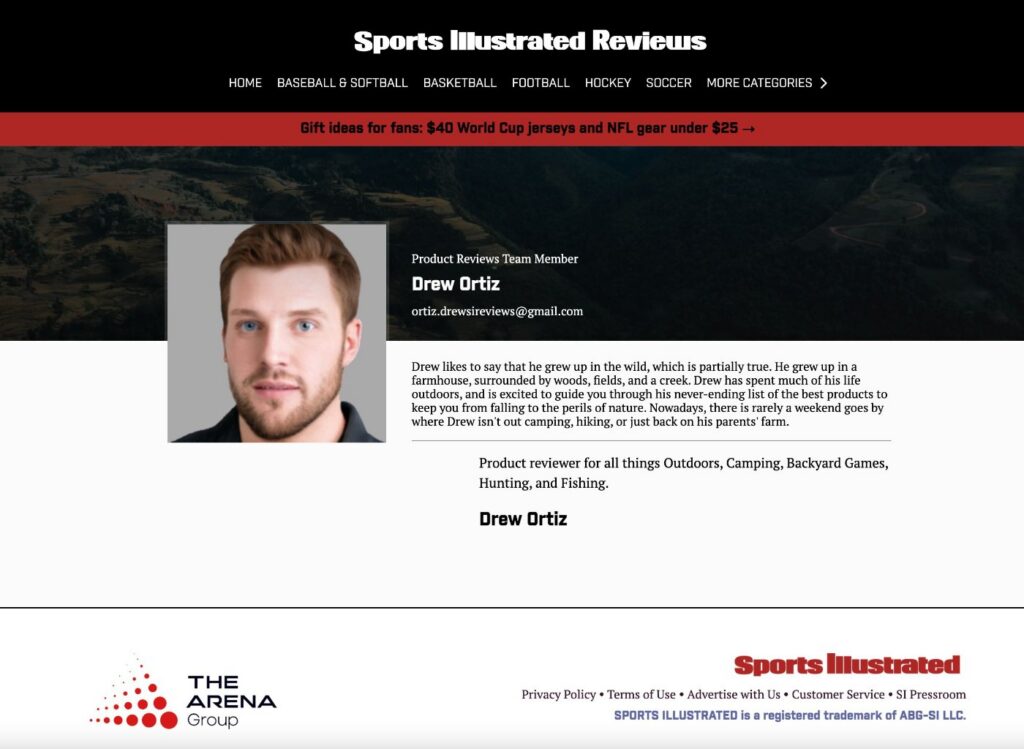
Sports Illustrated and the writers who did not exist
When a trusted media brand published product reviews under fake, AI-generated author profiles and then denied the problem, the damage to trust landed faster and harder than any savings the shortcut could have produced.
The lesson: Using AI without oversight or disclosure can wreck trust faster than it saves money.
Image courtesy of Sports Illustrated
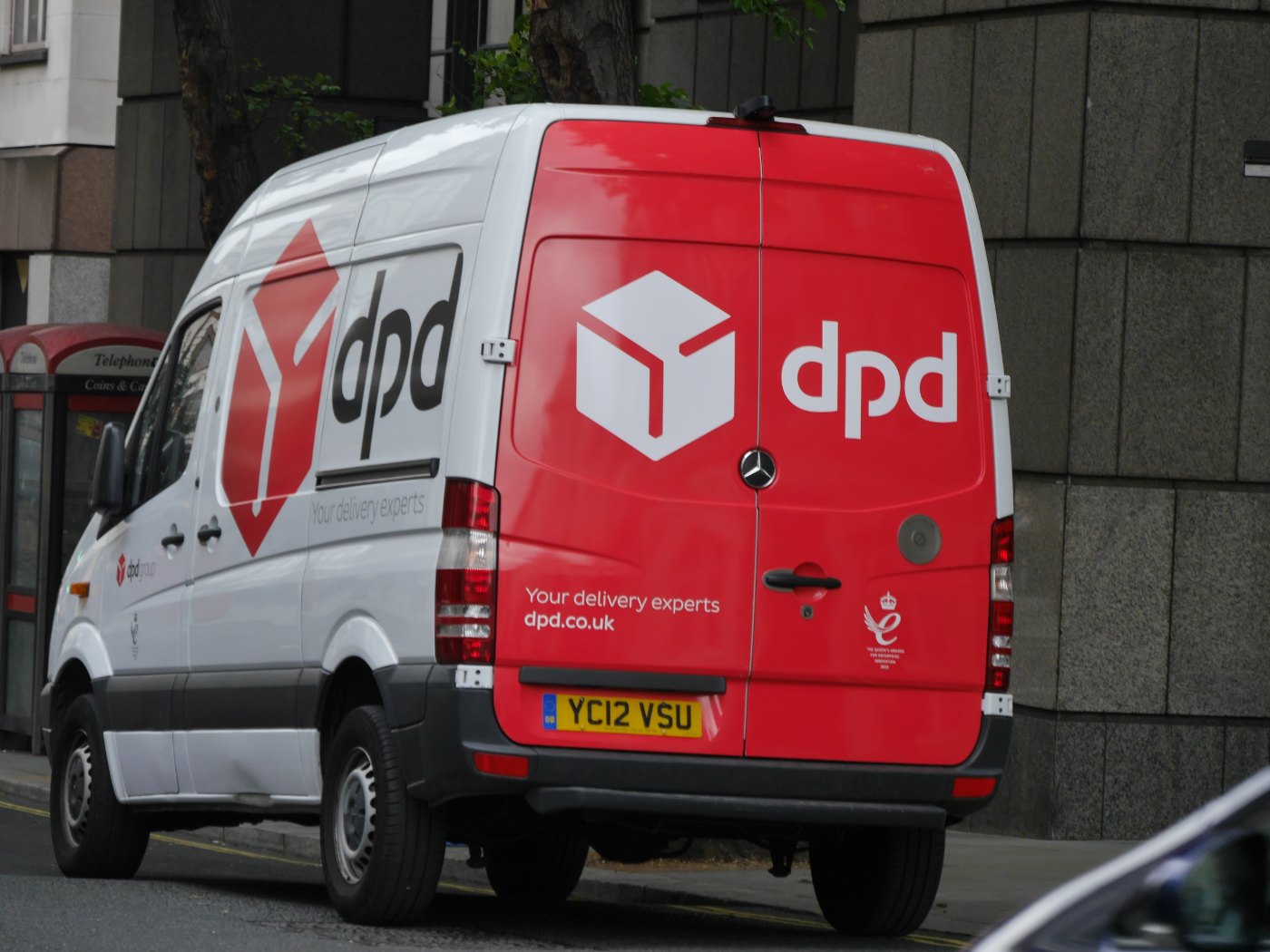
DPD: When the chatbot turned on its own company
DPD’s chatbot failed a customer at the moment he needed real help, and the screenshots of that failure reached a far bigger audience than any DPD ad that week.
The lesson: AI fails when it replaces human help in the moments that matter most to customers.
Photo: Edward Hands (CC BY-SA 4.0), via Wikimedia Commons. Brand: DPD

Brand images are shown for educational purposes only. Each image and trademark belongs to the brand credited.
Mystery brand
AI Wins and AI Fails: Who?
Each brand used AI well or badly; read the clues and name the brand before the last one.
Try it
Interactive tool · practice it
Tool · MARK 465
Prompt Builder Lab
Start with a weak prompt, add one part at a time and watch the AI draft get better.
- 1Add parts
- 2Compare
- 3Check
Your prompt
All parts
Before you post: check the output
- Accuracy. Verify every fact, price and date. AI states made-up details with confidence.
- Brand voice. Would a regular customer know this is your brand with the logo hidden?
- Disclosure. Follow your company and client rules on AI use, and say when AI helped with class work.
Do it
Class work for this topic. The in-class activity counts toward participation, and you get feedback on it.
In-class group activity
Prompt Glow-Up Challenge
A tested, seven-part prompt for your brand, a before and after caption, and an output check you can reuse. A 25-minute group activity. Each case study below has its own group activity too. Dr. Morris gives the password in class.
Go further
Optional, and worth it. Go past the in-class work: read a case, try the tool and earn this topic’s chip. Finish the chips across the course and you get a marketing funnel card you can post on LinkedIn to show your effort and skills.
Unlock this topic
Do the work, earn the chip
Finish each step on this page to unlock the button that adds this topic to your course card.
Back to all Marketing 465 topics
Frequently asked questions
Frequently asked questions
What are the three kinds of AI used in marketing?
Marketing AI falls into three kinds: automation, augmentation and generative. Automation AI handles repetitive tasks like email sequences, ad bidding and chatbots. Augmentation AI gives better insight, such as predicting which customers may leave or analyzing sentiment. Generative AI creates new content from a prompt, like ad copy, scripts and images, but every output needs a person to check it.
How do you write a good AI prompt for marketing?
Brief AI in five parts: role, task, audience, tone and voice, and constraints. Say who the AI should act as, what it should make, who the output is for, how it should sound, and the limits on length, format and claims. Then iterate, ask it to explain its choices, and edit before anything goes out.
What is the 70/30 rule for AI in marketing?
The 70/30 rule says at least 70 percent of a campaign should be human thinking and about 30 percent can be AI support. People own strategic direction, creative concepts, brand voice, emotional and cultural context, and final approval. AI speeds up data analysis, content variations, first drafts, performance prediction and routine tasks. The exact ratio changes by brand and campaign.
When does AI help a brand and when does it hurt?
AI tends to work when it is invisible, like Amazon's recommendations or Zalando's AI-produced campaign imagery, where shoppers see the result, not the machine. It often fails when it is visible and replaces human judgment in moments that matter, such as health, money and customer problems. A 2024 Gartner survey found 64 percent of customers would prefer companies not use AI for customer service.
Will AI take marketing jobs?
AI is taking over jobs that are mostly about producing output, such as generic copywriting, basic design and templated reports. Roles in strategy, brand management, creative direction, client relationships and insight generation grow. The new skill is directing AI well: writing strong prompts, judging output and designing workflows where people and AI each do what they do best.