Case study · Marketing 465 · AI in Marketing
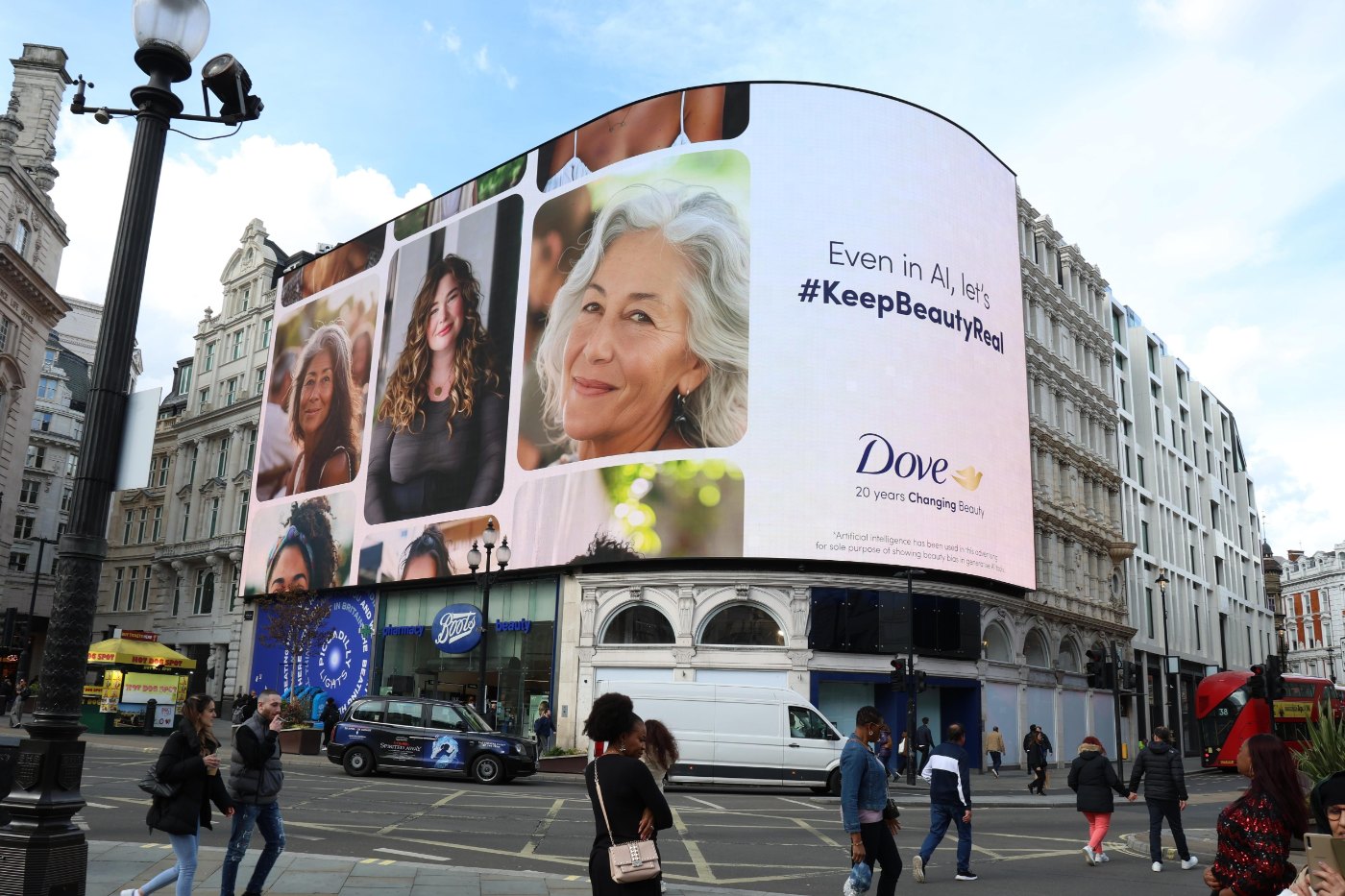
Dove did not compete with generative AI on speed or scale. It used 20 years of Real Beauty work to show what AI gets wrong about women, and made that gap the campaign.
Brand
Dove (Unilever)
Year(s)
2024 to 2025
Channel(s)
Online film, out-of-home, print, social, Pinterest partnership
Goal
Mark 20 years of the Campaign for Real Beauty and show its relevance in the age of AI
Topic
AI in Marketing
1 in 3
Women and girls who feel pressure to change their looks because of online images, even fake or AI ones (Dove Real State of Beauty report, 2024)
33,000+
People surveyed in 20 countries for that report (Muse by Clios, 2024)
787M
Impressions from the Pinterest-based Real Beauty AI campaign (WPP case study, 2025)
21.4%
Engagement above Pinterest benchmarks for the custom experience (WPP case study, 2025)
The situation
Dove launched its Campaign for Real Beauty in 2004. For two decades the brand built its reputation on showing real women instead of retouched models.
By 2024 a new kind of image was flooding the internet. Generative AI tools could create a picture of a woman in seconds. Those tools learn from huge archives of online images, so they also learn the beauty standards baked into those archives.
The challenge
Dove’s own research named the risk. Its Real State of Beauty report, which surveyed more than 33,000 people in 20 countries, found that one in three women and girls feel pressure to change their appearance because of what they see online, even when they know the images are fake or AI-generated.
Dove had a choice. It could adopt AI imagery to keep up, or it could use its 20-year point of view to question the technology. The second path carried a risk: a brand attacking a popular tool can sound out of touch.
What they did
In April 2024 Dove released “The Code,” a short film directed by Juliana Curi. The film shows real outputs from AI image tools. Prompts like “a gorgeous woman” or “perfect woman” returned a narrow, repetitive look. When the team added the phrase “according to Dove Real Beauty” to the prompt, the results became far more diverse in race, body type and hair texture.
The film carried a simple message: the brand’s two decades of work had become a kind of code that could change what AI produces.
- A public pledge never to use AI to create or distort women’s images in Dove advertising.
- Real Beauty Prompt Guidelines, developed with Media.Monks, to help people prompt AI tools for more representative images.
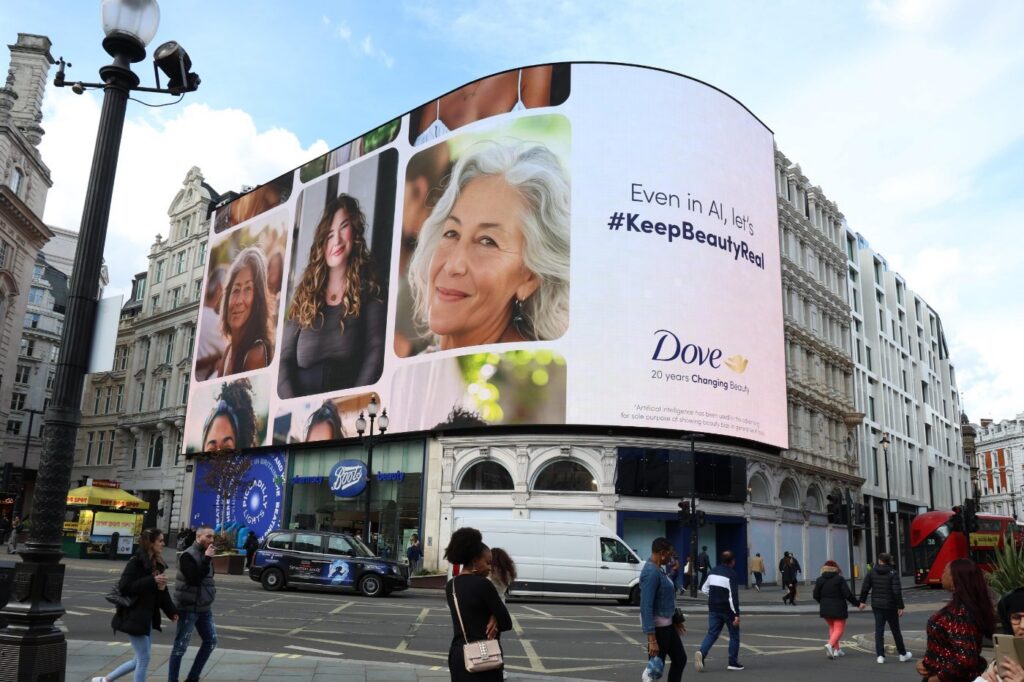
- Print, outdoor and social posts comparing generic AI outputs with Dove-influenced ones.
- A follow-on 2024 to 2025 effort, “Real Beauty Redefined for the AI Era,” built with Pinterest. Users chose images of real women and inner traits like “Brave” or “Creative” to make a personal video, then pinned it, which fed Pinterest’s recommendations.
What happened
The work was widely covered in the trade press and won major awards. The biggest prize went to the Pinterest execution, not the original film.
- June 2025: “Real Beauty Redefined for the AI Era” won the Media Lions Grand Prix at Cannes Lions. The festival first credited Mindshare New York, then added Droga5 São Paulo for the idea after a joint request (MediaPost, Propmark, 2025).
- WPP reports the Pinterest campaign delivered 787 million impressions, reached 27 million people on Pinterest, and drew engagement 21.4% above Pinterest benchmarks (WPP case study, 2025).
- “The Dove Code” earned a Merit in Use of Technology/AI at The One Show 2025.
Why it worked
Dove did not invent a new position for the AI era. It applied the one it already owned. Twenty years of consistent Real Beauty work gave the brand the credibility to criticize AI imagery without sounding opportunistic.
The proof was visible. Viewers did not have to take Dove’s word that AI is biased. They could see the outputs side by side. The insight came from people who had studied beauty standards for years. The AI tools supplied the evidence.
Where it gets complicated
The campaign used AI to criticize AI. Dove’s pledge covers how it portrays women in ads, not every use of AI in its business. Parent company Unilever has said it uses generative AI and digital product twins to produce marketing imagery, so students should notice how carefully the promise is worded.
The “according to Dove Real Beauty” prompt trick shows that a brand name can steer a model. It does not fix the training data underneath. Retraining a recommendation feed on one platform is also a narrow fix for a broad problem.
Finally, credit for the work was disputed among agencies even at Cannes. Big brand campaigns are rarely the product of one team.
The marketing principle
AI reflects the data it learned from, including its blind spots. A brand with a clear point of view can spot those blind spots faster than the tool can. Dove turned that gap into its story, which only worked because the insight was human and the brand had earned the right to tell it.
Sources
- Dove Calls Out AI’s Unrealistic Beauty Standards in ‘The Code’, Muse by Clios (2024)
- Dove ‘Won’t Use AI To Represent Women’ To Celebrate 20 Years Of ‘Campaign For Real Beauty’, B&T (2024)
- Mindshare: Dove’s Real Beauty Redefined for the AI Era, WPP (2025)
- Dove/Mindshare Distorted AI Beauty Wins Media Lions Grand Prix, MediaPost (2025)
- Festival volta atrás e concede GP para Droga5 em Media Lions, Propmark (2025)
- The Dove Code (One Show 2025 entry), The One Club (2025)
Group activity for this case
Crack Your Brand’s Code
A side-by-side test showing what a generic AI output gets wrong about your brand’s category, and the point of view that fixes it. A 20-minute group activity. Dr. Morris gives the password in class.
Back to AI in Marketing · All case studies
Brand names, images and trademarks belong to their owners and appear here for educational purposes only.