Case study · Marketing 465 · Copywriting for Digital Channels
When Apple launched the iPod in 2001, it did not lead with gigabytes. It promised “1,000 songs in your pocket,” five words that turned a hard drive spec into a picture anyone could see.
Brand
Apple iPod
Year(s)
2001 to 2022
Channel(s)
Launch event, press release, press coverage, product marketing
Goal
Sell a $399 music player to people who already owned CD players
Topic
Copywriting for Digital Channels
5GB
The spec the line translated: the first iPod’s hard drive (Apple, 2001)
$399
Launch price, which many reviewers called too high (Apple, 2001; TechRadar)
100 million
iPods sold by April 2007, less than six years after launch (MacRumors, 2026)
20+ years
How long the iPod line lasted before Apple ended it in May 2022 (Apple, 2022)
The situation
In 2001 digital music players already existed. Some were small but held only a few dozen songs. Others held a lot of music but were bulky. Analysts named rivals like Creative’s Nomad Jukebox, and at least one competitor offered more storage than Apple.
Apple was still mostly a computer company. Its new player only worked with Macs at first, cost $399, and arrived weeks after 9/11, when the mood at the launch was subdued.
The challenge
The iPod’s real advantage was a small hard drive in a pocket-sized body. But “5GB” meant nothing to most people in 2001. A spec sheet invites comparison on numbers, and on some numbers Apple was not the winner.
Apple needed a line that explained the benefit in a heartbeat, worked on a stage, in print and on a box, and made the price feel worth it.
What they did
Steve Jobs introduced the iPod on October 23, 2001, at a small press event in Cupertino. Instead of selling storage, he sold a scene: your whole music collection, carried with you. The pitch boiled down to “1,000 songs in your pocket.”
The press release made the same move in more formal language, calling it a player that holds up to 1,000 CD-quality songs. Specs like FireWire speed and 10-hour battery life came after, as proof.
- A number people can picture: 1,000 songs, not 5 gigabytes.
- A place people already know: your pocket. The word does the job of a size chart.
- Short enough to repeat: five words that a reporter, a friend or a store clerk could say back.
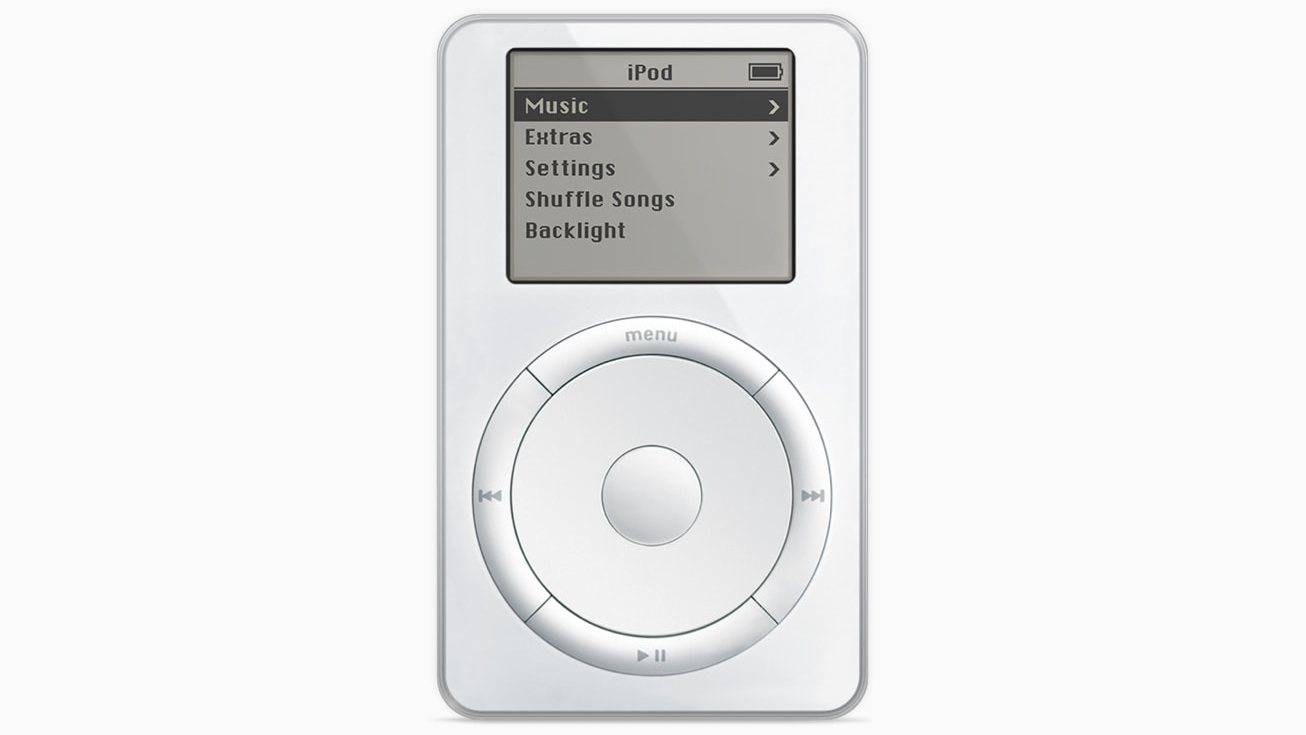
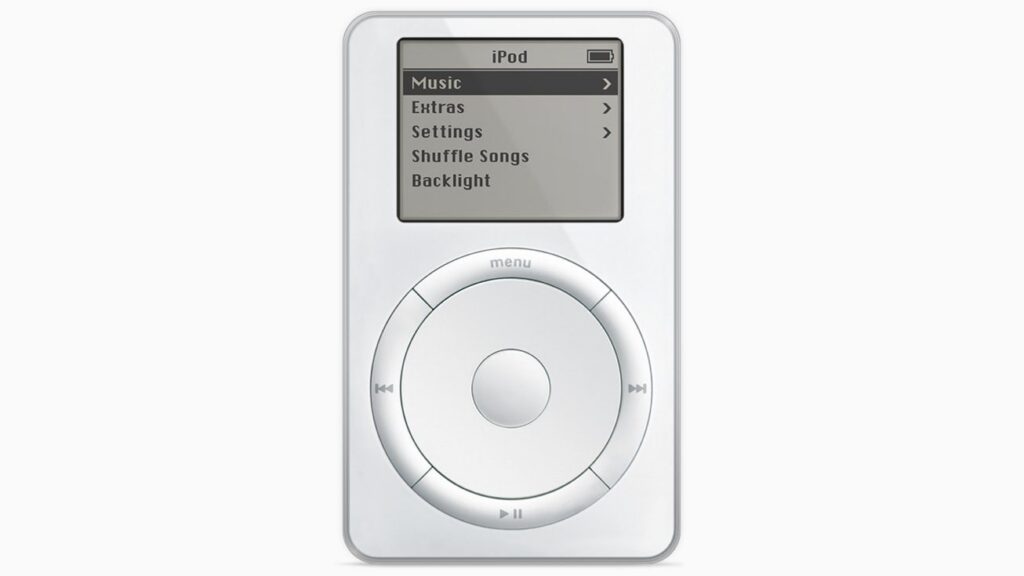
- A clean visual partner: a simple white device with one wheel, so the words and the product told one story.
- Specs as backup, not headline: the details were there for people who wanted them.
The line became shorthand for the product itself and still shows up in anniversary coverage decades later.
What happened
- October 23, 2001: Apple announced the iPod at $399, shipping November 10 (Apple, 2001).
- Launch week: reactions were mixed. Critics online called it overpriced, and one attendee later said most people did not get what it was (TechRadar).
- Walt Mossberg of The Wall Street Journal called it the best digital music player he had seen (TechRadar).
- 2003: iTunes arrived for Windows, opening the iPod to most computer owners (TechRadar).
- April 2007: Apple passed 100 million iPods sold; by 2011 the total was over 304 million (MacRumors, 2026).
- May 10, 2022: Apple announced the end of the iPod line, describing the original as the first player to pack 1,000 songs (Apple, 2022).
- The catch: the iPod’s success also came from design, iTunes and the later music store, so the line was one part of a larger system.
Why it worked
It translated a feature into a benefit. Gigabytes describe the machine. Songs describe your life. The line answered the only question a buyer cared about: what does this do for me?
It changed the comparison. On raw storage, Apple was not always ahead. By talking about songs and pockets, Apple framed the contest around portability and ease, where it was strong.
Words and image matched. A small white box with one wheel, next to a line about your pocket, reinforce each other. Neither needs the other explained.
Where it gets complicated
- The exact wording varied. Apple’s own press release said up to 1,000 CD-quality songs. The tighter pocket version is how Jobs and the marketing framed it, and how it is remembered.
- The claim had fine print. Song counts depend on file size and quality. Like most capacity claims, 1,000 was an estimate, not a guarantee.
- A great line did not erase the price. At $399 and Mac only, early sales were limited. The line made the product clear, but price and Windows support still mattered.
- Hindsight makes it look obvious. Many people at launch did not understand the product. Great copy is easier to spot after the product succeeds.
The takeaway
The marketing principle
Don’t sell the spec, sell what the spec means. Translate your biggest feature into a number and a place your customer already understands. If they can picture it in five words, they can repeat it to someone else.
Sources
- Apple Presents iPod, Apple Newsroom (2001)
- The music lives on, Apple Newsroom (2022)
- Most people just didn’t understand: Apple revealed the original iPod on this day in 2001, TechRadar (n.d.)
- Happy 25th Anniversary, iPod, MacRumors (2026)
- 20 years ago today, Apple unveiled the first-ever iPod, iMore (2021)
- First iPod launch date, Cult of Mac (n.d.)
- The introduction of the first iPod (23 October 2001), Mac History (n.d.)
- 2001 Revisited: the iPod Introduction, 512 Pixels (n.d.)
Group activity for this case
Spec to Pocket
Turn your client’s most technical feature into a five-word line people can picture. A 20-minute group activity. Dr. Morris gives the password in class.
Use this case in: Copywriting for Digital Channels · Words and Visuals Together · All case studies
Use and share this case
Free to use in your own classroom, training or team, and to adapt for non-commercial teaching, with credit to Dr. Jules Morris, Haslam College of Business, University of Tennessee. The text is licensed CC BY-NC 4.0. Brand photos and trademarks belong to their owners and are not covered by this license.
Brand names, images and trademarks belong to their owners and appear here for educational purposes only.