The big idea
Human in, human out. AI amplifies the strategy, judgment and voice you bring to it, and the gap between what AI writes and what you rewrite is your brand voice.
Topic soundtrack
Duet Mode
Great duets and robot grooves. Two voices, one song: you lead, AI harmonizes.
In 60 seconds
- Human in, human out: you bring the insight, AI drafts in the middle, and you judge what comes out.
- Brief AI with full context and the work you already built, then edit every draft before you use it.
- The gap between what AI writes and what you rewrite is your brand voice.
Do this: build the AI persona for your Imaginary Brand Brief: the exact prompt, how you refined it, and a final persona with a name, a face and a story.
Slides

How to work with AI as a creative partner
Human in, human out. AI works in the middle.
AI has no goals, opinions or brand instinct. You do. You set the direction going in, AI works in the middle, and you own what comes out.
The human-first AI loop
AI is the fast intern, not the strategist.
See it in the wild
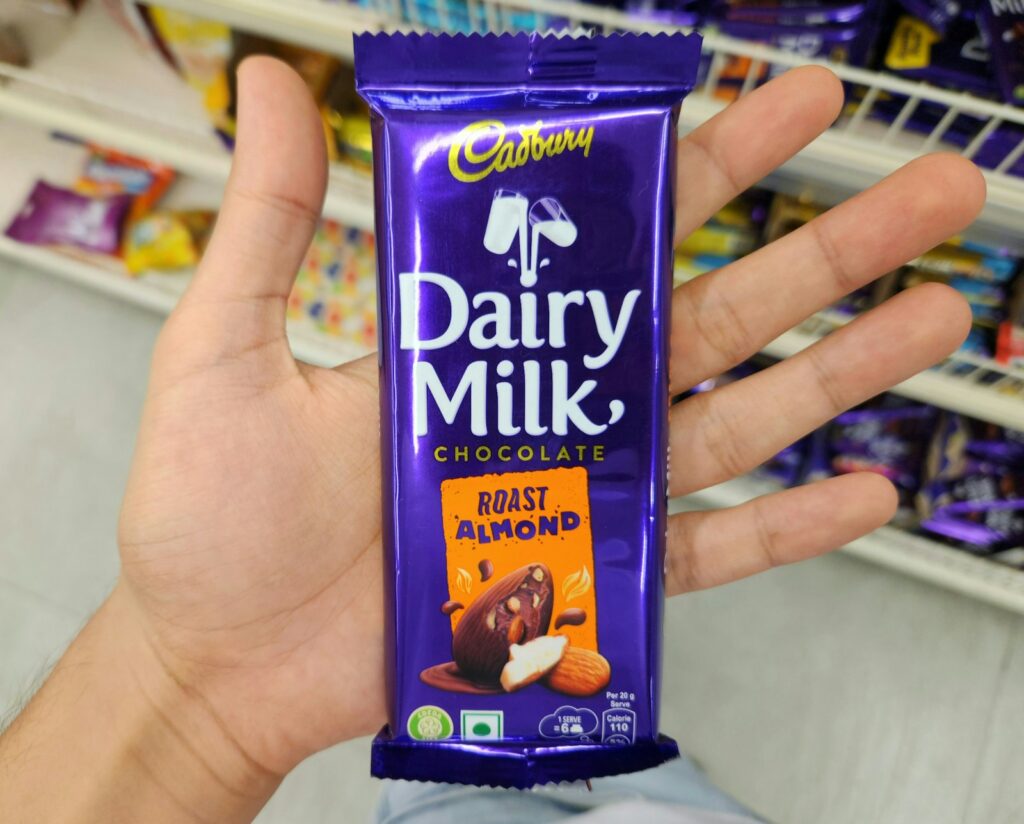
Cadbury used AI to help small shops.
In India in 2021, Cadbury’s “Not Just a Cadbury Ad” used AI to make personalized ads for neighborhood stores.
Human insightSmall local shops were struggling during the pandemic’s festival season.
AI does the heavy liftingAI recreated film star Shah Rukh Khan’s face and voice to name thousands of different local shops.
Human judgmentCadbury got the star’s permission and kept the message about helping neighbors.
Front end: brief it
Do not start from scratch each time.
- Give the full context. Who it is for, the goal, and the platform or format.
- Feed in what you built. Positioning, personas, five personality words, palette and constraints.
- Define what good looks like. The tone, the feeling, and what you want the audience to think or do.
Write the positioning statement first
Audience, difference, emotional payoff.
Your positioning statement is the input AI needs most. Before you write one, read a few and notice the pattern.
- 1For [audience]Who the brand serves.
- 2who [need or want]What they are looking for.
- 3[Brand] delivers [what]What sets the brand apart.
- 4because [reason]The emotional reason why.
Guess the brand. Read the clue, name the brand, then tap.
AthletesWho delivers innovative gear and relentless inspiration?
OutdoorsWho makes durable, responsibly sourced gear?
ListenersWho delivers personalized listening experiences?
EatersWho makes oat-based products good for you and the planet?
Four practice examples in this pattern. These are class examples written in the formula, not official brand statements.
Back end: edit it
Treat every AI result as a first draft.
How to judge AI copy: the editor’s mindset and four criteria
Treat every AI result as a first draft. Mark what is flat, what is off-brand and what is good, then rewrite from that assessment.
| Criterion | Question |
|---|---|
| Personality match | Does it sound like this brand, or like any brand in the category? |
| Constraint | Did it respect the limit, such as 150 characters, without padding? |
| Distinctiveness | Could this line belong only to this brand? “Gear you can trust” fits anyone. |
| Usability | Would you post it tomorrow, or does it need a full rewrite? |
See it in the wild
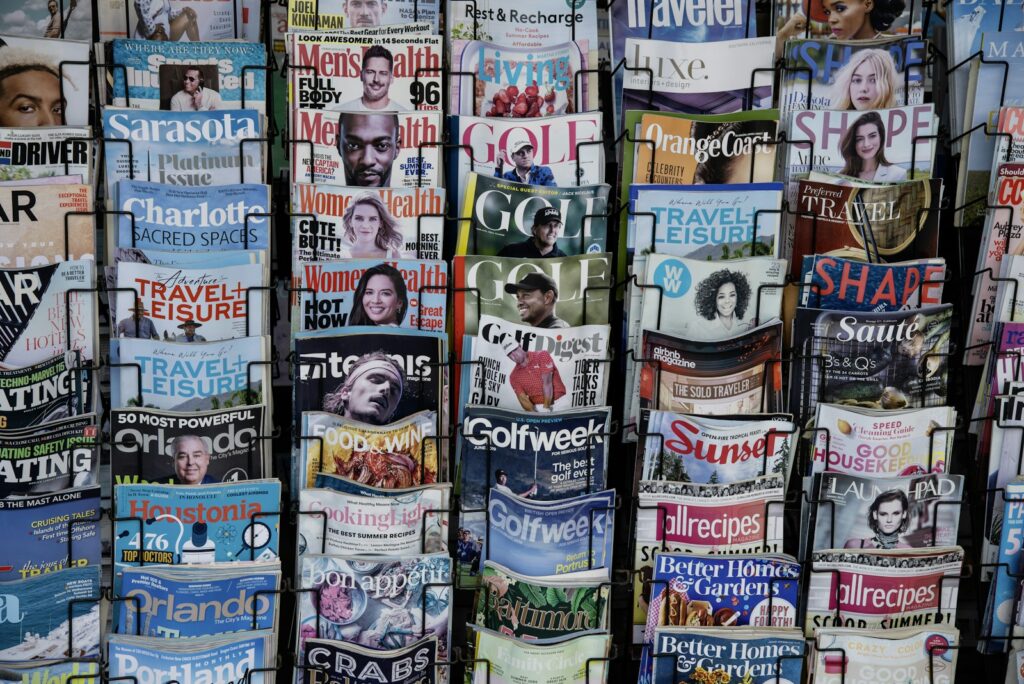
Sports Illustrated skipped the edit.
In 2023, reporters found product reviews on Sports Illustrated’s site under made-up writers with AI-generated headshots.
EvaluateDid anyone check whether the writers were real? No.
ChallengeReaders lost trust once they learned the bylines were fake.
The lessonTreat every AI result as a first draft, and never let it pretend to be a person.
Where your value lives
Cut what is generic. Keep what is specific.
AI cannot know your client’s unspoken fear, remember last quarter’s inside joke, or choose a word because of how it feels. You can, and that is where your value lives.
Run a competitive landscape audit with AI
AI maps the category. You find what it missed.
Prompt to copy
“I’m building a brand called [NAME], a [CATEGORY] brand for [AUDIENCE]. Name the five most recognizable competitors and describe their visual style, tone of voice and the emotional territory they own. Then tell me what visual and messaging territory no one has claimed that my brand could own.”
The thing it missed is often your best insight, because AI gives breadth and you bring local context and lived experience.
A prompt to copy, what to look for and how to reflect
Use a research tool with a prompt like the one above. Look for the four things on the map: visual style, tone of voice, emotional territory, then reflect.
If the first answer feels generic, push back and ask for more niche competitors or deeper emotional detail. The strongest positions own a feeling, not just a feature.
See it in the wild
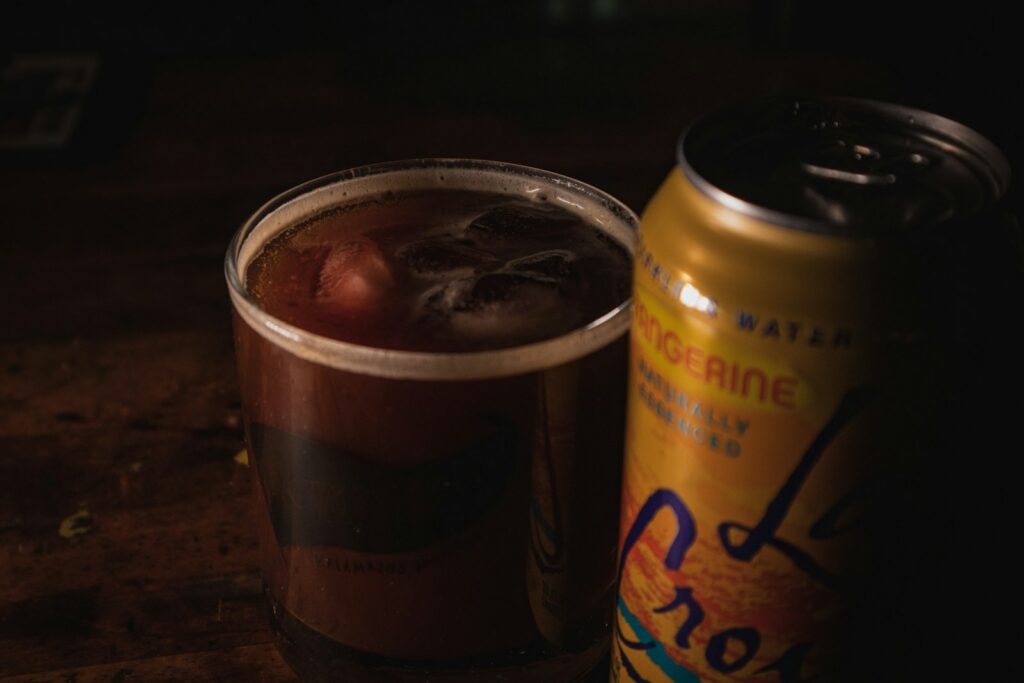
Try the audit on sparkling water.
Run the AI prompt on a category you know: LaCroix, Spindrift and Bubly.
AI maps itAsk for each brand’s visual style, tone and emotional territory.
You check itLook at their real cans and Instagram. What did the AI get wrong?
Find the gapName one feeling none of the three brands own yet.
Match the tool to the task
No single winner. Each tool has a home turf.
Claude
Brand voice, personas, strategy and positioning.
Watch out: great depth, lower volume.
ChatGPT
Quick drafts, volume, lists and structured formats.
Watch out: generic by default. Push with specific words, examples and tone cues.
Gemini
Web content, YouTube, the Google ecosystem and visual context.
Watch out: inconsistent creative voice over time.
Grok
Real-time trends, social tone and cultural references.
Watch out: unpredictable and weak on strategic depth.
The matching principle and tools for other jobs
Using the wrong tool for a task does not just waste time. It produces misleading results. A visual tool can’t reason about brand strategy, so know the boundaries of each.
- Match tool capability to content type.
- Layer tools for complex briefs.
- Always apply human judgment at the handoff points.
| Job | Tools | Use it for |
|---|---|---|
| Competitive and audience research | Perplexity, Gemini | Real-time web search, market synthesis and trend mapping. Always validate findings against primary sources before they go in a brief. |
| Audio and voice | ElevenLabs, Adobe Podcast | Voiceovers, podcast production and audio branding. |
| Video and motion | Runway, Sora | Campaign video concepts, motion graphics and fast prototypes of visual storytelling ideas. |
The smartest move: run the same prompt through two tools and pick the output you can actually use. Treat AI like a creative team, not a single vendor.
Different tools, different defaults
Don’t hunt for the best tool. Write a better brief.
Different tools have different defaults. One may play it safe and another may take more risk.
- When the same brief produces different results, that tells you about the tool’s habits and about how clear your brief was.
- The goal is not to find the best tool. It is to write briefs so specific that any tool gives you something useful.
What the gap reveals
The gap between what AI wrote and what you rewrote is your brand voice.
When you tighten a phrase or swap a word in an AI draft, you are not fixing a mistake. You are asserting identity. The smaller that gap gets over time, the better your briefs have become.
Two tools, one brief: score it and rewrite it
Run the exact same brief through two tools, word for word, then rate each piece of copy from 1 to 5 on brand fit:
- 5: nailed it. You could publish it now.
- 3: close, but something is off.
- 1: generic. It could be anyone’s brand.
Circle the single best line across both outputs. Then rewrite the weakest piece yourself and ask what your brand would actually say. For more practice, run the same prompt through a third tool: does the voice hold, and what does that tell you about your brief?
Quick check
Every team used AI. What went wrong?
Name the step each team skipped: brief it, human judgment, or a better brief. Then open the answers.
- 1Maple Row Bakery’s team types “write a fun post for a bakery” and nothing else.
- 2An intern posts ten AI captions straight to Instagram before anyone reads them.
- 3The best line in the draft is “Fresh bread you can trust.”
- 4Two tools give two different results from one brief, so the team spends an hour hunting for the best tool.
Check your answers
- Front end: brief it. No audience, goal, platform, positioning or personality words, so AI has nothing to work with.
- Human judgment. Never publish AI work without a human review.
- Distinctiveness. Could any bakery have written it? Cut what is generic. Keep what is specific.
- Write a better brief. The goal is a brief so specific that any tool gives you something useful.
Maple Row Bakery is an invented brand.
Real brands in action
See it in real brands.
Each case study shows these ideas at work. Open one to read the full story.
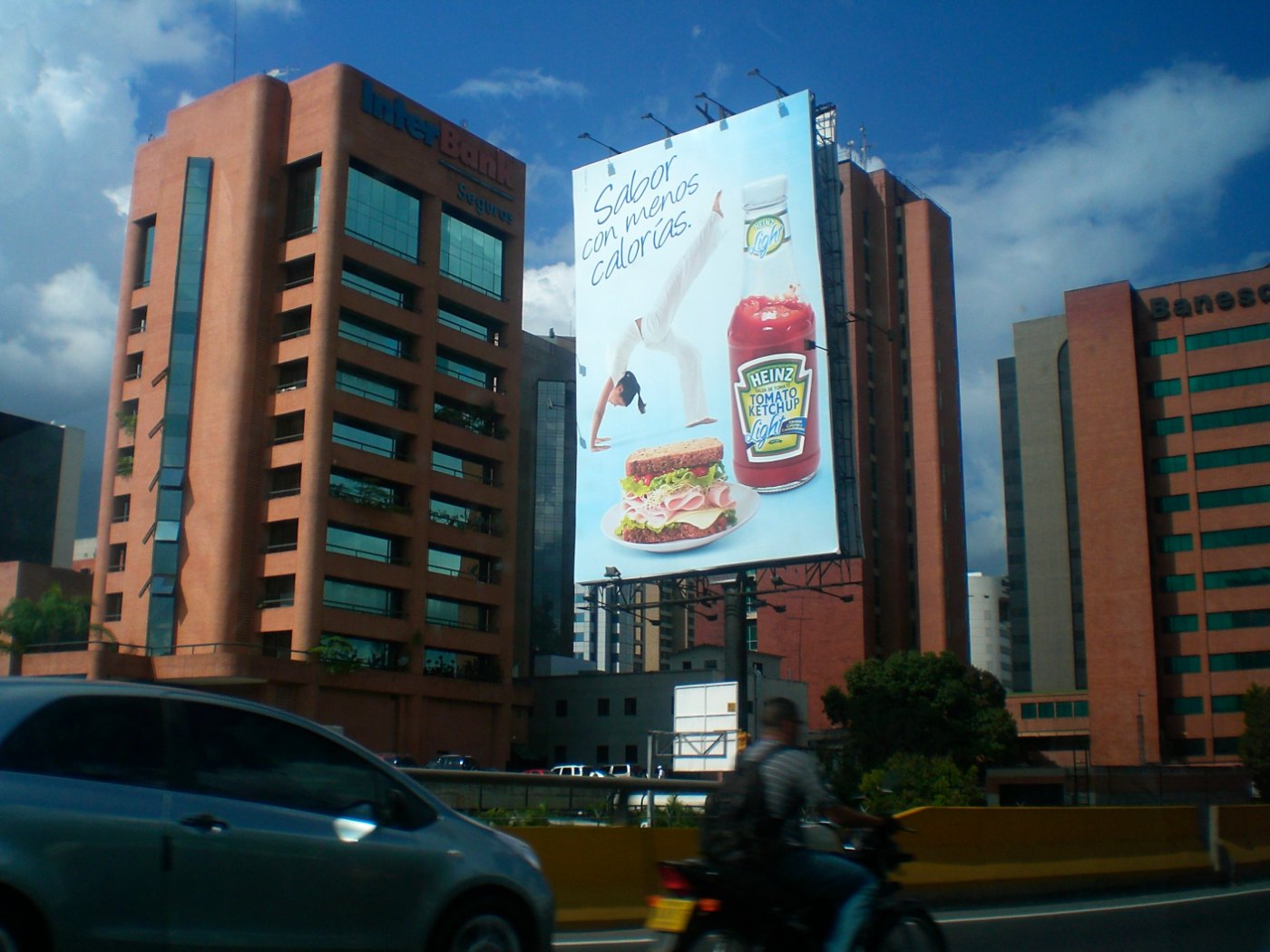
Draw Ketchup: Heinz Used AI to Prove an Insight It Already Had
Heinz did not start with AI. It started with a human truth, that people picture Heinz when they think of ketchup, and then used an AI image generator as fresh evidence for it.
The lesson: Start with a human insight, then use AI to prove it. The idea still comes from you.
Photo: Nano Anderson (CC BY 2.0), via Wikimedia Commons. Brand: Heinz

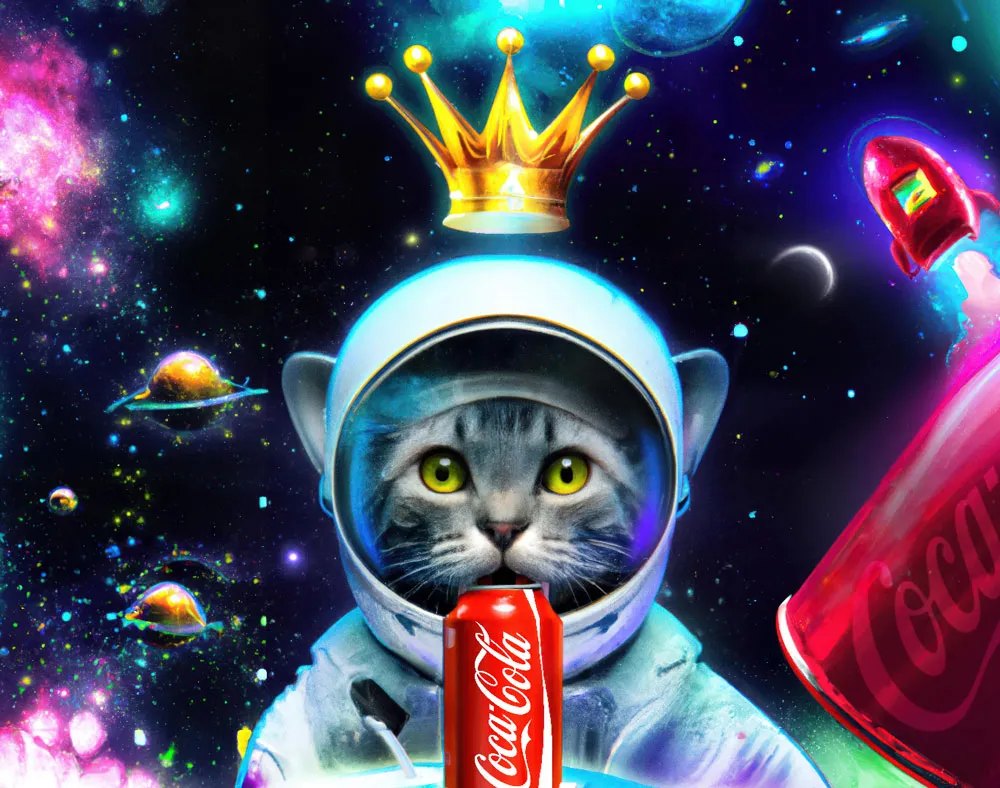
Coca-Cola: Create Real Magic: AI that worked because the brand came first
Coca-Cola’s 2023 AI art platform worked because it handed creators a century of brand assets to build with, and its 2024 AI holiday ad shows what happens when people feel the technology has replaced the human part.
The lesson: Treat AI as an extender of your ideas, not the source of them.
Image courtesy of Coca-Cola
Brand images are shown for educational purposes only. Each image and trademark belongs to the brand credited.
Hot take
AI Wrote It. Now What?
Pick a side on each AI take, argue it out loud, then see what human in, human out says.
Try it
Interactive tool · practice it
Tool · MARK 475
Image Prompt Lab
Brief an AI image tool the way you would brief a photographer, one part at a time.
- 1Set parts
- 2Regenerate
- 3Copy
Prompt parts Skip one and the tool guesses
Brand constraints
Tell it what to avoid
Your prompt
All 8 parts
Before you use any AI image
- 1Iterate on purpose. Change one part at a time so you know what made the difference.
- 2You are the judge. Check hands, text, product details and brand fit. Ask: could any brand have posted this?
- 3Rights and disclosure. Read the tool’s terms for commercial use. Never prompt a living artist’s name, a real person or another brand’s logo. In the U.S., images made entirely by AI generally can’t be copyrighted, so your human edits matter. Label realistic AI images where the platform or client asks.
Do it
Class work for this topic. The in-class activity counts toward participation, and you get feedback on it.
In-class group activity
Two Tools, One Brief
A brand brief, scored AI drafts from two tools and one human rewrite for your brand. A 28-minute group activity. Each case study below has its own group activity too. Dr. Morris gives the password in class.
Put it to work: the AI persona in your Imaginary Brand Brief
Part of the Imaginary Brand Brief is an AI persona: a detailed picture of your target customer that your team builds with an AI tool and then improves. You show the exact prompt, how your team refined the result, and the final persona with a name, a face and a story. Use AI as a partner, then apply your own judgment. Remember the persona is a hypothesis to test, not research data.
Build it in six steps
Round 1: the starting prompt
Write your brand details first, then fill in the starting prompt below and paste it into your AI tool.
Your deliverable: the exact prompt you used, word for word.
Round 2: push back
Read the output as a team and mark anything generic, stereotyped or too perfect. Reply with specific fixes: “Make her frustration more specific to [situation].” “She would not shop at [store]; she shops at [store] because [reason].” “Give her one habit that surprises us.”
Your deliverable: what you changed and why.
Round 3: reality check
Ask one or two people who fit the audience if the persona sounds like them. Change anything they say is wrong. AI tends to give polished, average answers, so this step is where the persona gets real.
Your deliverable: how you checked it.
Name it
Pick a name and age that fit the person, plus one line that sums them up.
Your deliverable: “Maya, 26, the night-shift nurse who wants to feel good at something at home.”
Give it a face
Generate a portrait with an image tool, or use a free stock photo with a license that allows it. If you generate one, build the prompt one part at a time in the Image Prompt Lab above and use its review checklist.
Your deliverable: a portrait, labeled as AI-generated if it is.
Tell its story
Write about one moment in this person’s life when your brand would help, in your team’s words.
Your deliverable: a 3 to 5 sentence story that matches the audience in the rest of your brief.
The starting promptCopy it, fill in the brackets, save the exact text
Prompt
“You are a consumer researcher. Create a detailed customer persona for [brand name], a [category] brand that [what it offers]. Our audience is [your specific person: age range, life stage, situation]. The job they need done is [job to be done]. Our competitors are [2 to 3 brands]. Include: name, age, job, a typical day, where they spend time online, what they buy and why, their biggest frustration with [category], what would make them choose a new brand, and a one-paragraph story of a recent moment when they needed this product. Make it feel like one real person, not an average.”
Save the exact text you used. It goes in your brief.
Show your process and be open about AI useA sample process note, labeling and platform rules
Your brief should make it easy to see what AI did and what your team did. A short process note like this one is enough.
| Include | Example |
|---|---|
| Tool used | ChatGPT for the persona text; an image generator for the portrait |
| Exact first prompt | Pasted in full, in quotation marks or a box |
| What you changed | “AI made her a marketing manager; we made her a nurse because shift work explains her schedule.” |
| How you checked it | “Two nursing students read it and said the 1 a.m. scrolling was accurate.” |
| What is AI-made in the final | “Portrait is AI-generated. Story was rewritten by our team.” |
- Label an AI-generated face as AI-generated wherever you show it, including slides later in the semester.
- If you later post AI-made images or video that look real, check the platform’s rules. YouTube and TikTok ask creators to label realistic AI-generated content, and Meta adds AI labels to some content.
Do this, not thatPrompting habits that work and the common mistakes
Do this
- Write the brief before the prompt. A prompt is only as good as the strategy behind it.
- For the portrait, name every part of the shot: subject, setting, style, lighting, composition and mood. Anything you leave out, the tool decides for you.
- Change one thing per round, and save each version with its prompt.
- Add text and logos yourself. Image tools still misspell words and warp logos.
- Zoom in on hands, faces and backgrounds before you use an image.
- Use tools whose terms allow commercial use, and follow the platform’s and client’s rules for labeling AI images.
Not that
- Pasting the first AI output with no edits. The assignment asks you to refine it.
- A short, vague prompt (“make a persona for a coffee brand”) that gets a generic answer.
- Leaving in stereotypes or details that do not fit, such as a student persona with a luxury budget.
- A persona that does not match the audience described elsewhere in the brief.
- Using a real person’s photo (someone you know or a celebrity) as the persona’s face, prompting a living artist’s name, or not saying the face is AI-generated.
Before you submitCheck off each item as a team
- [ ] Our brief includes the exact prompt we used, word for word.
- [ ] We show at least one round of refinement and explain what we changed and why.
- [ ] Our persona has a name, a face and a short story written in our own words.
- [ ] The persona feels like one specific person, not an average of a demographic.
- [ ] The persona matches the target audience in the rest of our brief.
- [ ] We checked the persona against at least one real person or source.
- [ ] We clearly label which parts are AI-made, including the portrait.
Go further
Optional, and worth it. Go past the in-class work: read a case, try the tool and earn this topic’s chip. Finish the chips across the course and you get a marketing funnel card you can post on LinkedIn to show your effort and skills.
Unlock this topic
Do the work, earn the chip
Finish each step on this page to unlock the button that adds this topic to your course card.
Back to all Marketing 475 topics
Frequently asked questions
Frequently asked questions
How should marketers use AI as a creative partner?
Marketers should follow a human in, human out workflow. People bring the insight, strategy and brief, AI generates drafts, options and research fast like a helpful intern, and people evaluate, edit and decide. AI work should never be published without human review. The gap between what AI writes and what you rewrite is your brand voice.
How do you write an AI prompt that sounds like your brand?
Give the AI a specific brief instead of a vague prompt. Include who it is for, the goal, the platform, the tone and your positioning statement. Compare "Write a social post about our product" with "Write a LinkedIn post for fintech founders using our positioning statement. Tone: bold, direct, witty. Goal: drive demo sign-ups."
How do you judge whether AI-written copy is any good?
Judge AI copy on four criteria: personality match, constraint, distinctiveness and usability. Ask whether it sounds like this brand or any brand in the category, whether it respected limits like 150 characters, whether the line could belong only to this brand, and whether you would post it tomorrow. "Gear you can trust" fails because it fits anyone.
Which AI tool is best for marketing work?
No AI tool is best at everything, because each was trained differently and the same prompt comes back different. In class, Claude tends to suit brand voice and strategy, ChatGPT fast drafts and lists, Perplexity and Gemini research, and Midjourney, Adobe Firefly and Canva Magic Studio images. Running one prompt through two tools and comparing outputs gives better results.
What did the Heinz A.I. Ketchup campaign show?
Heinz's 2022 A.I. Ketchup campaign showed how to use AI to prove an insight a brand already has. With the agency Rethink, Heinz asked an AI image generator to draw "ketchup" with no brand name, and the images kept looking like a Heinz bottle. The insight came first, and the AI was the proof, not the source of the idea.