Case study · Marketing 475 · AI as a Creative Partner
Coca-Cola’s 2023 AI art platform worked because it handed creators a century of brand assets to build with, and its 2024 AI holiday ad shows what happens when people feel the technology has replaced the human part.
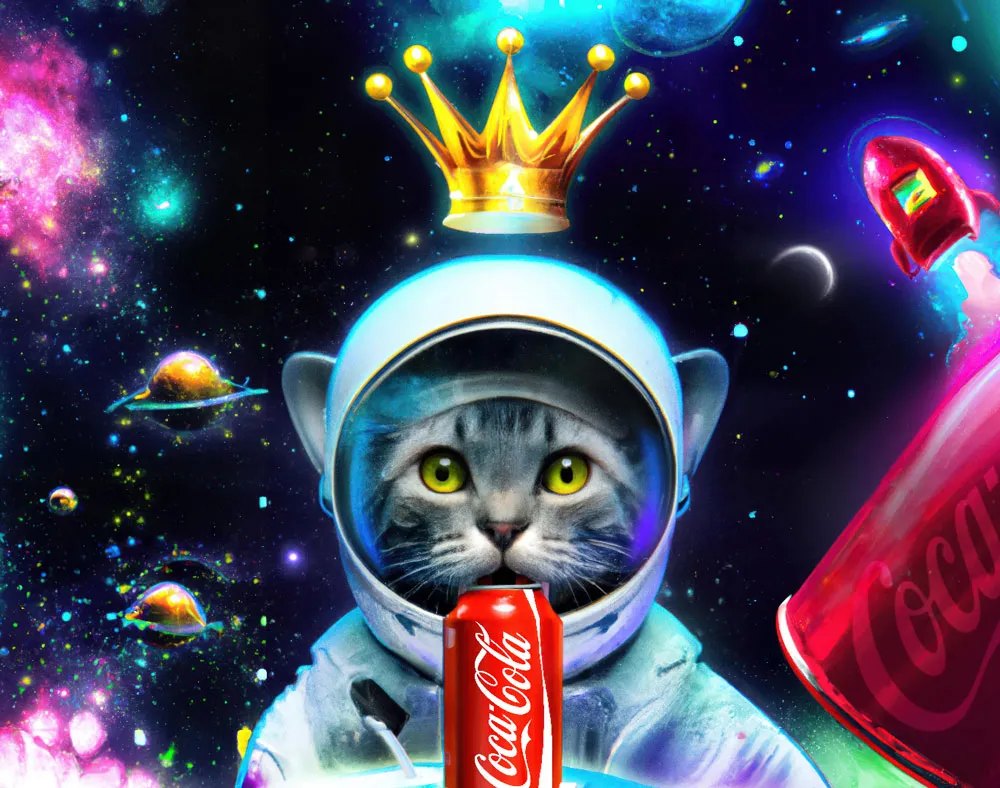
Brand
Coca-Cola
Year(s)
2023 (Create Real Magic); 2024 (AI holiday film)
Channel(s)
Web platform (createrealmagic.com), social media, digital billboards in Times Square and Piccadilly Circus
Goal
Invite fans and digital artists to co-create with Coca-Cola’s brand assets using generative AI
Topic
AI as a Creative Partner
120,000+
artworks created on Create Real Magic (Fast Company, 2024)
17
countries where participants created work (Fast Company, 2024)
30
creators invited to the Real Magic Creative Academy in Atlanta (Coca-Cola, 2023)
300M
social media impressions from the entries (Fast Company, 2024)
The situation
Few brands own as many recognizable visual assets as Coca-Cola. The contour bottle, the Spencerian script logo, the Coca-Cola Santa Claus and the polar bears have been built up through decades of advertising.
In early 2023, generative AI tools were suddenly in everyone’s hands. Brands were under pressure to show they understood the technology. Coca-Cola’s global chief marketing officer, Manolo Arroyo, said the company would begin to use OpenAI’s technology in its marketing function and wanted to speed up content production from weeks to days.
The challenge
AI image tools can produce almost anything. That is the problem for a brand. Output that could come from anyone does nothing for Coca-Cola, and output that distorts its assets can damage them.
The question was how to let people play with AI without losing the brand in the process.
What they did
On March 20, 2023, Coca-Cola launched Create Real Magic, a platform built with OpenAI and Bain & Company. It combined GPT-4, which generates text, and DALL-E, which generates images from text prompts. The campaign was developed with Ogilvy and framed as part of the brand’s existing ‘Real Magic’ platform.
The key design choice was the raw material. Instead of a blank canvas, users got dozens of branded elements from Coca-Cola’s archive to prompt with. The human supplied the idea. The brand supplied the visual vocabulary. The AI combined them.
- Open to the public in the U.S., Australia, select European countries and other markets, through March 31, 2023.
- Four professional artists created launch artwork to show what was possible.
- Selected entries could appear on Coca-Cola’s digital billboards in Times Square and Piccadilly Circus.
- Thirty creators were invited to a three-day Real Magic Creative Academy at Coca-Cola’s Atlanta headquarters, run by its Global Design and Creative teams with OpenAI. The company said participants would be credited if their co-created work was used.
What happened
Fast Company named Coca-Cola to its Most Innovative Companies list in 2024 and cited the contest’s reach.
- More than 120,000 artworks were created by participants in 17 countries (Fast Company, 2024).
- The entries generated about 300 million social media impressions (Fast Company, 2024).
- Coca-Cola kept experimenting with AI in 2023, including ‘Masterpiece,’ a film that used the Stable Diffusion AI platform, and Y3000, a flavor co-created with AI.
Why it worked
The creative strategy did not come from the AI. Coca-Cola decided what the brand stood for, which assets mattered and what the invitation was. AI made it possible for 120,000 pieces of work to exist, but every one of them was built from assets the brand had spent decades making familiar.
That is why the work stayed recognizably Coca-Cola even though thousands of strangers made it. The brand’s visual equity acted as guardrails. People also had a reason to take part that had nothing to do with the technology: the chance to see their art on a billboard in Times Square or be invited to Atlanta.
Where it gets complicated
In November 2024, Coca-Cola released an AI-generated remake of its 1995 commercial ‘Holidays Are Coming,’ produced with the AI studios Secret Level, Silverside AI and Wild Card. Early testing by System1 found a positive consumer response, according to Adweek. Online, the reaction turned. Critics called the film soulless, and some artists accused the brand of replacing creative workers.
Coca-Cola responded that the films were ‘a collaboration of human storytellers and the power of generative AI.’ The contrast is useful. In 2023, AI gave the public a way to create. In 2024, many viewers saw AI standing in for the people who used to make the ad. Same brand, same assets, very different read on who the human in the process was.
There are open questions too. Who owns AI-generated work that blends a brand’s trademarks with a user’s prompt? Impression counts measure reach, not whether anyone liked Coca-Cola more or bought more of it.
The marketing principle
AI is strongest as an extender: it multiplies ideas and assets that already exist. Coca-Cola’s strategy, brand assets and invitation were human decisions, and the AI scaled them. When audiences sense that AI has replaced the human idea instead of extending it, the same technology can turn against the brand.
Sources
- Coca-Cola Invites Digital Artists to ‘Create Real Magic’ Using New AI Platform, The Coca-Cola Company (2023)
- In Coca-Cola’s A.I. Alliance, UGC Makes an Improbable Return, Muse by Clio (2023)
- This beverage giant is taking a refreshing approach to marketing with AI (Most Innovative Companies 2024), Fast Company (2024)
- How Coca-Cola’s AI Holiday Ad Went From Praise to Rage, Adweek (2024)
- Coca-Cola causes controversy with AI-generated ad, NBC News (2024)
Group activity for this case
Build Your Asset Kit
A list of your brand’s own visual assets and an AI invitation that keeps them in charge. A 22-minute group activity. Dr. Morris gives the password in class.
Back to AI as a Creative Partner · All case studies
Brand names, images and trademarks belong to their owners and appear here for educational purposes only.