
The big idea
Great strategy fails without a plan. Project management is how a team turns ideas into a finished pitch, on time.
Topic soundtrack
On Schedule
Clocks, countdowns and taking care of business. Deadlines never sounded so good.
In 60 seconds
- Most marketing projects fail from unclear roles, miscommunication and missed deadlines, not bad ideas.
- Give every piece one owner and a reviewer, and write down what is in scope and what is not.
- Work backward from the deadline. The last week is for polish and rehearsal, not first drafts.
Do this: build a one-page Final Pitch team plan with a signed charter, an owner and reviewer for every section, and a dated timeline.
Slides

How marketing projects work
Good ideas don’t save a project. A plan does.
Most marketing projects that go wrong don’t fail because the idea was bad. They fail for the same reasons group projects fail: unclear roles, miscommunication, missed deadlines and money spent without a plan. Project management is the fix.
The four phases
Four phases. One question at each.
- 1PlanGoals, scope, roles and the timeline. Ask: who is doing what, by when?
- 2BuildResearch, draft and create the work. Ask: what’s blocking us?
- 3CheckReview drafts against the goal and adjust. Ask: are we still on track?
- 4DeliverPolish, rehearse and present. Ask: what would we do differently?
Scope: agree on what’s in
Write down what’s in, and what’s out.
Scope is a suitcase. It only holds so much, so pack on purpose.
When things slip: missed deadlines, missing teammates and scope creep
- Say it early. A problem raised a week out is a schedule change. Raised the night before, it’s a crisis.
- Re-plan, don’t just push harder. Cut or simplify something so the plan fits the time you have.
- If a teammate goes quiet, check in directly first, then follow your team charter, then talk to your instructor.

See it in the wild
The Sydney Opera House outgrew its suitcase.
The building was planned to cost about A$7 million and take four years.
What happenedThe design kept changing, and it opened in 1973, ten years late, at about A$102 million.
Scope creepEach new idea was added without deciding what came out.
The lessonWrite the packing list first, and trade something out when something new comes in.
Roles and owners
Every piece needs one owner.
What does each letter stand for? Guess, then tap.
RWho is this?
AWho is this? Hint: only one.
C + IWho are these two?
That list is called a RACI chart. For a class team, “owner plus reviewer” for each section does the same job.
Work with a real client: how to sound like a professional team
- One point of contact. Pick one teammate to email the client so messages don’t overlap.
- Send an agenda before every meeting and a recap within 24 hours: what you heard, what was decided and what happens next.
- Ask for what you need early. Data, photos and logins take time.
- Confirm decisions in writing. A short email avoids “I thought you said…”
Keep the team moving
Three habits that keep a team on time.
All three fit on one shared project calendar.
Tools teams use: boards, shared docs and chat
- Task boards: Asana, Monday.com, ClickUp, Trello, Notion or Basecamp for tasks, owners and deadlines.
- Shared files: Google Docs, Sheets and Slides or Microsoft 365, so there is one current version.
- Team chat: Slack, Teams or a group text for quick questions. Decisions go in the shared doc.
A shared Google Sheet with columns for task, owner, due date and status is enough for a class project.

See it in the wild
Amazon starts at the end.
Amazon teams are known for working backwards: they write the launch press release before they build anything.
Work backwardStart with what the customer will read on launch day.
Plan in reverseThe press release and its FAQ become the plan the whole team builds toward.
Your versionWrite your final slide’s headline first, then plan the weeks that get you there.

Run a 15-minute standup
Three questions, once a week.
Each person answers three questions, and anything bigger goes to a separate conversation.
- What did I finish since last time?
- What will I finish before next time?
- What is blocking me?
Run a 15-minute standup: after the meeting
Write the answers in your shared doc so absent teammates can catch up.
Real brands in action
See it in real brands.
Each case study shows these ideas at work. Open one to read the full story.

Spotify: The Team Model Spotify Never Fully Ran
Spotify’s squads and tribes became a famous team model, but former insiders say it was never fully practiced and caused real coordination problems.
The lesson: Copy the problem a team model solves, not the chart, and pair autonomy with clear accountability.

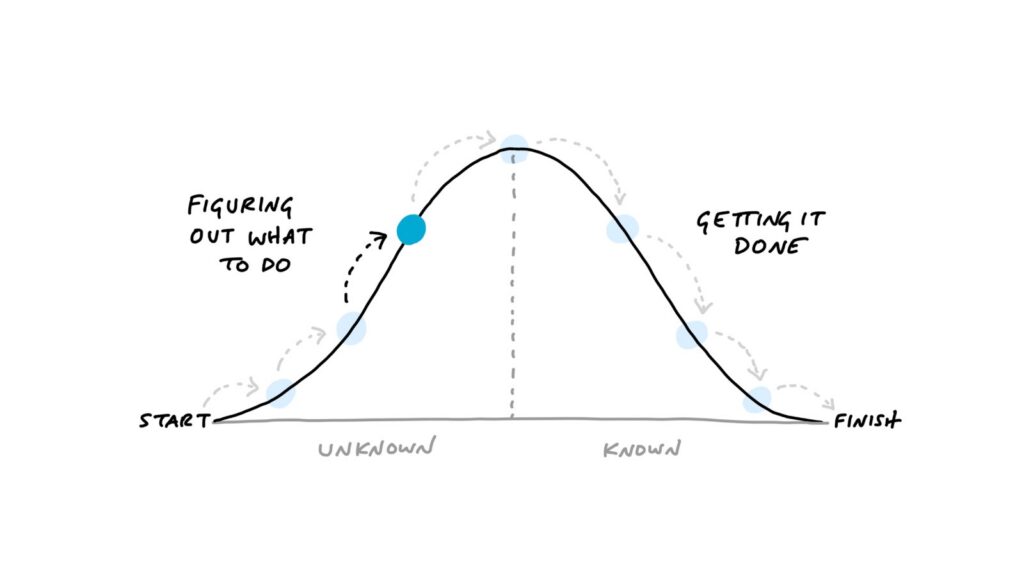
Basecamp: Shape Up and the Six-Week Bet
Basecamp’s Shape Up method uses six-week cycles, appetites instead of estimates and hill charts to ship work on time.
The lesson: Set the time budget first, then shape the work to fit it, and cut scope instead of moving the deadline.
Image courtesy of Basecamp (37signals)

HealthCare.gov: A Launch Date Nobody Would Move
HealthCare.gov crashed at launch after ignored warnings and split ownership, then a small team rescued it in six weeks with basic project management.
The lesson: Name one owner, make status visible, and protect testing time, or the launch date will expose you.
Photo: Office of Senator Dick Durbin / Wikimedia Commons, Public domain


Pixar’s Braintrust: candid notes, no orders
Pixar built a review process where peers give blunt, specific notes on unfinished films but have no power to force changes, which keeps the critique about the work and leaves the decisions with the person who owns it.
The lesson: Critique the work against its goal, be specific, and let the person who owns the work decide which notes to act on.
Photo: P.gobin at English Wikipedia (Public domain), via Wikimedia Commons. Brand: Pixar

Brand images are shown for educational purposes only. Each image and trademark belongs to the brand credited.
Quick check
Something slipped. What do you do?
Your team is building a social plan for Lakeside Animal Rescue. Pick your move for each one, then open the answers.
- 1Two weeks before the pitch, the client emails: “Could you also add an email newsletter plan?”
- 2One teammate hasn’t answered the group chat in eight days.
- 3On Monday you realize the survey results won’t be ready by Friday.
- 4On a call, the client says, “Let’s go with option B.”
Check your answers
- Scope creep. Decide what comes out to make room, and agree on it with the client.
- Check in directly first, then follow your team charter, then talk to your instructor.
- Say it early and re-plan. Raised on Monday, it is a schedule change, not a crisis.
- Confirm it in writing. Send a short recap email the same day.
Lakeside Animal Rescue is an invented client.
Work backward
The last week is for polish and rehearsal, not first drafts.
Start at the deadline and plan in reverse.
Myth or fact
Plan Beats Panic
Call each team project claim a myth or a fact, then see what keeps a pitch on time.
Try it
Interactive tool · practice it
Tool · MARK 465
Final Pitch Planner
Enter your pitch day and your team. The planner works backward to a dated timeline and gives each of the ten pitch sections an owner and a reviewer.
- 1Add date and team
- 2Check the plan
- 3Share it
Up next
Full timeline (12 steps)
Who owns what (10 sections)
| Pitch section | Owner | Reviewer |
|---|
Do it
Class work for this topic. The in-class activity counts toward participation, and you get feedback on it.
In-class group activity · 30 min
Who Owns What, By When
Your group will have a signed team charter, an owner and a reviewer for each of the ten Final Pitch sections, and a dated plan that works backward from pitch day. Your instructor will give you the password in class.
Put it to work: your Final Pitch team plan
Your Final Pitch has ten sections and one deadline. Before the Mid-Project Strategy Check, build a one-page team plan so every section has an owner and every week has a goal. The Final Pitch Roadmap shows what each section must include.
Write a team charter
Agree on how you communicate, how fast you reply, how you make decisions and what happens if someone misses work.
Your deliverable: a half-page charter every teammate signs.
Give every section an owner and a reviewer
Use the planner above to split the ten sections. One owner per section, plus a second set of eyes.
Your deliverable: the owner and reviewer table.
Plan backward from pitch day
Draft early, review in the middle, freeze the deck a few days out and rehearse with a timer.
Your deliverable: the dated timeline on your team calendar.
Set your rhythm
A weekly 15-minute standup and one scheduled client touchpoint.
Your deliverable: standup day and time, and the client contact plan.
Write the Executive Summary last
It summarizes decisions the whole team made, so it comes after the sections are drafted.
Your deliverable: a deck where every section points to the same goal.
Team charter templateSix questions to answer together
- What does a great final pitch look like to us?
- Where do we talk, and how fast do we reply?
- Where do files live, and how do we name them?
- How do we make decisions when we disagree?
- Who is the point of contact for the client?
- What happens if someone misses a deadline?
Before you submitCheck the plan against this list
- [ ] Every teammate signed the team charter.
- [ ] Each of the ten sections has one owner and one reviewer.
- [ ] Our timeline has dated milestones on a shared calendar.
- [ ] We have a weekly standup and a client contact plan.
- [ ] We set a deck freeze date and a timed run-through.
- [ ] We know who answers which kinds of questions in Q&A.
Go further
Optional. Go past the in-class work with these extras.
Back to all Marketing 465 topics
Frequently asked questions
Frequently asked questions
What is project management in marketing?
Project management in marketing is how a team turns ideas into a finished deliverable, such as a pitch, on time. Most marketing projects that go wrong fail because of unclear roles, miscommunication, missed deadlines and money spent without a plan. Projects move through four stages: plan, build, check and deliver, each with a guiding question like who is doing what, by when.
What is a RACI chart?
A RACI chart assigns roles for every piece of a project: Responsible does the work, Accountable owns the result and signs off, Consulted gives input, and Informed just needs updates. Only one person should be accountable. For a class team, naming an owner plus a reviewer for each section does the same job and gives every piece a second set of eyes.
How do you run a weekly team standup?
A standup is a short check-in, about 15 minutes once a week, where each person answers three questions: what they finished since last time, what they will finish before next time, and what is blocking them. Anything bigger goes to a separate conversation. Write the answers in a shared doc so absent teammates can catch up.
How do you avoid scope creep on a team project?
Write down exactly what you will deliver and what you will not, and when someone adds one more thing, decide what comes out to make room. Scope, time and budget are linked, so more of one means less of another. If the plan slips, re-plan by cutting or simplifying something rather than just pushing harder.
Why should the Executive Summary of the Final Pitch be written last?
The Executive Summary should be written last because it summarizes decisions the whole team made, so it only makes sense after the other sections are drafted. Writing it last helps produce a deck where every section points to the same goal. The page also recommends planning backward from pitch day, setting a deck freeze date and rehearsing with a timer.