The big idea: Your final presentation is the story of one person: what you learned about them, what you built and tested for them, and why it works, told so the audience can retell it.
In 60 seconds
- Your final presentation tells the story of one person: what you learned about them, what you built and tested, and why it works.
- Open on a person in a moment of struggle, use their words and fieldwork photos, and close with that same person, now helped.
- Prove desirable, feasible and viable with evidence, and show the prototype in action, including what failed.
Do this: build a 20 to 30 minute final presentation in eight story beats, with every teammate presenting and evidence for each lens.
How a design story works

How a design story works
Tell the story of one person.
Your final presentation is not a report of what your team did each day. It is the story of a person, what you learned about them, and what you built and tested for them. The evidence supports the story. The person carries it.
The design story arc
Five beats, from a person in trouble to a person helped.
- 1A person in troubleOpen on one user in one moment of struggle.
From: Empathy - 2What we learnedThe fieldwork, the insight and the HMW question it led to.
From: Empathy and Define - 3What we madeThe range of ideas, the one you chose and why, and the prototype itself.
From: Ideate and Prototype - 4What testing showedWho tried it, what worked, what failed and what you changed.
From: Test - 5Why it winsDesirable, feasible, viable. Return to your person, now helped, and make your ask.
From: all of it
What makes a design story land
Start with a person. End with the same person.
- Start with a person, not an agenda. Introductions can wait 60 seconds.
- Show, then tell. A photo from fieldwork or a 20-second role play beats a bullet list.
- Keep the tension. Name the moment it went wrong for your user, and later the moment your prototype failed.
- Use their words. One real quote from an interview is worth a slide of summary.
- Close the loop. End with the same person from the opening, now helped.
The three lenses to prove
Prove it with evidence, not your opinion.
Desirable
People want it. Show tester reactions and behavior, not your opinion.
Feasible
It can be built and run. Name who would do it and what it takes.
Viable
It can last. What does it cost, save or earn, and who pays?
Why stories, not just facts
Facts inform. A story makes people care enough to act.
In The Ten Faces of Innovation, Tom Kelley describes the Storyteller as the role that builds belief inside a team and awareness outside it. Facts and reports inform. A story makes people care enough to act.
Stories keep ideas alive
Tim Brown’s design thinking article makes the same point: telling more stories keeps ideas alive while a team prototypes and tests. Practice your story early, not the night before.
Ways to show it besides slides
Make us believers. Six formats.
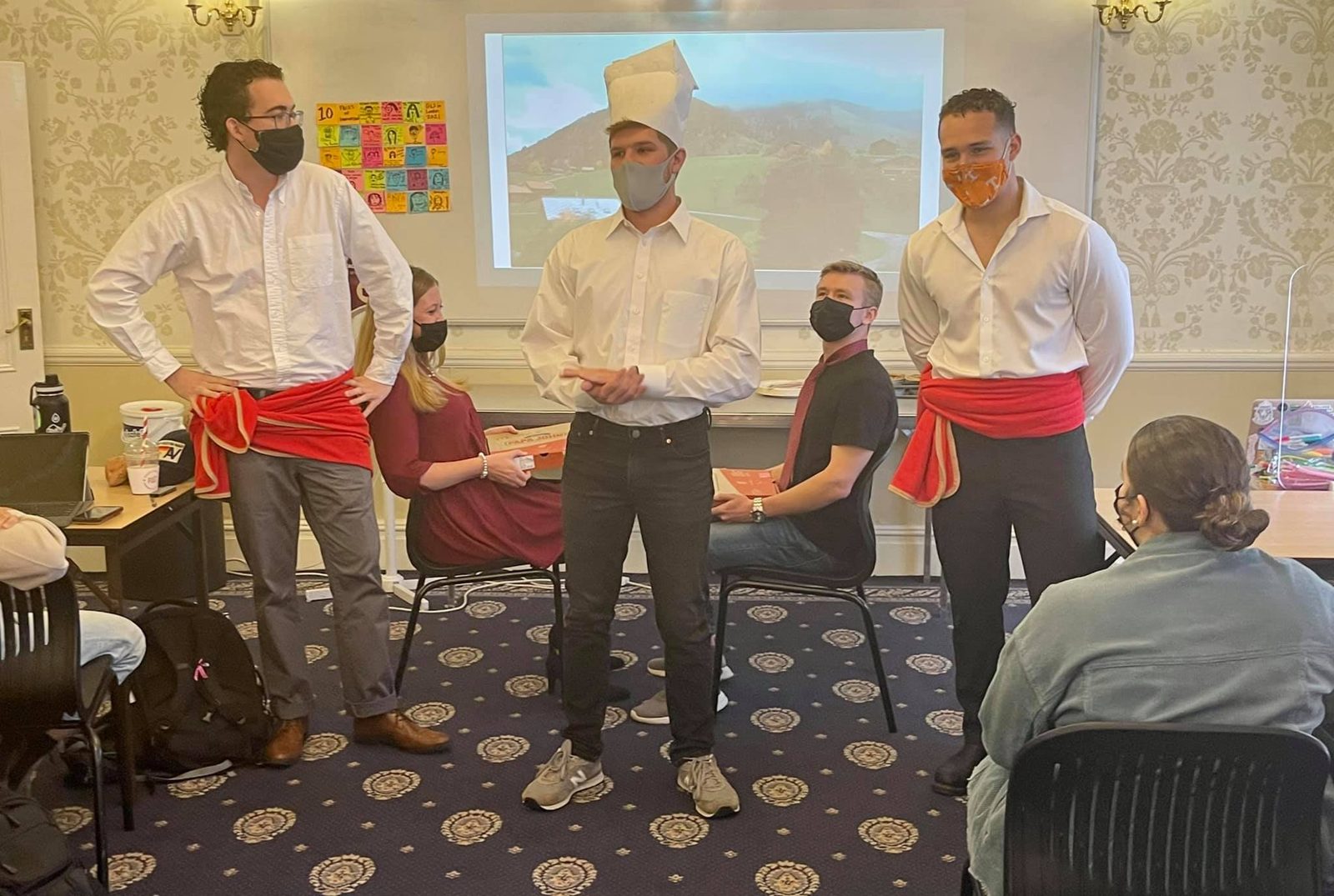
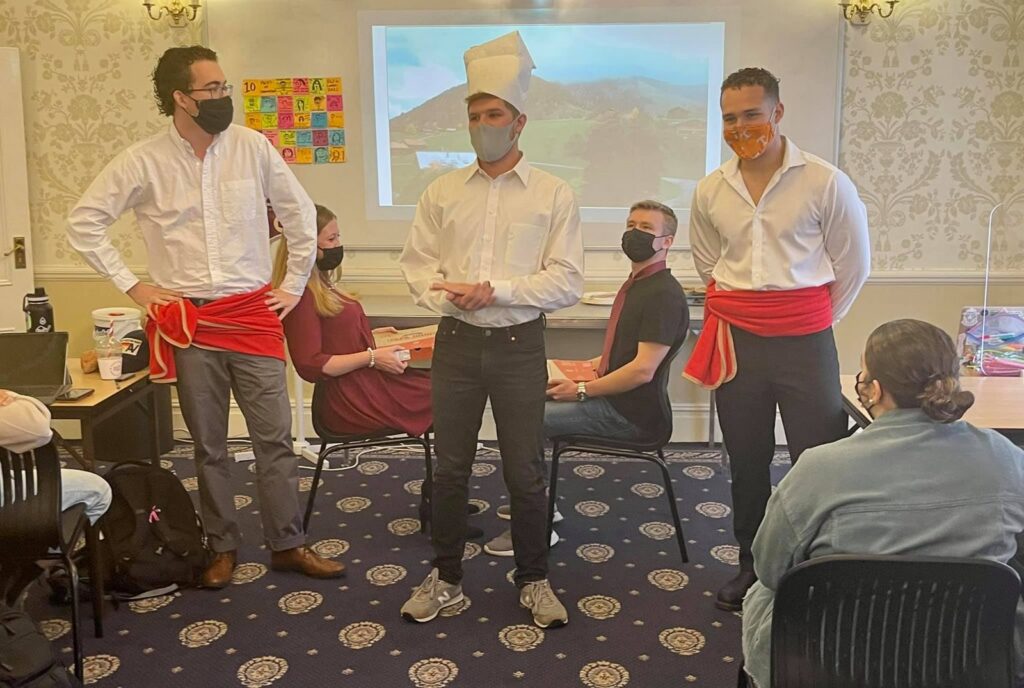
- Act it out. Two teammates play the user before and after. Best for services and processes.
- Hand it over. Give the prototype to someone in the audience and narrate as they use it.
- Short video. Thirty to sixty seconds of real testing, filmed with permission.
- Journey on the floor. Tape the user’s steps on the floor and walk the audience through them.
- Versions side by side. Put version one, two and three on a table. Iteration becomes visible.
- Photo slides. Full-screen photos from fieldwork, one idea per slide, very few words.
Slides that support the story
The deck sits behind you, not in front.
- One idea per slide. If you need two sentences to explain the slide, split it.
- Use your own fieldwork photos. Stock photos tell the audience you were not there.
- Put quotes in large type with who said it (a role, not a full name).
- Show your HMW question on its own slide. Everything after it answers it.
- Show versions of the prototype side by side so the iterations are obvious.
- End on an image of your person and your ask, not on “Questions?”
Rehearse like a team
Run it twice. Drill the hard questions.
- Give every beat a speaker. Everyone presents something. Hand-offs should name the next speaker’s beat, not their name only.
- Run it twice with a timer. Once to find the gaps, once to cut to time.
- Drill the hard questions. “Who pays for it?” “What if nobody uses it?” “What did your testers hate?” Assign who answers each.
- Plan for failure. If the video will not play, what do you say instead?
This or that
Which Slide Tells the Story?
For each round, pick the option that would make your final London presentation land with the audience.
Try it: Story Arc Builder
Tool · IB 407
Story Arc Builder
Build your final presentation as a story in eight beats, inside 20 to 30 minutes.
- 1Write beats
- 2Check
- 3Share
Your story arc
Your outline
Put it to work: your London final presentation
The final presentation is the last day of IB 407 in London. Aim for a captivating, user-focused story that ties empathy, your point of view, prototyping and testing together, with real-world tests across a range of users and an honest account of what worked and what didn’t.
Build it in five steps
Choose your person
Pick the user whose story best shows the need. Use a composite or a first name only with permission.
Lay out the eight beats
Use the Story Arc Builder: open, empathy, reframe, ideas, prototype, testing, why it works, close.
Pick a format for every beat
Decide where you act it out, hand over the prototype or play a video. Slides support the rest.
Prove the three lenses
Back desirable, feasible and viable with something specific, and say how people will find out about your idea.
Rehearse and assign
Every teammate presents. Run it twice with a timer and drill the hardest questions.
Example openingsWeak and strong first lines
Weak
“Hi, we are Team 3. Today we will walk you through our process, starting with our research.”
Why: it is about the team and the agenda. Nobody wonders what happens next.
Strong
“It is 6 a.m. A night-shift nurse has fifteen minutes to hand off twelve patients. Watch what she does first.”
Why: one person, one moment, real tension. The audience wants the rest.
These openings are made-up examples.
Before you presentCheck these before the final presentation
- [ ] We open with a person, not with our team.
- [ ] Our HMW question appears on its own and the rest of the story answers it.
- [ ] We show the prototype in action, not only describe it.
- [ ] We share testing with more than one kind of user, including what didn’t work.
- [ ] We cover desirable, feasible and viable, and how people will find out.
- [ ] The run time is 20 to 30 minutes and every teammate presents.
- [ ] Every photo or video of a person was taken with permission, and AI help is credited.
Go deeper
Back to all IB 407 topics · Next: Leading Through Design
Part of the Smith GLS human-centered leadership sequence: IB 407, BUAD 317 and BUAD 497, toward the Human Centered Consulting Certificate.
Frequently asked questions
How do you tell a story in a design thinking presentation?
Tell the story of one person, not a report of what your team did each day. Open on one user in a moment of struggle, share what you learned and the HMW question it led to, show what you made, explain what testing showed, then prove why it wins. Close with the same person from the opening, now helped, and make your ask.
What do desirable, feasible and viable mean?
Desirable, feasible and viable are three lenses a design pitch should prove. Desirable means people want it, shown through tester reactions and behavior, not your opinion. Feasible means it can be built and run, so name who would do it and what it takes. Viable means it can last: what it costs, saves or earns, and who pays.
How should you open a presentation?
Open with a person in a moment, not with your team or agenda. "Hi, we are Team 3. Today we will walk you through our process" is weak because nobody wonders what happens next. "It is 6 a.m. A night-shift nurse has fifteen minutes to hand off twelve patients" is strong because it gives one person, one moment and real tension.
What is the IB 407 final presentation in London?
The IB 407 final presentation is a 20 to 30 minute pitch to the class, as if to investors, on the last day of the course in London. Teams show the prototype, summarize research, testing and iterations, prove desirable, feasible and viable, and say how people will find out about the idea.
What are common final presentation mistakes?
Common mistakes include a day-by-day diary of your process, walls of text read off slides, describing the prototype without showing it, sharing only good news from testing, claiming it is desirable "because we think so" and ending on "Any questions?" Instead, use real quotes and fieldwork photos, include a version that failed, back each lens with evidence and end with your person and your ask.