Case study · Marketing 475 · Accessible and Inclusive Design
Microsoft built the Xbox Adaptive Controller with gamers who have limited mobility, tested even the box with them, then put kids who use it in a Super Bowl ad. The ad worked because the product and the process behind it were real.
Brand
Microsoft Xbox
Year(s)
2018 to 2019
Channel(s)
Product and packaging design, Super Bowl TV spot, social and digital video
Goal
Make gaming playable for people with limited mobility, and show the world it exists
Topic
Accessible and Inclusive Design
$99.99
Launch price of the Xbox Adaptive Controller, sold through the Microsoft Store (Xbox Wire, 2018)
100+
Packaging versions the team went through so the box could be opened without teeth or twist ties (Microsoft, 2018)
$35M
Earned media the campaign generated, as reported by agency McCann New York (WFA/Contagious, 2020)
246%
Rise in Xbox social conversation, also as reported by the agency (WFA/Contagious, 2020)
The situation
A standard game controller assumes two hands, ten working fingers and a lot of fine motor control. For many gamers with disabilities, that design locks them out before the game even starts.
Inside Microsoft, a small group of designers built a first prototype of a different kind of controller at the company’s internal hackathon. The core team then kept developing it with partners including AbleGamers, the Cerebral Palsy Foundation, Craig Hospital, SpecialEffect and Warfighter Engaged (Engadget, 2019; Xbox Wire, 2018).
The challenge
Accessible gaming gear existed, but it was often custom, expensive or hard to find. Microsoft wanted something plug-and-play, extendable and affordable, sold by a mainstream brand next to its regular products.
Then came the marketing problem. A niche product for a specific group rarely gets a mass audience. Microsoft had to tell the story without turning disabled kids into props for a feel-good moment.
What they did
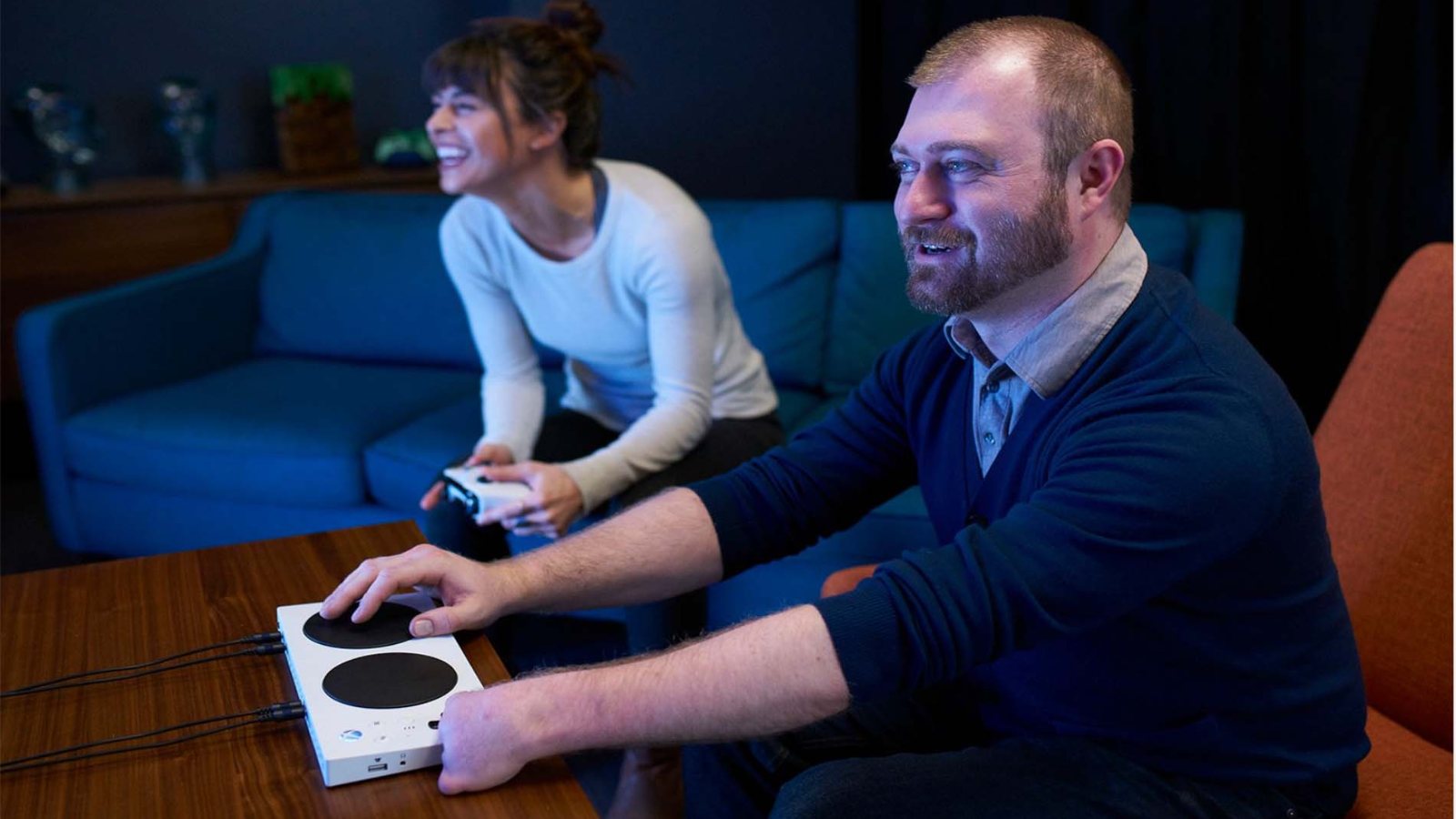
Microsoft designed the controller as a hub. It has two large programmable buttons and 19 jacks so players can plug in the switches, buttons, mounts and joysticks that fit their own bodies (WFA/Contagious, 2020; AbleGamers, 2019). Gamers with limited mobility worked directly with the team.
The team applied the same thinking to the box. A designer built prototypes and tested them with gamers, including a Microsoft retail employee born without fingers on his left hand. His feedback turned small round pull loops into larger oval ones (Microsoft, 2018).
In February 2019, a 60-second spot called “We All Win” ran during the Super Bowl on CBS. Made with McCann New York, it showed kids with limited mobility struggling with a standard controller, then playing with friends using the adaptive one (GeekWire, 2019; The Drum, 2019).
- Design partners: disability nonprofits and gamers shaped the hardware from early on.
- Packaging: loops on the tape, inner box, guide and cables; a hinged box instead of a lid; no twist ties.
- Price: $99.99, sold through the Microsoft Store.
- Ad: real kids who use the product, with the line “When everybody plays, we all win.”
The ad did not invent a story. It pointed a camera at work that had already been done.
What happened
- May 2018: Microsoft announced the controller on Xbox Wire (Xbox Wire, 2018).
- September 2018: it launched at about $100 (Engadget, 2019).
- 2018: Time named it one of the 50 best inventions of the year (GeekWire, 2019).
- February 2019: “We All Win” aired in the fourth quarter of Super Bowl LIII (GeekWire, 2019).
- February 2019: the Kellogg School’s Super Bowl Advertising Review named it the top ad, with an A grade (Notebookcheck, 2019).
- 2019: the wider campaign won a Cannes Lions Grand Prix in Brand Experience and Activation (WFA/Contagious, 2020).
- The catch: the $35M and 246% figures come from the agency’s own case study, not an independent audit.
Why it worked
The product came first. The ad had something true to show: a controller and a box that disabled gamers helped design. Contagious argued Microsoft’s long record of accessibility work protected it from claims of a charity stunt (WFA/Contagious, 2020).
The people in the ad were the users. Kids who actually use the controller carried the story. Viewers saw the problem and the fix in the same minute.
The message was about everyone. “We all win” framed accessibility as more people in the game, not as a favor to a few. That turned a niche product into a brand statement about who Xbox is for.
Where it gets complicated
- Who measured the results? The earned media and social numbers are agency-reported. Award wins and ad rankings show the ad landed, but none of the sources here report unit sales.
- Emotion can tip into using people. Ads with disabled kids can slide into pity or inspiration for its own sake. This one stayed on play and friendship, but the line is close, and teams should test with the community.
- Partners did a lot of the work. AbleGamers says its earlier controllers were a reference for Microsoft’s team (AbleGamers, 2019). Big brands should credit the groups whose knowledge they build on.
The takeaway
The marketing principle
Accessible marketing is only as believable as the accessible product behind it. Design with the people you serve, test every touchpoint with them, down to the box, and then let those same people tell the story. If the work is real, the ad mostly needs to show it.
Sources
- Xbox Adaptive Controller announcement, Xbox Wire (Microsoft) (2018)
- How gamers with disabilities helped design the new Xbox Adaptive Controller’s elegantly accessible packaging, Microsoft News Centre Australia (2018)
- How a hackathon helped build the Xbox Adaptive Controller, Engadget (2019)
- Microsoft unveils Super Bowl ad starring 9-year-old gamer and Xbox Adaptive Controller, GeekWire (2019)
- McCann NY / Microsoft: We All Win, The Drum (2019)
- Microsoft / We all win, World Federation of Advertisers (from Contagious) (2020)
- Memorable Microsoft Super Bowl commercial for the Xbox Adaptive Controller tops advertising review, Notebookcheck (2019)
- Why the Xbox Adaptive Controller Super Bowl ad meant so much for AbleGamers, AbleGamers (2019)
Group activity for this case
Open the Box
Walk your client’s customer journey as someone with limited mobility, find the hardest step, and redesign it with the people it affects. A 20-minute group activity. Dr. Morris gives the password in class.
Use this case in: Accessible and Inclusive Design · All case studies
Use and share this case
Free to use in your own classroom, training or team, and to adapt for non-commercial teaching, with credit to Dr. Jules Morris, Haslam College of Business, University of Tennessee. The text is licensed CC BY-NC 4.0. Brand photos and trademarks belong to their owners and are not covered by this license.
Brand names, images and trademarks belong to their owners and appear here for educational purposes only.