Case study · Marketing 465 · Copywriting for Digital Channels
Wendy’s turned its Twitter account from a complaint desk into a stand-up act, roasting trolls, rivals and even fans who asked for it. The voice made a burger chain one of the most talked-about brands online, and showed how much risk a sharp voice carries.

Brand
Wendy’s
Year(s)
2017 to 2026
Channel(s)
Twitter/X, TikTok, other social platforms
Goal
Stand out against bigger fast-food rivals by sounding like a witty person, not a corporation
Topic
Copywriting for Digital Channels
1,224%
Rise in mentions of Wendy’s during National Roast Day 2022 (The One Show, 2022)
30 million
Organic Twitter impressions from the 2022 roast hashtag (The One Show, 2022)
130 million+
Earned media impressions within hours of the 2022 event (QSR Magazine, 2023)
3.4 million
The retweet record a teen broke after Wendy’s told him he’d need 18 million for free nuggets (CNBC, 2017)
The situation
For years, Wendy’s Twitter account worked like most brand accounts: people complained, and the company replied with polite apologies. The brand was the smaller challenger next to giants like McDonald’s.
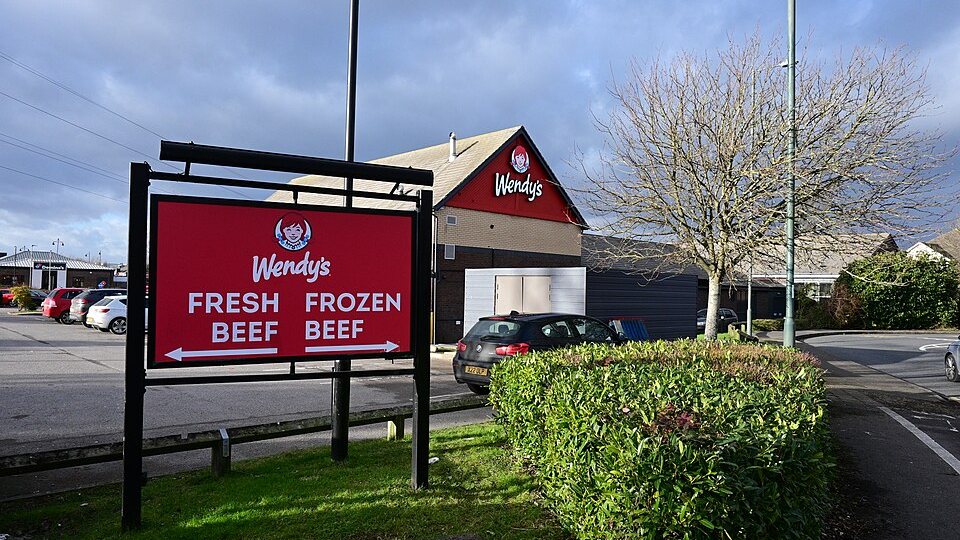
Wendy’s had one product fact it loved to talk about: its beef is fresh, never frozen. In late December 2016 it tweeted a cheeky line about its beef being too cool to be frozen.
The challenge
Fast-food ads all promise the same things: taste, value, speed. A smaller chain cannot outspend the leader, and polite corporate replies on social media are invisible.
Wendy’s needed a voice people would choose to follow and share. But a brand that talks back on a public platform can also say the wrong thing in front of millions.
What they did
In early January 2017, a Twitter user challenged the fresh-beef claim and called the company a joke. Instead of apologizing, the person running the account fired back. Wendy’s pointed out it had used fresh beef since 1969, then asked where the user stored cold things that were not frozen. When the user praised a rival, Wendy’s joked that he had forgotten refrigerators existed. The user deleted the tweets, then the account.
The exchange spread fast, and Wendy’s leaned in. The account became known for quick, sarcastic replies and for roasting people who asked to be roasted. In 2018 the brand created National Roast Day, an annual event where fans and other brands volunteer to get burned.
- Punch with a fact: the best roasts circled back to a real product point, like fresh beef.
- Roast on request: most burns went to people and brands who asked, which kept it playful.
- Short and fast: replies landed within minutes, in a sentence or two.
- Turn it into an event: National Roast Day gave the voice a yearly stage, with app deals for fries attached.
- Move with the audience: the roasts later expanded to TikTok and an animated, talking version of the Wendy character.
Agency VMLY&R, PR firm Ketchum and media agency Spark Foundry worked on the National Roast Day campaigns.
What happened
- January 2017: the frozen-beef exchange drew wide coverage (Adweek, 2017; 1851 Franchise, 2017).
- Days later: Wendy’s deleted a tweet using a Pepe the Frog meme, an image the Anti-Defamation League had labeled a hate symbol (CNBC, 2017).
- May 2017: a teen asked how many retweets he needed for a year of free nuggets. Wendy’s said 18 million, and #NuggsForCarter broke the all-time retweet record (CNBC, 2017).
- 2018: Wendy’s launched National Roast Day (Campaign).
- January 2022: Xbox, Oculus and other brands lined up to be roasted, and The Drum called it a high-risk strategy few brands could pull off (The Drum, 2022).
- 2022: the event drove a 1,224% rise in mentions and won a One Show Silver Pencil (The One Show, 2022).
- The catch: none of these sources tie the roasts directly to sales.
Why it worked
The voice matched the underdog. Challengers can take risks that a market leader cannot. Wit gave Wendy’s a personality that a bigger ad budget could not buy.
Every roast sold something. The frozen-beef reply was funny, but it also repeated the brand’s main product claim. Good brand humor carries a message inside the joke.
It invited people in. By roasting people who asked, Wendy’s turned followers into participants. National Roast Day made the voice a ritual people look forward to, not just a feed they scroll past.
Where it gets complicated
- One bad post can undo a lot. The Pepe the Frog tweet showed how fast a fun, quick-reply voice can stumble into something offensive.
- It depends on people. The voice was shaped by a small social team. Social media manager Amy Brown, credited with the early roasts, later left the company. A voice that lives in one person’s head is fragile.
- Snark is not for every brand. A bank, hospital or charity that roasted customers would lose trust fast. Copying Wendy’s tone without its underdog position usually falls flat.
- Attention is not proof of sales. Impressions and mentions are big, but public sources do not show how much the roasts moved burgers.
The takeaway
The marketing principle
A strong voice is a choice, not a mood. Pick a personality that fits your brand’s position, tie every joke back to something true about your product, and set clear limits before you post. The edge that gets you noticed is the same edge that can cut you.
Sources
- Wendy’s shows us all how to respond to a Twitter troll, Adweek (2017)
- Wendy’s saucy tweets are hit and miss on social media, CNBC (2017)
- Mashable: The Sass Master Behind Wendy’s Twitter, 1851 Franchise (2017)
- The Shot Heard Around the World Wide Web, Chain Store Guide (2019)
- Teen who asked Wendy’s for nuggets breaks all-time retweet record, CNBC (2017)
- Wendy’s roasts brands in high-risk social strategy, The Drum (2022)
- No platform is safe: Wendy’s brings National Roast Day to TikTok for first time, Campaign (n.d.)
- Wendy’s announces return of National Roast Day, QSR Magazine (2023)
- Roast Day, The One Show (2022)
Group activity for this case
Find Your Client’s Edge
Choose a social voice for your client, write a reply to a real kind of comment, and set the lines it will never cross. A 20-minute group activity. Dr. Morris gives the password in class.
Use this case in: Copywriting for Digital Channels · Social Media and Short-Form Video · All case studies
Use and share this case
Free to use in your own classroom, training or team, and to adapt for non-commercial teaching, with credit to Dr. Jules Morris, Haslam College of Business, University of Tennessee. The text is licensed CC BY-NC 4.0. Brand photos and trademarks belong to their owners and are not covered by this license.
Brand names, images and trademarks belong to their owners and appear here for educational purposes only.