Case study · Marketing 475 · Shooting and Editing Marketing Video
In 2015 a small Utah company made a three-minute video about pooping, starring a prince and a unicorn that poops rainbow ice cream. It drew about 30 million views in its first week and sent online sales up 600%. Behind the jokes is a tightly built sales video.

Brand
Squatty Potty, with agency Harmon Brothers
Year(s)
2015 to 2016
Channel(s)
YouTube, Facebook, paid social
Goal
Make people comfortable talking about a toilet stool, then sell it
Topic
Shooting and Editing Marketing Video
$500K
Total spend on production, focus groups and promotion (Fox News)
30 million
Views in the video’s first week (Fox News)
600%
Rise in online sales after the video, with retail sales up 400% (Campaign, 2016)
~6 months
How long Squatty Potty’s leaders took to fully approve the unicorn idea (Webby Awards, 2016)
The situation
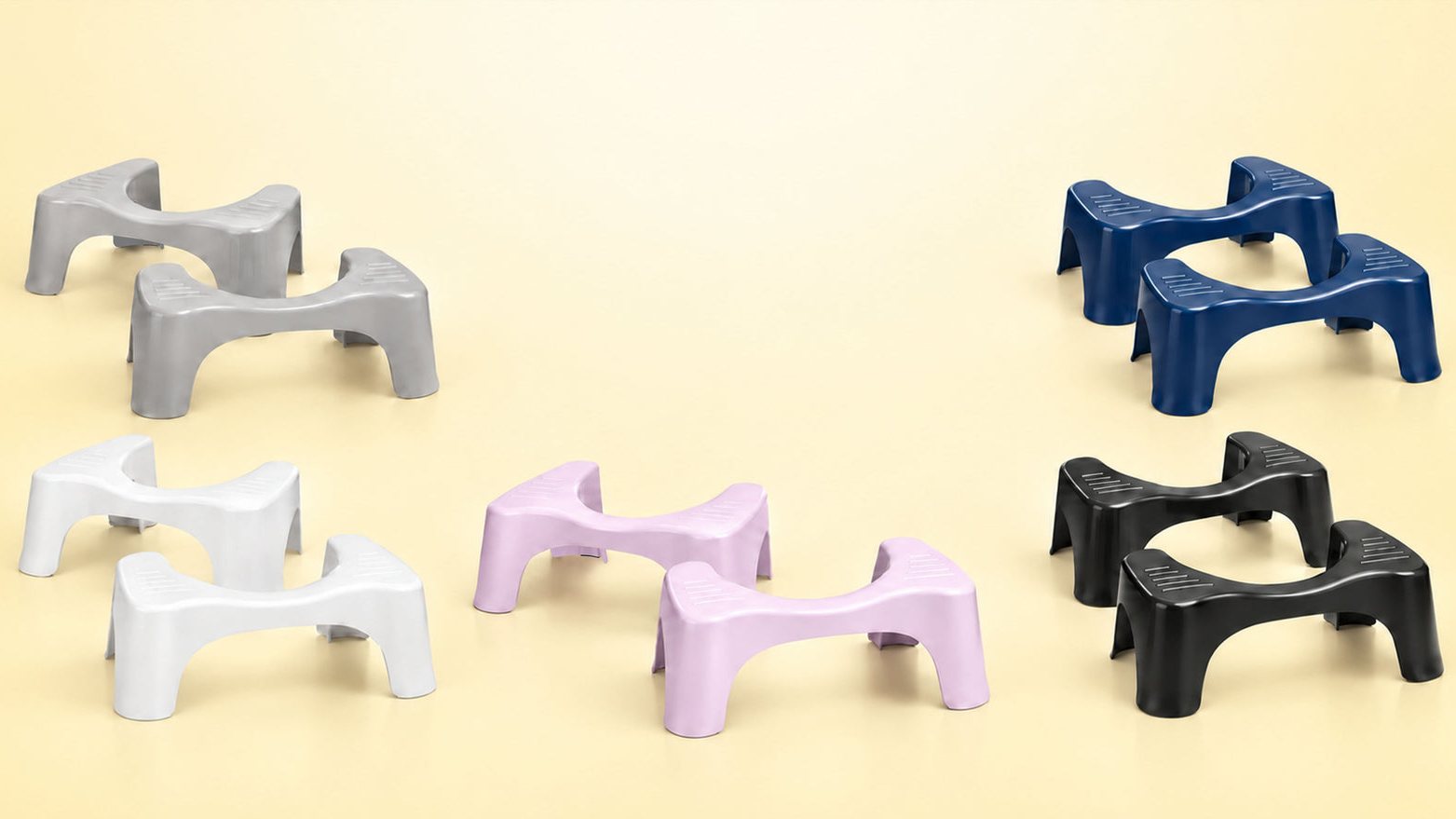
Squatty Potty is a plastic footstool that sits at the base of a toilet and puts you in a squatting position. The Edwards family started it as a home business in 2011. After a 2014 Shark Tank deal with Lori Greiner, online sales jumped, but the product still had a big problem.
Nobody wants to talk about pooping. Squatty Potty sold a health benefit that people found awkward, gross or funny, and none of those feelings made them click “buy.”
The challenge
The company hired Harmon Brothers, a Utah agency known for long, funny product videos. The agency had to solve two problems at once: make the topic watchable and explain how the product works clearly enough to sell it.
When the team tried explaining the stool to people, it didn’t click until they heard one fact: sitting on a toilet kinks the colon, and squatting straightens it. That “colon kink” became the one idea the whole video had to land.
What they did
Harmon Brothers wrote a fairy tale. A proper prince explains the science, and a unicorn shows it. The unicorn poops soft-serve rainbow ice cream, which lets the video show and talk about poop without ever being gross. The agency described it as swapping the subject for its opposite so people would be willing to watch.
- One insight, shown not told: the colon kink is explained and then demonstrated with the stool.
- A guide on camera: the prince narrates in a formal, Monty Python style that makes crude jokes feel clever.
- A visual stand-in: ice cream replaces poop, so viewers laugh instead of look away.
- Length set by the sale: the team didn’t write to a 30- or 60-second slot; it ran about three minutes because that’s what the story needed.
- Tested for reaction: the agency checks whether test viewers are cringing or smiling, and pulls back when a joke goes too far.
- A clear ask: the video ends by telling viewers to buy.
The idea was a hard sell inside the company. Investors and colleagues hated the unicorn at first, and leaders took almost six months to fully sign off. CEO Bobby Edwards backed it anyway.
What happened
- Oct. 2015: the video launches (Utah Business, 2016).
- First days: a teaser earns about 20,000 social shares without paid media (AdNews, 2015).
- First week: about 30 million views (Fox News).
- First four months: about 66 million views (Utah Business, 2016).
- By Jan. 2016: online sales up 600%; 2015 sales reach about $18 million against a $12 million forecast (Utah Business, 2016).
- 2016: the ad wins a Webby People’s Voice Award for copywriting; a sequel follows (Webby Awards, 2016; Campaign, 2016).
Why it worked
It found the one thing to show. The colon kink is a simple, visual fact. Once viewers see it, the product makes sense. Good marketing video is built around the one moment that makes the viewer get it.
The stand-in did the heavy lifting. Rainbow ice cream turned a gross topic into a funny one. A good visual substitute lets you show what you can’t film directly.
Entertainment served the sale. Every joke sits next to a product point, and the video asks for the order. The team treated humor as a bonus on top of selling, not a replacement for it.
Where it gets complicated
- “Low budget” is relative. $500,000 is far less than a national TV campaign, but it is a lot for a small company. Another account puts the video’s cost at $250,000, so the split between production and promotion is unclear.
- The numbers vary. Reports put retail growth at 200% or 400% and 2015 sales at $15 million or $18 million, depending on the source and date.
- It built on earlier exposure. Shark Tank had already made the product known. The video amplified demand that was starting to grow.
- Not every brand can be this silly. The approach fits a quirky, low-cost product. A bank or hospital would need a different tone.
The takeaway
The marketing principle
A marketing video sells when it is built around one clear insight the viewer can see. Find the fact that makes the product click, then find a visual way to show it, even if that means a stand-in like rainbow ice cream. Let the story set the length, test early cuts for cringe versus smile, and always end with a clear ask. Production polish matters less than knowing exactly what each shot is there to prove.
Sources
- The Squatty Potty timeline, Fox News (2016)
- This company found a way to sell something no one wants to discuss, Entrepreneur (2016)
- Potty talk: marketing an unconventional product, Utah Business (2016)
- Creativity rules: Harmon Brothers developing powerful marketing campaigns, Utah Business (2016)
- Can a unicorn change the way you poop?, AdNews (2015)
- Are you ready for No. 2? Squatty Potty is back with a sequel, Campaign (2016)
- Harmon Brothers, creators of viral Squatty Potty ad, Webby Awards (2016)
- Squatty Potty’s CEO ignored everyone, made an insane video and boosted sales 600%, Adweek (2015)
Group activity for this case
Find the Kink, Shoot the Kink
Find the one insight that makes your client’s product click, pick a visual way to show it, and write a short shot list. A 20-minute group activity. Dr. Morris gives the password in class.
Use this case in: Shooting and Editing Marketing Video · All case studies
Use and share this case
Free to use in your own classroom, training or team, and to adapt for non-commercial teaching, with credit to Dr. Jules Morris, Haslam College of Business, University of Tennessee. The text is licensed CC BY-NC 4.0. Brand photos and trademarks belong to their owners and are not covered by this license.
Brand names, images and trademarks belong to their owners and appear here for educational purposes only.