Case study · Marketing 475 · Presenting Creative Work
In November 2024 Jaguar launched its new brand with a 30-second film that showed no cars. The internet filled the gap with its own story, and the car arrived two weeks too late to change it. The order of a reveal can matter as much as the work.

Brand
Jaguar (Jaguar Land Rover, owned by Tata Motors)
Year(s)
2024 to 2026
Channel(s)
Social video, X/Twitter, Miami Art Week event, press
Goal
Relaunch Jaguar as an all-electric luxury brand for new buyers
Topic
Presenting Creative Work
0
Cars shown in the 30-second “Copy Nothing” launch film (DesignRush, 2024)
Nearly 7M
Views on Elon Musk’s “Do you sell cars?” reply to the film (DesignRush, 2024)
2 weeks
Gap between the new identity and the first car, the Type 00 concept (Design Week, 2024)
80% to 90%
Share of future buyers Jaguar hoped would be new to the brand (Design Week, 2024)
The situation
Jaguar was shrinking. It sold 33,320 cars in 2024, down from 61,661 in 2022, while sister brand Land Rover grew. Its plan was drastic: stop selling its old gas models, go fully electric and move up to cars priced above £100,000.
That meant Jaguar was about to have almost nothing to sell for a while. The brand needed people to understand the new Jaguar before the new cars arrived.
The challenge
The team had a bold idea, captured in the line “Copy Nothing,” and a new identity to match. The question was how to present it. Do you show the product first, the brand idea first, or both together?
Jaguar chose to lead with the idea. The car would come later.
What they did
On November 19, 2024, Jaguar posted a 30-second film. Models in bold, bright outfits walked through colorful sets while lines like “delete ordinary” and “live vivid” flashed on screen. It ended with “Copy Nothing” and the new wordmark. There was no car in it.
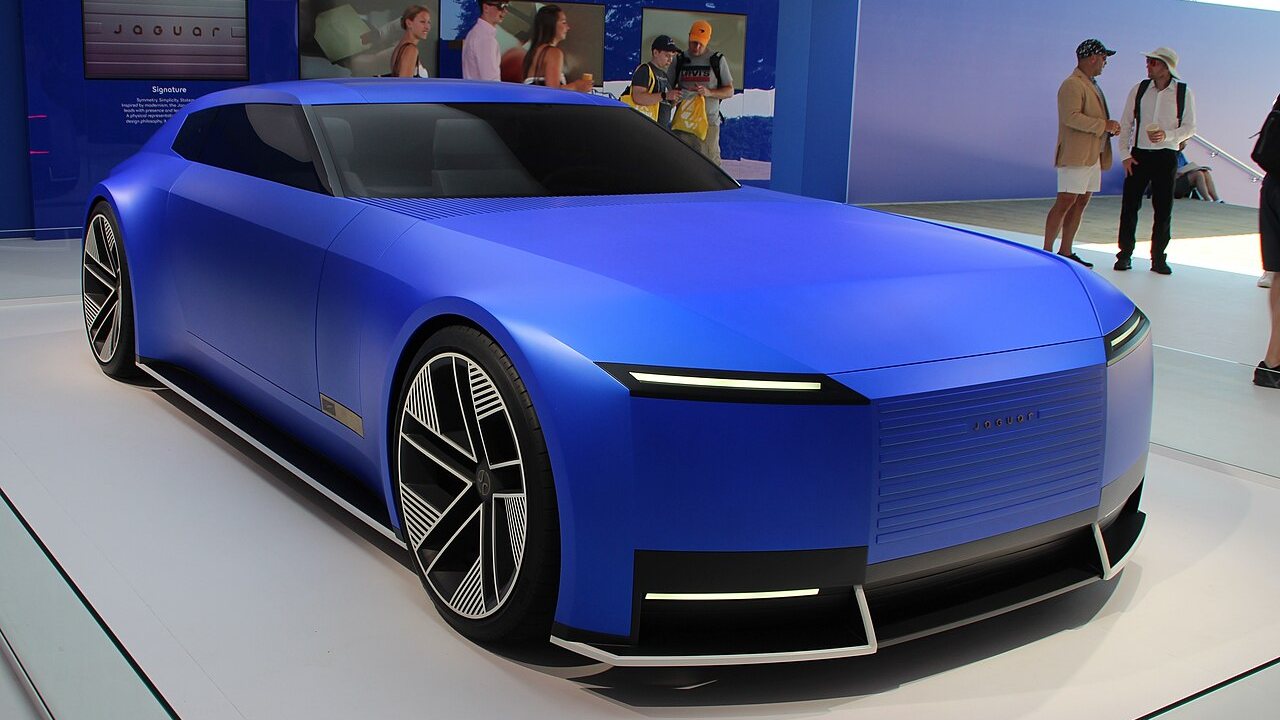
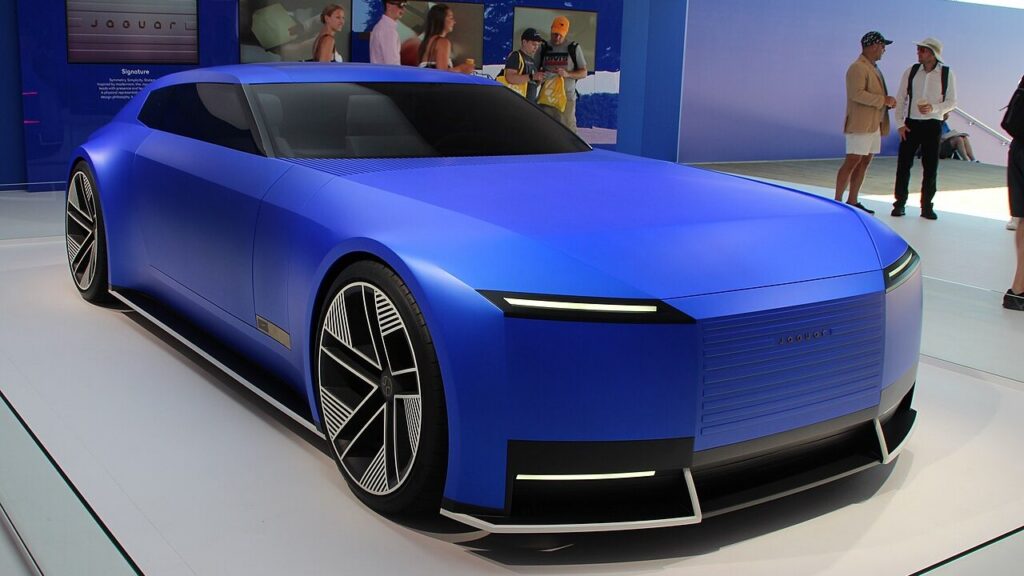
About two weeks later, at Miami Art Week, Jaguar revealed the Type 00 concept in Miami Pink and London Blue. Leaders said the car was the first physical example of the new brand and a way for people to judge the identity alongside a real product.
- Step 1, the idea: film, slogan and new wordmark, with no car.
- Step 2, the product: the Type 00 concept car, two weeks later.
- Step 3, the real car: the production Type 01 GT, nearly two years later.
By then the story was set. Elon Musk replied to the film with “Do you sell cars?” and the post drew nearly 7 million views. Critics read the film as a culture-war statement, and many people never saw the car at all.
What happened
- Nov. 19, 2024: “Copy Nothing” film posted; Musk’s reply goes viral the same day (DesignRush, 2024).
- Early Dec. 2024: Type 00 concept revealed at Miami Art Week (Design Week, 2024).
- April 2025: only 49 new Jaguars registered in Europe, down 97.5%, during a planned gap with no new models on sale. Jaguar said the drop was not related to the rebrand (Motor1, 2025; HuffPost via AOL, 2025).
- May 2025: Jaguar reportedly begins looking for a new ad agency (Autobuzz, 2025).
- Mid 2025: JLR CEO Adrian Mardell announces he will step down (HuffPost via AOL, 2025).
- Dec. 2025: chief creative officer Gerry McGovern leaves JLR; Autocar’s sources said he was asked to go (Campaign, 2025).
- Aug. 2026: McGovern says the campaign was misread and pulled into politics, and that Jaguar shelved more ads it had prepared (Auto Trader NZ, 2026).
- Oct. 6, 2026: Jaguar reveals the production Type 01 in New York, priced from £120,000, with sales in early 2027 (BusinessDay, 2026).
Why it worked
People noticed. The reveal made Jaguar one of the most talked-about brands in the world for weeks. Almost everyone now knew Jaguar was changing, which the old Jaguar could not claim.
The idea held across every step. The film, the concept car and the 2026 Type 01 all carried the same “copy nothing” thinking. When the real car arrived, its tagline was still “A copy of nothing.”
The car did some of the work the film couldn’t. Coverage of the Type 00 and Type 01 shifted the conversation toward design, price and range. That is the conversation Jaguar wanted from the start.
Where it gets complicated
- The sales crash was mostly planned. Jaguar stopped selling its old models before the new ones existed, so low 2025 sales were expected. Critics still tied the numbers to the ad, and that story was hard to undo.
- Context is part of the audience. McGovern says the film was dragged into an American political fight he didn’t see coming. Presenters can’t control that, but they can plan for how a piece will be read in the moment it lands.
- Who was the audience? Jaguar wanted mostly new buyers at a very high price. Angry longtime fans may not have been the people it needed to win.
- The verdict isn’t in. The Type 01 goes on sale in 2027. Whether the rebrand worked will depend on whether people buy it.
The takeaway
The marketing principle
When you present creative work, decide what the audience must see first. If you show the big idea without the thing people care about, they will fill the gap with their own story, and first stories stick. Lead with proof (the product, the result, the real customer), then the idea that explains it. Before any reveal, write down the worst likely reaction and decide how the first thing people see answers it.
Sources
- Jaguar’s Copy Nothing rebrand draws backlash as critics slam its new era, DesignRush (2024)
- The car after the storm: Jaguar unveils new concept EV, Design Week (2024)
- New Jaguar registrations were hilariously low last month, Motor1 (2025)
- Jaguar CEO Adrian Mardell stepping down months after rebrand, HuffPost (via AOL) (2025)
- Jaguar looking for new advertising agency after controversial campaign, Autobuzz (2025)
- Jaguar Land Rover axes chief creative officer Gerry McGovern, Campaign (2025)
- McGovern defends Copy Nothing, Auto Trader NZ (2026)
- Global reveal: Jaguar Type 01 ushers in a new electric era, BusinessDay (2026)
Group activity for this case
Plan the Reveal
Plan the order in which your client’s audience will see your campaign, and pre-answer the worst reaction. A 20-minute group activity. Dr. Morris gives the password in class.
Use this case in: Presenting Creative Work · Giving and Using Creative Critique · All case studies
Use and share this case
Free to use in your own classroom, training or team, and to adapt for non-commercial teaching, with credit to Dr. Jules Morris, Haslam College of Business, University of Tennessee. The text is licensed CC BY-NC 4.0. Brand photos and trademarks belong to their owners and are not covered by this license.
Brand names, images and trademarks belong to their owners and appear here for educational purposes only.