Case study · Marketing 465 · Privacy, Data and Marketing Ethics
Strava published a beautiful map of where its users run and ride, built from more than a billion workouts. A college student noticed it also traced soldiers’ routines on military bases, proving that data with no names on it can still expose people.

Brand
Strava
Year(s)
2017 to 2018
Channel(s)
Strava app and website, public Global Heatmap
Goal
Show off the scale of the Strava community and help athletes find popular routes
Topic
Privacy, Data and Marketing Ethics
1 billion+
Recorded activities in Strava’s November 2017 Global Heatmap (Bicycle Retailer, 2017)
6x
More data than Strava’s 2015 heatmap (Bicycle Retailer, 2017)
Trillions
GPS data points drawn on the map from users’ uploaded and synced activity (Bellingcat, 2018)
About 6 months
Time from the heatmap’s release to a Pentagon memo restricting geolocation features for deployed troops (NPR, 2018)
The situation
Strava is a social fitness app. Runners and cyclists record their workouts with a phone or fitness tracker, then share them with friends. By 2017 it had a huge library of GPS tracks from around the world.
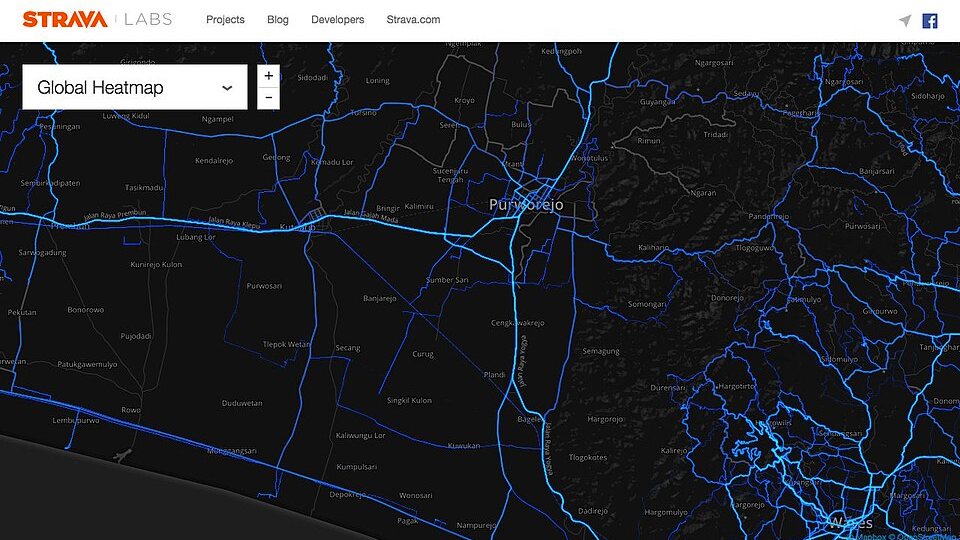
In November 2017, Strava released an updated Global Heatmap. It drew every public activity as a glowing line, so the busiest routes lit up brightest. It was a striking piece of brand content: a picture of a global community in motion.
The challenge
Strava saw the heatmap as anonymous. No names, no profiles, just lines. Private activities were left out, and users could opt out.
The problem was context. In big cities, millions of lines blur together. In remote places where almost nobody uses Strava, a few bright lines stand out sharply. If the only people jogging in a stretch of desert are soldiers, the map shows exactly where the base is and where the soldiers go.
What they did
Strava’s original heatmap update was a marketing and product win. It showed more than a billion activities across 31 sport types, six times the data of the 2015 version.
In late January 2018, Nathan Ruser, an Australian university student, posted that the map made military bases easy to spot. Other researchers piled on. One showed that public route segments could lead back to individual users’ profiles. Strava’s first reply pointed to its privacy settings. Within days its CEO, James Quarles, published an open letter promising changes.
- First response: private activities were excluded and users could opt out of the heatmap (Help Net Security, 2018).
- The promise: review features built for motivation that could be misused, and simplify privacy controls (TechCrunch, 2018).
- The fix: street-level detail only for logged-in users, monthly refreshes that drop newly private data, and low-traffic roads hidden until enough people use them (Engadget, 2018).
- The opt-out: made easier to find in early March 2018.
The US military made its own changes. In August 2018, the Pentagon restricted geolocation features on devices in operational areas.
What happened
- November 1, 2017: Strava releases its updated Global Heatmap with more than 1 billion activities (Bicycle Retailer, 2017).
- January 27, 2018: Nathan Ruser points out that the map reveals military bases and patterns of life around them (Help Net Security, 2018).
- January 29, 2018: Bellingcat publishes a guide on reading the map, noting that many sites shown were already open secrets (Bellingcat, 2018).
- January 29, 2018: Strava’s CEO promises to review features and simplify privacy settings (TechCrunch, 2018).
- March 13, 2018: Strava limits street-level heatmap detail to logged-in users and hides low-activity areas (Engadget, 2018).
- August 2018: a Pentagon memo restricts geolocation apps and features for deployed personnel (NPR, 2018).
Why it worked
This is a lesson in what went wrong. The heatmap was clever brand content. The mistake was assuming that taking names off data makes it safe.
Aggregated data is only anonymous in a crowd. In dense cities, one person’s run disappears into millions. In sparse places, a handful of tracks can point to a specific group, or even a specific person. Strava had checked the privacy settings. It had not checked what the map revealed in its emptiest corners.
The fix was smart, once it came. Hiding low-traffic routes until enough people use them solved the core problem. Requiring a login for detail added friction for bad actors. These are the kinds of safeguards worth building in before launch.
Where it gets complicated
- Users did opt in, sort of. Strava’s settings did allow people to keep activities private or leave the heatmap. Many users did not know the settings existed or did not imagine how the data would be used. Default settings shape behavior more than options do.
- How secret were the bases? Bellingcat pointed out that many locations on the map were already public. The bigger risk was the routines inside them: patrol routes, jogging paths and schedules (Bellingcat, 2018).
- Who owns the risk? Strava built the map, but soldiers chose to record workouts on sensitive sites. The military’s own response suggests the responsibility was shared.
The takeaway
The marketing principle
Removing names does not make data anonymous. Before you publish or share any aggregated customer data, look for the places where the crowd is thin, because that is where individuals show through. Design for the most exposed user, not the average one.
Sources
- Strava releases updated Global Heatmap, Bicycle Retailer and Industry News (2017)
- Strava user heatmap reveals patterns of life in western military bases, Help Net Security (2018)
- How to Use and Interpret Data from Strava’s Activity Map, Bellingcat (2018)
- Strava says it will simplify privacy settings and review app features after exposing military bases, TechCrunch (2018)
- After exposing secret military bases, Strava restricts data visibility, Engadget (2018)
- Pentagon Restricts Fitness And GPS Trackers For Deployed Personnel, NPR (2018)
Group activity for this case
Find the Thin Crowd
Pick a piece of customer data your client could share, then find where it would expose individuals. A 20-minute group activity. Dr. Morris gives the password in class.
Use this case in: Privacy, Data and Marketing Ethics · All case studies
Use and share this case
Free to use in your own classroom, training or team, and to adapt for non-commercial teaching, with credit to Dr. Jules Morris, Haslam College of Business, University of Tennessee. The text is licensed CC BY-NC 4.0. Brand photos and trademarks belong to their owners and are not covered by this license.
Brand names, images and trademarks belong to their owners and appear here for educational purposes only.