Case study · Marketing 465 · Privacy, Data and Marketing Ethics
Apple spent 2019 advertising privacy as a reason to buy an iPhone, then shipped a pop-up in 2021 that let users tell apps not to track them. Most said no, and businesses that ran on targeted ads felt it fast.
Brand
Apple
Year(s)
2019 to 2025
Channel(s)
Billboards, TV and online video, the iPhone operating system itself
Goal
Make privacy a reason to choose iPhone, then build it into the product
Topic
Privacy, Data and Marketing Ethics
4%
Share of US iPhone users on iOS 14.5 who let apps track them in the first 12 days, per Flurry data (Engadget, 2021)
About $10B
Meta’s estimate of 2022 revenue lost to Apple’s tracking change (CNBC, 2022)
60%
Fewer sales from non-personalized ads, according to Facebook’s own data cited in its 2020 newspaper ads (Fortune, 2020)
€150M+
Fine France’s competition authority gave Apple in 2025 over how the tracking prompts were rolled out (TechRadar, 2025)
The situation
By the late 2010s, much of the free internet ran on tracking. Apps followed people across other apps and websites, built profiles, and sold ads aimed at those profiles. Facebook was one of the biggest players in that system, and it said small businesses depended on its targeting to find customers.
Apple made most of its money selling devices, not ads. That gave it room to treat privacy as a selling point instead of a cost.
The challenge
Smartphones look more alike every year. Apple needed a reason to choose iPhone that rivals with ad-based business models could not easily copy.
Privacy is hard to advertise, though. It is invisible when it works, and most people do not read settings screens. Apple had to make an abstract value feel concrete, then prove the claim was more than a slogan.
What they did
Apple started with advertising. In January 2019, a billboard near CES in Las Vegas played on the city’s famous slogan: what happens on your iPhone stays on your iPhone. In March 2019, a TV spot showed everyday moments when people want privacy, framed by the message “Privacy. That’s iPhone.”
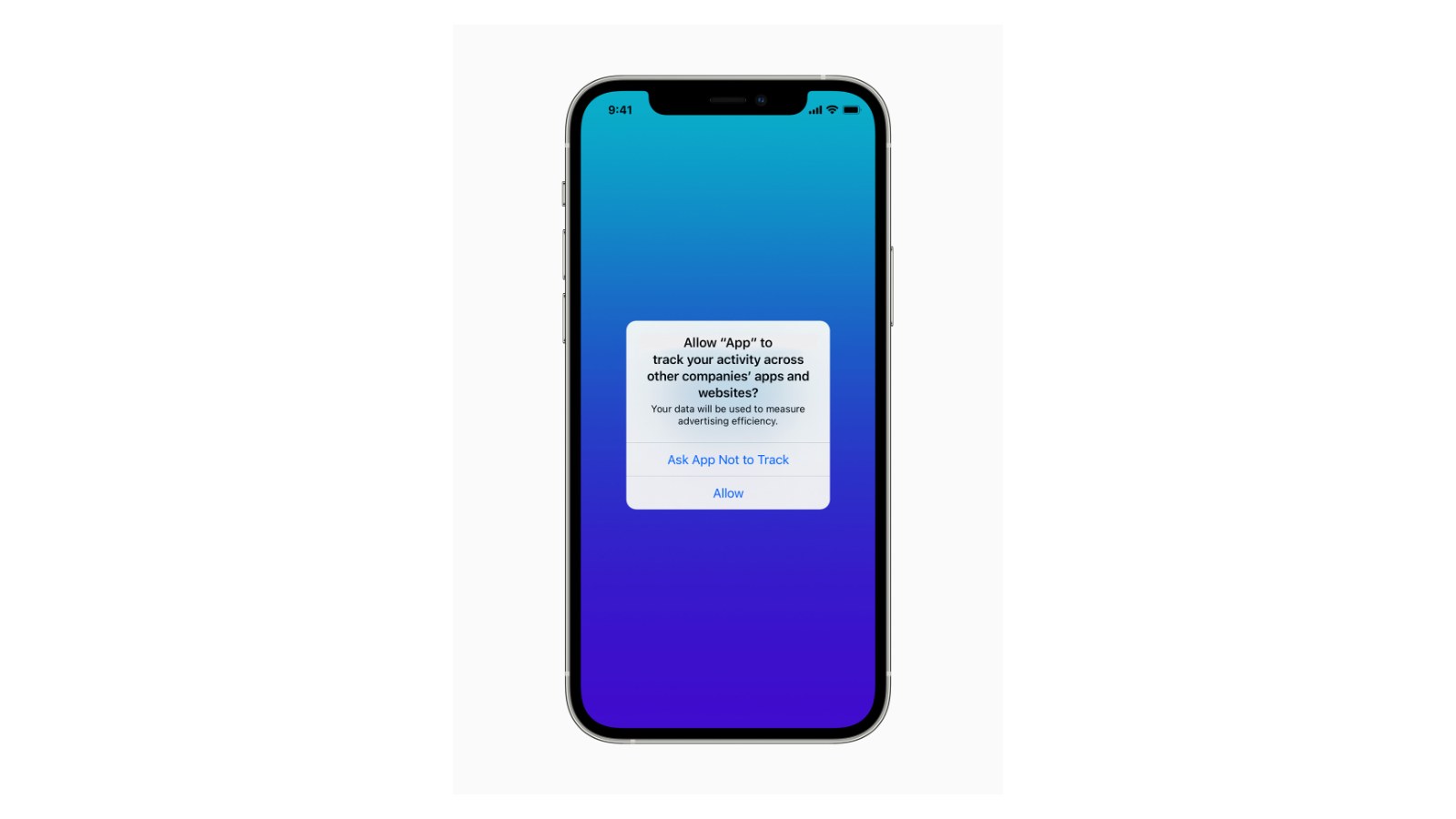
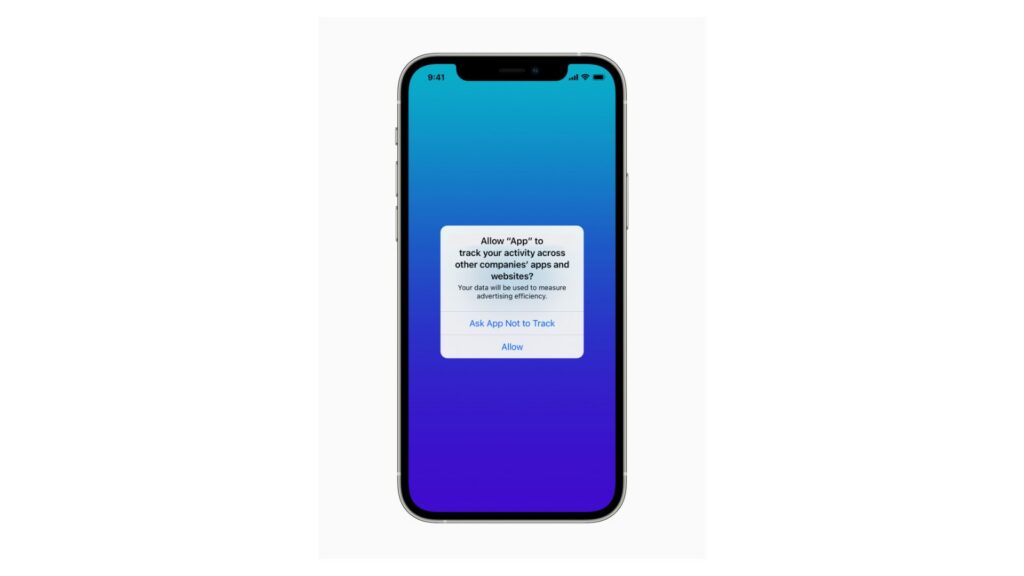
Then Apple put the promise into the product. App Tracking Transparency arrived with iOS 14.5 in April 2021. Any app that wanted to track a user across other companies’ apps and websites had to ask first, through a standard pop-up. Users could also review and change those choices in Settings.
- The billboard: a parody of “What happens in Vegas,” placed where rival tech firms were showing off products (9to5Mac, 2019).
- The TV spot: private moments, like a bathroom door or a one-on-one talk, tied to the phone your life is on (CNBC, 2019).
- The feature: a single prompt asking whether an app may track you, plus a Settings page to change your mind (Apple Newsroom, 2021).
- The rule: apps needed permission to use the device’s advertising identifier for tracking.
Apple announced the change in June 2020. Facebook pushed back hard before it launched.
What happened
- January 2019: the iPhone privacy billboard appears in Las Vegas ahead of CES (9to5Mac, 2019).
- March 14, 2019: Apple releases a privacy TV spot framed by the message “Privacy. That’s iPhone.” (9to5Mac, 2019).
- December 16, 2020: Facebook runs full-page ads in The New York Times, The Wall Street Journal and The Washington Post saying it is standing up to Apple for small businesses (Fortune, 2020).
- April 26, 2021: App Tracking Transparency launches with iOS 14.5 (Apple Newsroom, 2021).
- May 2021: Flurry data shows only 4% of US users and 12% worldwide opting in to tracking in the first 12 days (Engadget, 2021).
- February 2, 2022: Meta says the change will cost it about $10 billion in 2022 sales, and its shares fall 23% in after-hours trading (CNBC, 2022).
- March 31, 2025: France’s competition authority fines Apple more than €150 million, saying the way it ran the prompts disadvantaged other app makers (TechRadar, 2025).
Why it worked
The ad and the product said the same thing. “Privacy. That’s iPhone.” could have been empty. App Tracking Transparency made it something users touched every time they opened a new app. A claim you can see in the product is far stronger than one you only see in an ad.
It named a feeling people already had. Most users never thought about ad identifiers. They did understand a simple question: do you want this app to track you? Framed that way, most people said no.
Apple picked a value its business could afford. Because Apple did not depend on ad tracking the way Facebook did, the stance cost Apple far less than it cost rivals. That made the promise more believable and harder to copy.
Where it gets complicated
- Small businesses took real damage. Facebook argued that targeted ads were how small brands found customers. Its numbers came from its own data, but the concern that small advertisers would pay more for worse results was widely shared.
- Was it fair play? France’s competition authority found the prompts were not applied equally, since Apple did not ask consent for its own apps until iOS 15. Apple said ATT treats all developers the same and that the authority required no specific changes (TechRadar, 2025).
- Opt-in rates moved. The famous 4% figure came from the first 12 days in the US. Flurry itself said the rate might not hold, so treat it as an early snapshot, not a permanent number (Engadget, 2021).
- Privacy can also be strategy. A value that hurts your competitors more than it hurts you is still a value, but marketers should notice when ethics and advantage line up so neatly.
The takeaway
The marketing principle
A values claim in marketing is only as strong as the proof inside the product. Apple advertised privacy, then built a feature that let users act on it in one tap. When your message and your product say the same thing, customers believe you, and competitors who cannot match the proof get left explaining themselves.
Sources
- Apple puts up giant billboard in Las Vegas ahead of CES touting iPhone privacy, 9to5Mac (2019)
- Apple’s new iPhone ad focuses on privacy, CNBC (2019)
- Apple makes privacy extremely relatable in fun new iPhone ad, 9to5Mac (2019)
- Facebook attacks Apple software changes in newspaper ads, Fortune (2020)
- iOS 14.5 offers Unlock iPhone with Apple Watch, diverse Siri voices, and more, Apple Newsroom (2021)
- Only 4 percent of US iPhone users have agreed to app tracking after iOS 14.5, Engadget (2021)
- Facebook says Apple iOS privacy change will cost $10 billion this year, CNBC (2022)
- Apple fined over €150 million in France for discriminatory consent practices surrounding its ATT framework, TechRadar (2025)
Group activity for this case
Prove the Promise
Pick one value your client claims, then find or design the product proof that backs it up. A 20-minute group activity. Dr. Morris gives the password in class.
Use this case in: Privacy, Data and Marketing Ethics · All case studies
Use and share this case
Free to use in your own classroom, training or team, and to adapt for non-commercial teaching, with credit to Dr. Jules Morris, Haslam College of Business, University of Tennessee. The text is licensed CC BY-NC 4.0. Brand photos and trademarks belong to their owners and are not covered by this license.
Brand names, images and trademarks belong to their owners and appear here for educational purposes only.