Case study · Marketing 475 · Image Rights, Licensing and Copyright
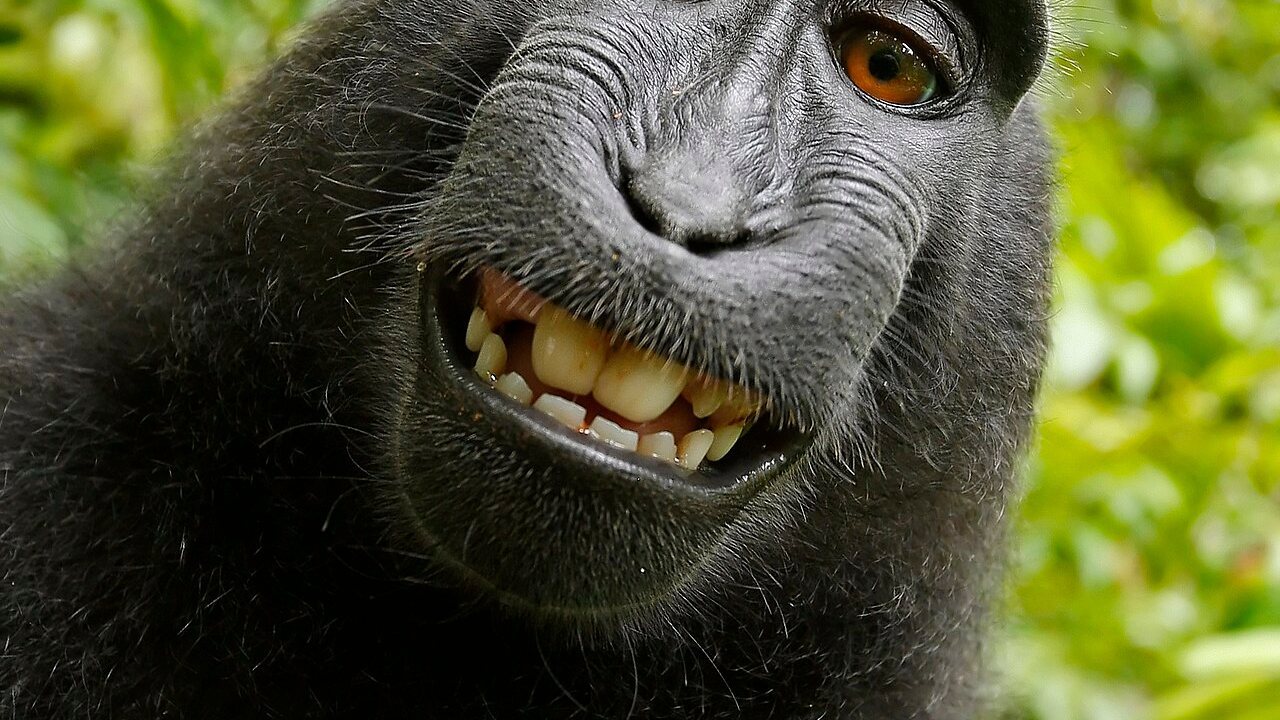
A wild macaque grabbed a photographer’s camera and took a grinning selfie. Wikipedia said nobody owned it, PETA sued on the monkey’s behalf, and the courts ended up confirming a rule that now matters for every AI-generated image: copyright needs a human author.

Brand
David Slater (photographer), PETA and Wikimedia
Year(s)
2011 to 2018
Channel(s)
Wildlife photography, Wikipedia and Wikimedia Commons, a self-published book
Goal
Slater wanted to control and earn from the photo; PETA wanted the monkey named as owner
Topic
Image Rights, Licensing and Copyright
2011
Year the selfies were taken on Sulawesi, Indonesia, with Slater’s unattended camera (Ninth Circuit, 2018)
25%
Share of future revenue from the photos Slater agreed to donate to macaque habitat charities in 2017 (CNN, 2017)
313.2
Section of the U.S. Copyright Office rules that lists “a photograph taken by a monkey” as not registrable (U.S. Copyright Office)
April 23, 2018
Date the Ninth Circuit ruled that animals cannot sue under the Copyright Act (Ninth Circuit, 2018)
The situation
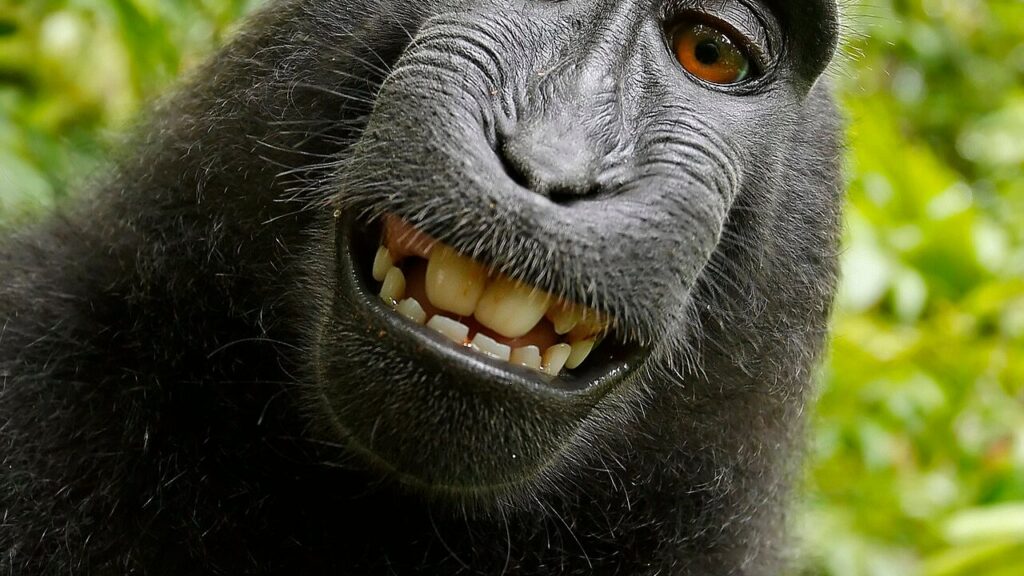
In 2011, British wildlife photographer David Slater was working with crested macaques on the Indonesian island of Sulawesi. One of them picked up his camera and took a series of shots, including a toothy, wide-eyed selfie (Ninth Circuit, 2018; NBC News, 2014).
The photo went viral. It was uploaded to Wikimedia Commons, the free media library behind Wikipedia, as a public domain image.
The challenge
Slater argued the photo was his. He planned and paid for the trip, owned the camera and chose its settings (NBC News, 2014). He said he had earned little from the image while it spread for free.
Wikimedia refused his takedown request in 2014. Its position was simple: a monkey cannot own copyright, and no human took the picture, so nobody does (ABA Journal, 2014).
What they did
Then the fight got stranger. In 2015, PETA sued Slater in federal court, claiming the monkey, which it called Naruto, owned the copyright and that Slater’s book infringed it (CNN, 2017).
- Copyright Office: its rules list “a photograph taken by a monkey” as an example of work it will not register, because copyright requires human authorship (U.S. Copyright Office).
- District court, January 2016: ruled that a monkey cannot hold a copyright under the Act (CNN, 2017).
- Settlement, September 2017: PETA and Slater agreed he would give 25% of future revenue from the photos to charities protecting crested macaque habitat (CNN, 2017).
- Ninth Circuit, April 23, 2018: refused to just drop the appeal, and ruled anyway. Animals lack standing to sue under the Copyright Act. The court also awarded Slater attorney’s fees (Ninth Circuit, 2018).
One judge wrote that PETA had used the monkey as a pawn for its own goals (Ninth Circuit, 2018). Nobody walked away owning the selfie in the clear.
What happened
- 2014: Wikimedia denied Slater’s takedown request (ABA Journal, 2014).
- 2015 to 2018: PETA’s suit ran from district court to the Ninth Circuit, which affirmed dismissal (Ninth Circuit, 2018).
- March 18, 2025: in Thaler v. Perlmutter, a federal appeals court held that an AI system cannot be an author under copyright law (Skadden, 2025).
- March 2, 2026: the Supreme Court declined to hear Thaler’s appeal (TMCA, 2026).
- The catch: none of these cases says how much human input is enough. That question is still open for AI-assisted work (Skadden, 2025).
Why it worked
The rule is clear and old. U.S. copyright protects human creativity. Owning the camera, the trip or the software is not the same as authoring the image.
It became the go-to example for AI. Courts and the Copyright Office now apply the same human-author idea to images made by AI. A brand that prompts an AI tool may not own the result.
It showed what open licensing means in practice. Once an image is treated as public domain, anyone can use it. Slater could not pull it back.
Where it gets complicated
- Slater’s case was sympathetic. He paid for the trip and set up the gear (NBC News, 2014). A rule that leaves the person who made the moment possible with nothing can feel unfair.
- Other countries may see it differently. The U.S. rulings settle U.S. law. Slater is British, and the cases here do not decide how courts elsewhere would treat his claim.
- “Human authorship” is a line, not a wall. A person who edits, arranges or selects AI or animal-made images may add protectable work. How much is enough is decided case by case.
The takeaway
The marketing principle
If no human authored an image, nobody owns its copyright, not the camera owner and not the person who typed the prompt. Before a brand builds its identity on a visual, make sure a human created the parts that matter, and get the rights to them in writing.
Sources
- Naruto v. Slater, No. 16-15469 (opinion), U.S. Court of Appeals for the Ninth Circuit (2018)
- Compendium of U.S. Copyright Office Practices, Chapter 300, U.S. Copyright Office (n.d.)
- Monkey selfie lawsuit ends in settlement, CNN (2017)
- Monkey selfie on Wikipedia drives photographer bananas, NBC News (2014)
- Who owns the copyright to macaque’s selfie? Wikimedia denies photographer’s takedown request, ABA Journal (2014)
- Appellate court affirms human authorship requirement for copyrighting AI-generated works, Skadden (2025)
- Can AI author copyrightable work? The Supreme Court just declined to say yes, TMCA (2026)
Group activity for this case
Who Owns This?
Sort your client’s visual assets by who authored them, and set a rule for AI-made images before they become brand assets. A 20-minute group activity. Dr. Morris gives the password in class.
Use this case in: Image Rights, Licensing and Copyright · All case studies
Use and share this case
Free to use in your own classroom, training or team, and to adapt for non-commercial teaching, with credit to Dr. Jules Morris, Haslam College of Business, University of Tennessee. The text is licensed CC BY-NC 4.0. Brand photos and trademarks belong to their owners and are not covered by this license.
Brand names, images and trademarks belong to their owners and appear here for educational purposes only.