Case study · Marketing 465 · Project Management for Marketing Teams
Basecamp stopped asking how long work would take and started asking how much time the work was worth. Its Shape Up method, with fixed six-week cycles, no backlog and hill charts, gives any team a way to ship on time by cutting scope instead of moving deadlines.
Brand
Basecamp (37signals)
Year(s)
2015 to 2021
Channel(s)
Internal process, free online book, print edition
Goal
Ship meaningful work on a steady rhythm without endless backlogs or blown deadlines
Topic
Project Management for Marketing Teams
6 + 2
Weeks in each cycle: six to build, then two weeks of cool-down (Basecamp, Shape Up, 2019)
4 to 50+
Basecamp’s growth in people, which made its habits hard to pass on by word of mouth (Basecamp, Shape Up, 2019)
1 to 2 hours
Typical length of the betting table meeting that picks the next cycle’s work (Basecamp, Shape Up, 2019)
6 months to 6 weeks
Process Street’s claimed drop in time to ship a feature after switching; the post does not show how it measured this (Process Street, 2021)
The situation
Basecamp, the project management software company now called 37signals, started in 2003. It grew from four people to more than fifty, and by 2015 its product team had quadrupled and everyone worked remotely. Around then it settled on six-week work cycles.
As the team grew, leaders found it hard to explain how they worked to new hires, and other companies kept asking. Ryan Singer, who led product strategy, wrote it all down. The free online book Shape Up went live in July 2019, and a print edition followed in 2020.
The challenge
Most teams plan by estimating. They list tasks, guess how long each one takes, and add it up. Estimates are usually wrong, so deadlines slip, projects drag on and backlogs grow until nobody reads them.
Basecamp wanted a rhythm where teams could finish real work on time, leaders could see progress without hovering, and nobody got stuck in a project that never ends.
What they did
Shape Up flips the usual question. Instead of an estimate (how long will this take?), leaders set an appetite (how much time is this worth to us?). Time is fixed. Scope is what bends.
- Shaping: a small senior group defines the problem and a rough solution before any team starts, with clear limits on what is in and out.
- Appetite: each project gets a time budget, either a small batch of one or two weeks or a big batch of a full six-week cycle.
- The betting table: during cool-down, a few leaders (at Basecamp, the CEO, CTO, a senior programmer and a product strategist) pick which shaped pitches to bet on for the next cycle.
- No backlog: ideas that are not picked are not saved in a giant list. If they still matter, someone pitches them again.
- Circuit breaker: if a project is not done in six weeks, it does not get an extension by default. It goes back to be reshaped.
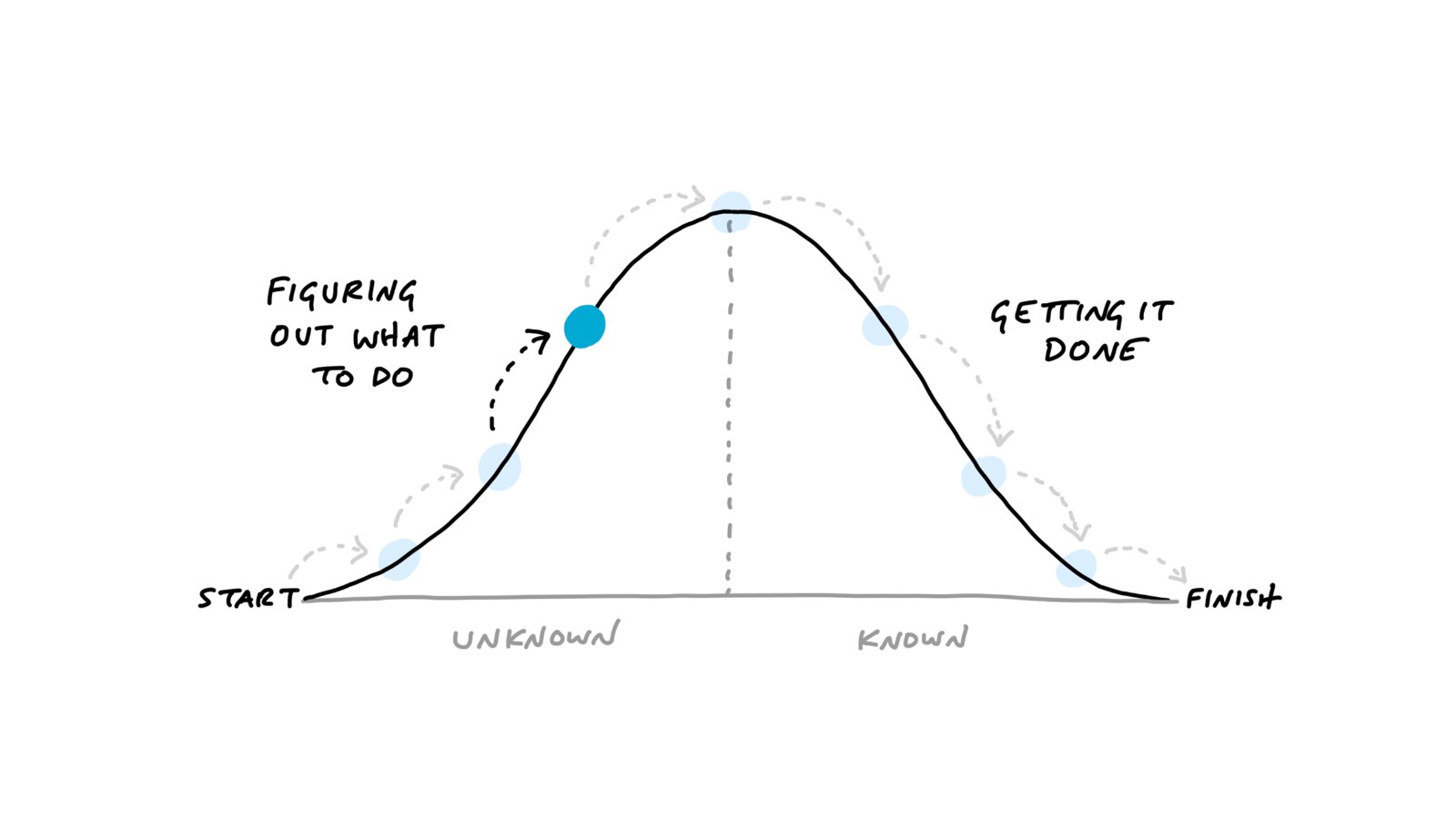
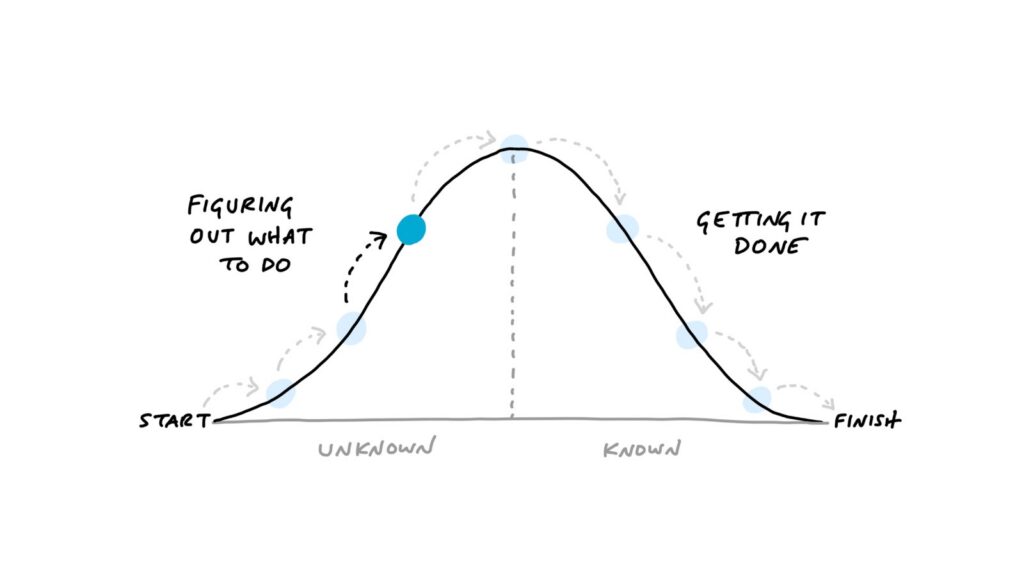
- Hill charts: each piece of work is a dot on a hill. Going uphill means still figuring it out; downhill means the path is clear and it is just execution.
Between cycles, a two-week cool-down gives people time to fix bugs, explore ideas and plan the next bets.
What happened
- Around 2015: Basecamp moves to six-week cycles as its product team grows (Basecamp, Shape Up, 2019).
- July 2019: Shape Up is published free online (37signals REWORK podcast, 2020).
- September 2019: an early review calls the method useful but warns it needs full management buy-in and came out of one company’s years of tuning (Reflectoring, 2019).
- April 2020: a well-known critique of the Spotify model suggests Shape Up as an option for organizations under about 150 people (Jeremiah Lee, 2020).
- Late 2020: Ryan Singer says traffic to the web version was huge, and Basecamp releases a print edition it designed and sells itself (37signals REWORK podcast, 2020).
- January 2021: Process Street describes dropping Scrum for Shape Up, removing its backlog and adding betting and hill charts (Process Street, 2021).
Why it worked
A fixed time box forces real choices. When the deadline cannot move, the team has to decide what matters most. That is how good work ships on time.
Hill charts show the risk, not just the to-do list. A checklist can look nearly done while the hardest unknown is still unsolved. A dot stuck going uphill shows where a team needs help, without anyone having to ask.
No backlog keeps the slate clean. Leaders choose from a few well-shaped ideas each cycle instead of grooming hundreds of old tickets.
Where it gets complicated
- It came from one company. Six weeks fit Basecamp’s size and product. Other teams may need different cycle lengths, and the book offers little help for very large organizations.
- It needs leaders all in. The betting table, the circuit breaker and the no-backlog rule only work if leadership truly gives up on extensions and drop-in requests.
- The success numbers are self-reported. Teams that adopted it, like Process Street, report big gains, but their posts do not show how they measured them.
- Shaping takes senior time. Someone has to do the hard thinking up front. Skipping that step just moves the mess into the six weeks.
The takeaway
The marketing principle
Decide what a project is worth before you decide what it includes. Set a fixed time budget, shape the work to fit it, and cut scope instead of moving the deadline. Then track what is still unknown, not just what is checked off, so you see trouble while there is still time to fix it.
Sources
- Shape Up: Introduction, Basecamp (2019)
- Shape Up: Set Boundaries, Basecamp (2019)
- Shape Up: The Betting Table, Basecamp (2019)
- Shape Up: Show Progress, Basecamp (2019)
- Shape Up Print Edition, 37signals REWORK podcast (2020)
- Book Review: Shape Up, Reflectoring (2019)
- How We Cut Our Time to Ship a Feature from 6 months to 6 weeks Using Shape Up, Process Street (2021)
- Spotify’s Failed #SquadGoals, Jeremiah Lee (2020)
Group activity for this case
Shape Your Client Bet
Pick one client deliverable, set its time budget, cut it to fit, and draw what is still uphill. A 20-minute group activity. Dr. Morris gives the password in class.
Use this case in: Project Management for Marketing Teams · Managing a Creative Project · All case studies
Use and share this case
Free to use in your own classroom, training or team, and to adapt for non-commercial teaching, with credit to Dr. Jules Morris, Haslam College of Business, University of Tennessee. The text is licensed CC BY-NC 4.0. Brand photos and trademarks belong to their owners and are not covered by this license.
Brand names, images and trademarks belong to their owners and appear here for educational purposes only.