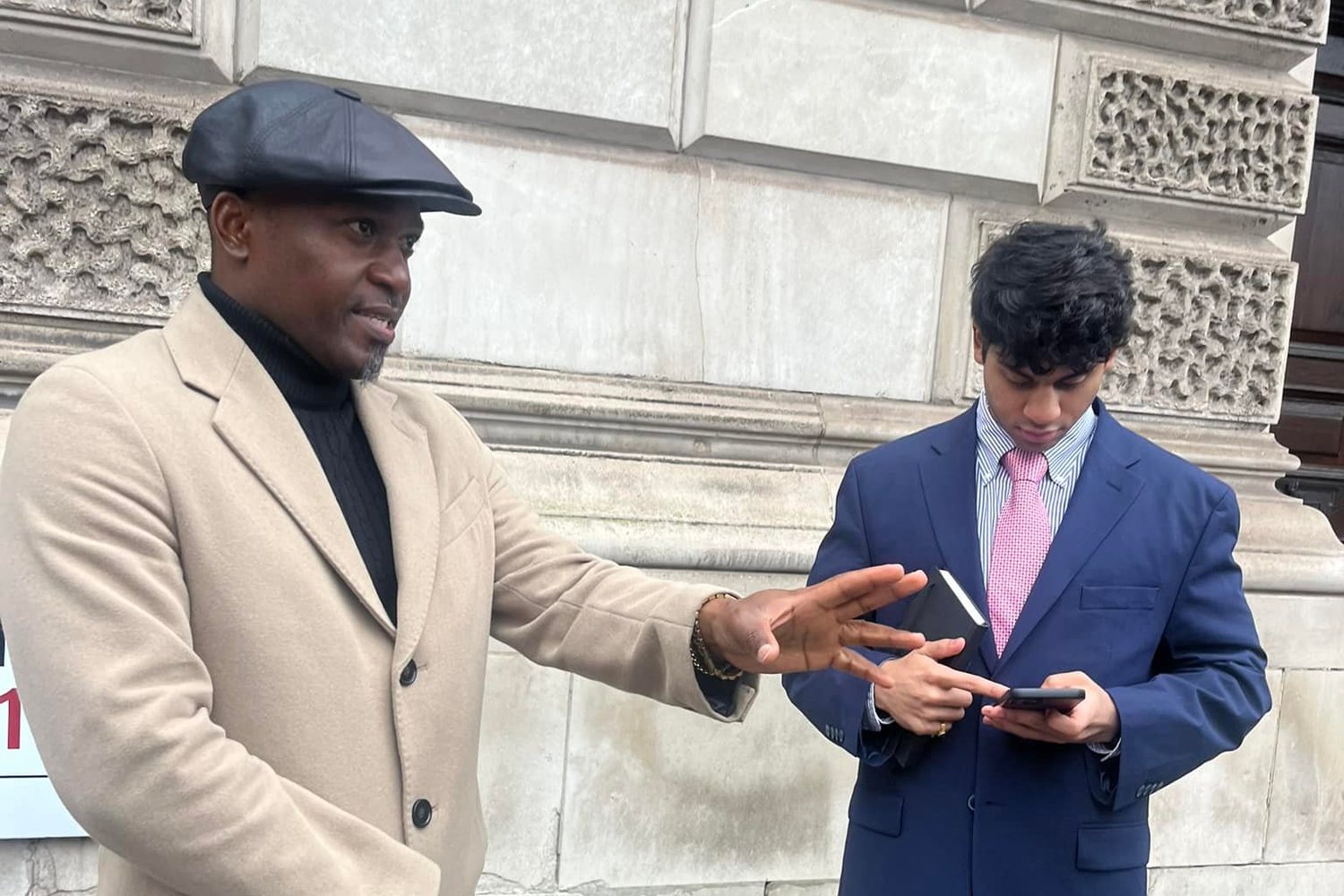
The big idea: A street interview only counts when the person chose to talk, stayed safe, and told you a real story you recorded accurately, so ethics and data quality are the same job.
In 60 seconds
- Your interview team needs 10 or more solid street interviews, downloaded on sticky notes with photos, by the start of Class 8.
- Consent, freedom from harm, confidentiality and honesty decide whether an interview can count at all.
- Consistent technique and exact quotes kept apart from interpretation make your data reliable and valid.
Do this: check every street interview for consent, a real story, exact quotes and a verb need before you log it as solid.
How feet on the street interviews work
Between Class 4 and Class 8 your interview team leaves the classroom. You gather 10 or more solid street interviews, download them onto sticky notes with photos, and arrive at the start of Class 8 ready to present. Interview teams are formed at the end of Class 3 and are not the same as the prototype teams you form later. This page covers the part that makes those interviews count: treating people right and collecting data you can trust.
Prepare
Merge your team’s Deliverable #2 questions into one shared guide. Put a consent opener on top.
Ask: who could feel pressured or harmed by this?
Approach
Keep it casual. A conversation feels less threatening than an interview, and far less than an interrogation.
Say: “You can skip any question or stop at any time.”
Listen and record
Work in pairs: one asks, one writes. Exact words in quotation marks, what you see in a separate column.
Ask first: before any photo or recording.
Protect
Codes and roles instead of names. One team-only folder. Nothing identifying in a public AI tool.
Never: repeat what one person said to another.
Download
Within a day, put each interview on sticky notes: one quote or observation per note, with the photo.
Result: a story your team can tell in Class 8.
What makes an interview “solid”?
The syllabus asks for 10 or more solid interviews, not 10 chats. Use this as your team’s test: the person agreed to talk, you heard at least one specific story (“the last time…”), you captured exact words and what you saw, you kept your guesses separate, you found at least one need or surprise, and you took a photo with permission. If one of those is missing, go back or find another person.
Two jobs at once
Ethics: treat people right
- Informed consent. People take part of their own free will, understand what you are doing and know about any risks before they say yes.
- Freedom from harm. No one is put at risk socially, at work, emotionally or legally because they talked to you.
- Confidentiality. You know who said it, and you do not release anything that identifies them without permission.
- Honesty. The class checklist says deception is unacceptable. Never hide your purpose or pretend to be someone you are not.
Quality: data you can trust
- Validity. Are you capturing what is really happening, or what people think you want to hear?
- Reliability. Would your team collect the same kind of data no matter who did the interview?
- Generalizability. How far do your findings reach? For street interviews, aim to understand this community well, not to prove something about everyone.
- Bias. Watch for confirmation bias: hearing only what proves the idea you already like.
Reliability and generalizability, in plain language
Reliability with numbers
In quantitative research, reliability is how consistently a test measures whatever it measures. It is reported as a coefficient. Close to 1.00 means highly reliable. No test is perfectly reliable.
Example: a patient satisfaction survey that gives the same result when the same patients take it twice.
Reliability with stories
In qualitative work there is no coefficient. Reliability means consistent technique: the same methods used again and again, and used the same way by different researchers.
Your version: one shared guide, one note format, notes downloaded within a day.
Generalizability (Maxwell)
Internal: do your findings hold across the community you studied? External: would they hold in settings you did not study? Ten street interviews can support internal claims. Be careful with external ones.
Say: “Late riders on this route told us…” not “Bus riders want…”
Reliable is not the same as valid
A scale that always reads five pounds heavy is consistent, and consistently wrong. A guide can be identical every time and still ask leading questions. A valid method is reliable. A reliable one is not always valid.
Confidential is not anonymous
Anonymous means even your team does not know who said it, like an unsigned comment card. Confidential means you know and you protect it. Street interviews are almost always confidential, so do not promise anonymity.
Informed consent, step by stepWhat to say before the first question
Consent is an ongoing conversation between you and the person, not a box you tick once. It protects people from being used, and it makes your data usable.
- Who you are. “We are Haslam honors students working on a class consulting project.”
- What it is for. One sentence about the challenge and where the results will go (class, and possibly a client).
- Voluntary. “You can skip any question or stop at any time, no problem.”
- Notes, audio and photos. Ask for each one separately. A yes to notes is not a yes to audio, and a yes to audio is not a yes to a photo.
- Naming. “How would you like to be described: by name, by role, or not at all?”
- Check again. If the talk turns personal, pause: “Are you still comfortable with us using this?”
Written permission is sometimes needed, for example if results will be published. Ask Lane Morris, PhD or Jules Morris, PhD which form to use.
Freedom from harmRisk, anonymity, confidentiality and sensitive topics
People must not be exposed to risk because they helped your team. In practice that means:
- Know which promise you are making. Anonymity: you never learn who they are. Confidentiality: you know, but you never release identifying details. Promise only what you can keep.
- Remove giveaway details. “The only night pharmacist at that store” identifies someone as clearly as a name.
- Plan for hard moments. Health, money, safety, immigration, family and job security can come up on the street. Offer to skip, change the subject or stop. Do not push for the story.
- Watch power gaps. Interviewing a worker while their manager stands nearby, or someone who depends on you, makes “no” hard to say. Offer privacy or move on.
- People under 18. If participants are underage, or your data identifies children, get parent or guardian permission first. The request should say what data may be shared, for what purpose and with whom. Fully anonymous records are the exception.
Your personal ethical perspectiveDecide where you stand before you start
Some data will test you
A person may describe something unsafe, unfair or against the rules. Colleagues may tell you things in confidence.
Clarify first
Talk as a team before your first interview about what you would do. Base it on your personal beliefs and the broader social principles you hold.
Stay accurate
Collect, analyze and interpret without bias. Report what people said, not the version that fits your favorite idea.
If someone shares something that suggests a person is in danger, stop the interview and talk with your instructors right away.
The ethics guidelines checklistSeven items from the BUAD 317 slides
- Determine whether you need approval, and get it if you do.
- If needed, ask for written consent or permission.
- Consider confidentiality, anonymity and avoiding harm.
- Deception is unacceptable.
- Develop your own ethical research perspective.
- Name the broader social principles that shape your ethical stance.
- Record your data accurately.
On approval: researchers answer to professional codes (such as the American Psychological Association’s ethics code), national guidelines (the National Research Act of 1974) and their university’s Institutional Review Board (IRB). Class projects that stay in class are often handled differently from research that will be published or presented publicly. If your work may go beyond class, for example into a senior thesis or a EUReCA poster, ask your instructors what review it needs before you collect data. This is not legal advice.
Trustworthy data: the deeper criteriaGuba, Maxwell, Anderson and Wolcott, as questions
Qualitative research judges quality differently from a survey. You do not need to memorize these. Use them as questions your team asks before Class 8.
Trustworthiness (Guba)
Credibility: are the findings believable? Transferability: could they apply in similar settings? Dependability: is the data stable and well kept? Confirmability: would a neutral person read it the same way?
Understanding (Maxwell)
Descriptive: are the facts accurate? Interpretive: did you capture their meaning, not yours? Theoretical: does it explain what is going on? Generalizability: internal and external. Evaluative: can you present it without judging people?
Validity in practice (Anderson)
Democratic: did you hear all the people affected? Outcome: did it lead to a resolution? Process: was it done in a dependable, competent way? Catalytic: did it spark action? Dialogic: did peers review it?
Habits that protect validity (Wolcott)
Talk little, listen a lot. Record accurately. Begin writing early. Let readers see for themselves. Report fully. Be candid. Seek feedback. Write accurately.
Confronting your own biasFour protections from class
- Be systematic. Same guide, same note format, every interview logged.
- Write your hunches down first. List what you expect to hear before you go, so you notice when people disagree.
- Watch for confirmation bias. Look hard for the story that breaks your favorite theory.
- Keep a beginner’s mindset. The class slides call it the best protection: assume you do not know yet.
Need the questions themselves? The five question types, TEDW prompts and what to look and listen for live on Casual Learning Conversations. Your individual question set is covered on AI-Generated Interview Questions.
Try it: Solid Interview Check
Tool · BUAD 317
Solid Interview Check
Log one street interview. See if it is ethical, solid and deep enough to count toward your 10+.
- 1Log it
- 2Check
- 3Add to the team log
Empathy depth of this interview
- 1Others experience things
- 2Non-obvious insights
- 3Deeper insights
- 4Full spectrum
All checks
Put it to work: Deliverable #3 Part A, 10+ solid interviews
This is Deliverable #3, Part A: Feet on the Street Interviews. Your interview team gathers 10 or more solid street interviews, downloads them on sticky notes with photos, and presents at the start of Class 8. Part A is graded on two things: Empathy (how deep your insights go) and Interpret (how well you turn them into needs). This page sets up the Empathy side. The Interpret side is on Interpretation: From Interviews to Insights and How Might We.
From Class 4 to Class 8 in six steps
Build one guide (Class 4)
Bring your individual Deliverable #2 AI-generated questions. As an interview team, pick the strongest, cut leading ones and put a consent opener on top.
Your deliverable: one shared guide every interviewer uses, opener first.
Plan who and where
List the roles you need: mainstream people, extremes (the heaviest user, the person who quit) and people who serve them. Pick real places and times.
Your deliverable: a who-and-where list with at least five different roles.
Agree on protections
Choose your code format (R1, R2…), one team-only folder, and your rule for photos and names.
Your deliverable: a short “how we protect people” note at the top of your team log.
Interview in pairs (Classes 5 to 7)
One person asks, one writes. Go for stories: “Tell me about the last time…” Look and listen for surprises, workarounds and contradictions.
Your deliverable: notes with exact quotes, observations and your interpretations kept apart.
Log and check each one
Run each interview through the Solid Interview Check within a day. If it is not solid, fix it or replace it. Spring break is a good time to catch up, not to start.
Your deliverable: a team log showing 10 or more solid interviews and a mix of roles.
Download before Class 8
For each person: the code and role at the top of a board, one quote or observation per sticky note, and the photo. Look across interviews for ah-has and patterns.
Your deliverable: boards ready to present each interviewee’s story at the start of Class 8.
What the Part A Empathy rubric rewardsFour levels, from the BUAD 317 syllabus
| Level | What it looks like |
|---|---|
| Full spectrum of insights (top level) | You understand the people and the system or process they work within, and you can think like them. Rich descriptions, many surprising insights and deep needs. |
| Deeper insights (meets expectations) | You understand their perspective and experiences, and show it through emotion, physical needs, surprises and needs. |
| Non-obvious insights | A varied approach, but thin descriptions with few surprises or needs. Some practice drawing information out of people. |
| Others experience things | Little description of what people experience, and little comfort talking with people unlike yourself. |
The jump from “non-obvious” to “deeper” usually comes from emotion and physical detail. The jump to “full spectrum” comes from seeing the system around the person: schedules, rules, other people, places.
Sample consent openerA script you can adapt in one minute
“Hi, we are Haslam honors students working on a class project about [your challenge]. Could we hear about your experience? It takes about ten minutes. You can skip any question or stop at any time. We won’t use your name unless you say we can. How would you like to be described: by name, by your role, or not at all? Is it OK if we take notes?”
Ask about a photo at the end, once trust is built, and accept a no without pushing. A photo of the place, with permission, can stand in.
What a clean log row looks likeExample: riders on a city bus route after 9 p.m.
| Column | Entry |
|---|---|
| Code and role | R7, hospital food-service worker, downtown stop after a late shift |
| Consent | Notes yes, audio no, photo of the stop yes, role only |
| Story | Missed the late bus by two minutes and waited almost an hour, standing by a lit store window. |
| Quote | “I don’t sit in the shelter. I stand where the cashier can see me.” |
| What we saw | Checked the transit app every two minutes. The shelter light was out. |
| What we think it means | Feeling safe may decide where late riders wait. Check with other riders. |
| Need, as a verb | To know for sure when the next bus will come. |
Do this, not thatHabits that protect people and your data
Do this
- Say the purpose and the right to stop before the first question.
- Ask separately for notes, audio, photos and names.
- Go for one specific story per person.
- Talk to a real mix of roles, including extremes.
- Download within a day, quotes exact.
Not that
- Promising anonymity you cannot deliver.
- Taking photos first and asking later.
- Ten interviews with ten versions of your roommate.
- Pasting names or transcripts into a public AI tool.
- “Don’t you think…?” questions that plant the answer.
Before you submitCheck these before Class 8
- [ ] We have 10 or more solid interviews, not just 10 conversations.
- [ ] Every interview has a consent note (notes, audio, photo, naming).
- [ ] Every photo was taken with permission.
- [ ] Sticky notes use codes or roles unless someone agreed to be named.
- [ ] Nobody under 18 was interviewed without parent or guardian permission.
- [ ] No names or identifying details went into a public AI tool.
- [ ] Every interviewer used the same core guide.
- [ ] Quotes are exact and kept apart from our interpretation.
- [ ] We can tell each interviewee’s story in our own words.
Go deeper
Frameworks on this page come from BUAD 317, taught by Lane Morris, PhD and Jules Morris, PhD, and the sources named in each panel. Want a final quality check later in the semester? See the optional Big Tent criteria.
Back to all BUAD 317 topics · Next: Interpretation: From Interviews to Insights and How Might We
In-class team activity · 25 min
Street Interview Dry Run
By the end: A tested consent opener, a who-and-where plan for 10 or more solid interviews with a real mix of roles, and your team's protection rules, ready before your first street interview. Your instructor will give you the password in class.
Part of BUAD 317, taught by Lane Morris, PhD and Jules Morris, PhD, in the Smith GLS human-centered leadership program, toward the Human Centered Consulting Certificate.
Frequently asked questions
What are feet on the street interviews in BUAD 317?
They are the 10 or more solid street interviews your interview team gathers between Class 4 and Class 8 for Deliverable #3 Part A. Interview teams are formed at the end of Class 3 and are not your later prototype teams. You download each interview onto sticky notes, with photos taken with permission, and present the stories at the start of Class 8.
What makes a street interview solid?
A solid interview starts with consent, captures at least one specific story about a real time something happened, records exact quotes separately from what you saw and what you think it means, names a need or a surprise, and includes a photo taken with permission. If any of those is missing, go back to the person or find another one before Class 8.
What is informed consent in a street interview?
Informed consent means people take part of their own free will, understand what you are doing and know about any risks before they say yes. Before your first question, say who you are, what the project is for and that they can skip any question or stop at any time. Then ask separately about notes, audio, photos and how they want to be named.
What is the difference between reliability and generalizability?
Reliability is consistency. With numbers it is a coefficient near 1.00. With interviews it means using the same techniques the same way, no matter who interviews. Generalizability is reach. Maxwell separates internal, meaning your findings hold across the community you studied, from external, meaning they hold in settings you did not study. Ten street interviews support internal claims best.
Do I need IRB approval for BUAD 317 interviews?
It depends on how the results will be shared. Class projects that stay in class are often handled differently from research that will be published or presented publicly, such as a senior thesis or a EUReCA poster. The class ethics checklist starts with deciding whether you need approval, so ask your instructors before you collect data. This is not legal advice.