Case study · Marketing 475 · Color Theory and Brand Psychology
In a category where the services are hard to tell apart, T-Mobile and its parent Deutsche Telekom treat magenta as a business asset, register it as a trademark and defend it in court.
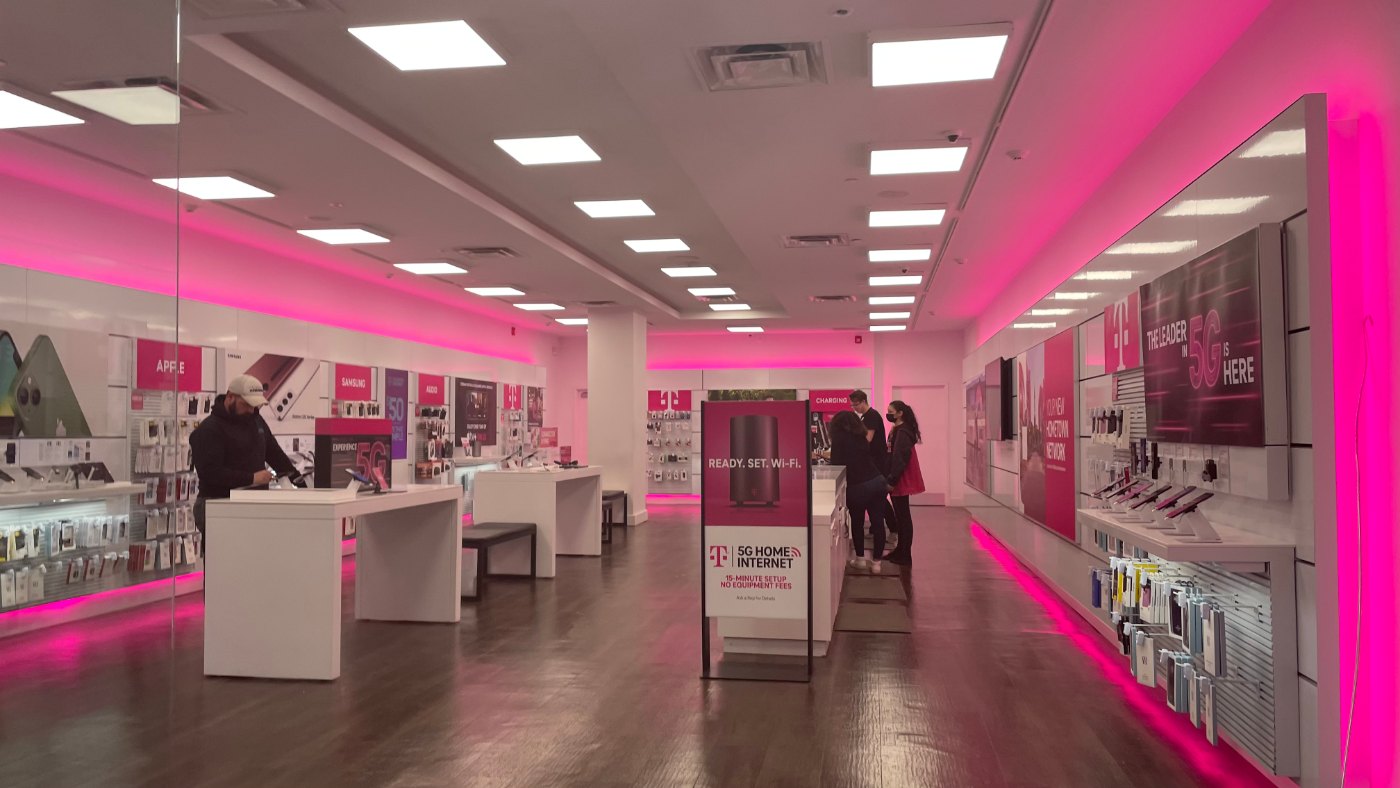

Brand
T-Mobile (parent company: Deutsche Telekom)
Year(s)
US color trademark registered 2007; key disputes 2014 and 2019 to 2020
Channel(s)
Stores, advertising, digital, sponsorships, legal protection
Goal
Make one color mean T-Mobile on sight
Topic
Color Theory and Brand Psychology
2007
Year Deutsche Telekom’s US trademark for the color magenta was registered; renewed in 2017 (USPTO)
3 days
Length of the 2014 court hearing before AT&T’s Aio Wireless was barred from using its plum color (RCR Wireless, 2014)
The situation
Wireless service is hard to tell apart. Every carrier sells phones, plans, coverage maps and deals. Customers see the same devices on every shelf. When the product looks the same, the brand has to do more of the work.
T-Mobile is the US arm of Germany’s Deutsche Telekom, which uses magenta across its brands. In the US, T-Mobile built its look around that color, and its main rivals are known for other colors. If you walk past a wall of magenta in a mall, you know whose store it is before you read the sign.
The challenge
A color only works as a brand signal if it stays yours. Color is cheap to copy, and competitors and new companies are free to use most colors. If others use something close, the shortcut in a customer’s mind gets blurry.
So the challenge is two-sided. Use the color so consistently that people link it to you, then protect it so the link does not weaken.
What they did
Deutsche Telekom made magenta a legal asset, not just a design choice. Then it enforced that right, including against much larger and much smaller companies.
- Registered the color. US trademark registration 3263625, held by Deutsche Telekom, covers “the color magenta alone,” close to Pantone Rhodamine Red U, for telecommunications services. It was registered in 2007 and renewed in 2017 (USPTO records).
- Took on AT&T. In 2014, T-Mobile US went to federal court in Texas over the plum color used by Aio Wireless, an AT&T prepaid brand. After a three-day hearing, the court barred Aio from using the color in its marketing, stores and websites. T-Mobile said the ruling “validates T-Mobile’s position that wireless customers identify T-Mobile with magenta” (RCR Wireless, February 2014).
- Went after a startup. In 2019, Deutsche Telekom won a temporary injunction in Germany against Lemonade, a US insurance startup that uses pink, after Lemonade entered the German market. Lemonade switched to red in Germany for a time (TechCrunch, November 2019).
- Wore the color, literally. Then-CEO John Legere regularly wore magenta T-shirts and custom magenta sneakers, and in 2019 he dyed his hair magenta (NPR, November 2019).
What happened
The color became so tied to the brand that T-Mobile could joke about it. For April Fools’ Day 2022, it announced a “New Magenta” backed by “thousands of hours of research.” Tech press recognized it as a gag (Android Police, April 2022). A joke like that only lands when everyone already knows your color.
- 2014: Court order bars AT&T’s Aio Wireless from using its plum color in marketing (RCR Wireless).
- 2019: German court grants Deutsche Telekom a temporary injunction against Lemonade (TechCrunch).
- December 2020: Lemonade wins a ruling in France that found “no evidence of genuine use” of Deutsche Telekom’s mark for the contested services (Carrier Management, December 2020).
Why it worked
In a category with few visible differences, a color can work as a shortcut. People make quick choices and notice color before words. A single, consistent color across every touchpoint gives them something easy to recognize.
The legal work matters as much as the design work. A color mark is only protected if the owner can show that customers connect the color to the company. Years of saturated, consistent use built that evidence. Lawsuits then kept others from borrowing it.
Where it gets complicated
Defending a color can make a big company look like a bully. When the Lemonade fight went public in 2019, its CEO, Daniel Schreiber, told NPR that trademarking a color “just defied belief.” Lemonade launched a #FreeThePink campaign and turned the dispute into publicity for itself.
Color rights also have limits. They usually apply within certain industries and countries, and they can be challenged. TechCrunch reported that Deutsche Telekom had lost earlier magenta disputes against Telia and against dataJar, an Apple device management company. The French ruling in 2020 went against it too. Owning a color is never complete. It has to be earned through use and defended case by case.
The marketing principle
When competitors offer nearly the same product, color can become part of the strategy, not just decoration. It works only with relentless consistency, and its value depends on protecting it. Students should also weigh the cost: aggressive defense can protect the asset and still damage how people feel about the brand.
Sources
- Trademark status, US Registration No. 3263625, US Patent and Trademark Office (2007)
- Aio Wireless barred from using color similar to T-Mobile US, RCR Wireless (2014)
- Lemonade gets a nastygram from Deutsche Telekom over its use of magenta, says it will fight, TechCrunch (2019)
- T-Mobile has a trademark on magenta, demands an insurance company stop using it, NPR (via WFAE) (2019)
- Lemonade Wins Right to Use Signature Pink in France, Carrier Management (2020)
- T-Mobile April Fools New Magenta (article on the 2022 gag), Android Police (2022)
Group activity for this case
Magenta Wall Challenge
Your group will have a color claim for your brand in a look-alike category and a plan for showing it at every touchpoint. A 20-minute group activity. Dr. Morris gives the password in class.
Back to Color Theory and Brand Psychology · All case studies
Brand names, images and trademarks belong to their owners and appear here for educational purposes only.