Case study · Marketing 465 · Strategy Foundations: Goals, Audiences and Channels
A useful marketing goal is specific, measurable and tied to the real reason customers choose you, and a Tennessee brewery that sells good times as much as beer makes the point clearly.
Brand
Yee-Haw Brewing Co.
Year(s)
Class exercise, 2026 (brand facts from Yee-Haw’s website as of October 2026)
Channel(s)
Taproom events, Instagram Stories, ticketing and event check-ins
Goal
Practice writing a SMART goal for fall event attendance (sample goal, not Yee-Haw’s own)
Topic
Strategy Foundations
5
Yee-Haw taprooms listed on its website as of October 2026 (Yee-Haw Brewing)
15% / 60 days
Sample class goal for fall event attendance (practice figure, not company data)
The situation
Yee-Haw Brewing Co. is an independent craft brewery that calls Johnson City, Tennessee its birthplace. As of October 2026, its website lists taprooms in Johnson City, Knoxville and Nashville, Tennessee, and in Greenville and Myrtle Beach, South Carolina. Its story page says the Greenville taproom opened in 2018 and the Knoxville taproom in 2023.
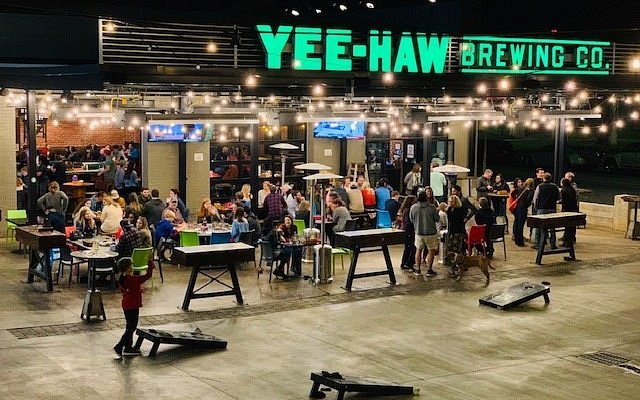
Yee-Haw does not describe itself mainly as a beer company. Its website headline is “More than Fine Southern Beer.” It says it wants to be “a space where communities gather to create memories with friends & family,” and lists Good Times, Pride, Simplicity and Inclusiveness as its core values. The taprooms are family and dog friendly, with outdoor beer gardens and full food menus. Its events calendar includes trivia nights, old-time music jams and run clubs.
The challenge
Imagine a marketing team at a brand like this sets a goal: “Get more people to our fall events.” It sounds reasonable, but it cannot guide decisions. How many more people? By when? At which taproom? How will anyone know if it worked?
Vague goals lead to vague tactics. The team posts more, spends more and still cannot say whether anything changed. The SMART framework, which stands for specific, measurable, achievable, relevant and time-bound, is one way to fix that.
What they did
In class, we used Yee-Haw to practice. The goal below is a sample written by the class. It is not a goal Yee-Haw has published, and the numbers are for practice only.
Sample goal: Increase attendance at fall taproom events by 15% in 60 days, compared with the same events last year, tracked through ticket sales and link taps from Instagram Stories.
- Specific: it names one outcome (event attendance) and one season (fall).
- Measurable: it sets a number (15%) and a baseline (last year’s attendance at comparable events).
- Achievable: 15% is a stretch but not a fantasy for a brand that already runs regular events. A team would check this against past data.
- Relevant: events are the core of Yee-Haw’s positioning as a place to gather, not just a beer label.
- Time-bound: 60 days gives a clear end date for review.
- Tracked: ticket sales or check-ins measure the result; taps on Instagram Story link stickers (Instagram’s replacement for the older swipe-up) show which posts drove action.
What happened
This is a practice case, so there are no real results to report. The point is what the goal makes possible. With a clear target and a deadline, a team can plan backward: which events, which audiences, what content, and how many tickets per week to stay on pace.
It also makes review honest. At day 30, the team can see whether attendance is on track and which Stories drove taps, then shift effort before the window closes.
Why it worked
The goal ties back to why people choose the brand. The class’s working insight was that many younger adults, especially millennials, “hire” a place like Yee-Haw for the atmosphere and time with friends, not only for craft beer. That is a hypothesis, not a published study. But it is consistent with how Yee-Haw describes itself: a backyard-style gathering place built around good times.
If that insight is right, events are the most relevant lever, and attendance is the right thing to measure. A goal like “sell 15% more IPA” would miss the reason people show up. The best goals measure the behavior that reflects your real value to customers.
Where it gets complicated
SMART goals can be precise and still wrong. If the insight about why people come is mistaken, the team will hit a number that does not matter. Insights need testing, for example by asking attendees why they came or by comparing event nights to regular nights.
Measurement has gaps. Regular events on Yee-Haw’s calendar, such as trivia or music jams, show no ticketing, so a team would need another count, like check-ins or a door tally. Story link taps show interest, not attendance. Weather, football schedules and holidays can swing fall turnout more than any campaign. A 15% lift is only meaningful if the comparison is fair.
The marketing principle
A strong goal is specific, measurable and time-bound, and it ties back to why people choose you. Start with the customer insight, pick the behavior that proves it, then set a number and a deadline. Without that link, a goal is just a target. With it, the goal guides every tactic that follows.
Sources
- Yee-Haw Brewing Co. home page, Yee-Haw Brewing Co. (2026)
- Our Story, Yee-Haw Brewing Co. (2026)
- Happenings, Yee-Haw Brewing Co. (2026)
- Community, Yee-Haw Brewing Co. (2026)
- FAQ, Yee-Haw Brewing Co. (2026)
Group activity for this case
SMART Goal Glow-Up
One SMART goal for your brand, tied to why people choose it, with a way to track it. A 20-minute group activity. Dr. Morris gives the password in class.
Back to Strategy Foundations: Goals, Audiences and Channels · All case studies
Brand names, images and trademarks belong to their owners and appear here for educational purposes only.