Case study · Marketing 465 · Community vs. Audience
The Harley Owners Group shows the difference between an audience and a community: an audience watches a brand, while a community gives members a shared identity and a reason to show up together.

Brand
Harley-Davidson
Year(s)
1983 to today
Channel(s)
Owners club, local dealer chapters, rallies and group rides, member magazine
Goal
Build lasting relationships between riders, dealers and the company
Topic
Community vs. audience
1983
Year the Harley Owners Group was founded (Rider Magazine, 2013)
~1M
H.O.G. members worldwide as of 2013 (Rider Magazine, 2013)
1,380+
Chapters as of 2013: about 680 in the U.S. and over 700 abroad (Rider Magazine, 2013)
The situation
In the early 1980s, Harley-Davidson was in serious trouble. In a 2009 Harvard Business Review article, Susan Fournier and Lara Lee wrote that in 1983 the company faced extinction. Twenty-five years later it was a top-50 global brand. They tied that turnaround closely to Harley’s commitment to brand community.
Harley had something most brands do not: customers who already felt the brand said something about who they were. The question was how to give that feeling a home.
The challenge
Selling a motorcycle is a single transaction. Keeping a rider connected to the brand for decades is harder. Harley needed a way to stay close to owners after the sale, and to give dealers a reason to see customers again and again.
Expectations were modest. Clyde Fessler, the former Harley executive credited with the idea, later said: “We thought we’d get about 25,000 people nationwide, sell a few patches, sell a few pins and have a good time” (Rider Magazine, 2013).
What they did
Harley launched the Harley Owners Group, or H.O.G., in 1983. According to a 2025 Harley-Davidson UK history of the club, a young marketing employee named Steve Piehl was handed the project in September 1982 with a January launch deadline. The first offer focused on services, like breakdown recovery and a theft reward program, plus a pin, patch, membership card and touring handbook.
Then members changed the plan. The organizers had not expected social activities to matter much, but they became central to the club’s success. Dealers asked for local groups, and chapters spread, each sponsored by a local dealership. Steve Piehl, H.O.G.’s first director, said: “We never had a thought that there would be H.O.G. chapters at every Harley dealer in the world” (Rider Magazine, 2013).
- Member benefits such as roadside services, rallies and free admission to the Harley-Davidson Museum (as listed today)
- Local chapters tied to dealerships, so the store becomes a meeting place
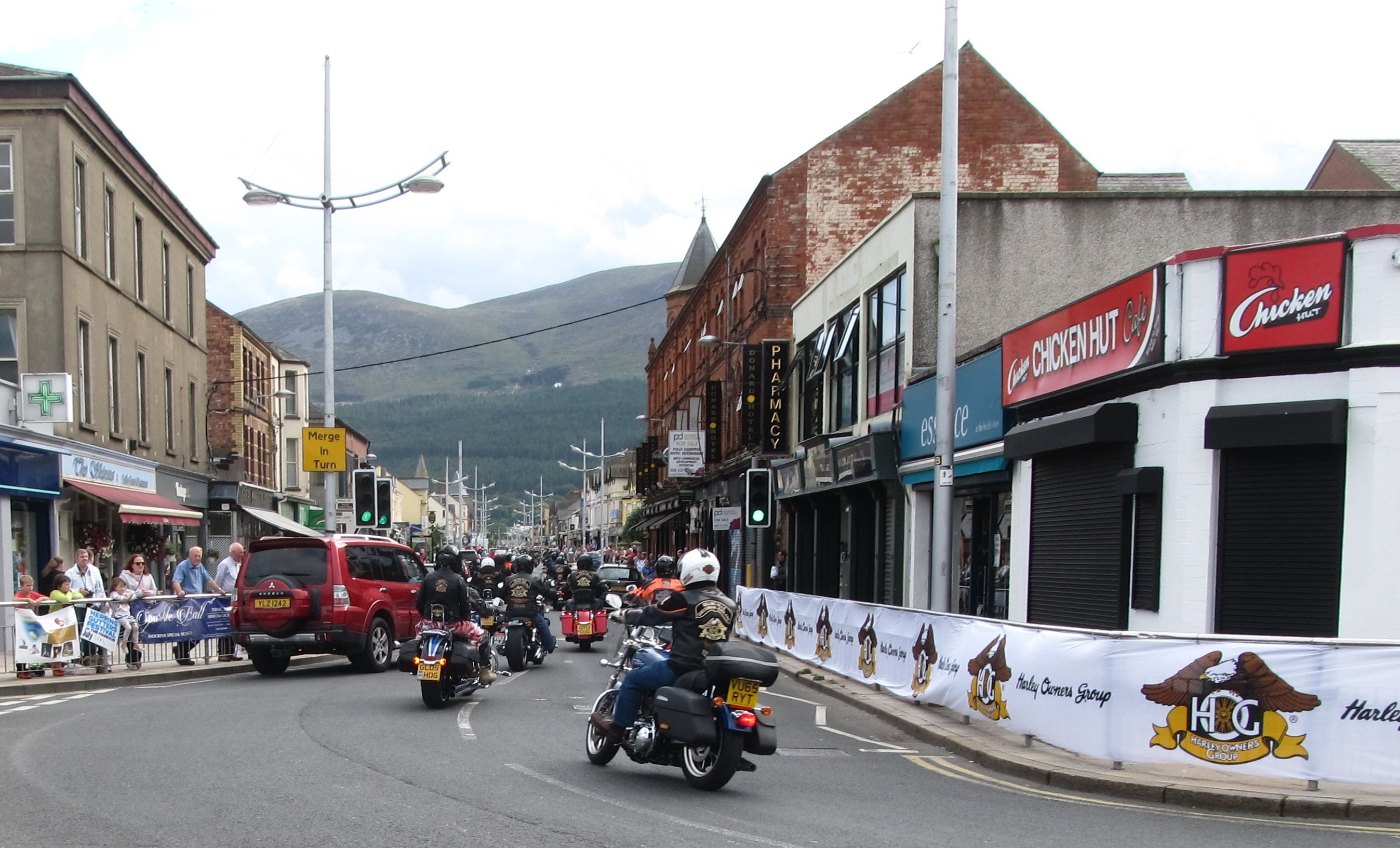
- Rallies, group rides and events where members meet each other, not just the brand
- Company staff and executives engaging directly with riders
What happened
H.O.G. grew far beyond the original goal and became a model studied in marketing classes and research on brand communities.
- First H.O.G. event: a three-day tour in Colorado with 250 members (Rider Magazine, 2013)
- About one million members worldwide by 2013 (Rider Magazine, 2013)
- About 680 U.S. chapters and over 700 chapters abroad as of 2013 (Rider Magazine, 2013)
- A “close to the customer” culture in which staff and executives engage directly with riders, which Harley’s own history credits to H.O.G. (Harley-Davidson UK, 2025)
Why it worked
H.O.G. sold belonging, not discounts. The patch, the chapter and the group ride let people say “I am a Harley rider” in front of others who understood what that meant. That is shared identity. Members bond with each other, and the brand becomes the place where that bond lives.
It also put the community where the business already was. Chapters meet at dealerships. Riders come back for events, see new bikes and gear, and talk with staff who know them. The community supports sales without feeling like a sales push.
Finally, Harley listened. When members showed that the social side mattered more than the services, the company leaned into it.
Where it gets complicated
A strong community can also become a closed one. Reuters reported in 2019 that Harley’s U.S. sales were falling as its loyal baby boomer riders aged, and that its heavy, expensive cruisers had not caught on with millennials. The same identity that bonds existing members can feel unwelcoming to people who do not see themselves in it.
The card’s claim that H.O.G. attracts new customers needs care. H.O.G. is an owners group, built for people who already ride a Harley, so it is strongest at keeping and deepening relationships with existing owners. Attracting new riders has required other moves, such as lower-priced, lighter and electric models that Harley announced around 2019.
Communities also do not belong fully to the brand. Members set the culture. That is the source of their power, and it means the company cannot control the message the way it can with an ad.
The marketing principle
An audience receives your message. A community gives members a shared identity and a reason to connect with each other. H.O.G. shows that a community built around identity and real experiences can do more for loyalty and lifetime value than a sales push. The harder test is keeping that community open enough to welcome the next generation.
Sources
- Harley Owners Group 30th Anniversary Celebration: Riding with a passion, Rider Magazine (2013)
- The Birth of H.O.G., Harley-Davidson UK & Ireland, HOG Stories (2025)
- Getting Brand Communities Right (excerpt in HBR’s 10 Must Reads on Strategic Marketing), Harvard Business Review / O’Reilly (2009)
- No easy ride for Harley-Davidson as its sales hit the skids, Reuters via Business Day (2019)
- Harley Owners Group, Wikipedia (2026)
Group activity for this case
Start Your Own Chapter
A sketch of a community for your brand built on shared identity, with a place to gather and a reason to come back. A 22-minute group activity. Dr. Morris gives the password in class.
Back to Community vs. Audience · All case studies
Brand names, images and trademarks belong to their owners and appear here for educational purposes only.