Case study · Marketing 475 · Building Your Brand Identity System
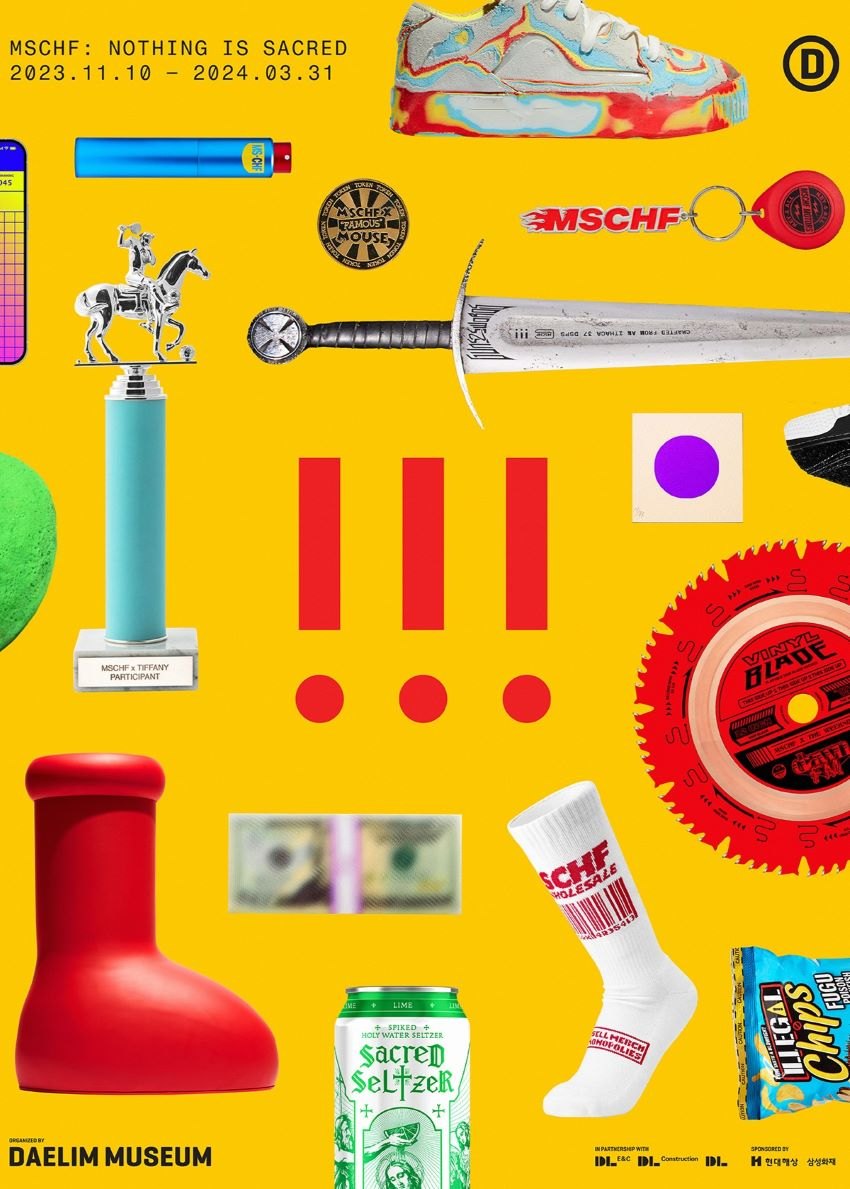
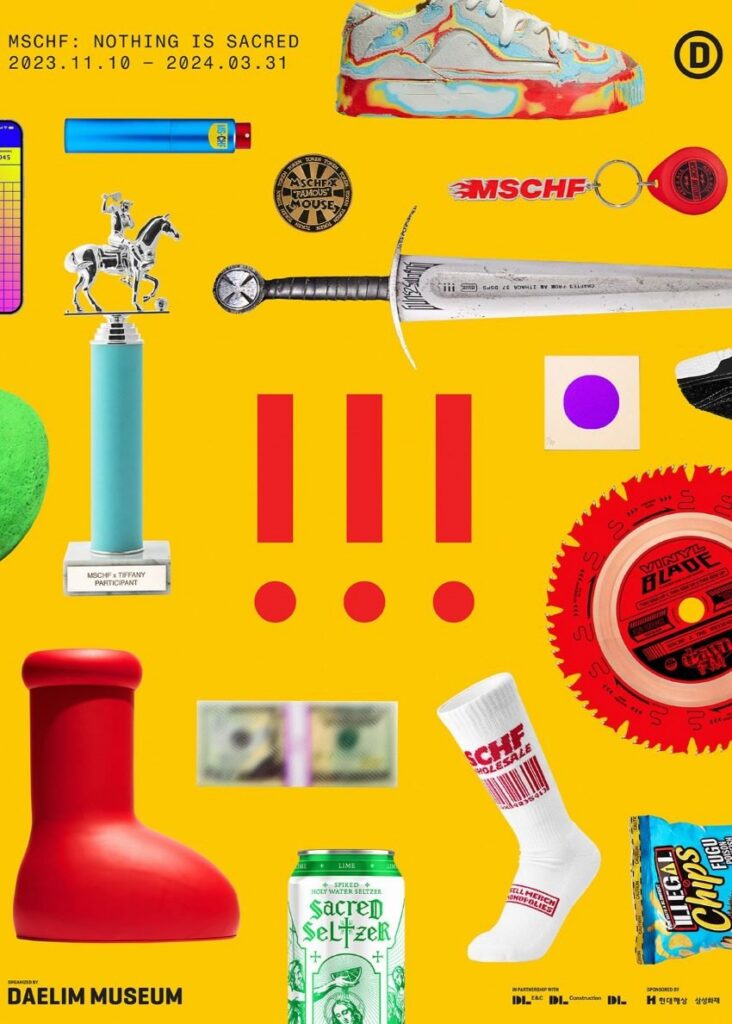
MSCHF breaks the usual rules of brand consistency on purpose, and that only works because its audience rewards surprise and the company accepts the risks that come with it.
Brand
MSCHF (MSCHF Product Studio, Brooklyn, New York)
Year(s)
2019 to 2024
Channel(s)
Numbered online product drops, social sharing, earned media
Goal
Create cultural moments that people talk about and buy into
Topic
Brand Identity Systems
666
Pairs of Satan Shoes made, priced at $1,018 each (Fox Business, 2021)
$350
Price of the Big Red Boots, which sold out within minutes of launch (Yahoo News, 2023)
~2 weeks
Typical gap between MSCHF drops (Highsnobiety, 2024)
The situation
Most brand identity systems are built for consistency. A logo, a palette, a typeface and a tone repeat across every touchpoint until customers recognize the brand on sight.
MSCHF (short for “miscellaneous mischief”) does close to the opposite. The Brooklyn company, led by founder and CEO Gabriel Whaley, releases work as numbered “drops.” Highsnobiety reported in 2024 that a new drop arrives about every two weeks. Each one has its own look, product and joke. Wikipedia describes MSCHF as an art collective. It sells products, but it presents them as artworks and stunts.
The challenge
MSCHF’s audience is young, online and quick to scroll past anything that looks like an ad. A uniform brand look would make each drop feel predictable. The company needed every release to feel new enough to be shared, while still adding up to one recognizable name.
What they did
MSCHF made the drop itself the brand system. The constant is not a color or a font. It is the attitude: provocative, funny and built to be talked about. Two drops show how far it goes.
- Satan Shoes (March 2021): A collaboration with rapper Lil Nas X. MSCHF modified 666 pairs of Nike Air Max 97s with a pentagram charm, the reference “Luke 10:18” and a sole that reportedly held a drop of human blood. They sold for $1,018 a pair. MSCHF had already released “Jesus Shoes” with holy water in the soles in 2019.
- Big Red Boots (February 16, 2023): Oversized, cartoon-like red boots priced at $350. They sold out within minutes. WWE’s Seth Rollins wore them on Monday Night RAW, and co-founder Daniel Greenberg called them a “cartoonish abstraction of a shoe.”
- Scarcity is built in. Drops are limited and often sell out fast, which pushes people to talk about them right away.
What happened
The drops reliably produced news coverage and social conversation far beyond what a small company could buy.
- Satan Shoes: Nike sued for trademark infringement. 665 of the 666 pairs had already shipped. The case settled on April 8, 2021, and MSCHF agreed to buy back Satan Shoes and Jesus Shoes at their original price. MSCHF’s lawyer said the shoes had “already achieved [their] artistic purpose” (Fox Business, 2021).
- Big Red Boots: Celebrities including Janelle Monáe and Diplo wore them in public, and the boots spread widely online (Yahoo News, 2023).
- MSCHF had raised $11.7 million in funding as of July 2020 (Wikipedia).
Why it worked
For this audience, novelty is the value. A consistent look would signal “brand,” and this audience tunes brands out. A new look every drop signals “event,” and events get shared.
The inconsistency is also not random. The tone stays steady: irreverent, absurd and a little dangerous. The numbered drop format is steady too. Fans learn to recognize MSCHF by how it behaves, not by how it looks. That is still a brand system. It just sets its rules at the level of behavior instead of visuals.
Where it gets complicated
Controversy has real costs. Nike’s lawsuit forced a recall. Vans sued over MSCHF’s “Wavy Baby” shoes, which distorted Vans’ design. A federal court blocked sales, the Second Circuit upheld that decision in 2023, and in August 2024 the parties filed a settlement in which MSCHF agreed to stop selling the shoes and stop using Vans’ trademarks.
The model also depends on constant novelty. Each drop has to top the last one for attention, and a brand built on shock can wear out its audience or offend people it did not mean to. Highsnobiety notes that MSCHF says its goal is to start conversations, not to offend. Not everyone reads the Satan Shoes that way.
Finally, this approach rarely transfers. A bank, hospital or airline that changed its look every two weeks would lose the trust that consistency builds.
The marketing principle
Consistency is a tool, not a law. MSCHF shows that a brand can let its visuals change constantly if something else, such as tone, format and attitude, stays fixed and the audience values surprise. Breaking the rules works only when it is a deliberate choice for a specific audience, and when the brand is ready to pay for the risks.
Sources
- Nike and Lil Nas X ‘Satan Shoes’ maker settle lawsuit, Fox Business (2021)
- These big red boots have stomped onto the internet, and they’re probably here to stay, Yahoo News (2023)
- MSCHF: Everything You Ever Wanted To Know About The Art Collective, Highsnobiety (2024)
- Vans settle dispute over Wavy Baby shoes, European Commission IP Helpdesk (2024)
- MSCHF, Wikipedia (2026)
Group activity for this case
Break One Rule On Purpose
Your group decides what must stay fixed in your brand and the one place it is allowed to surprise. A 20-minute group activity. Dr. Morris gives the password in class.
Back to Building Your Brand Identity System · All case studies
Brand names, images and trademarks belong to their owners and appear here for educational purposes only.