Case study · Marketing 475 · Building Your Brand Identity System
Starface used a bright yellow star, a cartoon mascot and unfiltered skin to make a product people used to hide into one they post, and that visual system changed how the whole category feels.
Brand
Starface
Year(s)
2019 to present
Channel(s)
Packaging, product design, Instagram, TikTok, retail (Target, Walmart, CVS)
Goal
Normalize acne and make a pimple patch something young people want to be seen wearing
Topic
Brand Identity Systems
1B+
individual Hydro-Stars sold, according to the company (CNBC, 2024)
~$90M
revenue Starface was on track for in 2024 (CNBC, 2024)
60%
share of customers who are Gen Z or Gen Alpha (CNBC, 2024)
The situation
Hydrocolloid bandages have been used on wounds for decades. By the late 2010s, brands such as Hero and Peace Out were selling them as pimple patches. Those patches were translucent or flesh-toned. The whole point was to go unnoticed.
That fit how the category talked about acne. Julie Schott, a former beauty editor at Elle.com, told Dazed at launch that pimples were ‘completely hidden in most advertising, pop culture and mainstream media,’ and that product words like ‘blemish’ and ‘imperfection’ made the problem worse.
The challenge
Schott and co-founder Brian Bordainick launched Starface on September 5, 2019. They did not have a new ingredient. Hydrocolloid was a commodity. What they needed was a different meaning: a way to make the same product feel like a choice instead of a cover-up.
What they did
They built the brand as a visual system, with every piece pointing the same way.
- Shape: a star instead of a circle. A star is something you wear on purpose.
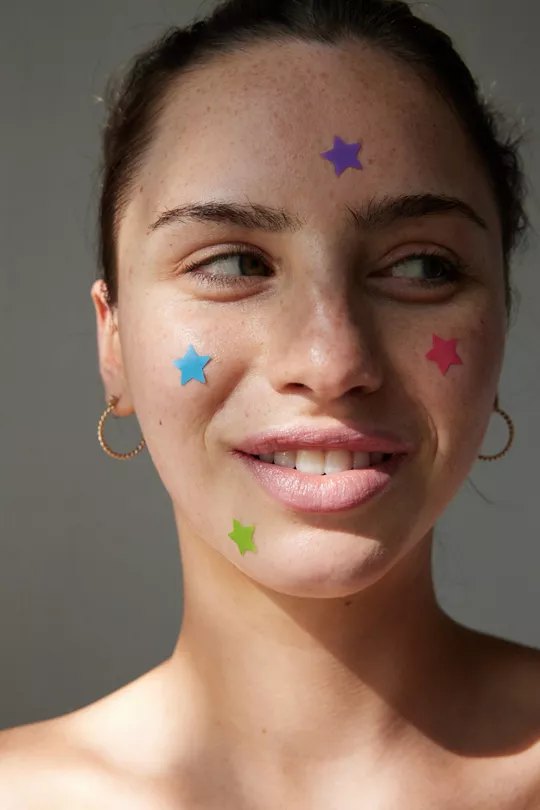
- Color: bright yellow Hydro-Stars, later joined by black, magenta and rainbow designs. In a category of skin tones and clear plastic, a yellow patch cannot be missed.
- Mascot: Big Yellow, a star-eyed smiley face introduced in 2019. Schott put it on the packaging instead of her own face. The brand’s social accounts speak in the first person as Big Yellow.
- Photography: the company says that since launch it has committed to showing ‘real, unfiltered skin in all of its creative,’ including acne, scars and texture (BeautyMatter, 2023).
- Tone and culture: memes, drop-style limited releases, and collaborations with Hello Kitty, Sesame Street and SpongeBob SquarePants.
What happened
The patches became something people showed. CNBC reported in 2024 that the brand ‘really took off’ during the pandemic, when people wore the stars on video calls, and that teens posted TikTok and YouTube vlogs wearing them.
- By 2023 the company reported more than 77 million Hydro-Stars sold (BeautyMatter, 2023).
- By late 2024 the company said it had sold more than one billion individual Hydro-Stars (CNBC, December 2024).
- CNBC reported Starface was on track for about $90 million in revenue in 2024, sold through Target, Walmart, CVS and its own site.
- About 60% of customers are Gen Z and Gen Alpha (CNBC, 2024).
- A 2022 Hello Kitty collaboration produced the brand’s biggest sales day to that point, according to its Shorty Awards entry.
Why it worked
Starface did not just add color. It made shape, color, mascot, voice and photography say one thing: a pimple is normal, and you do not have to hide it. Because every element agreed, the message came through even when a customer only saw one piece of it, like a star on a classmate’s chin.
The product itself became the advertising. Every patch worn in public or on camera was a small yellow billboard. Beauty Independent’s Claire McCormack told CNBC that the bright designs ‘disrupted the pimple patch market.’
Where it gets complicated
A visual identity can change how a product feels without changing what it does. CNBC noted it is unclear whether pimple patches speed healing. A dermatologist it interviewed said patches may protect a healing pimple but are not for everyone, and may help less with cystic acne or sensitive skin. Some customer reviews treat the stars mainly as accessories.
There is also a fashion risk. A brand built on being fun to wear depends on staying cool to a young audience, and McCormack pointed out the risk if the patches stop being seen that way. Competitors can copy a star shape. They cannot easily copy years of consistent identity, but the brand has to keep earning it.
The marketing principle
A brand identity system is more than a logo. When shape, color, character, voice and imagery all carry the same idea, they can flip how a whole category feels. Starface took a product designed to be invisible and made visibility the point.
Sources
- Introducing Starface: pimple patches for the Instagram age, Dazed (2019)
- Julie Schott Is In Touch With Her Inner Teen, Bustle (2022)
- Starface (FUTURE50 2023), BeautyMatter (2023)
- How Starface turned pimple patches into a business bringing in $90 million a year, CNBC (via NBC Los Angeles) (2024)
- Starface: Shorty Awards entry, The Shorty Awards (2023)
Group activity for this case
Flip the Category Feeling
Your group has one idea for your brand and a plan for how shape, color, character, voice and imagery all say it. A 20-minute group activity. Dr. Morris gives the password in class.
Back to Building Your Brand Identity System · All case studies
Brand names, images and trademarks belong to their owners and appear here for educational purposes only.