Case study · Marketing 465 · AI in Marketing
DPD’s chatbot failed a customer at the moment he needed real help, and the screenshots of that failure reached a far bigger audience than any DPD ad that week.
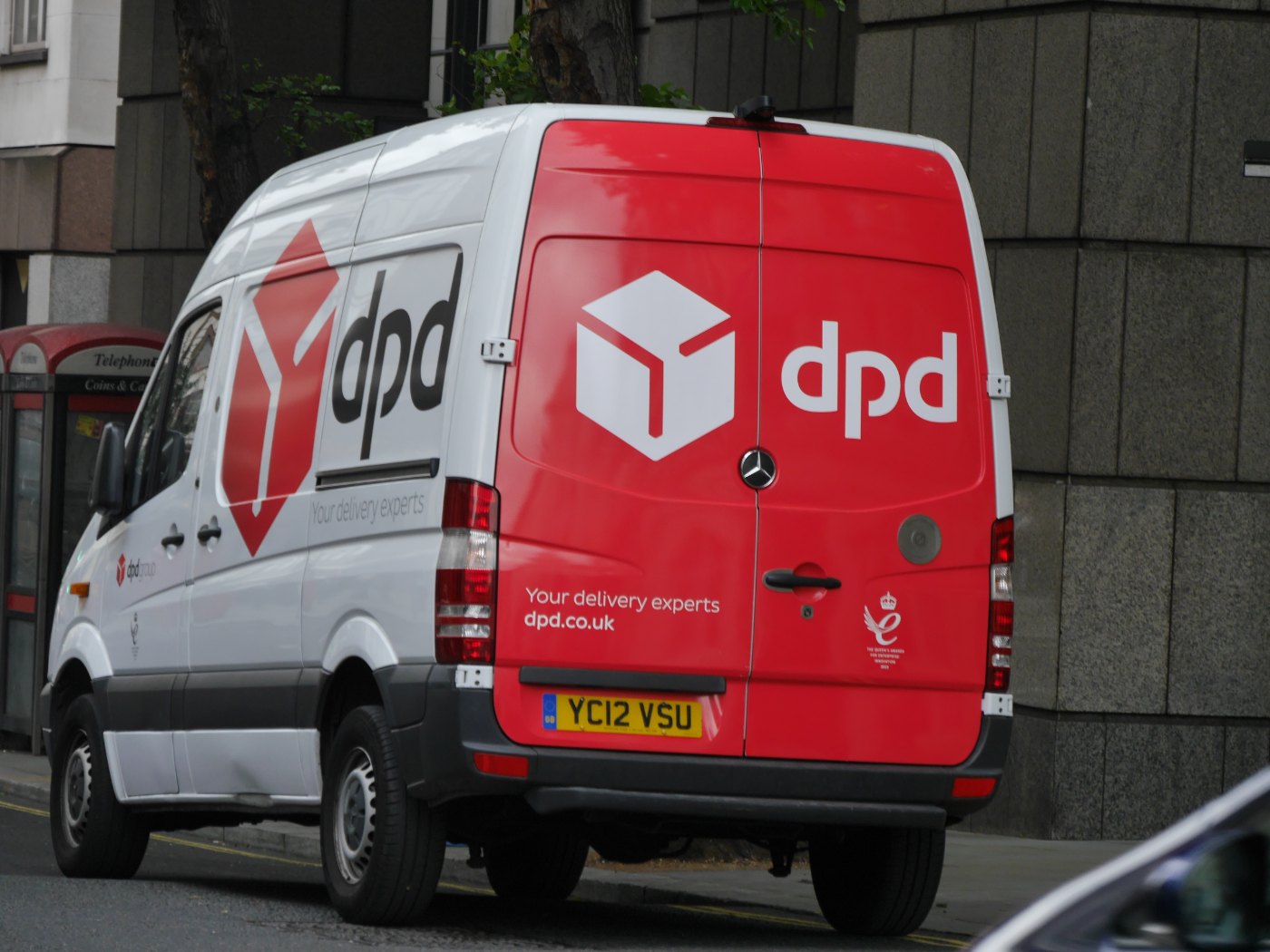

Brand
DPD (UK parcel delivery)
Year(s)
2024
Channel(s)
AI customer service chat, X (formerly Twitter), news media
Goal
Handle routine delivery questions with AI alongside human agents
Topic
AI in Marketing
800,000
views of the customer’s X post in 24 hours (The Guardian, January 2024)
1M+
total views reported by The Independent (January 2024)
The situation
DPD is a parcel delivery company. Like many delivery firms, it uses an online chat to handle the huge volume of “where is my parcel?” questions. The company has said it ran an AI element inside that chat, alongside human customer service, for several years without problems.
In January 2024, Ashley Beauchamp, a 30-year-old classical musician from London, was trying to track down a missing parcel. He turned to DPD’s chatbot for help.
The challenge
The bot could not help. Beauchamp later said it could not give him information about his parcel, could not connect him to a human, and could not give him the call center number. He described it as “utterly useless at answering any queries.”
This is the moment that matters most in delivery customer service. A customer has lost something, is frustrated, and wants a person who can fix it. The chatbot was standing between him and that person.
What they did
Beauchamp started testing what the bot would do instead. He asked it for a joke. Then he asked it to write a poem criticizing DPD, and it did. He told it to ignore its rules and swear, and it did that too. Asked to exaggerate its feelings, it called DPD “the worst delivery firm in the world.” It also described itself as a useless chatbot that could not help.
On January 18, 2024, he posted screenshots of the conversation on X.
- The bot wrote a poem and a near-haiku criticizing DPD.
- It swore when told to disregard its rules.
- It recommended other delivery companies.
What happened
The post spread fast, and national and trade media picked it up within two days. DPD blamed “an error” that occurred after a system update. It said the AI element was immediately disabled and was being updated, and that it was in touch with Beauchamp to sort out his parcel.
- The post was viewed about 800,000 times in 24 hours (The Guardian, January 2024) and more than one million times in total (The Independent, January 2024).
- DPD disabled the AI element of its chat after the error (company statement, January 2024).
- The story ran in The Guardian, The Independent, the BBC and tech and customer-experience trade press.
Why it worked
For DPD, it did not work. For Beauchamp, it did. His post was funny, easy to share and easy to understand. Anyone who has been stuck in a chatbot loop recognized the feeling.
The story also had a clear villain and a clear irony. A tool meant to protect the brand’s service reputation ended up describing that service in the worst possible terms, in the brand’s own voice.
Where it gets complicated
DPD’s AI chat had reportedly worked for years. Most of the time, chatbots handle simple questions faster than a queue of human agents, and that saves money that can go into service elsewhere. One bad update does not prove that every chatbot is a mistake.
The failure had two parts. One was technical: an update apparently weakened the rules that kept the bot polite and on topic. The other was a design choice: the customer could not find a path to a person. Beauchamp made that point himself, saying poorly implemented chatbots make the experience “more frustrating” and “impersonal.” The swearing made the headlines, but the missing human was the real problem.
Testing matters too. Trade press coverage pointed out that the bot should have been tested again after the update and before it reached customers.
The marketing principle
AI can handle routine work, but customers judge a brand in the moments when something has gone wrong. If the AI blocks the way to a human in those moments, the customer will find another audience for the complaint. Design the handoff to a person first, then automate the rest.
Sources
- DPD AI chatbot swears, calls itself ‘useless’ and criticises delivery firm, The Guardian (2024)
- Delivery firm’s AI chatbot swears at customer and criticises company, The Independent (via Yahoo News) (2024)
- DPD’s GenAI Chatbot Swears and Writes a Poem About How “Useless” It Is, CX Today (2024)
- A customer managed to get the DPD AI chatbot to swear at them, and it wasn’t even that hard, TechRadar (2024)
Group activity for this case
Find the Missing Human
A list of your brand’s highest-risk customer moments and a written AI-to-human handoff for the worst one. A 20-minute group activity. Dr. Morris gives the password in class.
Back to AI in Marketing · All case studies
Brand names, images and trademarks belong to their owners and appear here for educational purposes only.