The big idea: The needs worth designing for are often the ones people never say out loud, and a job statement keeps your prototype aimed at what people are trying to get done, not at a product.
In 60 seconds
- Johari’s window shows that the most valuable needs are often the ones people never say out loud.
- Five techniques, from systematic observation to repertory grids and lead users, uncover hidden needs.
- A job to be done is a solution-free verb, object and context, with functional, social and emotional dimensions.
Do this: write one solution-free job statement backed by evidence beyond asking, and Kano-sort your prototype’s features before Class 11.
How need finding works
By Class 10 your team has themes, HMWs and a wall of ideas. Before you build a prototype in Class 11, go one level deeper: find the needs people cannot or will not say out loud. Patnaik and Becker put it simply: a need is about what people are trying to do, not the product they ask for. If you want the four-stage needfinding process or the basics of writing need statements, refresh with Generative Research and the IB 407 page Need-Finding: Seeing What People Need. This page adds the Class 10 tools.
Johari’s window: what people know about themselves
Joseph Luft and Harrington Ingham built this model in the 1950s to describe self-awareness in relationships. In need finding it works as a map of where needs hide: some are easy to hear, some you can only see, and some nobody can name yet. It also reminds you that disclosure takes trust and is never guaranteed to be equal.
| Known to self | Not known to self | |
|---|---|---|
| Known to others | Open. I know it and others know it. Example: professional facts, like a job title. In interviews: stated needs. They tell you directly. | Blind. Others see it, but I do not. Example: food stuck in your teeth. In interviews: habits and workarounds you observe that the person never mentions. |
| Not known to others | Hidden. I know it, but others do not. Example: inner preferences. In interviews: fears, embarrassment and private priorities people share only once trust grows. | Unknown. Neither I nor others know it. Example: a psychological profile. In interviews: latent needs that surface only when people try something new, like your prototype. |
Three layers of needs
Stated needs
What people can tell you. Useful, but every competitor hears them too.
Found by: asking. The Open window.
Unspoken needs
What people do but do not say: workarounds, shortcuts, things they put up with.
Found by: watching and building trust. The Blind and Hidden windows.
Latent needs
Needs people have not felt or named yet. They are where breakthrough ideas come from.
Found by: lead users, immersion and prototypes. The Unknown window.
The Kano model: not every feature counts the same
Noriaki Kano and colleagues (1984) showed that features affect satisfaction in different ways. Sorting your ideas this way tells your prototype team what must be right first. Example: a shift handoff tool for hospital nurses.
Basic (must-be)
Expected without being asked. Having it earns no praise. Missing it makes people furious.
Example: the medication list is accurate.
Performance (more is better)
Satisfaction rises the better you do. People can usually tell you about these.
Example: the handoff takes less time per patient.
Delighter (attractive)
Unexpected. Nobody complains when it is missing, but it surprises and pleases people. Often comes from a hidden or latent need.
Example: it flags the family call a nurse promised overnight.
Delighters fade
Over time, today’s delighter becomes tomorrow’s basic. Once people get used to it, they expect it.
Two more categories
Indifferent: people do not care either way, so do not spend time on it. Reverse: some people would rather not have it, such as an alert that interrupts at the wrong moment.
Need finding in the wild: five techniques for hidden needs
Systematic observation
Structured watching in a natural setting, using a protocol so every observer records the same things.
Finds: behaviors, pain and workarounds people never mention.
Contextual interviewing
Interviewing people while they do the activity, then asking why at each step.
Finds: the reasons behind decisions, in the moment.
Repertory grid
People compare options three at a time and reveal the personal criteria they use to judge them.
Finds: hidden decision criteria people cannot list on request.
Lead users
People who feel a need ahead of everyone else and often build their own fix.
Finds: emerging needs and early solutions.
Empathy building
Living the experience yourself: role-play, shadowing, using the service the way they do.
Finds: frustration, delight and unspoken emotion.
Which one first?
Thin on behavior? Observe. Thin on why? Contextual interview. Everyone says the same thing? Repertory grid. Need the future? Lead users. Need the feeling? Empathy building.
Systematic observation, step by stepSix steps and a sample protocol
- Define the focus. Which behavior or interaction do you want to see?
- Choose the setting. The natural place it happens, or a controlled one if you must.
- Build an observation protocol. A checklist, field-note template or (with permission) video plan, so every observer records the same things.
- Observe without interfering. Record behaviors, interactions and context.
- Analyze patterns. Look for repeated behaviors, pain and workarounds that signal unmet needs.
- Synthesize. Turn patterns into needs and design opportunities.
| Time | Who (role) | What they did | Workaround or pain seen |
|---|---|---|---|
| 6:42 | Night nurse | Rewrote a paper list from memory | Paper list kept outside the official record |
Contextual interviewing, step by stepInterview while the work happens
- Select participants who represent the people you design for.
- Prepare a guide of open questions about behavior, challenges and motives.
- Interview in context, while they do the activity. Ask about what they just did.
- Probe for the rationale: “Why that way? What would happen if you didn’t?”
- Record key moments, pain and anything unexpected.
- Analyze across interviews for implicit needs and opportunities.
Repertory grid, step by stepTriads, two-ended constructs and 1 to 7 ratings
The repertory grid technique comes from George Kelly’s personal construct psychology (1955). It uncovers how people tell options apart, which often reveals criteria they would never list if you simply asked.
- Define the domain. The topic you want to explore. Example: how nurses pass on patient information.
- Pick the elements. Five to eight things people compare. Example: bedside verbal report, paper list, electronic record note, unit whiteboard, text to a colleague.
- Triadic elicitation. Show three elements at a time: “How are two of these alike and different from the third?” The answer is a construct with two ends, such as “I can ask a question back” versus “one-way.”
- Build the grid. Constructs as rows, elements as columns.
- Rate. The person rates every element on every construct, for example 1 to 7.
- Analyze. Look for constructs that cluster and options that score alike.
- Translate. Turn the criteria into design insights.
| Construct (1 to 7) | Bedside report | Paper list | Record note |
|---|---|---|---|
| Two-way (1) to one-way (7) | 1 | 6 | 7 |
| Fast to scan (1) to slow to read (7) | 4 | 1 | 6 |
| Trusted (1) to double-checked (7) | 3 | 2 | 5 |
Reading it: this nurse trusts the paper list more than the official note because it is fast to scan. A hidden need to scan priorities in seconds, not a need for “more documentation.”
Lead users, step by stepFind the people living in the future
Eric von Hippel (1986) named lead users: people who face a need months or years before the market, and who benefit so much from solving it that they often build their own fix.
- Identify them. Early adopters, pioneers in a field, or anyone with a homemade workaround.
- Engage them through interviews, workshops or co-creation sessions.
- Extract the principle behind their modifications, not just the gadget.
- Validate with a wider group. Is this need starting to matter to more people?
- Bring it into the design and strategy.
Lead users also make strong testers for your Part D feedback interviews.
Empathy building, step by stepWalk in their shoes, then reflect
- Define whose experience you need to understand.
- Use immersive techniques: role-play, shadowing, or using the service exactly as they do.
- Listen deeply in conversations that focus on feelings and experiences.
- Document and reflect on emotions, challenges and key moments.
- Synthesize patterns of frustration, delight and unspoken need.
- Translate into design opportunities.
How do you know you found an ah-ha?Signs and capture habits from the d.school handout
The d.school handout What to do in Need Finding starts from a striking idea: you look without knowing what you are looking for, and trust that the problem will become clear as you go. In our words, you have an ah-ha when:
- You can name the implicit insight, not just the obvious one.
- You found a surprise, or noticed what is missing.
- You can explain why people do something unusual, or explain a contradiction.
- In interviews, you can predict what the person will say next.
- You can tell a good story about it, and you want to tell everyone.
Bring back stories and artifacts, not just notes: photos (the handout suggests a pace of about 20 an hour), sketches, short quotes, recordings with permission, and objects from the place. Look for extreme users, allow silence, respect the people you study, and remember that being watched can change behavior.
Why needs are hard to seeBlocks to perceiving needs, from Faste (1987)
Rolf Faste, who taught needfinding at Stanford, listed blocks his students ran into again and again. A few to watch for in your team:
Thing orientation
We talk about products and past solutions instead of needs. “They need an app” is this block.
Lack of support from needers
People often insist they do not have a problem, so you feel intrusive pointing one out.
Investment in the status quo
People with power in the current system may not want it to change.
Lack of power
People who do see a need may feel powerless to address it, so they stop looking.
Invisible environments
Like a fish unaware of water, we take our own surroundings for granted.
Going shallow
Fixing an immediate, trivial need is easier than tackling the underlying one.
How jobs to be done works
Jobs to be done turns a need into something a prototype team can aim at. The class slides use Tony Ulwick’s definition: a job to be done is a statement that describes, precisely, what a group of people is trying to get done in a given situation. And one rule matters more than any other: jobs are not solutions.
A job can be
- A task people are trying to accomplish.
- A goal or objective they are trying to reach.
- A problem they are trying to resolve.
- Something to avoid, or anything else they are trying to get done.
Three dimensions of every job
- Functional. The task to perform or the problem to solve.
- Social. How people want to be perceived by others: to look good, or to gain power or status.
- Personal or emotional. How people want to feel: good, secure, at peace.
Write the job statement
Verb + object + context
Start with an action verb, name what it acts on, and add the situation. “Hand off each patient’s status to the next nurse at shift change.” “Get to an early class on time when the usual bus is late.” “Choose a retirement plan during the first week at a new job.” This structure is widely taught in Ulwick’s Outcome-Driven Innovation approach.
No solutions
“Use the scheduling app” is a solution. “Change a visit before the day of the appointment” is the job. It will still be true after the app is gone.
No success words
“Quickly,” “easily” and “better” describe how success is measured. Keep them out of the job and use them in desired outcomes instead.
The person’s view
Products do not have jobs. People do. Write it the way the job performer would describe what they are trying to do.
Where JTBD fits in the HCD process
Discover = Inspiration
Street interviews and observation reveal the jobs people are trying to get done.
BUAD 317: Part A interviews.
Define = Interpretation
Write job statements and the three dimensions from your themes.
BUAD 317: Classes 8 to 10.
Design = Ideate
Ideas and prototypes are “hired” to do the job better than today’s options.
BUAD 317: Parts B and C.
Deliver = Implement
Test whether the job gets done, then carry it into your senior project.
BUAD 317: Part D and the Capstone.
The JTBD ecosystem
A job never sits alone. These elements, common across JTBD practice, help your team see everything around it.
Job performer
The person trying to get the job done.
Core functional job
The main thing they are trying to accomplish.
Related jobs
Other jobs they try to get done at the same time or nearby.
Emotional and social jobs
How they want to feel and be seen while doing it.
Consumption chain jobs
Jobs around any solution: choose it, set it up, learn it, keep it running, stop using it.
Buyer or decision maker
The person who pays or approves may not be the job performer.
Desired outcomes
How the performer judges success: faster, fewer errors, less worry.
Circumstances
The time, place and situation that change which help gets “hired.”
Alternatives
Everything people use today, including doing nothing.
Worked example: “Grow a retirement portfolio”One job, mapped across the ecosystem
The class slides use this job as their example. Here is our own illustration of how it maps.
| Element | Example |
|---|---|
| Job performer | A hospital nurse in her late twenties, saving through a workplace plan |
| Core functional job | Grow retirement savings over a working life |
| Related jobs | Pay down student loans; build an emergency fund |
| Emotional job | Feel secure about the future, not anxious every time markets drop |
| Social job | Be seen by family as financially responsible |
| Consumption chain | Choose a plan, enroll, pick investments, rebalance, roll over after a job change, withdraw |
| Decision maker | Her employer chooses which plans are offered |
| Desired outcomes | Less time deciding how much to save; fewer surprise fees |
Twelve ways to do better JTBD researchThe Brand Genetics guide, summarized in our words
Brand Genetics (2021) argues that innovation should upgrade people, not products. Its twelve tips, in brief:
- Work the metaphor. People “hire” help to get jobs done. Write job descriptions and job specs.
- Learn from the milkshake study. Watch behavior instead of asking for features, ignore category lines, and segment by jobs, not demographics.
- Use motivation research. Validated motivation scales already describe the jobs behind eating, work, travel and more.
- Start with what does not change. Lasting human jobs, such as caring for family, gaining status or staying safe.
- Support autonomy, relatedness and competence, the three needs motivation science links to well-being.
- Search for struggles. Opportunity lives where people struggle to get the job done.
- Look at alternative hires. Everything people use for the job is your real competition.
- Watch for “fires.” Why did people stop using an option?
- Study hacks. Off-label uses and workarounds signal unmet jobs.
- Find job clashes. Two jobs that pull against each other at the same moment.
- Investigate “no hire.” People often get the job done with nothing at all, because time, effort or money stands in the way.
- Eliminate jobs. Sometimes the best help removes the job entirely.
The full guide is a required Class 10 reading. Full text on Canvas.
Want more depth on job maps and outcome statements? The Marketing 465 Jobs to Be Done Guide goes further.
Try it: Job Statement and Needs Builder
Tool · BUAD 317
Job Statement and Needs Builder
Write a solution-free job statement, give it three dimensions, show how deep your evidence goes, and sort features with Kano.
- 1Write the job
- 2Show evidence
- 3Sort features
Job statement
All checks
Put it to work: aim your rapid prototype (Parts C and D)
Class 10 has no deliverable of its own. It sharpens the next two: Deliverable #3 Part C, the rapid prototype you build in Class 11, and Part D, the feedback interviews with 7 to 10 people. Your new prototype team uses this class to make sure the idea it chose in Class 9 aims at a real job and a real need, not just the loudest complaint.
From Class 10 to your first prototype in six steps
Run a Johari scan
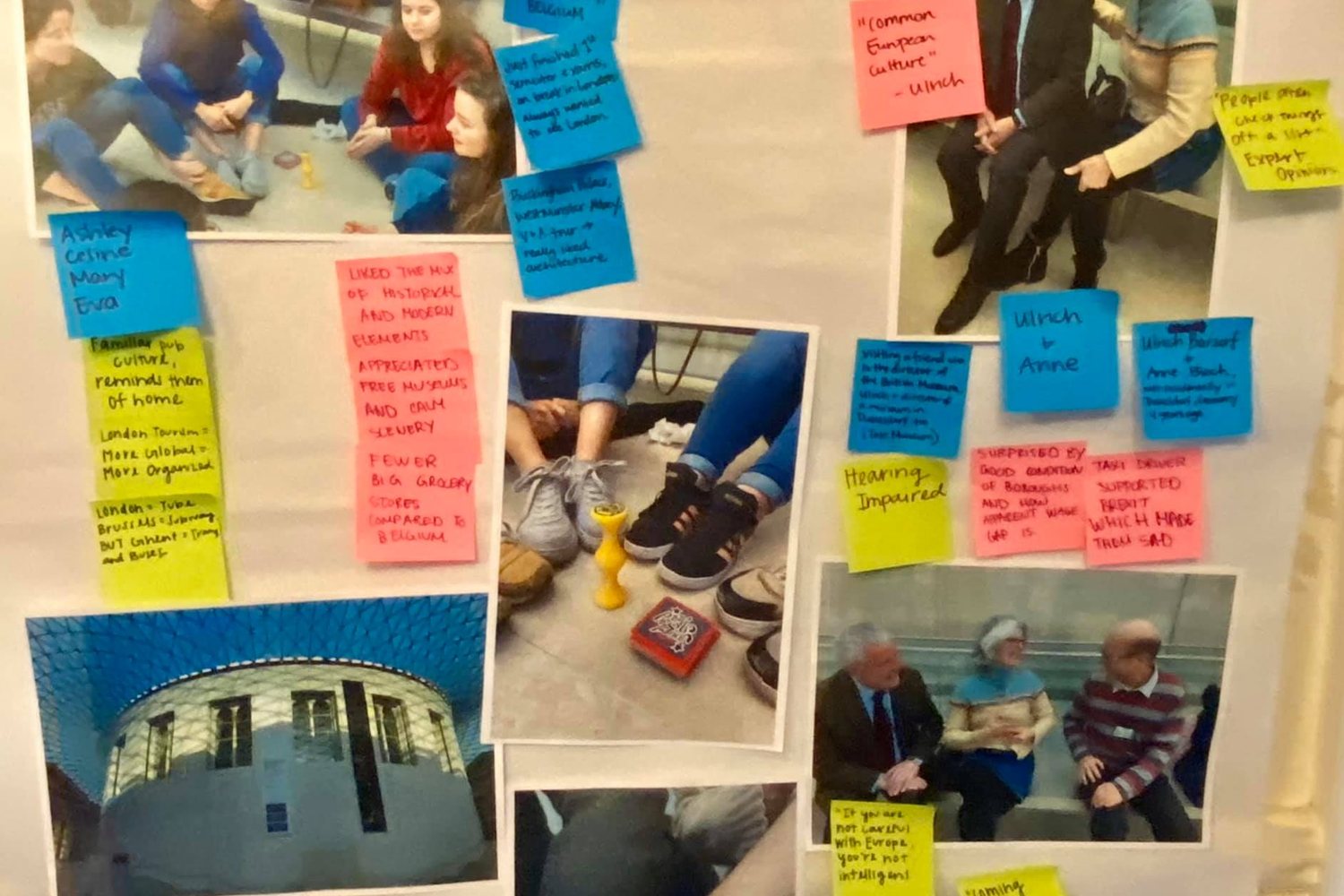
Go back to your Part A boards. Mark each sticky note Open, Blind, Hidden or Unknown. Most teams find nearly everything is Open.
Your deliverable: a short list of the Blind and Hidden notes, the ones a competitor would miss.
Dig with one technique
Pick one of the five hidden-need techniques that fits your gap and run it with at least three people before Class 11.
Your deliverable: new evidence, such as a repertory grid, an observation protocol or notes from a lead user.
Write the job
Use the Job Statement and Needs Builder: verb + object + context, plus the functional, social and emotional jobs.
Your deliverable: one job statement your whole prototype team agrees on.
Map the ecosystem
Who performs the job, who pays or approves, what they use today, and what jobs come before and after.
Your deliverable: a one-page ecosystem sketch.
Kano-sort your idea
List the features your chosen idea could have. Sort them into Basic, Performance and Delighter.
Your deliverable: the Basics your Part C prototype must show, plus one Delighter to test.
Plan the feedback
Decide what you need to learn from Part D. Test whether the job gets done and whether the Delighter really surprises people.
Your deliverable: three feedback questions tied to the job, ready for 7 to 10 people.
Which technique fits your gap?Choose it when, and watch out for
Systematic observation
Choose it when your boards are full of opinions but thin on what people actually do.
Watch out: ask permission where people expect privacy, and keep your protocol the same across observers.
Contextual interview
Choose it when you know what people do but not why they do it that way.
Watch out: do not slow down someone’s real work, such as a nurse mid-shift.
Repertory grid
Choose it when everyone gives you the same polite answer about how they choose.
Watch out: use options people actually know, or the comparisons mean nothing.
Lead users
Choose it when you want to see where the need is heading, or someone has built their own fix.
Watch out: check whether the wider group will feel this need too.
Empathy building
Choose it when you understand the steps but not the feelings.
Watch out: one afternoon in their shoes is not their life. Treat it as a hypothesis to check.
Do this, not thatHabits that keep needs ahead of solutions
Do this
- Write jobs that will still be true in ten years.
- Fill in all three dimensions: functional, social, emotional.
- Back each job with evidence beyond “they told us.”
- Build the Basics into your first prototype.
- Test the Delighter instead of assuming it.
Not that
- “Use our app” as a job.
- Speed and ease words inside the job statement.
- Only Open-window needs every competitor already hears.
- A prototype full of extras with a missing Basic.
- Treating the person who pays as the person who does the job.
Before Class 11Check these before you build
- [ ] We scanned our Part A boards with Johari’s window.
- [ ] We ran at least one hidden-need technique with three or more people.
- [ ] Our job statement is verb + object + context, with no solution and no success words.
- [ ] We wrote the functional, social and emotional jobs.
- [ ] We know who performs the job and who decides or pays.
- [ ] Our idea’s features are Kano-sorted, with the Basics in the first prototype.
- [ ] We have feedback questions ready for 7 to 10 people in Part D.
Go deeper
Class 10 readings
Go further
The five hidden-need techniques, the three job dimensions and the Class 10 sequence come from BUAD 317, taught by Lane Morris, PhD and Jules Morris, PhD.
Back to all BUAD 317 topics · Next: Rapid Prototyping and Street Feedback
In-class team activity · 30 min
Johari Swap and Job Hunt
By the end: A Johari scan of your Part A notes, one hidden need surfaced with a mini repertory grid, a solution-free job statement with three dimensions, and a Kano sort of your prototype idea's features. Your instructor will give you the password in class.
Part of BUAD 317, taught by Lane Morris, PhD and Jules Morris, PhD, in the Smith GLS human-centered leadership program, toward the Human Centered Consulting Certificate.
Frequently asked questions
How does Johari's window help with need finding?
Johari's window sorts what is known to a person and to others. Open needs are ones people state. Blind needs are habits and workarounds you can see but they never mention. Hidden needs are fears or private priorities shared only with trust. Unknown needs are latent, so nobody can name them yet. Breakthrough ideas usually come from the last three.
What is the Kano model?
The Kano model, from Noriaki Kano and colleagues in 1984, sorts features by how they affect satisfaction. Basic features are expected, so missing one makes people angry. Performance features satisfy more the better they work. Delighters are unexpected extras that surprise people. Over time delighters become basics. Build the basics into your first prototype and test the delighter.
What is the repertory grid technique?
The repertory grid, from George Kelly's personal construct psychology, uncovers how people tell options apart. You show three options at a time and ask how two are alike and different from the third. Each answer is a two-ended construct, such as two-way versus one-way. People then rate every option on every construct, often 1 to 7, revealing hidden decision criteria.
What is a job to be done?
Following Tony Ulwick, a job to be done is a precise statement of what a group of people is trying to get done in a given situation. It can be a task, a goal, a problem to resolve or something to avoid. Jobs are not solutions. Every job has functional, social and personal or emotional dimensions, which BUAD 317 asks you to name.
How do you write a job statement?
Use verb plus object plus context. Start with an action verb, name what it acts on, and add the situation, as in hand off each patient's status to the next nurse at shift change. Leave out solutions such as apps, and leave out success words such as quickly or easily. Those belong in desired outcomes. Write it from the job performer's view.