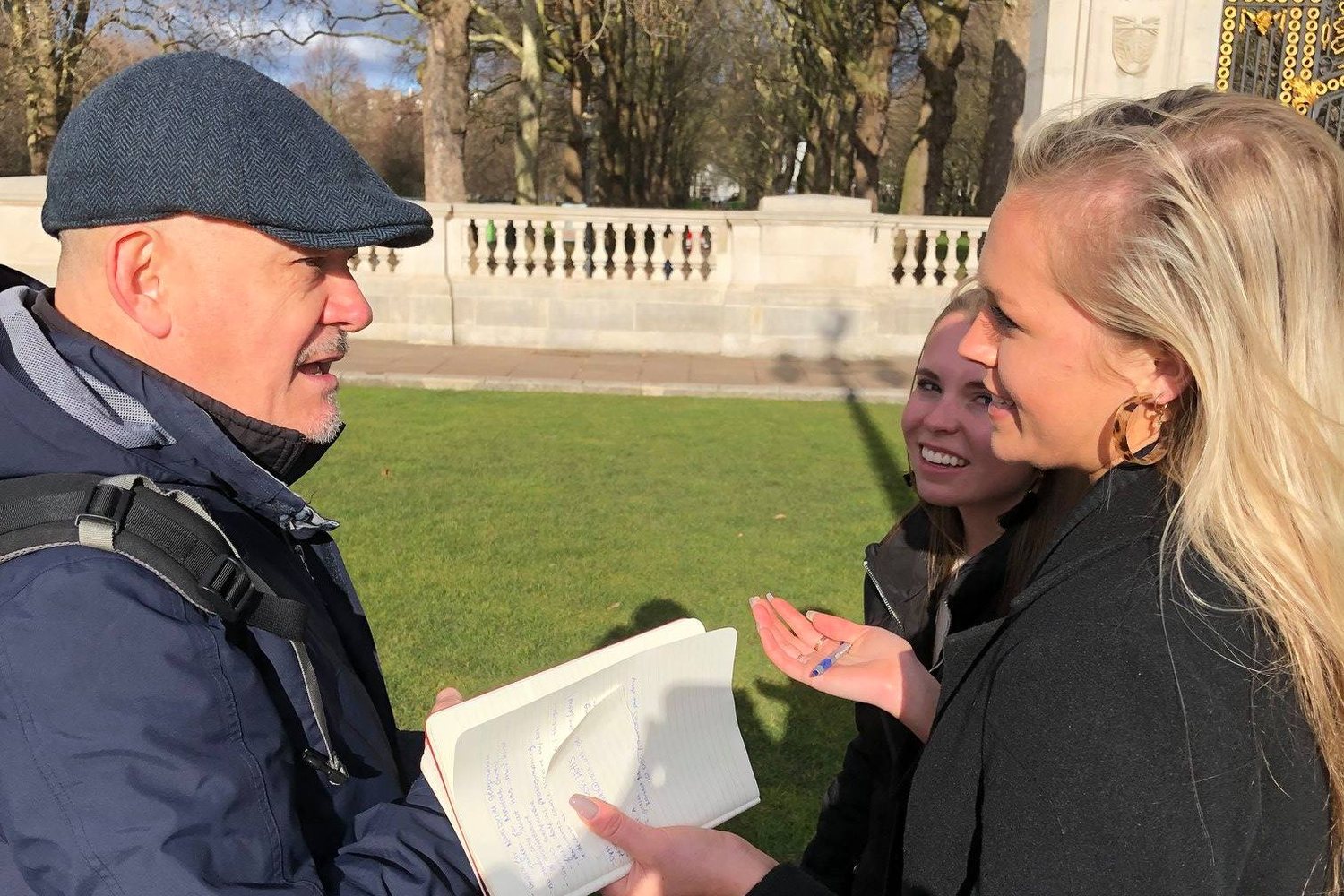
The big idea: Choose the method that fits what you need to learn, then pair it with a second one, because what people say and what they do are often different.
In 60 seconds
- Start with what you need to learn, then pick the method. Interviews show what people say. Observation shows what they actually do.
- Pair a say method with a do method. The gap between what people say and what they do is an insight, not a lie.
- Interviews tell you why. Surveys tell you how many. Interview first to learn what to ask, then survey to see how widely it holds.
Do this: match a main method and a paired method to each research objective, then use them for your 10+ interviews and prototype testing.
How to choose a data collection method
Start with what you need to learn, then pick the method. Interviews tell you what people say and feel. Observation shows what they actually do. Surveys tell you how common something is. Diaries show how things change over time. Strong research uses at least two.
Interviews
One-on-one conversations that draw out stories, motives and feelings. The core method of generative research.
Watch out: people describe what they remember or wish they did, not always what they do.
Contextual interviews
Talk with people in their own setting while they do the task. Ask about what you just saw them do.
Watch out: you need permission to be there, and you can slow their work.
Observation
Watch and record behavior in a natural setting with a plan: what to watch, where, and how to record it.
Watch out: you see the what, not the why, and being watched can change behavior.
Surveys
The same questions to many people. Best for “how many” and “how often,” and for checking whether an interview pattern holds more widely.
Watch out: you only learn what you thought to ask, and wording can steer answers.
Diaries
People record short entries, notes, photos or voice memos over days or weeks, in the moment it happens.
Watch out: entries fade after the first few days. Plan reminders and keep each entry short.
Prototype feedback
Put a rough version of an idea in someone’s hands and watch what they do with it. Concrete reactions beat opinions about ideas.
Watch out: people are polite. Ask what they would change, not whether they like it.
Say vs. do
What people say and what they do often differ. A nurse may say she always uses the checklist, while you watch her skip it at shift change. That gap is not a lie. It is an insight. Pair a “say” method with a “do” method to find it.
Why vs. how many
Ten deep interviews can tell you why something happens. They cannot tell you how common it is. If you need both, interview first to learn what to ask, then survey to see how widely it holds.
Generative research, step by step
Generative research builds a deep picture of people’s lives, not just their use of one product or service. These steps are our own summary of dscout’s guide, Generative UX Research: The Complete Guide, on your reading list.
Frame
Before choosing a method, ask what decision the research will inform and what answers people already expect.
Why: expected answers reveal bias early.
Plan
Write a short plan: background and problem statement, objectives, participants, method, guide and timeline.
Tip: turn each objective into 3 to 5 questions.
Talk
Run it like a conversation. Build rapport, stay quiet and let them talk, then dig deeper with follow-ups.
Tools: Tell, Explain, Describe, Walk me through.
Synthesize
Tag notes, write a summary per session, then cluster sticky notes into patterns as a team.
Next: turn patterns into “How might we” questions.
Going deeper in a conversationTEDW starters, the 5 whys and laddering
TEDW starters. Open with “Tell me about…,” “Explain…,” “Describe…” or “Walk me through….” Each invites a story instead of a one-word answer.
The 5 whys. Keep asking why until there is nothing deeper. Five is a guide, not a rule. Vary the wording so it does not feel like an interrogation: “What made that matter?” “How come?”
Laddering (attributes, consequences, values). People often start with a feature (attribute). Ask what that does for them (consequence). Then ask why that matters (value). A made-up example from a small plant:
- “I like the paper checklist.” (attribute)
- “Why that?” “I can check things off as I go.” (consequence)
- “What does checking off give you?” “My lead can see I didn’t skip anything.” (consequence)
- “Why does that matter?” “I want them to trust me on my own.” (value)
The insight is about trust and independence, not paper.
What goes in a research planSeven parts that keep a team focused
- Background and problem statement: why this study, and the central question.
- Objectives: what you need to learn. You should be able to answer each one by the end.
- Participants: who you will recruit and how, including how you will reach extremes, not just the typical user.
- Method: what you chose and why it fits the objectives.
- Interview or observation guide: an opening, your questions or watch-list, and a wrap-up.
- Timeline: recruiting, sessions, synthesis, report-out.
- Links: where notes, photos and the interview log live.
More ways to find hidden needsLead users, repertory grids and empathy building
- Lead users. People who feel a need before everyone else and often build their own workaround. Find them, learn their fix, then check if the wider group is heading the same way.
- Repertory grid. Show three options (three clinics, three apps, three break rooms). Ask how two are alike and different from the third. The answers reveal the hidden criteria people use to judge. Then have them rate each option on those criteria.
- Empathy building. Immerse yourself: shadow someone, or use the service the way they do. Note what you feel and where you get stuck.
Can you trust your data?Validity, reliability and bias in plain terms
- Validity: are you measuring what you think you are? In qualitative work, ask whether your findings are believable (credibility), useful in other settings (transferability), stable (dependability) and neutral (confirmability).
- Reliability: would the same method, used again or by a teammate, collect data the same way? Use a shared guide and a shared log.
- Generalizability: action research does not aim to explain everyone. It aims to understand and improve this setting.
- Bias: work systematically, watch for confirmation bias, and keep a beginner’s mindset.
- Triangulation: when two methods point the same way, trust grows. When they clash, dig in.
Ethics, consent and the IRB have their own page: Stakeholder Interviews and Ethics.
Try it: Method Picker
Tool · BUAD 317
Method Picker
Rank eight research methods for your question, see the tradeoff, and get a second method to pair with it.
- 1Ask
- 2Rank
- 3Share
Best fit for your question
Top 3 ranked, with tradeoffs
Less suited this time
All checks
Put it to work: your 10+ interviews and prototype testing
Your methods show up in two graded deliverables. Deliverable #3 asks for 10 or more solid interviews that also capture what you observed. Deliverable #6 asks you to test your prototype with 7 to 10 people. Choosing methods on purpose makes both stronger.
Plan your data collection in six steps
Write 2 to 4 objectives
Each objective starts with understand, discover or learn, and names who it is about.
Your deliverable: an objectives list at the top of your team’s research plan.
Match a method to each objective
Run each objective through the Method Picker. Pick a main method and a pair, so you can compare what people say with what they do.
Your deliverable: one line per objective: method, pair, and the tradeoff you accept.
Recruit a real mix
Plan for different stakeholder groups and for extremes as well as typical users. Ten versions of the same story is one interview.
Your deliverable: your target list in the team interview log for Deliverable #3.
Collect more than words
In every interview, note the setting, behavior and body language. Take a photo with permission. Capture exact quotes.
Your deliverable: Deliverable #3 sticky notes (one insight or quote each), participant photos and observation notes.
Look for say vs. do
Before class, compare what people told you with what you saw. Name every place they disagree.
Your deliverable: the contradictions and “nuggets of gold” in your Deliverable #3 patterns and themes.
Reuse it for prototype testing
When you take your prototype to the street, watch what people do with it before asking what they think.
Your deliverable: the feedback summary and artifacts for Deliverable #6.
Example: one objective, two methodsA made-up campus dining plan
Objective: understand why students leave the lunch line before they get food.
Main method: observation at the busiest hour, three days in a row: count people who leave the line, time the wait, note where the line backs up.
Pair: short intercept interviews with students who just left. “Walk me through the last two minutes.”
Tradeoff accepted: we learn a lot about one dining hall and less about the others.
What the pair caught: students said the line was “too long,” but the counts showed most left at the drink station, not the food line. The real problem was one bottleneck, not the whole line.
Before you go outA checklist for your team
- [ ] Every objective has a main method and a pair.
- [ ] Our target list covers several stakeholder groups and at least one extreme.
- [ ] We have a short guide with an opening, questions and a wrap-up.
- [ ] We know how we will ask for consent to take notes and photos.
- [ ] Everyone logs sessions in the same place, the same way.
- [ ] We scheduled interviews across several days, not one.
Go deeper
Back to all BUAD 317 topics · Next: AI + Human Interview Questions
In-class team activity · 25 min
Method Match-Up
By the end: A main method and a paired method for your team's research question, tested against a live poll and a quick interview in the room, and stress-tested against a surprise constraint. Your instructor will give you the password in class.
Part of the Smith GLS human-centered leadership sequence: IB 407, BUAD 317 and BUAD 497, toward the Human Centered Consulting Certificate.
Frequently asked questions
What are the main data collection methods in human-centered design research?
The main methods are interviews, contextual interviews, observation, surveys, diaries and prototype feedback. Interviews show what people say and feel, observation shows what they actually do, surveys show how common something is, and diaries show how things change over time. Strong research uses at least two methods, because each one has blind spots another can cover.
How do you choose a data collection method?
Choose a method after you write your objective, not before. Write 2 to 4 objectives that start with understand, discover or learn and name who they are about, then match a main method and a paired method to each one. Pair a "say" method like interviews with a "do" method like observation, and note the tradeoff you accept for each choice.
Why is what people say different from what they do?
People often describe what they remember or wish they did, not always what they do. For example, a nurse may say she always uses the checklist while you watch her skip it at shift change. That gap is not a lie. It is an insight. Pairing a say method, such as interviews, with a do method, such as observation, is how you find it.
What is the difference between interviews and surveys?
Interviews tell you why something happens, while surveys tell you how common it is. Ten deep interviews cannot show how widespread a pattern is, and a survey only teaches you what you thought to ask, with wording that can steer answers. If you need both, interview first to learn what to ask, then survey to see how widely the pattern holds.
What is laddering in user interviews?
Laddering is a follow-up technique that moves from attributes to consequences to values. People often start with a feature, so you ask what that does for them, then why that matters. In one example, a worker who likes a paper checklist ends up explaining that she wants her lead to trust her on her own. The insight was about trust and independence, not paper.