Case study · Marketing 465 · Social Media and Short-Form Video
Liquid Death took one of the most ordinary products there is, still and sparkling water, and built a billion-dollar brand by making content people chose to watch and share.
.jpg)
Brand
Liquid Death
Year(s)
2018 to 2024
Channel(s)
Facebook, YouTube, Instagram, TikTok, music streaming, a regional Super Bowl TV spot
Goal
Make a commodity product memorable and shareable with a bold, consistent voice
Topic
Social Media and Short-Form Video
$1,500
cost of the 2018 pre-launch video that reached 3M views in four months (CNBC, 2022)
$263M
scanned retail sales in 2023 (Inc., 2024)
$1.4B
valuation after March 2024 funding round (Inc., 2024)
23
markets for its regional 2022 Super Bowl ad (Adweek, 2022)
The situation
Mike Cessario, a graphic designer, trademarked the name Liquid Death in 2017. He has said the idea came from seeing performers at the Vans Warped Tour pour water into Monster Energy cans. His point was that the funniest, most memorable branding usually belongs to junk food, and healthy products rarely get to be cool (CNBC, 2022).
Cessario has been blunt about the product. “There’s not really anything that makes this water incredibly different,” he has said. Water is about as close to a commodity as consumer goods get.
The challenge
With no product difference to sell and little money for media, the brand had to earn attention. That meant content people would watch on purpose, not ads they would skip.
What they did
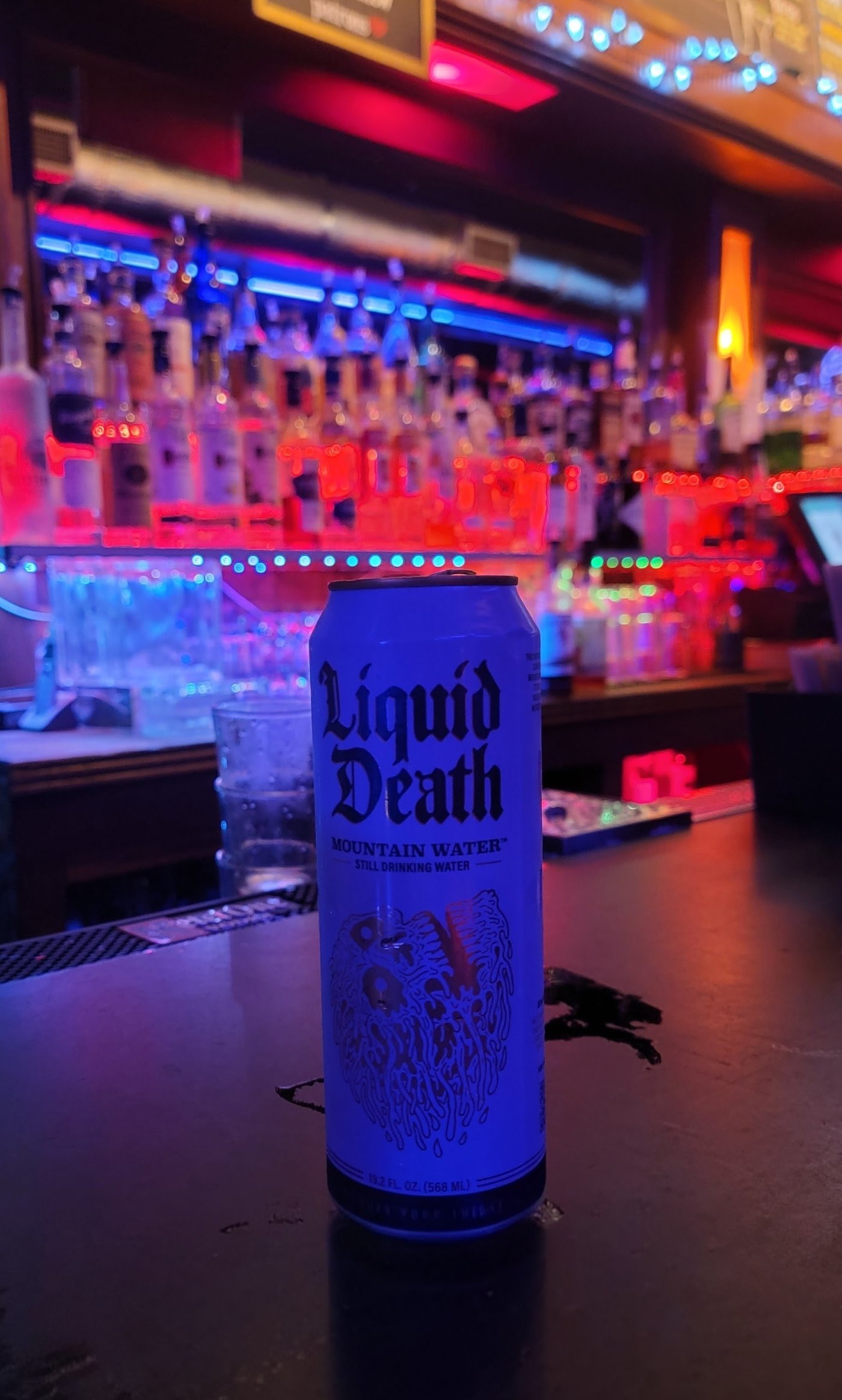
Liquid Death treated itself as an entertainment company that happens to sell water. Cessario told CNBC the goal was to “entertain people [and] make them laugh in service of a brand.” Everything carried the same voice: heavy metal imagery, a melting skull on a tallboy can, and the tagline “Murder your thirst.”
- In 2018, before the product was even on sale, Cessario posted a two-minute video that cost about $1,500 to make. It reached 3 million views in four months, and the brand’s Facebook page grew to nearly 80,000 followers (CNBC, 2022).
- In May 2020, it released Greatest Hates, a 10-track death metal album whose lyrics came from real hateful online comments about the brand, with titles like “Dumbest Name Ever for Water” (Loudwire, 2020).
- In February 2022, it ran a regional Super Bowl ad in 23 markets showing children appearing to party on canned water, set to Judas Priest’s “Breaking the Law” (Adweek, 2022).
- In April 2022, it released a tongue-in-cheek anti-plastic campaign cast with adult film performers, still kept safe for work (Adweek, 2022).
What happened
The brand grew quickly from a website launch in January 2019 into mainstream retail.
- Sales grew from $2.8 million in 2019 to about $45 million in 2021 (CNBC, 2022).
- $263 million in scanned retail sales in 2023 (Inc., 2024).
- A $1.4 billion valuation after a $67 million round in March 2024 (Inc., 2024).
- About 5 million TikTok followers and 3 million Instagram followers as of March 2024 (Inc., 2024).
Why it worked
The voice was bold and it never changed. Every piece, from the can to the album to the Super Bowl spot, sounded like the same rebellious, self-aware character. That consistency let people recognize the brand in a second of scrolling.
It also gave people something to share. A joke, a weird album or a shocking ad is social currency. When people pass it along, the brand gets reach it did not pay for.
Where it gets complicated
Earned media was the engine, but Liquid Death did buy media. The 2022 Super Bowl spot was a paid placement in 23 markets. The difference is that the paid ad was built to be talked about, so it also earned attention beyond what it cost.
Edgy humor has limits. Ads that show children partying or cast adult film stars will offend some people, and the brand has to keep topping its own stunts. Shock can also wear out. A voice built on provocation needs a steady supply of new ideas, and a single misstep can look like a betrayal of the joke. Students should also note that the brand was helped by major retail deals with chains like Whole Foods, 7-Eleven and Target. Content got attention, but distribution put the cans in people’s hands.
The marketing principle
A bold, consistent voice gives people a reason to watch and share. On short-form platforms, entertainment earns attention that ads have to buy. The voice has to come from a clear strategy, and it has to show up the same way everywhere.
Sources
- Liquid Death CEO Mike Cessario: We chose the dumbest possible name for water, CNBC (2022)
- Liquid Death, the canned water company for hipsters and headbangers, doubled its valuation overnight, Inc. (2024)
- Liquid Death scored with its regional Super Bowl ad starring hard-partying kids, Adweek (2022)
- Company Liquid Death makes metal album out of hateful comments, Loudwire (2020)
- Liquid Death marketing strategy: making water cool again, NoGood (2026)
Group activity for this case
Make the Boring Thing Watchable
A bold, consistent voice for the most ordinary part of your brand and one low-cost video people would choose to share. A 20-minute group activity. Dr. Morris gives the password in class.
Back to Social Media and Short-Form Video · All case studies
Brand names, images and trademarks belong to their owners and appear here for educational purposes only.