Case study · Marketing 475 · Brand Strategy: Who Is Your Brand?
Liquid Death turned one of the most commoditized products in the store into a billion-dollar brand by deciding exactly who it was for and who it was against, then letting every creative choice follow.

Brand
Liquid Death
Year(s)
2017 to present
Channel(s)
Packaging, social video (TikTok, Instagram), brand partnerships, merch, live events
Goal
Make water something people want to be seen holding
Topic
Brand strategy
$1.4B
Valuation after a $67M round (Fortune, March 2024)
$263M
2023 sales (NBC News, 2024)
113,000
Retail outlets in the U.S. and U.K. (NBC News, 2024)
The situation
Bottled water is about as close to a commodity as a product gets. Most brands compete on purity, mountains and calm blue labels. They look like a spa.
Mike Cessario, a former ad creative who had worked on campaigns for Netflix shows, saw a different problem. He has said the idea came from watching musicians pour water into energy drink cans so they would not look out of place on stage. Healthy drinks had no cool option at a show or a party. He trademarked the name in 2017 with three collaborators, and the cans reached buyers soon after.
The challenge
How do you build a premium brand around a product nobody can tell apart in a blind test? Cessario’s answer was to stop competing on the product’s attributes and compete on identity instead.
In class we boil that strategy down to three lines. It is our summary, not a company document, but it matches what Cessario has said in interviews.
- For: young people who are tired of wellness culture and do not want to be lectured.
- Against: every water brand that looks like a spa.
- With: a rebellious, funny, anti-corporate personality.
What they did
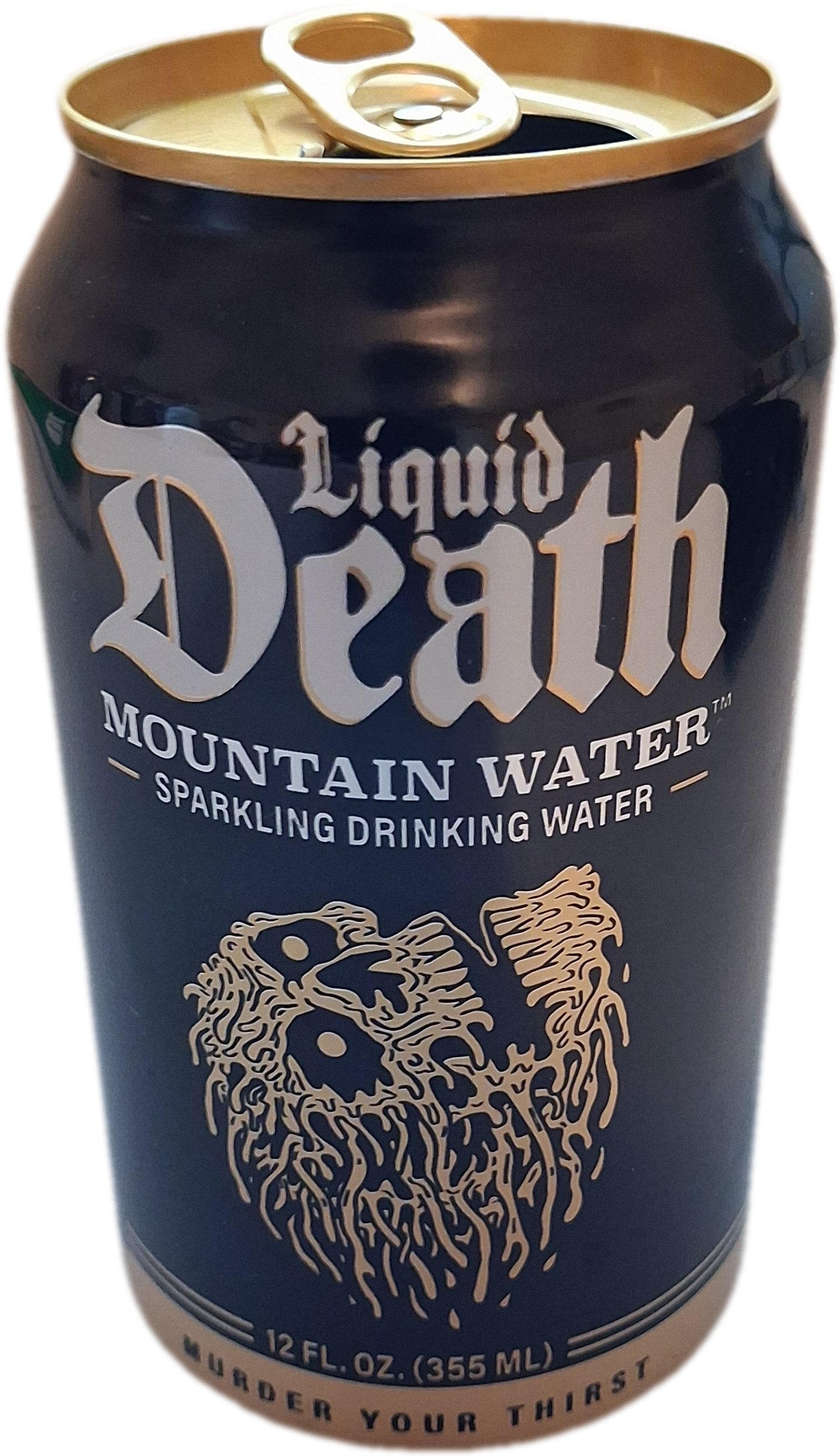
Every visible choice traces back to that brief. The product comes in a tallboy can with a skull and the promise to “murder your thirst.” Cessario told Fortune he wanted the can to be as appealing to carry as a beer, and that the goal was to “bake all the marketing and shareability into the product itself” so people would photograph it and post it for free.
The marketing borrows from heavy metal and comedy, not from wellness.
- 2020: Greatest Hates, a heavy metal album whose lyrics came from real hate comments about the brand, with tracks like “Fire Your Marketing Guy” (Muse by Clios).
- 2021: a partnership with Netflix for the zombie film Army of the Dead, built around a “No Brainer” head koozie and a late-night infomercial (Marketing Dive).
- 2021: a deal with Live Nation to be the exclusive water at many U.S. venues and festivals (Marketing Dive).
- 2023: a TikTok ad with Blink-182 drummer Travis Barker for a limited-edition joke product, which passed 4.7 million views (Fortune).
What happened
In March 2024 Liquid Death raised $67 million at a $1.4 billion valuation. NBC News reported $263 million in 2023 sales across about 113,000 retail outlets in the U.S. and U.K. Cessario told Fortune that revenue tripled from 2022 to 2024. The line has since grown into sparkling water, iced tea and electrolyte powders.
- $1.4 billion valuation, March 2024 (Fortune).
- $263 million in 2023 sales, 113,000 retail outlets (NBC News, 2024).
- About 8 million followers across Instagram and TikTok (Fortune, 2024).
Why it worked
The strategy made the creative decisions easy. Once the team decided the brand was a punk band and not a health brand, a skull logo, a metal album and a zombie movie tie-in were obvious yes answers. A calm, spa-style campaign would have been an obvious no. Cessario has pointed out that funny, irreverent marketing usually belongs to unhealthy products like candy and fast food. Liquid Death took that voice and put it on the healthiest drink in the cooler.
Each piece also reinforced the others. The can, the ads, the album and the merch all sound like the same character because they all came from the same brief. The brand even turned its critics into content: Liquid Death said ads built from hateful comments were its highest-performing ads, which led to the album.
Where it gets complicated
The brand’s “death to plastic” message has drawn criticism. In a 2024 Packaging Digest column, chemical engineer John Spevacek pointed out that aluminum cans have plastic liners, that cans cannot be made from 100% recycled material, and that the brand’s powders shipped in single-use plastic. He called the messaging more emotional than substantive. Students should notice that an edgy personality does not exempt a brand from checking its claims.
There is a strategic tension too. Cessario told NBC News the goal is “truly healthy, better-for-you beverages,” yet the brand’s whole identity rejects health marketing. That works while the joke stays fresh. A strong identity can also box a brand in as it moves into teas, powders and other categories, where it competes on taste and price, not attitude. A brand built on attitude still has to deliver a product people like.
The marketing principle
Brand strategy is a set of choices about who you serve, who you stand against and how you behave. Liquid Death made those choices sharply, and the logo, ads, partnerships and merch all followed from them. Get the strategy right first and the creative decisions get easy. Then make sure the product and the claims can hold up under the attention the creative earns.
Sources
- How Liquid Death became a billion-dollar beverage brand, NBC News (2024)
- Liquid Death CEO Mike Cessario interview, Fortune (2024)
- Liquid Death Is Valued at $1.4 Billion in New Financing Round, Bloomberg (2024)
- Liquid Death, the Canned Water, Made a Heavy-Metal Album With Lyrics From Its Hate Mail, Muse by Clios (2020)
- Liquid Death protects heads from zombies to promote Netflix’s Army of the Dead, Marketing Dive (2021)
- Liquid Death May ‘Murder Your Thirst,’ but It Won’t Kill Plastic, No Matter What the Ads Say, Packaging Digest (2024)
Group activity for this case
For, Against, With
A three-line brand brief for your brand and three visual choices that follow from it. A 22-minute group activity. Dr. Morris gives the password in class.
Back to Brand Strategy: Who Is Your Brand? · All case studies
Brand names, images and trademarks belong to their owners and appear here for educational purposes only.