The big idea: In short-form video, the first seconds decide everything. Plan the hook, keep one idea, and tell a story people want to finish.
See it in action
Storyboard Lab
Build a short video for BREW, an invented canned cold brew. Pick a shot for each beat and watch the storyboard, pacing and checks update.
Checks
Key concepts
- The hook: Grab attention in the first one to three seconds with motion, a question or a surprising visual.
- Structure: Hook, value, payoff, call to action.
- Script and shot list: Plan what’s said and what’s shown in each shot before you film.
- Captions and text on screen: Help sound-off viewers and make video accessible to people who are deaf or hard of hearing.
- Edit for pace: Cut anything that doesn’t move the story forward.
Real brands in action
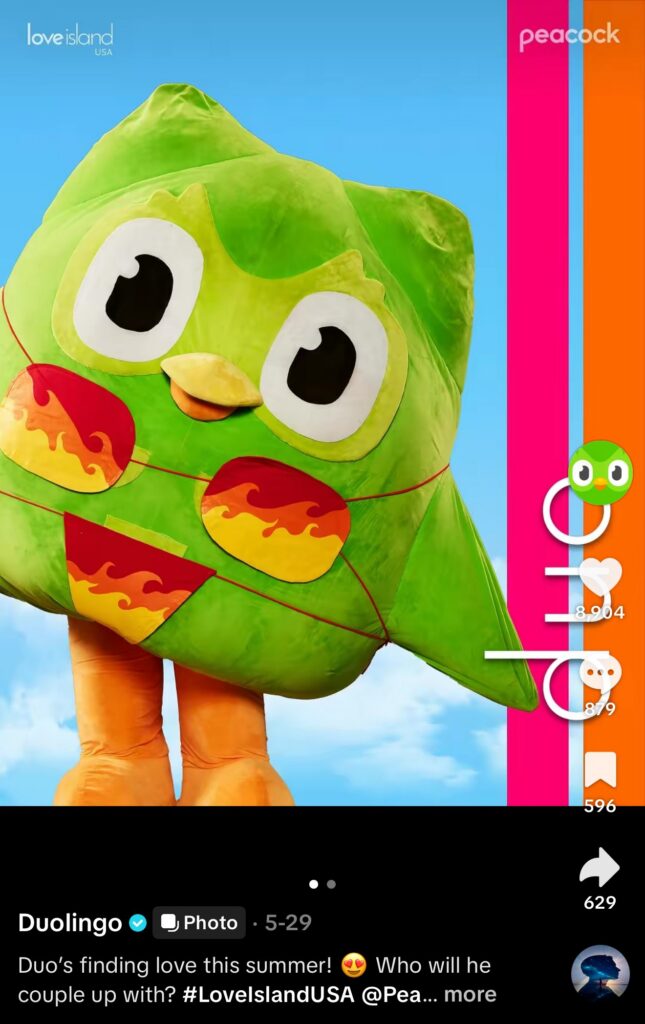
Duolingo: A mascot made for TikTok
Duolingo leaned into its owl mascot’s “unhinged” personality and made TikTok videos that feel created on the platform, not for it. It kept a bold neon green look and one consistent character voice, and even had Duo show up on Love Island. When the class deck was made, the account had 6.8 million TikTok followers.
The lesson: Make video that looks native to the platform, with a personality people want to share.
Image courtesy of Duolingo
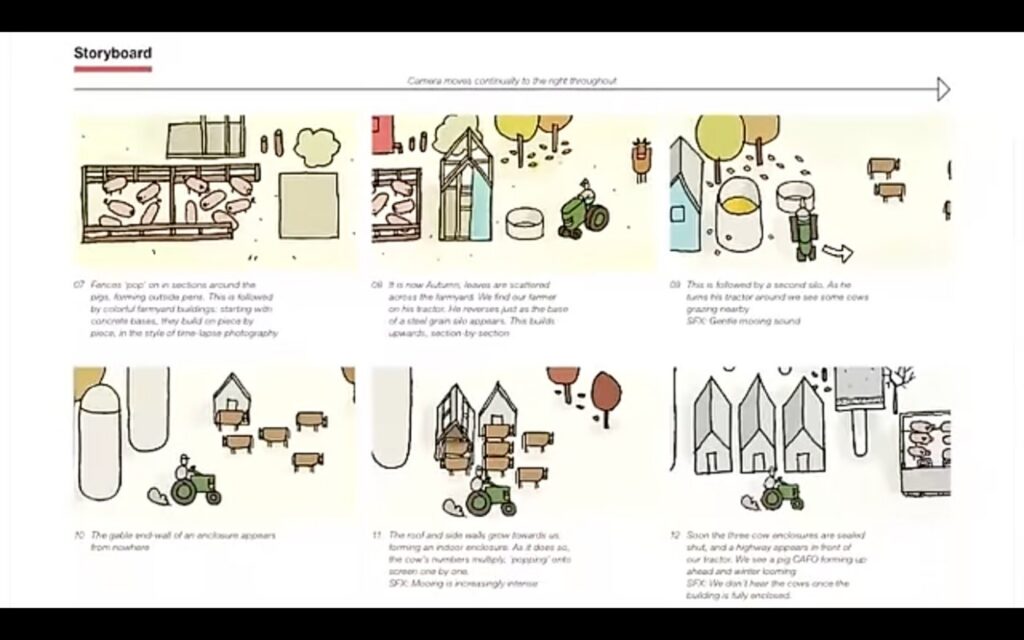
Chipotle: Back to the Start
Chipotle’s 2011 animated short follows a farmer who turns away from industrial farming and goes back to sustainable methods, set to Willie Nelson’s cover of Coldplay’s “The Scientist.” It ran online and in movie theaters, then aired as a TV spot during the 2012 Grammys. It told the brand’s story about food without a hard sell.
The lesson: One clear emotion and a simple story can carry a brand message better than a product pitch.
Image courtesy of Chipotle
Aerie: Real bodies, no retouching
Aerie’s message is confidence over perfection. Its content shows real bodies and real stories with zero retouching. That honesty is what makes the videos connect.
The lesson: Decide the one feeling you want viewers to have, and let the footage prove it.
Learn more: Aerie
Brand images are shown for educational purposes only. Each image and trademark belongs to the brand credited, and each credit links to that brand.
Frameworks from class
Start with one feeling
Before you write a hook, decide what you want people to feel. Emotion is the engine of engagement, not a side effect. Pick one core feeling and build every shot around it. Your story should land even with the sound off.
- Stanley: durability meets lifestyle
- Aerie: confidence over perfection
- Duolingo: chaos that builds community
- Nike: inspiration through effort
Four hook types
Most strong hooks fall into one of four types. Pick the one that fits your brand voice and your audience’s problem. Keep the hook under five seconds when spoken.
- Question hook: sparks curiosity. Ever wonder why your engagement dropped overnight?
- Shock hook: creates urgency. This one mistake is costing you.
- Story hook: invites them in. Last week I tried something crazy.
- Challenge hook: asks them to play. Can you do this in 10 seconds?
Lead with the benefit, not the announcement
A weak hook talks about the brand. A strong hook talks about the viewer. Compare these two openings for the same cleaner.
- Weak: Today we’re excited to announce our new eco-friendly cleaning product.
- Strong: Stop scrubbing. Our plant-based cleaner cuts through grime in seconds. Here’s how.
- The strong one names a pain point, promises a clear benefit and makes people want to see how.
Four mistakes that kill a video
These are the most common reasons a short video fails. Check for each one before you post.
- Weak hook: viewers leave before anything happens
- Text overload: people scan on-screen text, they do not read it
- Missing call to action: viewers need to be told what to do next
- Bad audio: poor sound turns people off faster than shaky video. Record audio separately when it matters.
Class exercise: Hook it, don’t tell it
Design a three-second opening that stops the scroll for a real brand.
- Pair up and choose a real brand you like.
- Name the target audience and the one emotion you want them to feel.
- Sketch the first three seconds on paper or in Canva. Show one powerful visual and one clear message.
- Add a sound idea: music, voiceover or a sound effect.
- Present the brand, the visual and the sound, and explain why someone would keep watching.
Try it
Write a script and shot list for a one-minute brand story video: the hook, three to five shots that tell the story, and the ending. Film it on a phone and edit with any tool, like CapCut, Canva or iMovie.
Tips and best practices
- Plan the first second on purpose. Open on motion, a face or a question, and save the logo for later or keep it small. Write the hook before anything else in your script.
- One video, one idea. If you need the word “and” to describe what the video is about, it is probably two videos. Focus makes it easier to finish and easier to remember.
- Storyboard before you film. Sketch each beat with the shot, the on-screen text and the sound. Ten minutes of planning saves an hour of reshoots and editing.
- Design for sound off. Burn in captions and add short on-screen text so the story works without audio. Captions also make your video accessible to people who are deaf or hard of hearing.
- Cut every beat that does not move the story. Watch your edit and ask, beat by beat, whether it earns its time. Trim the starts and ends of clips so each shot begins on action.
- End with a clear next step. Tell viewers exactly what to do: follow, find it in store, tap the link. A video that just stops leaves the attention you earned on the table.
Quick check
Think through your answer, then select a question to reveal one.
What are the four parts of a short-form video structure?
Hook, value, payoff and call to action.
Why add captions?
Many people watch muted, and captions make video accessible.